

Across South Africa, community food gardens are quietly transforming local food systems. What often begins as a few rows of vegetables planted on unused land can grow into projects that feed families, create livelihoods and strengthen entire communities.
By Talitha Janse van Vuuren, multimedia-editor at African Farming
The scale of this grassroots movement became clear through the inaugural Shoprite Act for Change Food Garden Competition, which drew nearly 600 entries from community gardens across the country. The competition highlighted the wide range of initiatives that are tackling hunger while building agricultural knowledge at community level.
From township gardens and rural projects to school-based initiatives and youth-led farms, the finalists represent a growing network of small-scale agricultural projects that are helping communities grow their own food and improve food security.
Also read: Here are the winners of the inaugural Shoprite Act for Change Food Garden competition
Small Gardens With Real Impact
The six winning gardens alone illustrate the reach of these initiatives.
The ACFS Khunadi Food Garden in Mogoto Village in Limpopo, which won the competition, provides vegetables to local feeding programmes while training women and youth in small-scale farming. Around 50 people benefit directly from the project each month.
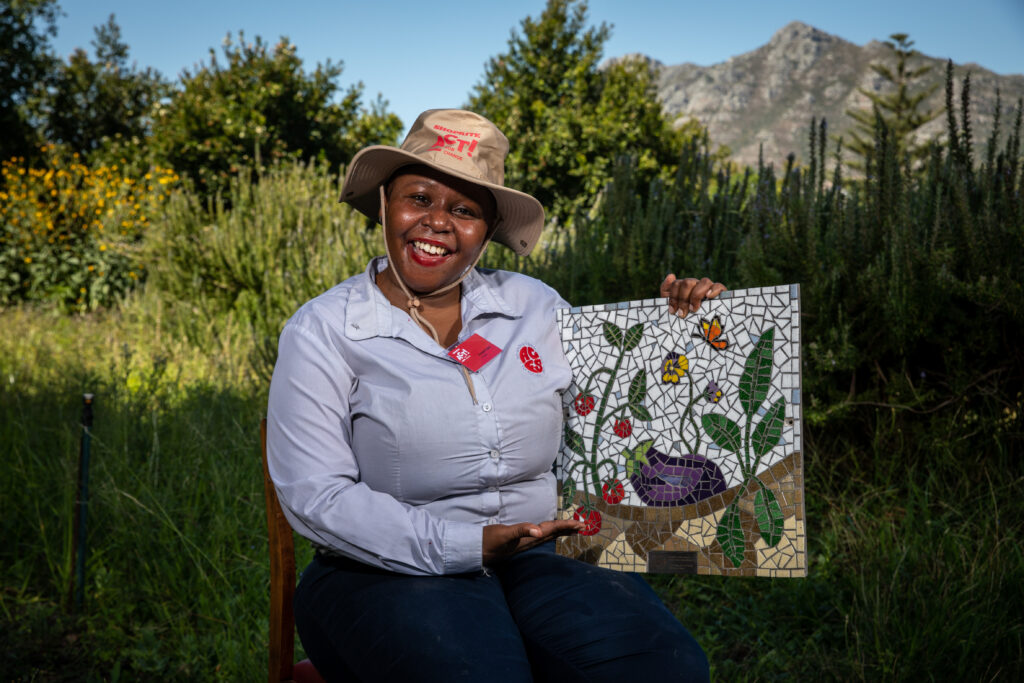 SHOPRITE ACT FOR CHANGE: Shoprite’s Act For Change Food Garden Competition prize giving. Meuse Farm, Hout Bay, March 10 2026.Photographer: Dwayne Senior for Shoprite/Ten X Collective.
In the Eastern Cape, the Ngxanga School Garden in Libode gives learners the opportunity to grow vegetables such as tomatoes and spinach while gaining practical knowledge about food production. The garden supports 243 learners and five households each month.
Another initiative, the Hope Park Children’s Health Campus Garden in Krugersdorp, supplies vegetables to more than 350 learners from four schools while also supporting households in the surrounding community.
Projects such as the Food Security Project in Gonubie, where 162 women cultivate their own garden plots, and the P Agricultural Group (PAG) in Soweto, which distributes vegetables to more than 150 families each Christmas, demonstrate how community gardens can grow beyond subsistence and become hubs of food production and skills development.
Youth-led initiatives are also emerging, such as Plenty Green Africa in Tsakane, where young people are transforming unused urban spaces into productive gardens while gaining agricultural skills.
Together, these projects show that community gardens are not only producing food, but also building local agricultural capacity.
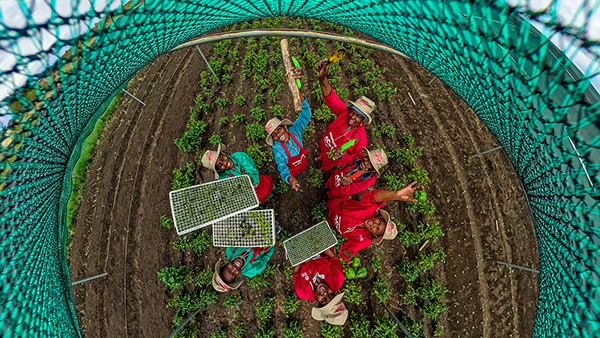 Photo: Supplied
Strengthening Local Food Systems
Community food gardens play an important role in strengthening local food systems – the networks that produce, distribute and consume food within communities.
By producing vegetables locally, these projects reduce reliance on distant supply chains and improve access to fresh, nutritious food in areas where it is often expensive or difficult to obtain.
Surplus vegetables are frequently shared with neighbours, supplied to feeding schemes or sold locally, helping create small but important food economies within communities.
Community gardens also serve as training spaces where participants learn practical agricultural skills such as composting, water conservation, crop management and seedling production.
These skills often extend beyond the garden itself, enabling households to start their own food gardens or small-scale farming initiatives.
Also read: How community food gardens are solving land access barriers for SA women and youth
The Heart Of Communities
Beyond the practical benefits, community gardens are also powerful social spaces.
During the judging process for the competition, one judge described community food gardens as “the heart of South Africa’s communities.”
In a country where unemployment remains high, these gardens give people something meaningful to work towards each day.
Women come together to plant, water and harvest crops. Young people learn agricultural skills that can lead to future opportunities. Families bring home fresh vegetables grown in their own neighbourhoods.
At their core, community gardens represent more than food production. They represent cooperation, shared knowledge and the resilience of communities determined to build a better future.
 Photo: Supplied
Growing More Than Vegetables
While community gardens will never replace commercial agriculture, they play a crucial complementary role in South Africa’s food system.
They help bridge the gap between food production and household access, especially in communities where poverty and unemployment limit the ability to buy fresh food.
They also introduce new generations to agriculture and demonstrate how small-scale farming can support livelihoods.
As initiatives like the Act for Change Food Garden Competition continue to highlight and support these projects, community agriculture is becoming an increasingly visible part of South Africa’s agricultural landscape.
Across the country, small gardens are proving that agriculture can grow far more than vegetables. They can grow skills, opportunity and hope.
Also read: Meet the top 10 finalists of Shoprite’s inaugural Food Garden Competition

Comments are closed.