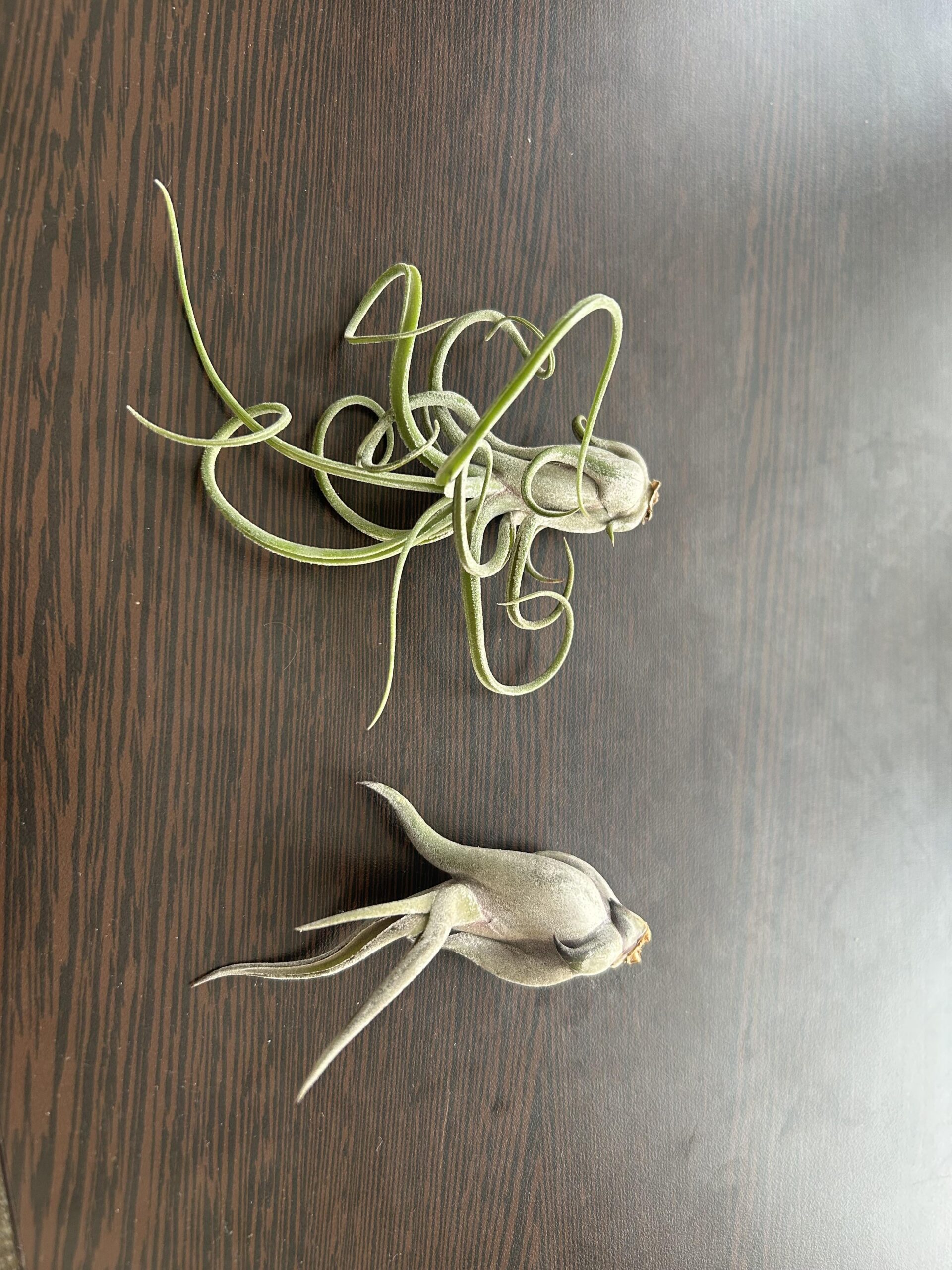
Hi! I believe these are both Caput Medusae. : ) They’re crazily different, that’s true, but often times tillandsia (and basically all plants) gain distinct shapes based on the natural environment they grow in. T. caput medusae is native to the forests and the deserts of Mexico, including the Sonoran desert, but you can also find it growing in the wild in Costa Rica and many other Latin-American countries! This means that caput medusae can take a lot of different forms (“ecotypes”), for example:
In the case of your sturdier leaves one, I believe that it may be the Mexican form, but I can’t really find anything to support that – it’s just that it has the shape that I see more typically, so I assume it must come from Mexico!
For some reason, there’s not a lot of talk going on about the many caput medusae ecotypes, which is strange because there actually is quite a discourse about (for example) tillandsia bulbosa Guatemala vs. Belize, or the two most common subtypes of t.Pruinosa. Weird! But you don’t have to worry about anything of this sort, the important thing here is that you just came home with two excellent, most beautiful new friends and you should start celebrating as soon as possible! 😁😁

2 Comments
🆔apps have been no help
Hi! I believe these are both Caput Medusae. : ) They’re crazily different, that’s true, but often times tillandsia (and basically all plants) gain distinct shapes based on the natural environment they grow in. T. caput medusae is native to the forests and the deserts of Mexico, including the Sonoran desert, but you can also find it growing in the wild in Costa Rica and many other Latin-American countries! This means that caput medusae can take a lot of different forms (“ecotypes”), for example:
Sonoran form: https://www.desertmuseum.org/programs/alamos_bromel_tilcaput.php
Guatemalan form:
https://www.facebook.com/groups/1384312601829279/posts/3779334418993740/
In the case of your sturdier leaves one, I believe that it may be the Mexican form, but I can’t really find anything to support that – it’s just that it has the shape that I see more typically, so I assume it must come from Mexico!
For some reason, there’s not a lot of talk going on about the many caput medusae ecotypes, which is strange because there actually is quite a discourse about (for example) tillandsia bulbosa Guatemala vs. Belize, or the two most common subtypes of t.Pruinosa. Weird! But you don’t have to worry about anything of this sort, the important thing here is that you just came home with two excellent, most beautiful new friends and you should start celebrating as soon as possible! 😁😁
Welcome on board! 😊