
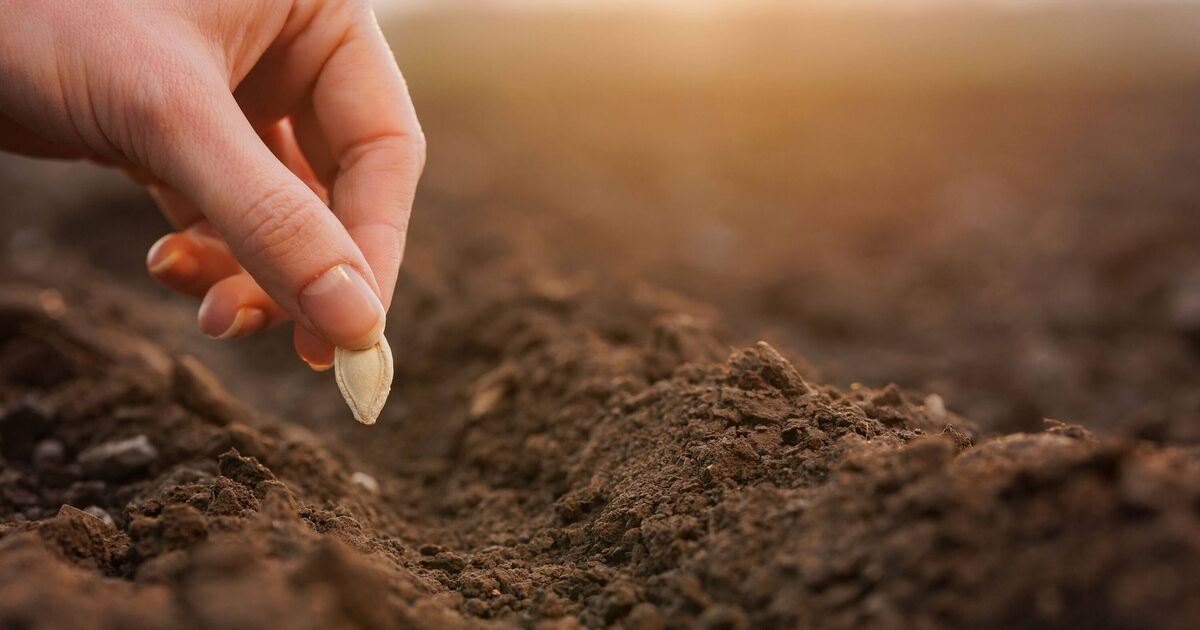
He stresses the significance of not missing that “all important sowing window” as milder conditions arrive. Benedict confesses he “can’t wait” to enjoy those initial harvests as his plants start to flourish. Initially Benedict advises that gardeners should sow any “overwintered carrots”. He favours the stump-rooted variety because it is “so much more carroty” than the produce he discovers in his local supermarket.
In a video, he said: “They may be cheap to buy but this is why you grow carrots, for that insanely deep carroty taste. Carrots are happiest when sown directly into the soil and left well alone.”
He continued by explaining that they don’t appreciate being “transplanted” and whilst they might survive, they could develop in “unusual” shapes. He advocates shorter stump-rooted varieties in heavier and stony soil or perhaps even constructing carrot planters.
Benedict nonetheless cautions that slugs “love” carrot seedlings, meaning gardeners will need to monitor for the pests. Additionally he proposes sowing courgette now, characterising it as the “plant that keeps on giving”. He maintains courgettes develop from seed to plant in the “blink of an eye” and reveals he prefers to “harvest them young” as they are at the “densest and nuttiest”. He advises sowing them between three and four weeks before the last frost.
Benedict proposes placing them into a pot and transplanting into a larger container before it’s time to relocate them outside. In a comparable fashion to courgettes, Benedict is sowing his cucumbers now because they will “germinate really quickly in the warmth”.
He maintains the secret to cultivating a cucumber is “regular feeding and regular watering”. Observing that “inconsistent moisture” results in a bitter-tasting fruit.
Additionally, Benedict enjoys cultivating chard in his garden for “reliability and productivity”. He continued: “Chard can be colourful, incredibly productive, and is far more tolerable to heat and cold than many other greens.”
He cautions that sowing the seeds too early could result in them flowering prematurely. Once in the soil, they require thorough watering to maintain leaf growth.
Whilst celery has a “reputation for being a little bit difficult,” Benedict enjoys cultivating the tiny “dust-like” seeds in his garden. He distributes them over the surface of his pot before misting them.
He then places clear plastic over the pot to provide them a “snug environment”. This is removed prior to planting them in the garden. Whilst Benedict takes pleasure in cultivating vegetables in his garden, his final recommendation is to plant vegetable-friendly flowers in your plot. He proposes marigolds, zinnias, and alyssums.
Comments are closed.