
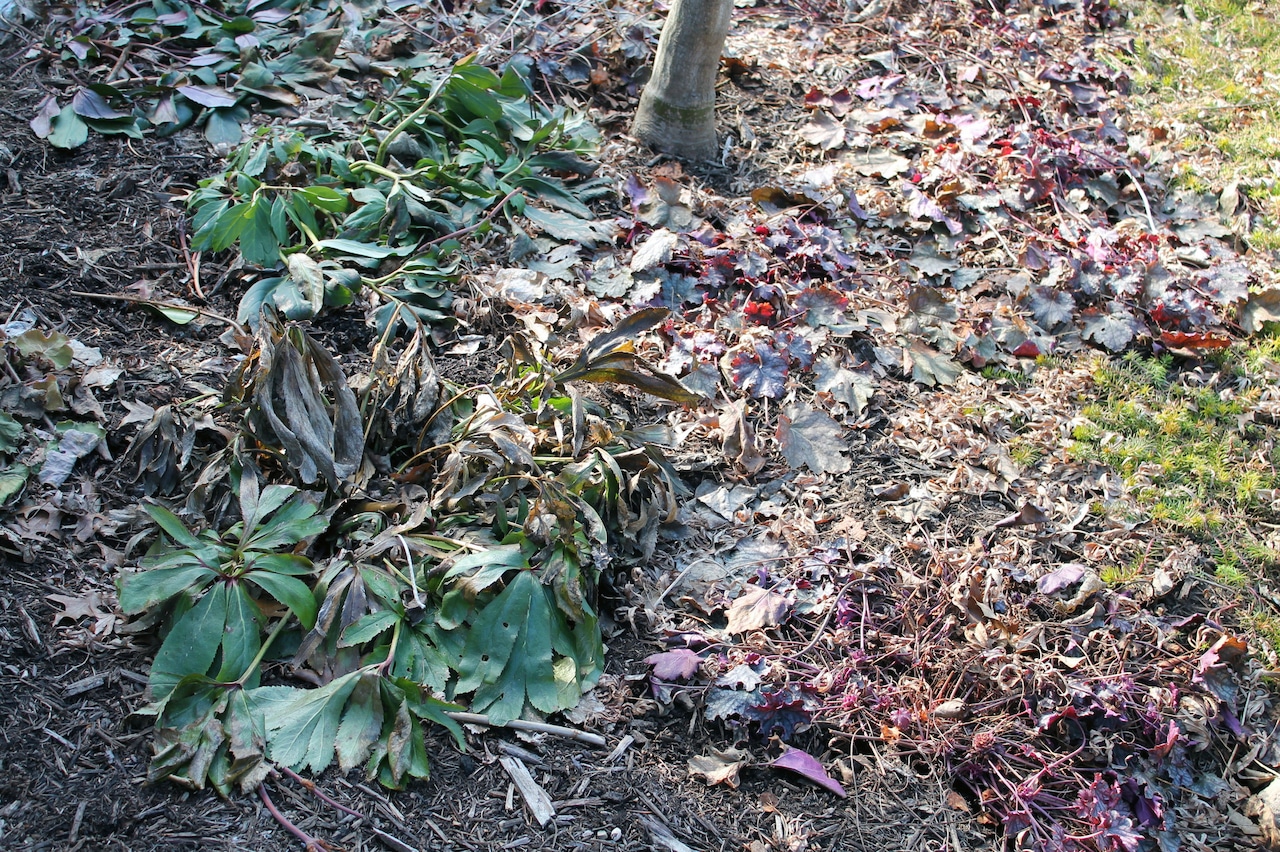
Until recent years, gardeners routinely did a “fall cleanup” in which they pulled out frost-killed annuals, cut spent perennials and grasses to the ground, and raked away every last fallen leaf.
Then came the help-the-pollinators movement in which nature-wary gardeners realized that insects benefit from all of that insulating dead vegetation over winter.
Birds eat seeds from many standing but browned perennial flowers, and they use browned-out ornamental-grass blades and other plant parts for nest-building.
Those factors led to the new recommendation to hold off doing “yard cleanup” until spring — preferably after pollinators and other so-called “good bugs” have hatched.
But when is that? How and what should gardeners remove when? And how does this mesh with a gardener’s cosmetic-sensitive side with all of that brown stuff standing for months on end?
Ontario Master Gardener Robert Pavlis, author of “Plant Science for Gardeners” (New Society Publishers, 2022), took a look at those practical questions in a post on his Garden Myths website.
He says one waypoint being bandied about is that gardeners should wait until temperatures are “consistently” above 50 degrees to do their cutbacks and cleanups.
However, he says that advice is murky on several fronts.
One is that different insects hatch at different times, and the hatching range can vary by a month or more even for insects of the same species.
Another, Pavlis says, is that “nobody seems to define the (50-degree) target temperature well enough so that gardeners can follow the advice.”
“Is that nighttime or daytime temperature?” he asks. “Is it a daily high or low? How much harm will you do if it is only 48 degrees?”
A third issue he mentions is that he’s been unable to find any scientific research that supports a 50-degree cleanup target, even if everyone agrees on exactly what that means.
Pavlis says that in general, the longer you wait to clean up, the less disruptive it is for all insects.
“However, it is not realistic for most gardeners to wait until all insects have emerged,” he says. “It will be summer before that happens. Perhaps more important than the temperature is how you clean up the garden.”
He suggests letting cut or fallen vegetation on the ground in place unless it is too thick for plants to emerge.
“Then only remove the amount that needs to be removed,” he says. “When you remove organic litter, try to pile it up in an out-of-the-way place, using low piles so insects can easily crawl out. The higher the pile is, the more insects you will trap. If you compost, hold off on using this material until mid-summer.”
For insects that are “cavity nesters” (i.e. ones that overwinter or lay eggs in plant stems), “use the cut-and-drop method,” Pavlis says. “Cut stems into six-inch lengths and drop them on the ground so that cavity nesters can still escape from them.”
“Cutting back ornamental grasses can be done at any time because insects don’t nest in the thinner stems,” he says. “In fact, grasses should be cut back early. If you wait too long, birds nest in them, and then you disturb the nests.”
To aid ground-nesting insects, Pavlis cautions that mulch can cover new nests and prevent newly hatched bugs from escaping.
“Also, many ground nesters won’t make nests in mulch,” he says. “Large chunky mulch is better than finely shaved mulch because it packs down less, but every kind of wood mulch is eventually knitted together by fungi growth.”
Pavlis says the least disruptive cleanup approach of all is the one that nature uses: none.
“We like things to look neat,” he says. “Cleaning up a garden has more to do with a perceived need and a fear of what neighbors might think.”
Comments are closed.