
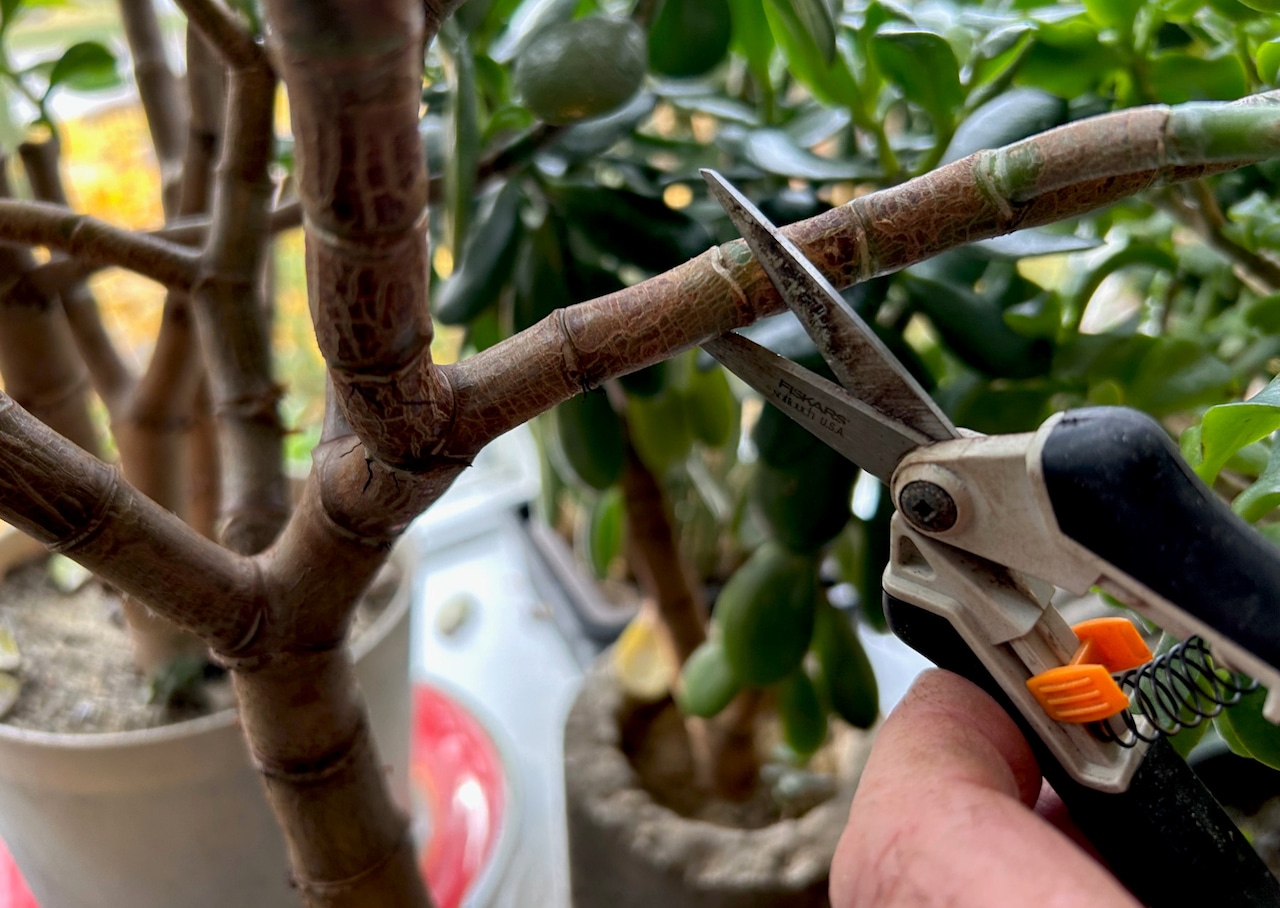
Houseplants sometimes get a bit gangly after a few years of growth, especially in a plant-friendly setting.
That’s a better problem to have than the opposite, which is death from overwatering or neglect.
Excess growth is usually a solvable issue and one that’s easier to fix than a lot of “plant parents” suspect.
Although cutbacks might make a plant look sparse or chopped at first, most pruned plants end up rejuvenated and ready for years more of growth.
The ideal time to tackle an overgrown houseplant is now, just as a new growing season with its longer days unfolds.
How to do it
Step one is removing any obviously dead shoots. Brown and yellow leaves also can be snipped off. And if excess stems are coming out of any particular part of the plant, remove those back to the main stem or bigger branch, too.
Once this culling and thinning is done, have a look at the remaining live growth.
With most overgrown houseplants, the majority of growth will be toward the end of the branches and vines. If you snip those branches back, that usually forces new growth from the inner part of the plant, resulting in a fuller, stockier plant.
The key is making your cuts just above a node at the point where you’d like new growth to emerge.
Nodes are those little bumps or ridges along stems where buds form. Inner nodes typically stay dormant in favor of the nodes that are producing leaf and flower buds toward the stem tips, where the light is brightest.
But when tip growth is removed, the dormant nodes become the lead nodes. And that’s when they’re induced to send out new growth.
If you’re nervous about doing that to the whole plant, try pruning in steps.
Snip back about one-third of the overly long branches and watch for new growth to happen. If it does, then snip another one-third and watch. If that checks out as well, finish the job by snipping back the remaining one-third.
A bonus is that in many plants, those tip cuttings can be used to grow new plants. Pinch off all but the top set or two of leaves and stick at least one or two nodes into moistened potting mix. Keep the mix moist and at near room temperature, and within a few weeks, the nodes will send out roots. If/when they do, you’ll have a new baby clone of the pruned parent.
Another rule of thumb with cuts is to remove no more than one-third of the stem’s length at a time.
Look at the roots
If your overgrown plant has been looking sickly or seems to be going downhill, you might need to prune the roots as well as the top growth.
The roots of aging houseplants can fill and circle their pots, compromising the plant’s health and growth ability.
One option is repotting the plant in a larger pot with fresh potting mix. But if you need to stick with current sizing, root pruning is the solution.
Start by removing the plant and untangling the roots, if possible. You might need to snip off some of the oldest, outer roots to free the rootball.
Fray out the roots, remove any dead or damaged ones, then cut back the remaining and too-long healthy roots so that they’ll fit within the pot. No need to cut smaller and younger roots that are already within the desired size of the rootball.
Repot the plant in fresh potting mix, water well, add the season’s first dose of fertilizer, and return the plant to its display site.
New growth should appear within a few weeks, and the plant should gradually fill in as the season progresses. If not, those rooted cuttings make a good backup plan.
In the long term, consider pruning more regularly. It’s less stressful on a plant to undergo light snipping each year than to undergo a bigger whackback after years of unchecked growth.
Comments are closed.