
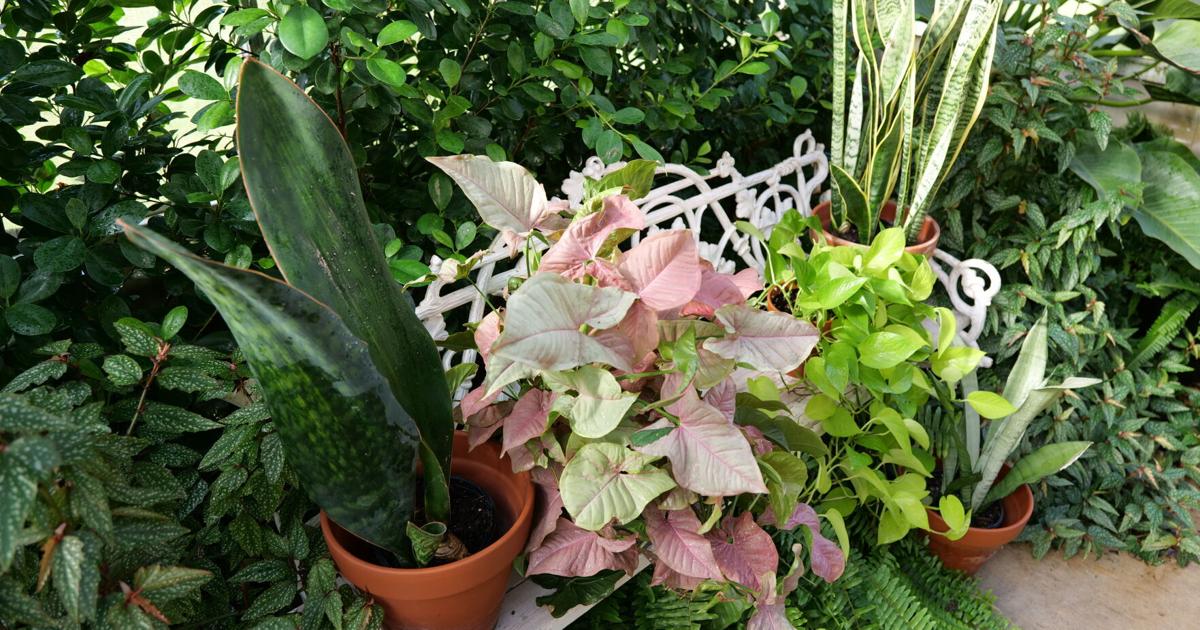
I bought a houseplant recently, and information on its care I found on the internet mentioned being “careful not to overwater.” Now, I’m afraid to add very much water when I water it. Help! — Nancy Roberts
Overwatering means keeping the soil too wet for an extended period. This is not determined by the amount of water you apply when you water. You cannot overwater with one watering.
You could apply a gallon of water to the pot, and the excess would just drain out of the drainage holes. This is a waste of time and water, and can leach out nutrients, but it doesn’t hurt the plant as long as the soil drains well.
If, however, you apply a pint of water every day and the soil stays constantly wet, that is overwatering. This can lead to unhealthy roots or even root rot. Soil that stays constantly wet from frequent watering deprives the roots of the oxygen they need.
The water continuously fills up the pore spaces in the soil driving out the air. So, overwatering is not based so much on how much you water apply when you water, but has much more to do with watering too frequently.
Determining how often to water depends on how fast the soil dries out and the water preferences of a plant. When you water, always apply enough water so that it runs out of the drainage holes. That way you know you have wet the entire rootball.
Plants that prefer to stay evenly moist, such as the peace lily (Spathiphyllum), should be watered again when the surface of the soil is dry (for larger pots, when the upper inch of soil is dry when you stick your finger in it). Most houseplants prefer to dry slightly between waterings. For them, wait until the soil looks dry and feels dry when you stick your finger down into the soil.
If you are not sure if you need to water, wait a day or two. It is better to water too little — a plant can recover from slight wilting — than too much and cause a fatal root rot infection.
For plants that prefer to become dry between waterings, such as cacti and succulents, allow the soil to feel dry almost to the bottom of the pot before you water. Using a probe like a wooden dowel can be helpful for larger pots.
Some general rules: 1) Plants in small pots dry out faster than plants in big pots; 2) Plants in clay pots tend to dry out faster than plants in plastic or glazed pots; 3) Plants outside tend to dry out faster than plants inside, and those in sun dry out faster than those in shade; 4) Plants that have filled their pots with roots or are pot bound dry out faster than plants that aren’t.
I’m wondering what varieties of vegetables do best here in south Louisiana. Is there a list? — Jeremy
This is a great question. You may want to grow tomatoes, but which varieties grow best in Louisiana?
The LSU AgCenter does vegetable variety trials to see which produce best here in Louisiana. Their variety recommendations can be found in the online Louisiana Vegetable Planting Guide.
These recommended varieties are certainly not the only vegetable varieties that will do well here. And you should feel free to try whatever varieties your are interested in planting. But including recommended varieties in your planting can help ensure good results.
In addition to variety recommendations, the Louisiana Vegetable Planting Guide is chockablock full of helpful information to make you a more successful gardener.
In particular, there is a chart that shows the proper planting times through the year for the many vegetables we can grow. Planting at the right time is critical to successful vegetable growing. There is also information on fertilizing vegetables. Every home vegetable gardener should download this publication as a valuable reference. The information is specifically tailored to Louisiana.
GARDEN TIPS
CHECK DRAINAGE: An excellent time to evaluate drainage conditions in your landscape is after a heavy rain. Which areas did the water drain away from quickly? Where did water puddle in the yard? What areas still have standing water or are still very wet days after a rain? This can be invaluable later on when considering what plants to plant in various areas.
TEND ROSES: Fertilize roses now if you have not already done so. If you are growing types of roses highly susceptible to black spot (such as hybrid tea roses), a regular spray program should be started now for disease (black spot) and insect problems. For convenience, use a material that combines an insecticide and a fungicide in the same product.
LOVE LAWNS: We fertilize lawns anytime from late March to early April, so now is the time. Mow the lawn just prior to fertilizer application, spread the fertilizer evenly and at the proper rate, and water thoroughly when you are finished. If weeds are an issue, you may use a weed and feed.
BUG OFF!: Check your oak trees for masses of young, black buck moth caterpillars, and consider having your tree sprayed if you see large numbers. Don’t wait until the caterpillars start crawling down the tree trunk or falling from the branches to spray.
PRUNE WITH CARE: Prune spring flowering trees and shrubs any time after they finish flowering. Have a specific purpose in mind before you begin pruning, and prune carefully to accomplish it.
GARDEN QUOTE
“Vegetables are a must on a diet. I suggest … zucchini bread and pumpkin pie.” Jim Davis, creator of the Garfield comic strip
Comments are closed.