
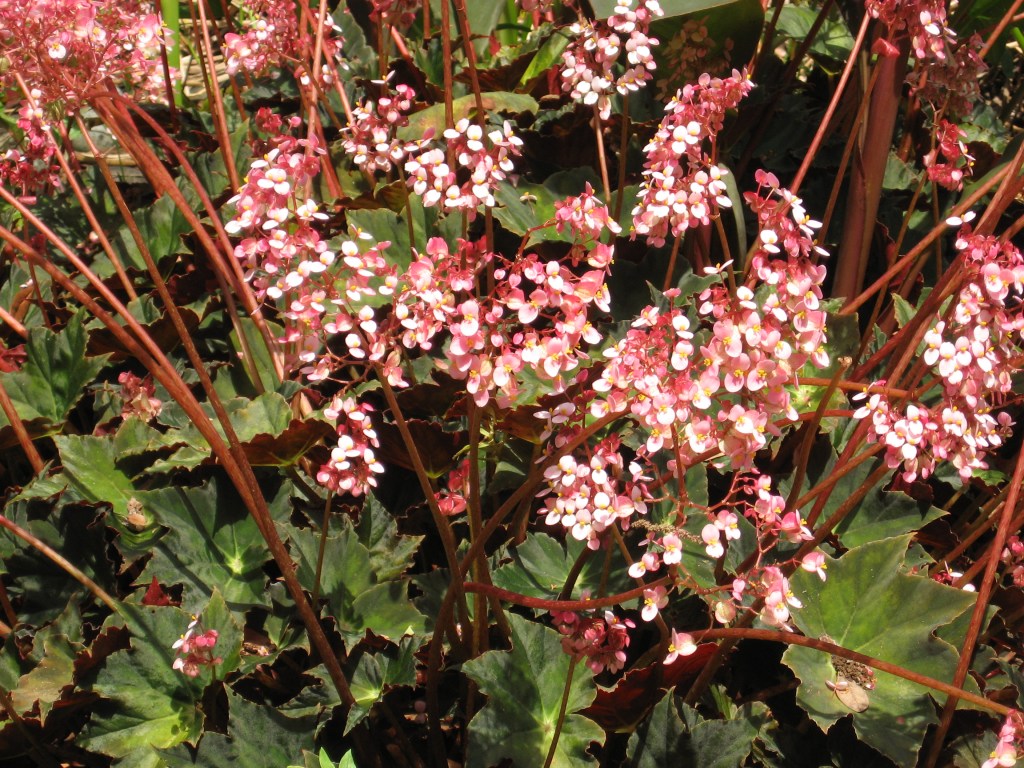
Q: I purchased a begonia with pointed leaves that is starting to flower. Any idea what type it is and the care?
A: You made a great buy selecting the star begonia — a very durable plant for the home or landscape. Star begonias like to grow in bright spots but out of direct sun. When added to the landscape, keep them in a container or planted in the ground where they receive the shade of a tree or other covering. Plants withstand some cold but die back during freezes. Usually they can be protected with a mulch or cover during very cold weather. Each spring, star begonias send up spikes of pink blooms. During the rest of the year you can enjoy the star-shaped dark green foliage. Keep plants moist and fertilize once in March, May and October when growing in the ground. Plants in pots can be provided with a container-type fertilizer as instructed on the label.
Q: Our St. Augustine lawn has splotches of brown throughout the green grass. What caused the brown spots and what should we do?
A: Cold and usually frost produces the brown patterns in most lawns. Some could be areas of dead weeds like crabgrass. But if you notice only St. Augustine grass affected, it should be starting to grow back by now. You can rake out some of the brown if you want and replace dead weeds with sod or plugs if needed. Now is the time to fertilize St. Augustine lawns,which should help them renew the green, too. Do water as permitted during dry weather to help with the recovery.
Q: I have two new small to medium plumeria trees that I planted in May 2025. Although I covered them during the recent freeze, I can feel the trunks and branches are soft on the upper ends. As I work my way down I get to firm parts that I think are still healthy. What’s your advice on when and how to prune them?
Plant Doctor: Treat leaf fungus on azaleas now for better foliage while blooming
A: Regretfully, plumeria have a nasty habit of dying back much further than you first think after a freeze. Feel free to cut off really obvious dead portions, then wait a month or two and look for possibly more decline. Continue to do the needed pruning until consistently green stems remain and new growth begins. Keep the plumeria trees moist and apply a slow-release fertilizer this month and again in May.
Q: My palm trees are ready for fertilizer. When do you suggest I start fertilizing all palm trees, including the roebelinii palms that were damaged by cold, using a slow-release fertilizer stakes?
A: Luckily most roebelinii palms appear to have only their fronds damaged by cold and the buds should be ready to start new growth. The brown-to-bronze fronds can be removed at this time. All palms capable of growth are ready for a March fertilizer application. I suggest you skip the stakes and broadcast a palm fertilizer of 8-0-12-4Mg analysis or similar under the spread of the palm fronds and out past the drip line. Stakes are still an option and a convenience, but they only place the fertilizer in pockets under the palms.
Q: Our gardenia shrub has grown tall and lanky. Is now the time to reduce the size of the plant?
March in the Garden for Central Florida
A: Don’t touch that shrub just yet as the flowering season is about to begin. If you look closely, new swelling buds may be forming, and in about a month or so, opening their fragrant white blooms. After most of the flowers have faded is the time to do needed pruning to reshape your gardenia — usually in late May or early June. Sporadic blooms may open during summer with a few varieties, but these are often lost during pruning.
Q: We are growing snapdragons that the cold did not seem to bother. Will cutting bouquets to bring indoors affect the flowering of the plants?
A: Snipe away, as stalks of snapdragon blooms are long-lasting additions to any flower arrangement. Not only are you enjoying the blooms indoors, but you are doing the plants a favor, too. Removing flowers from most plants leads to more shoots and a longer display life in the garden. With annuals like snapdragons, removing flower stalks delays the formation of seed production and the plants send out more shoots. The shoots of blooms may not be as tall and full, but they are going to be numerous to provide a lot more color.
Q: My hibiscus bush lost all its leaves during the cold. How far can I cut it back and when?
A: Most hibiscus can be pruned way back during late winter or early spring before major growth begins. First, test the shoots by scraping a few stems to see how much cold damaged occurred. If brown, indicating severe damage, prune the stem back far enough to remove the dead, which in some cases may be to the ground. When plants are still healthy, many residents like to remove about one-third of the old shoots and leave the rest to produce the first blooms. Then, when new shoots fill the voids, they remove some of the older ones again later in the season. But for your question specifically, you can cut your plants back to within a foot or two of the ground, if needed.
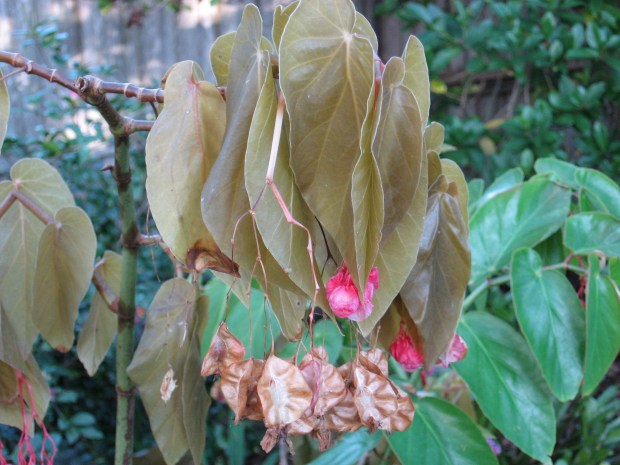 Since the freeze was many weeks ago, now is the time to decide what portions of an angel wing begonia are dead and cut the plant back to healthy green portions as needed. (Courtesy of Tom MacCubbin)
Q: An angel wing begonia growing in a container is damaged from cold but there appears to have some green shoots. What should I do to care for the plant?
A: Since some time has passed since the cold, it’s time to decide what portions of the plant are dead and those that are alive. If there is any green in the stems there is hope the begonia can continue growth from those shoots. Cut the plant back to the healthy green portions as needed. You can take this opportunity to reshape the plant, removing green stems to help produce a better-looking plant. Since angel wing begonias can grow quite tall and wide it would also be a good time to bring them back into bounds. Some plants may be frozen back to near the surface of the soil, but give them time and most should grow back to form new begonias.
Tom MacCubbin is an urban horticulturist emeritus with the University of Florida Cooperative Extension Service. Write him: Orlando Sentinel, P.O. Box 2833, Orlando, FL. 32802. Email: TomMac1996@aol.com.
Comments are closed.