
Now that planting time is approaching, you may wonder about the plants or bulbs that you received as gifts over the holidays. Can they have a place outdoors in your garden?
It’s possible, but for most plants it’s unlikely. “Gift plants are not selected or grown to be garden plants,” said Sharon Yiesla, plant knowledge specialist in the Plant Clinic at The Morton Arboretum in Lisle. “Producers choose florist plants for how well they will grow in pots in greenhouses, and for how easily they can be manipulated into bloom for the gift market at holiday times.” They are intended to be enjoyed and then discarded, like cut flowers.
Even if your potted plant is a shrub you sometimes see in local gardens, such as bigleaf hydrangea or azalea, it’s not likely to be of a variety that is winter-hardy in Chicago. Other common florist shrubs, such as camellia and gardenia, are species that are too tender to grow outdoors here.
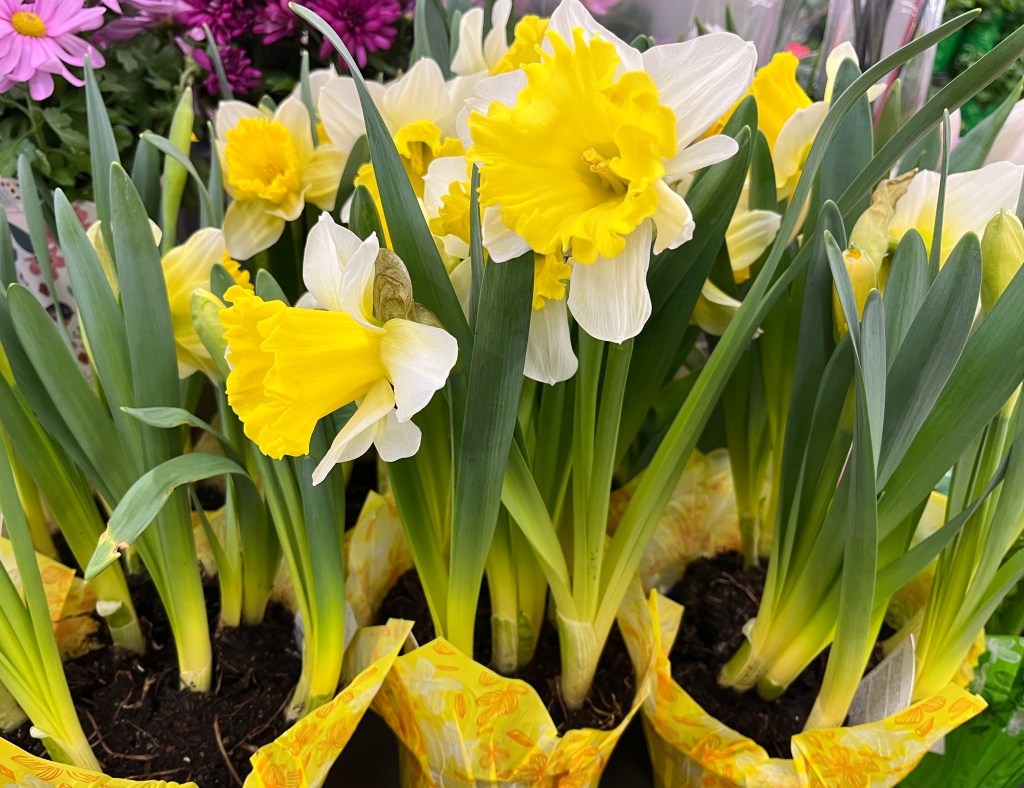
What about bulbs, such as the groupings of crocus, tulips and daffodils often given as potted bulb gardens? “Those bulbs are hardy in Chicago, but they have already done their blooming for this year, and they were forced to do it early,” Yiesla said.
You can try planting them outside after the soil has drained in spring and it’s possible that some may live to bloom next spring, but don’t count on it. “They may have given their all,” she said.
The bulbs would need to take root in the outdoor soil and collect enough of the sun’s energy through their leaves to build a new bulb for next year. “If the leaves have already wilted or been cut back, don’t bother,” she said. “Without leaves, bulbs can’t survive and get back in the swing of their natural life cycle.”
Some kinds of bulbs, such as amaryllis and paperwhite narcissus, are not winter-hardy and have no chance to survive cold weather outdoors.
“Treat an amaryllis bulb as a houseplant, giving it enough light so its leaves can recharge the bulb, and it may bloom again,” Yiesla said. Paperwhite bulbs, on the other hand, are strictly a passing pleasure; once they finish flowering, discard them in the compost or the trash.
Many plants sold as gifts, such as the Norfolk Island pines popular as living Christmas trees, are tropical or subtropical species. Some can be good houseplants, at least for a while. Like other houseplants, they can be moved in their pots out into a shady area of the garden between June and September, when there is no danger of frost.
“Don’t put them in full sun,” Yiesla said. These plants are mostly native to the shady understory of tropical forests—that’s why they can survive in living rooms—so they need sun protection.
They may not behave the same way in your house or garden that they did as gift plants, since they were usually manipulated with chemicals or light treatments to make their bloom coincide with holidays. A Christmas cactus, for example, may flower next year in November or February rather than at Christmas, depending on the species. Other gift plants may never rebloom indoors.
“Keeping some kinds of gift plants for the long term may be possible, but there are no guarantees,” Yiesla said. “As long as you understand that, there’s no harm in giving it a try.”
For tree and plant advice, see the online resources of The Morton Arboretum at mortonarb.org/plant-care, or submit your questions online at mortonarb.org/plant-clinic or by email to plantclinic@mortonarb.org. Beth Botts is a staff writer at the Arboretum.
Comments are closed.