
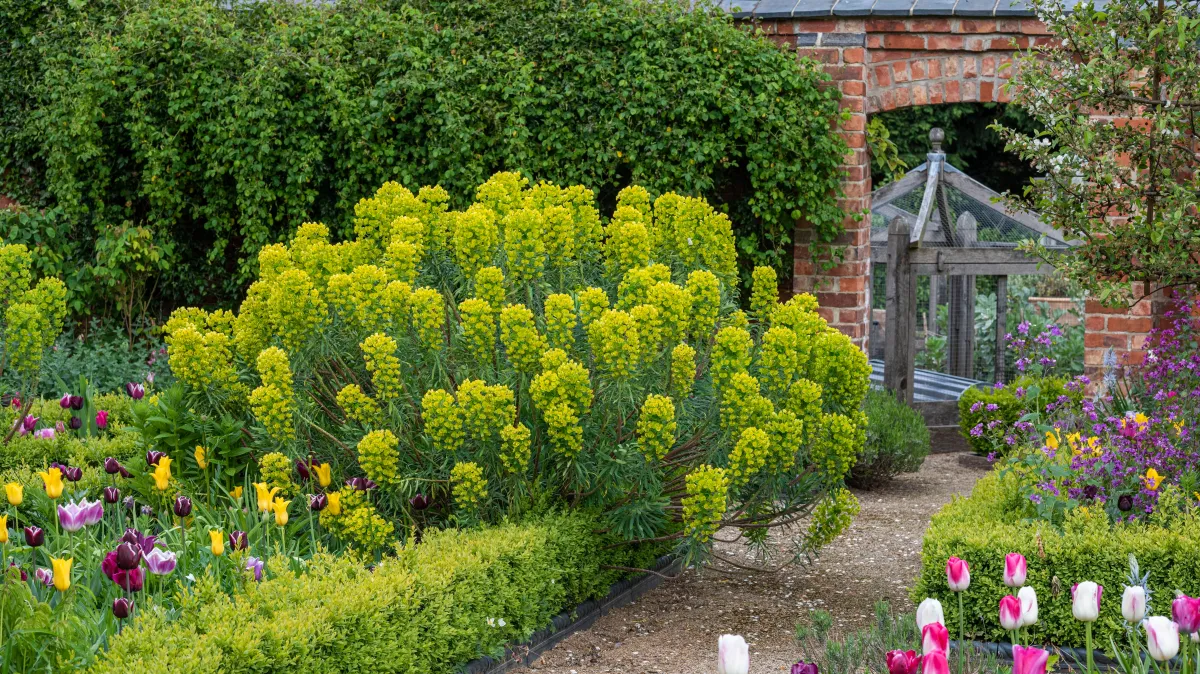
“I love euphorbias” were some of the first words I said on Gardeners’ World. I was visiting a master grower and national collection holder named Don Witton near Sheffield, where he’d turned an allotment into a place of worship for euphorbia lovers such as myself. It was a wonderful day — one that I’ll never forget.
The genus Euphorbiaceae, commonly known as the spurge family, is huge and diverse, containing more than 2,000 species from all over the world, including non-hardy succulent and cactus plants as well as the festive poinsettia.
The ones that we plant in our gardens are the hardy ones, mainly native to Europe. Some are perennials, others classed as “sub shrubs” as they develop a woody frame in milder areas.
Their showy flowers are actually bracts, which means they last a long time in the garden, and they fade nicely too. These bracts come in a range of colours from chartreuse to rusty orange, reds and intense acid greens. In spring there’s a freshness and intensity to them that lifts the garden and makes them ideal companion to other green foliage plants. Yet when it comes to setting off flowers such as geums, alliums, poppies, lupins and iris, there’s nothing quite like them.
I inherited some of the native wood spurge (E. amygdaloides var. robbiae), which is flowering now, covering the ground in areas of dappled shade. Last autumn I put a few more spurges in when planting up a large border. The more exotic-looking, shrubby E. mellifera is holding a corner space, budding up nicely and will grow to about 2m x 2m. It will no doubt seed around a bit, which is fine by me.
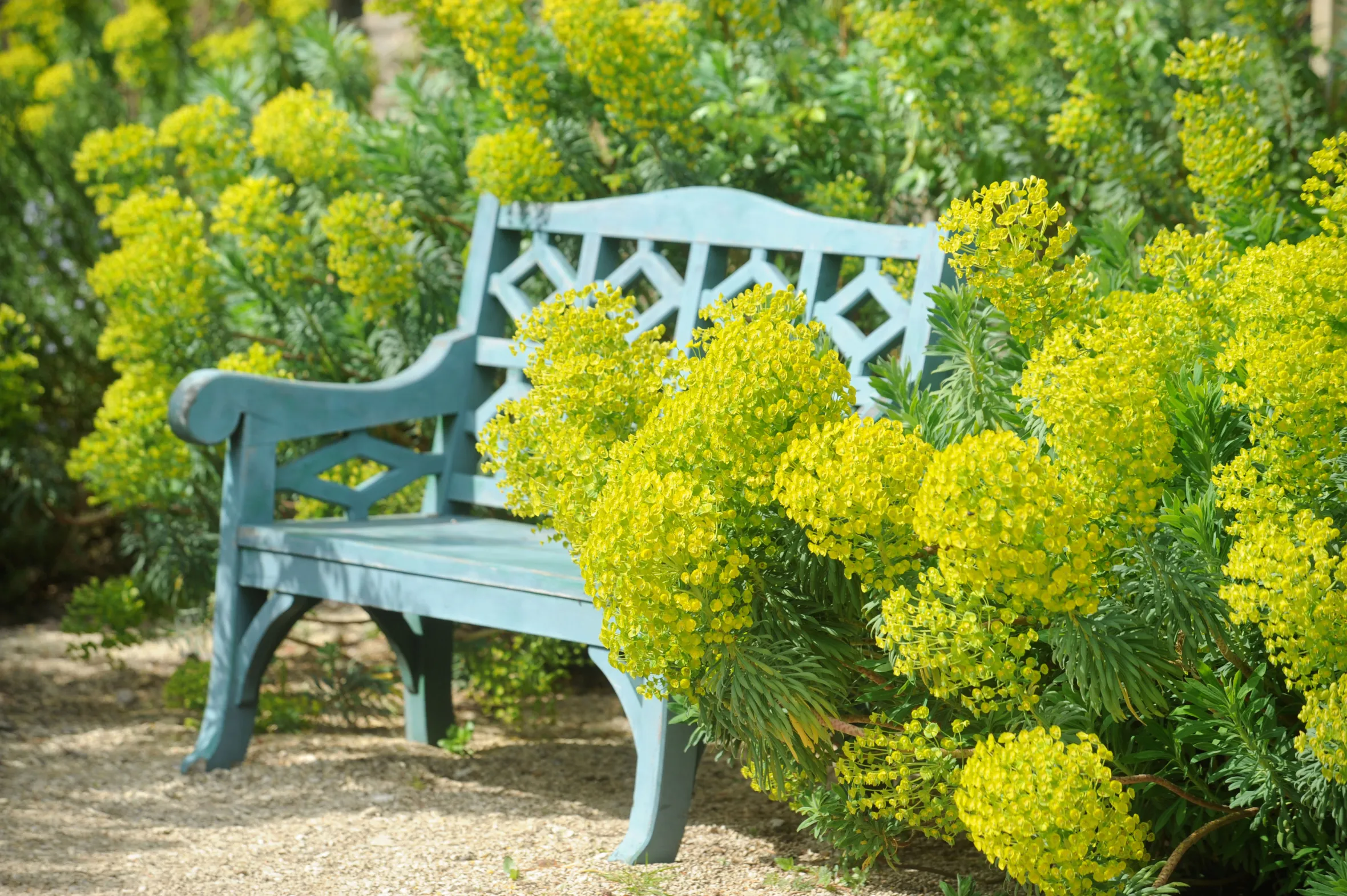 Euphorbia like this wulfenii are a vibrant addition to an outdoor spaceAlamy
In a drier area (with conditions more like a raised bed) I’ve planted a few of the Siberian spurge E. seguieriana niciciana, which is sun loving and drought tolerant with glaucous fine foliage. When in flower its acid-yellow flowers should look spot-on with the blue salvias and nepeta. It turns a lovely golden colour in autumn too. I’ve never had it before, so am rather excited about it.
I dotted a few E. polychroma through the borders last year for their early display of green-yellow bracts around sulphur-yellow flowers and they looked like they’ve clumped up well. I am hoping that their flowering time coincides with the vibrant mix of tulips that I planted. One I haven’t put in yet but is on my list — and some may say is a signature plant of mine — is E. x martini. It’s fabulous, ideal for dappled shade, holds its evergreen form well and its large lime-green heads have a small tomato red eye.
Euphorbias are so wide ranging and versatile that there’s one for every spot, be it well drained and sun-baked or shadier and damper. The only thing stopping you growing some may be that you simply don’t like them, which does happen. I have clients who don’t, who say there’s something a little weird or otherworldly about them. I do know what they mean and each to their own, but I love euphorbias and always will.
How to grow
There’s such a range, meaning it’s hard to be specific. However, most grow best on well-drained soils (avoiding heavy clay) and aren’t too bothered about the soil’s pH. To promote new shoots, remove flowerheads after they have finished flowering (wear gloves as the white sap is a skin irritant). With shrubby plants that are getting messy, cut back any untidy growth to the ground at the same time. Don’t plant euphorbias next to a pond with fish in. They make good cut flowers — steep the end in boiling water directly after cutting to seal.
Nine excellent euphorbias
1. E. characias wulfenii (Mediterranean spurge)
This large shrubby plant is spot-on in a dry gravel garden or mixed border. Grey-green foliage forming a hazy image. Tall, unmissable chartreuse flowers with bronze eyes. Height 1.5m x spread 1.5m
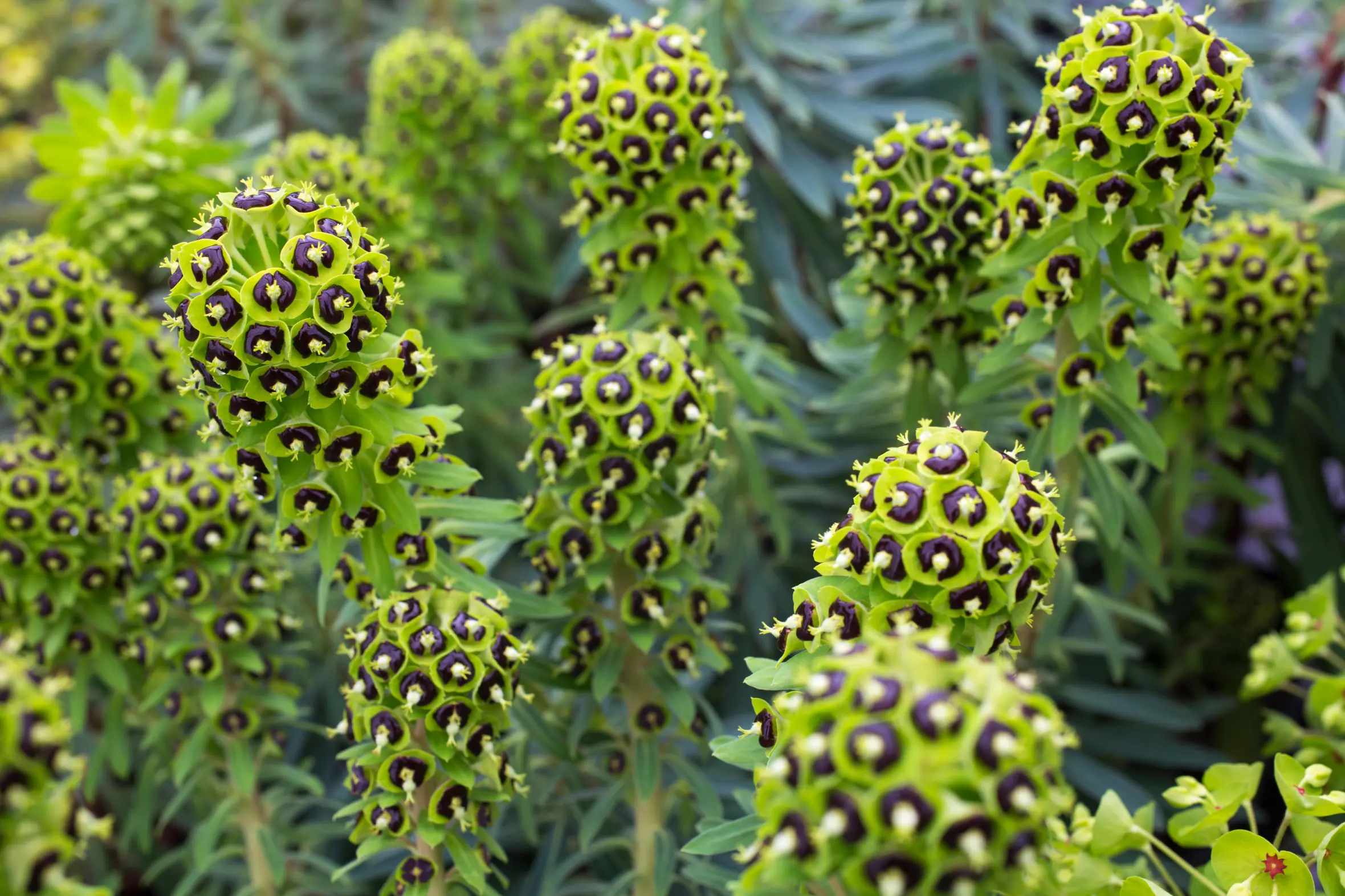
2. E. characias ‘Black Pearl’
 Alamy
Alamy
A compact form of the above with black eyes. Good choice for a pot. Height and spread 75cm.
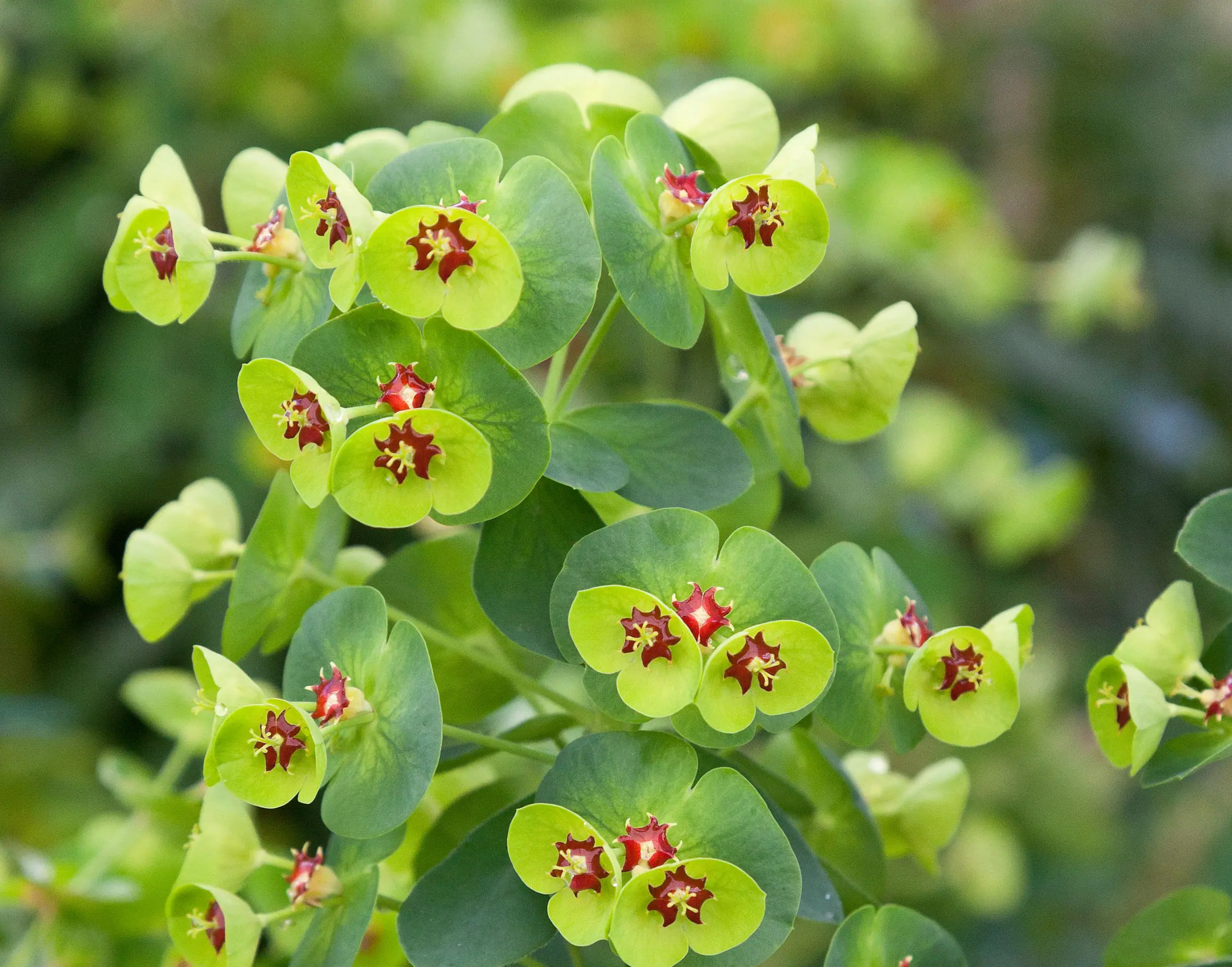
3. E. x martinii (Martin’s spurge)
 Alamy
Alamy
Dark grey-green foliage and upright stems with acid-green flowers with a bright red eye. Long flowering, March to late June. H 90cm x S 60cm.
4. E. palustris (marsh spurge)
 Alamy
Alamy
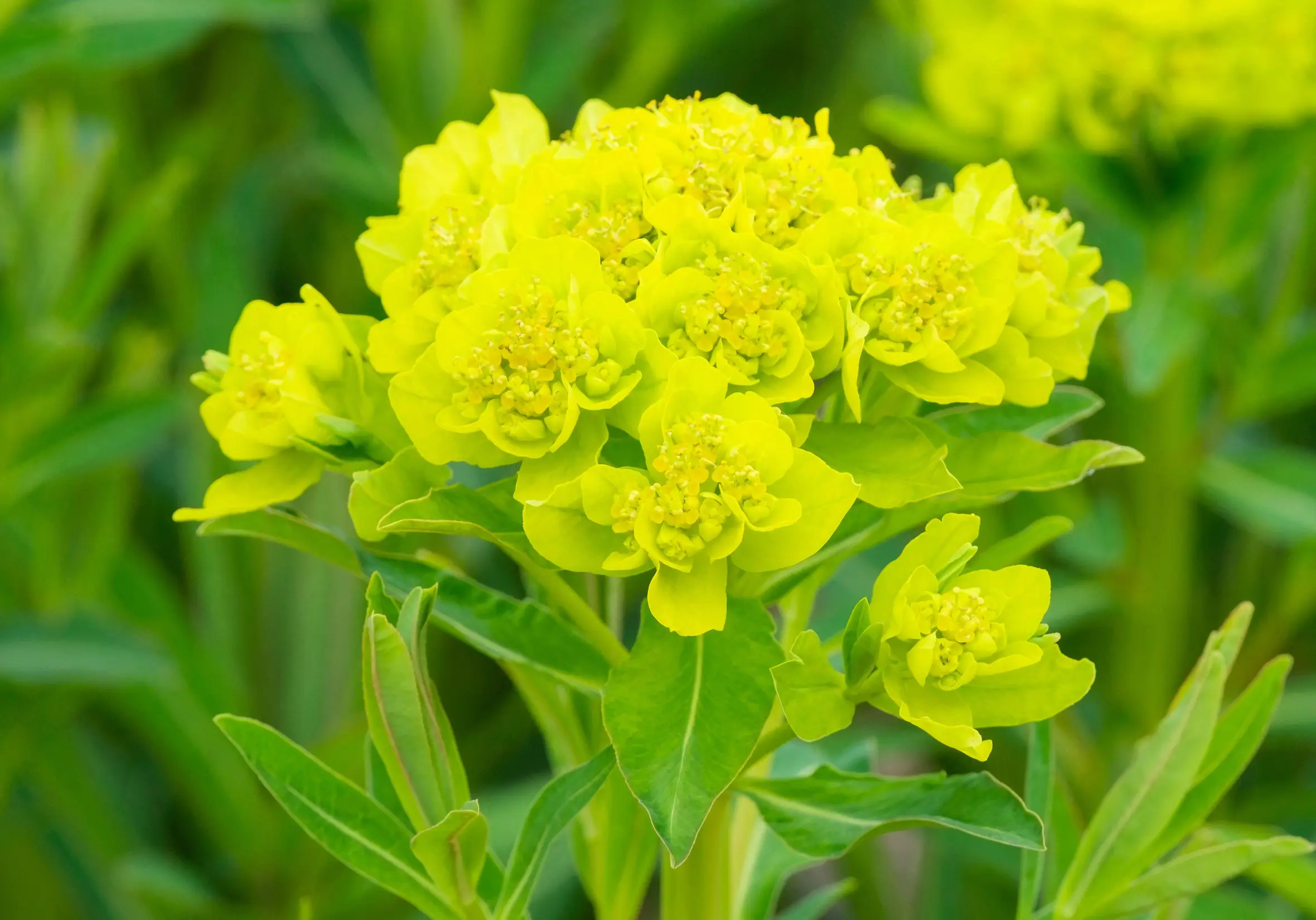
Particularly zingy. Flowers in late May and long lasting. Fresh foliage and acid-green bracts. Does well on heavier soils. H 0.9m x S 0.9m
5. E. amygdaloides var. robbiae (wood spurge)
Native. An excellent ground cover for dry shade beneath deciduous trees. Rosettes of glossy dark green foliage and lime-green flowers. Can get a little boisterous in damper soils. H 60cm x S 90cm
6. E. pasteurii (Pasteur’s spurge)
 GAP Photos/Martin Hughes-Jones
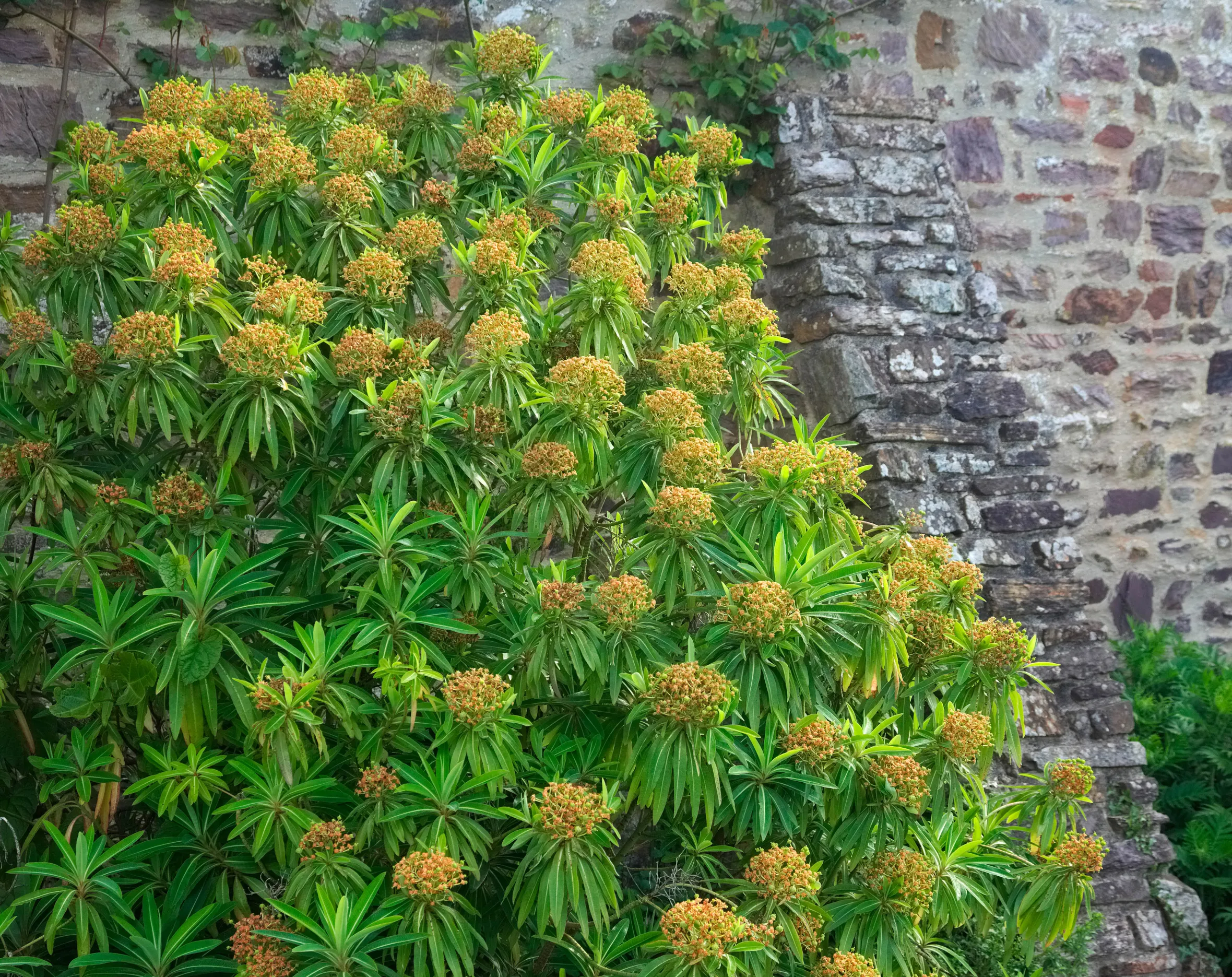
This cross between E. mellifera and E. stygiana has produced a rounded architectural shrub with long, matt leaves with a distinctive white stripe down the middle. Similar flowers to E. mellifera. H 1.5 x S 1.2 m
7. E. griffithii ‘Dixter’ (Griffith’s spurge)
 Alamy
Alamy
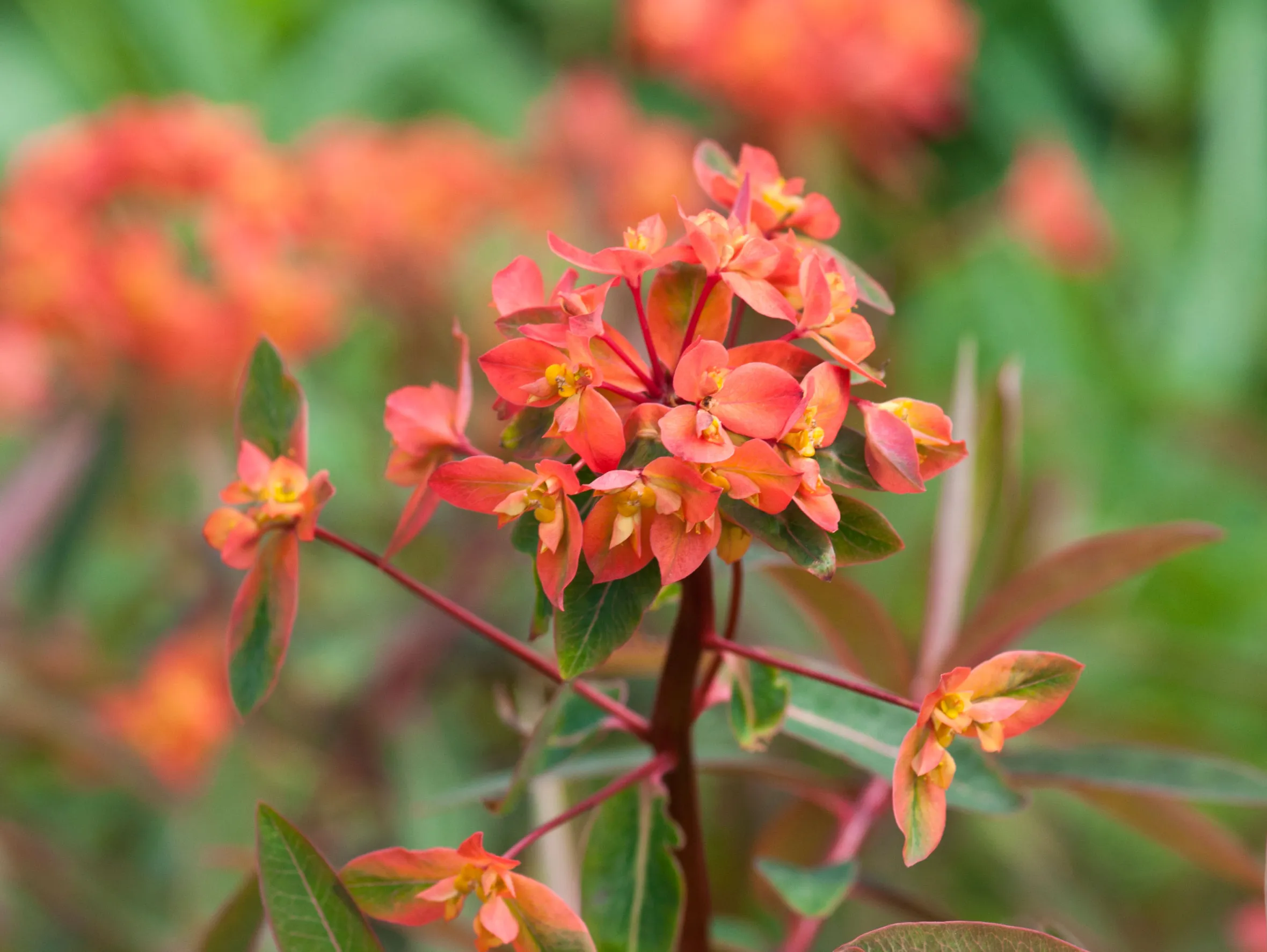
Herbaceous perennial dying back in winter. Brick-red flowers against foliage that turns dark green to red and then yellow. Drought tolerant, it will grow well in rich soils too — but may need restricting every now and then. H 1m x S 1m.
8. E. wallichii (Himalayan spurge)
 Alamy
Alamy
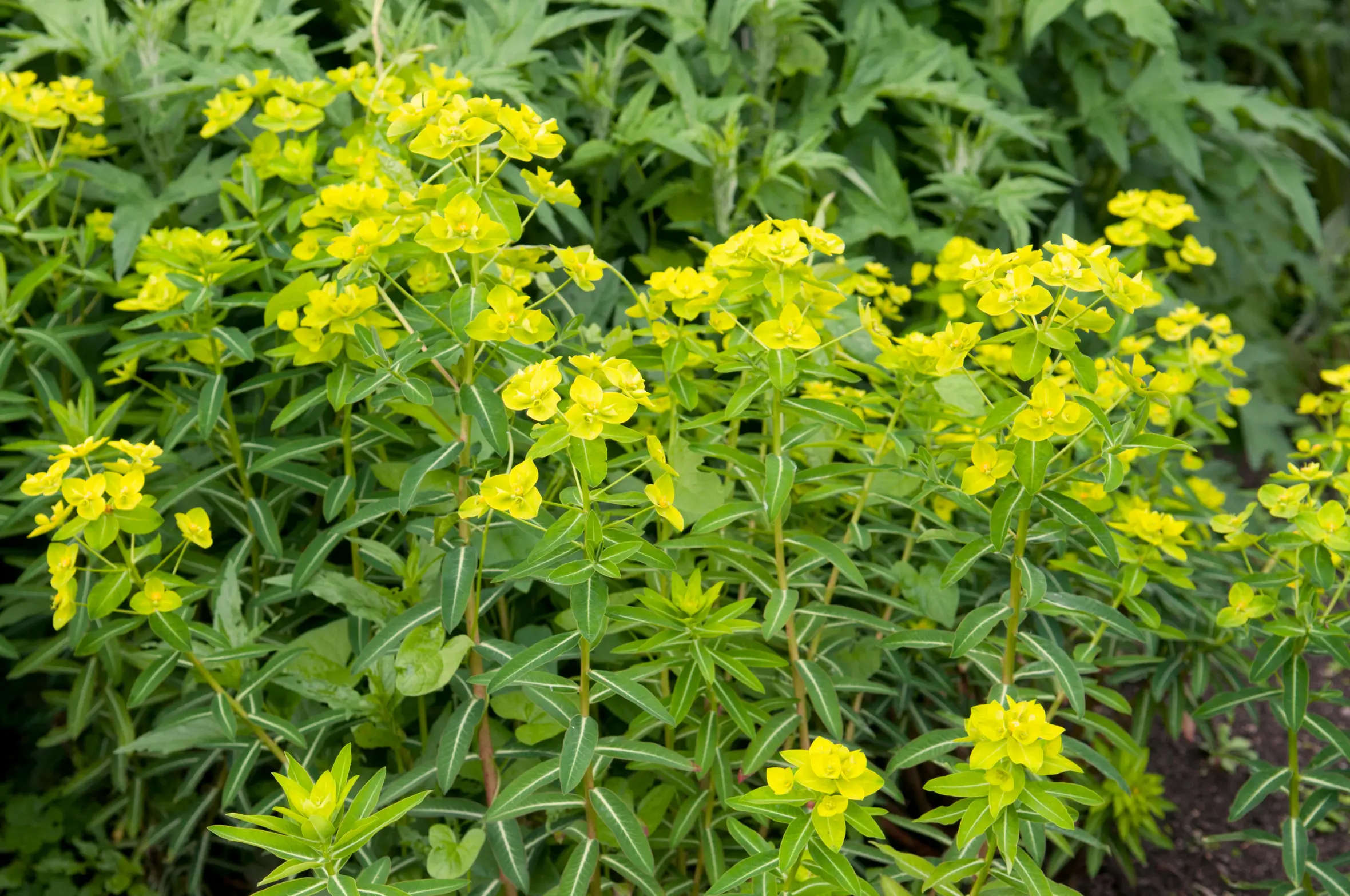
Later flowering (May to August) so ideal for a summer herbaceous border. White veins on the dark green leaves and acid-yellow flowerheads. H 60cm x S 50cm.
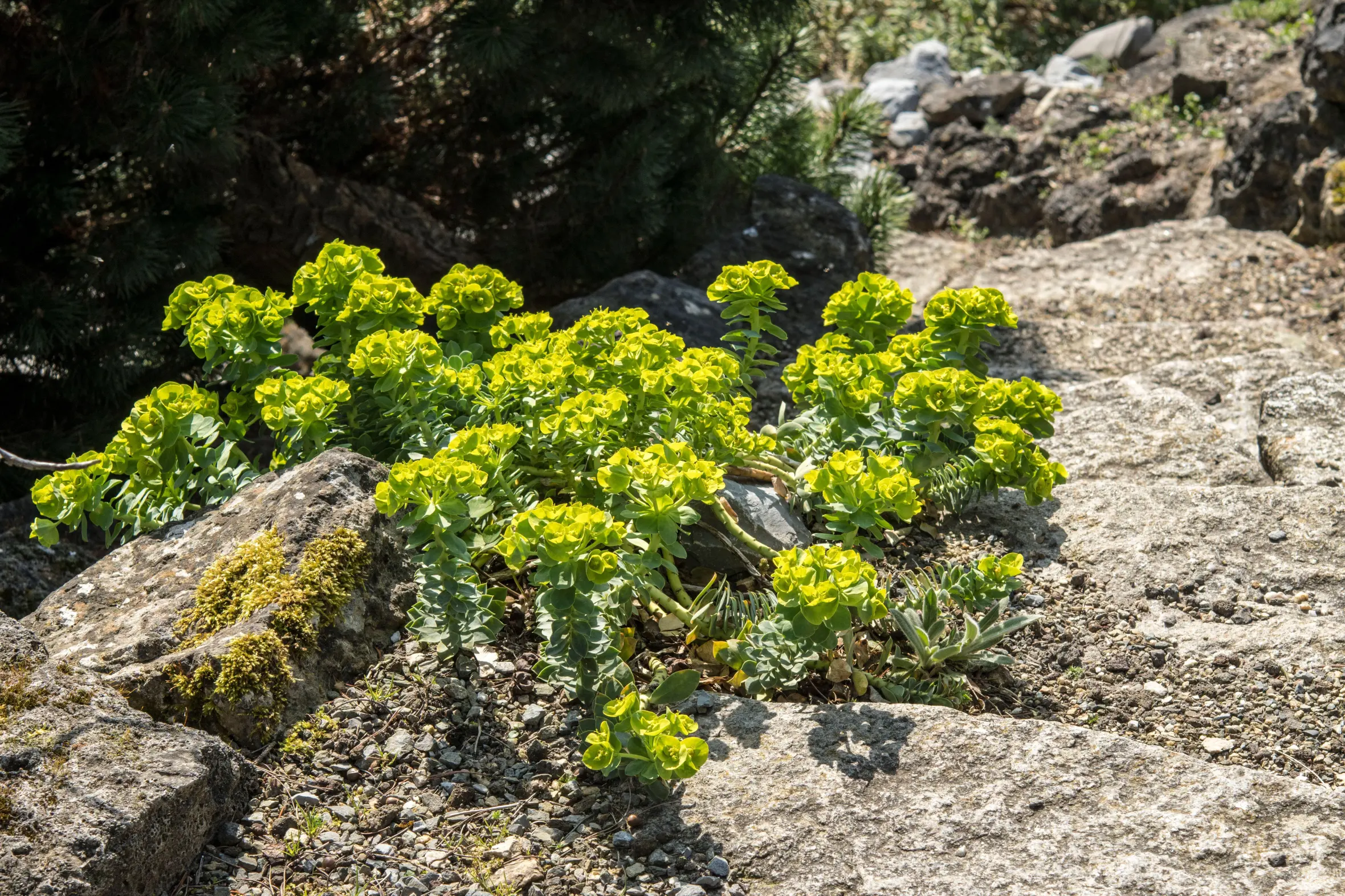
9. E. myrsinites (broad-leaved glaucous spurge)
 Alamy
Alamy
Low growing. One for the gravel garden or on a baking bank or front of a border. Glaucous snaky branches and acid-yellow bracts from April onwards. H 10cm x S 30cm.
Comments are closed.