
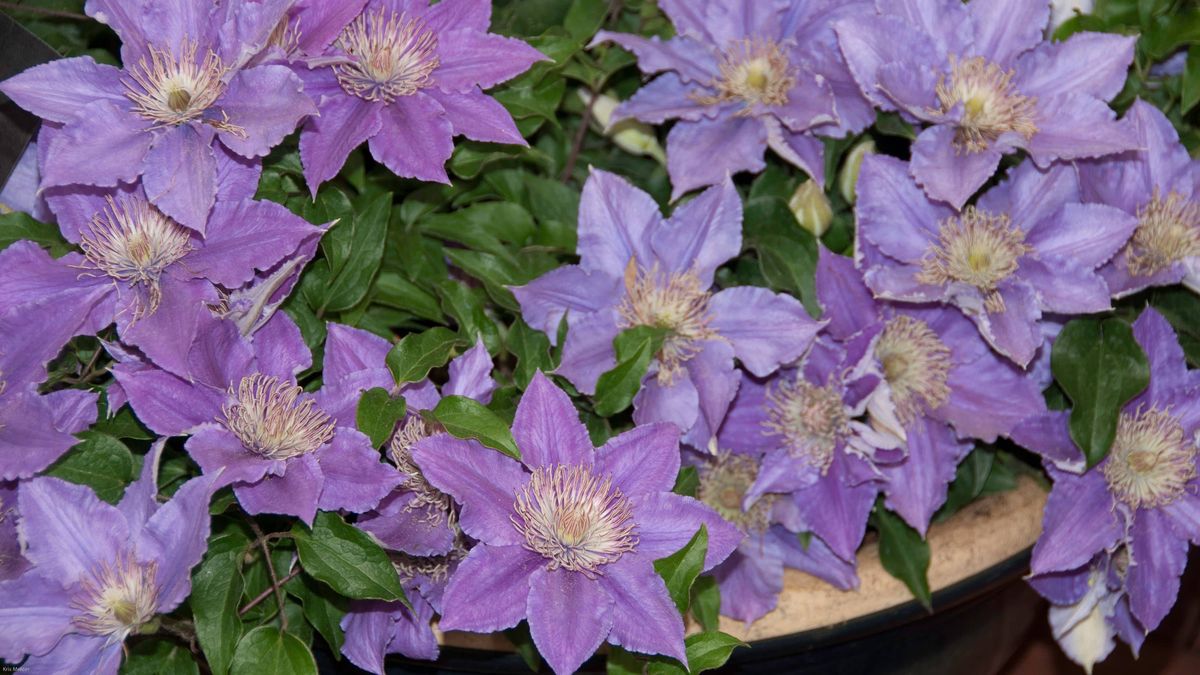
An award-winning Guernsey clematis breeder is launching three new compact varieties at RHS Chelsea Flower Show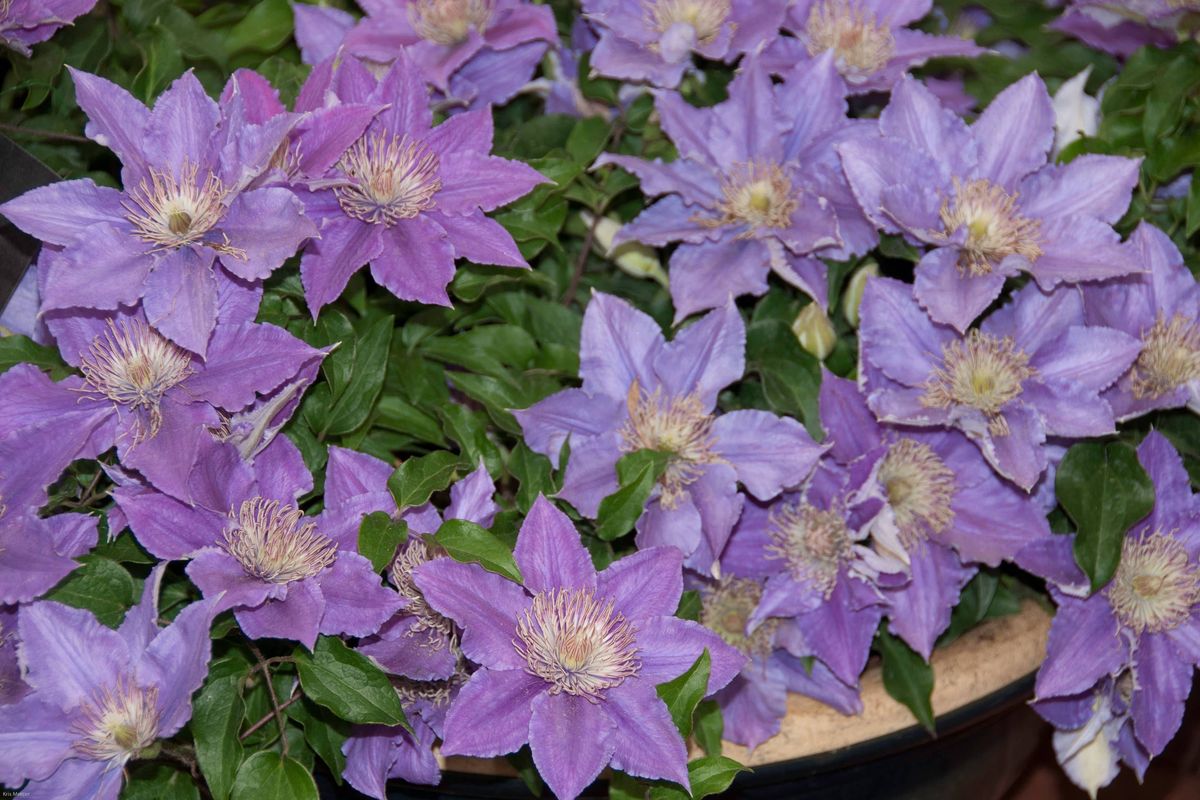
Colourful, hardy clematis will thrive in pots, containers and hanging baskets(Image: Alamy/PA)
They’re renowned for scaling trellises, weaving through shrubs and making excellent rose companions – but certain clematis varieties are perfectly suited to compact spaces. That’s according to gardening writer Hannah Stephenson.
This year, award-winning Guernsey clematis breeder Raymond Evison Clematis is officially unveiling three new cultivars at the RHS Chelsea Flower Show, all reaching just three to four feet in height, making them perfect for containers in confined areas such as city gardens.
C. Ithemba displays white flowers with a subtle pink stripe, C. ‘Eliza’ is a large-flowered type transitioning from pale blue to pure white, and C. ‘Queens Nurse’ showcases deep, rosy pink blooms. Currently available through the website, they’ll also appear in garden centres from mid-April onwards.
Cultivate them in containers
Even if you’ve only got space for a single large pot in an urban garden, a compact clematis could prove ideal.
“They’re perfect for a small urban garden, because they’re only going to get to about four or five feet tall. Containers are perfect. You could have them against the back wall of your house or plant them in the garden as they don’t take up much horizontal space, it’s all vertical,” says Andy Jeanes, international sales and marketing director at Guernsey Clematis.
The appeal of the compact varieties lies in their ability to produce flowers from the plant’s base right to the top, meaning you won’t end up with bare, woody stems at the bottom and blooms only at the peak, whilst the flowers remain just as impressive as their taller, large-flowered relatives that bloom during spring and summer.
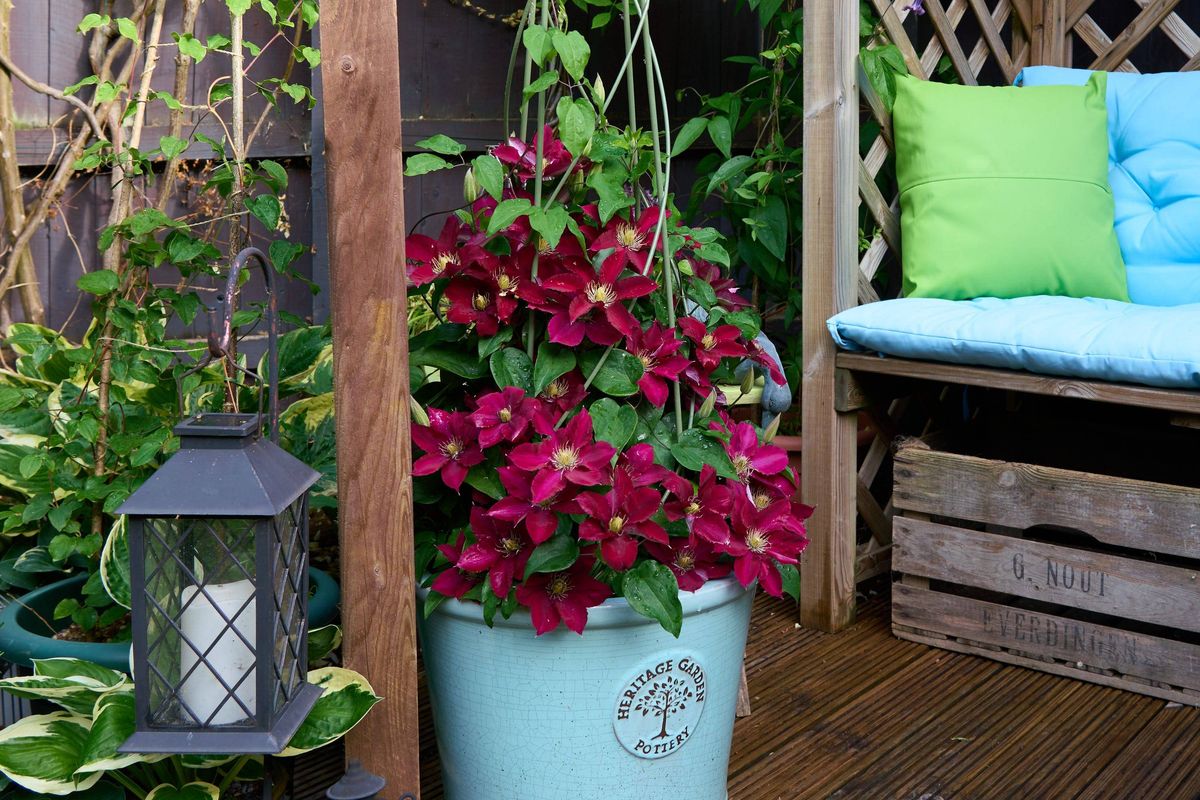
Clematis ‘Elpis’ in a pot(Image: Raymond Evison Clematis/PA)
Other breeders provide distinctive types such as the Dutch-bred Clematis tangutica ‘Little Lemons’, a compact plant that looks entirely different to its larger relatives and works perfectly for patios, rockeries, hanging baskets or bigger windowboxes. It reaches just 45cm in height and produces small yellow, drooping bell-shaped flowers across several months, delivering a lengthy period of visual interest. Once the flowers fade, attractive, feathery seedheads emerge.
Planting advice
“For our clematis, we recommend a minimum-size container to be 18in/450cm cubed and the container needs to have drainage holes,” says Jeanes. “Clematis hate to be wet over winter, so you’ll need plenty of drainage, good free-draining compost and underplant them with some bedding or trailing plants to go over the outside of the container.
“Water them moderately – never overwater. As soon as you see the first flower buds being produced, start feeding them with a high potash feed, something like a tomato feed, and continue to feed them until the first flowers are just about to open, then stop feeding. That will stress the plant even further, which will produce more blooms.”
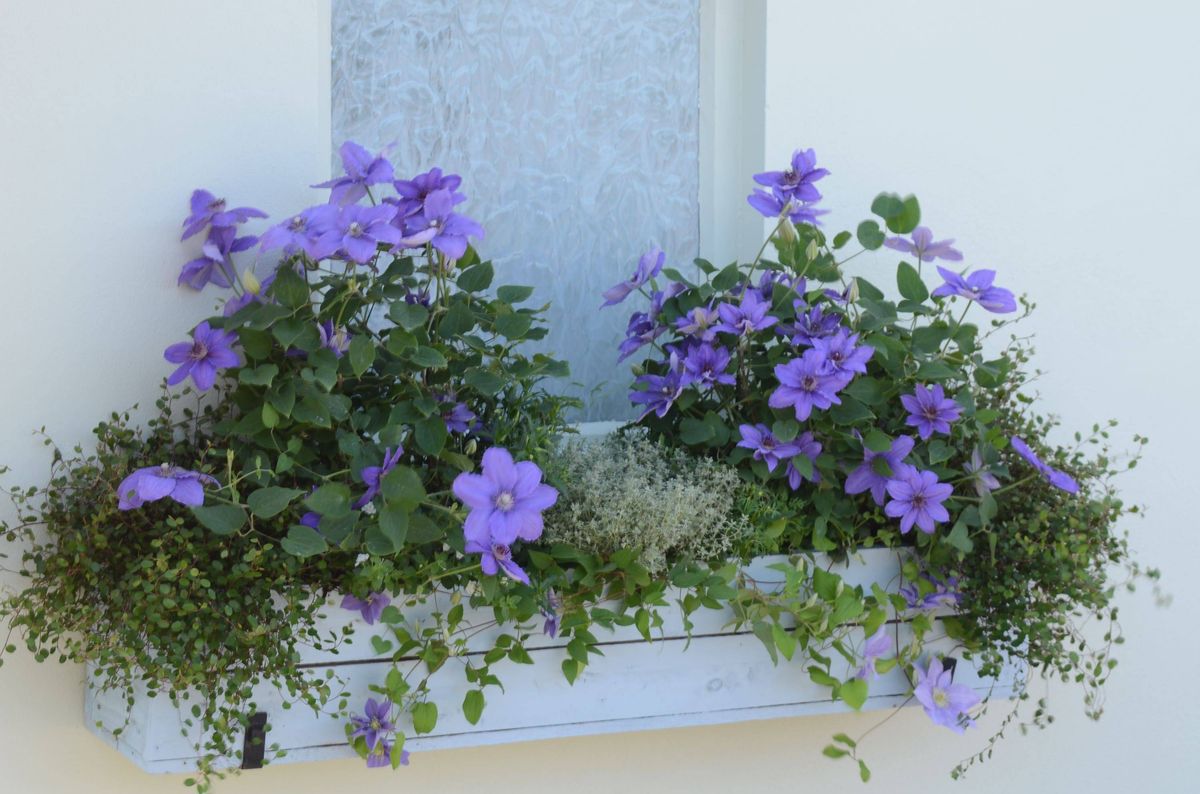
Clematis in windowboxes(Image: Raymond Evison Clematis/PA)
Show them off in hanging baskets
Dwarf clematis varieties also thrive in hanging baskets or sizeable window boxes, where they’ll cascade downwards amongst neighbouring plants. In his book, Clematis For Small Spaces, Raymond Evison suggests compact options like C ‘Bijou’ ‘Evipo030’, a delicate violet blue reaching 30-60cm, perfect for small to medium-sized pots as well as window boxes and hanging baskets. They’ll produce stems that drape from the baskets and he suggests pairing them with grey-leaved plants and mauve blooms for a harmonious display.
“They look fantastic in hanging baskets,” Jeanes agrees. “Instead of growing up, they cascade down.”
Provide support
Those climbing vertically in containers require some form of framework, such as canes or an ornamental structure. “They are semi self-clinging, so they need some structure. They’ll hold on to a cane and twirl around it, no problem,” says Jeanes.
You might need to secure them to a substantial post, or fix thinner materials like string for them to climb, he notes.
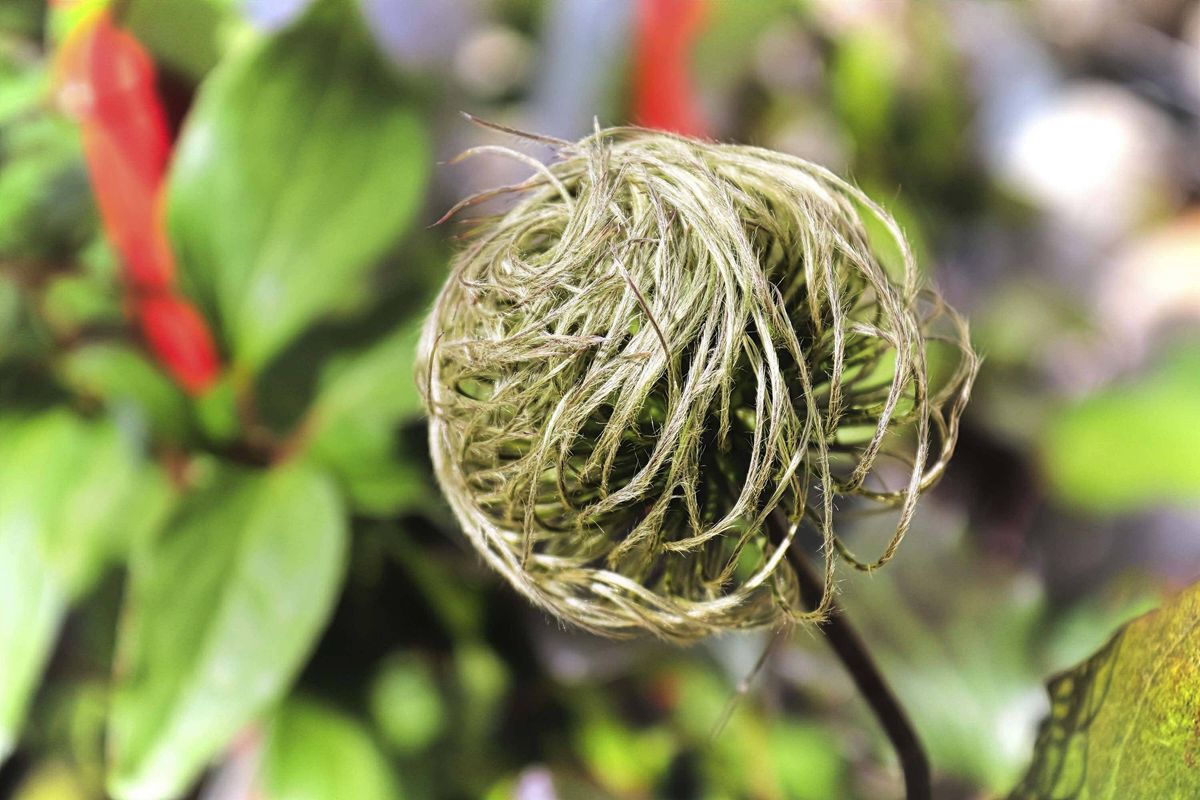
Clematis flower tufts at the end of summer(Image: Alamy/PA)
Mix them up in containers
Combine two contrasting shades in a single pot and you’ll achieve striking results, he proposes. You can neaten them once flowering finishes, deadheading them and treating like a rose, to encourage additional blooms. They perform best with shaded roots, so in containers and baskets position other plants around them to establish a micro-climate, he recommends. He explained: “Mix planting in containers with foliage plants such as thyme, saxifraga or any similar ground cover or trailing plants, or bedding of any mix.”
Should we experience a scorching summer, plants will enter summer dormancy once temperatures climb above 27C, he notes.
“They’ll go a bit yellow on the foliage and look like they have a drought problem, but actually they’ve gone into dormancy. One of the biggest killers of clematis in the summer is people thinking that they’re too dry. So don’t overwater them.”
The sole method to determine whether the plant requires watering is to insert your finger into the compost to assess moisture content, he advises. As temperatures begin dropping in late August and September, the clematis resume growth and you might even enjoy a second wave of blooms.
Comments are closed.