
Credit: Getty Images
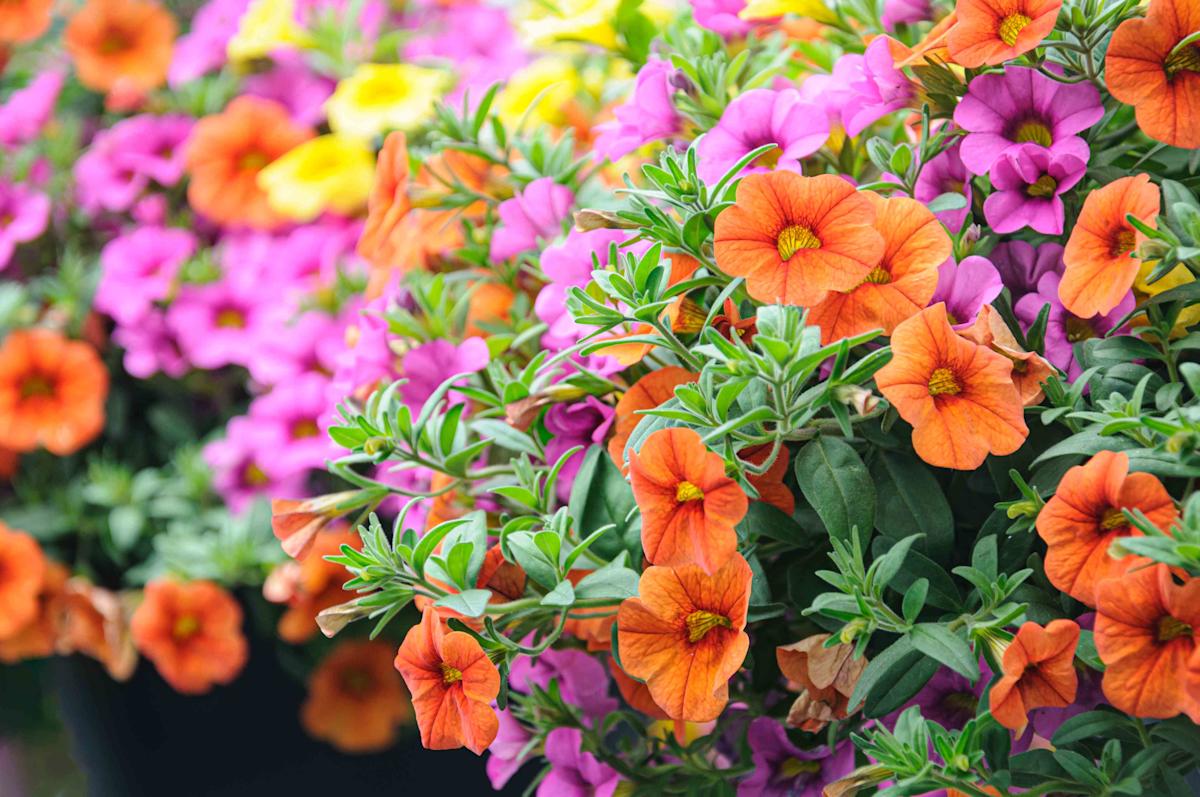
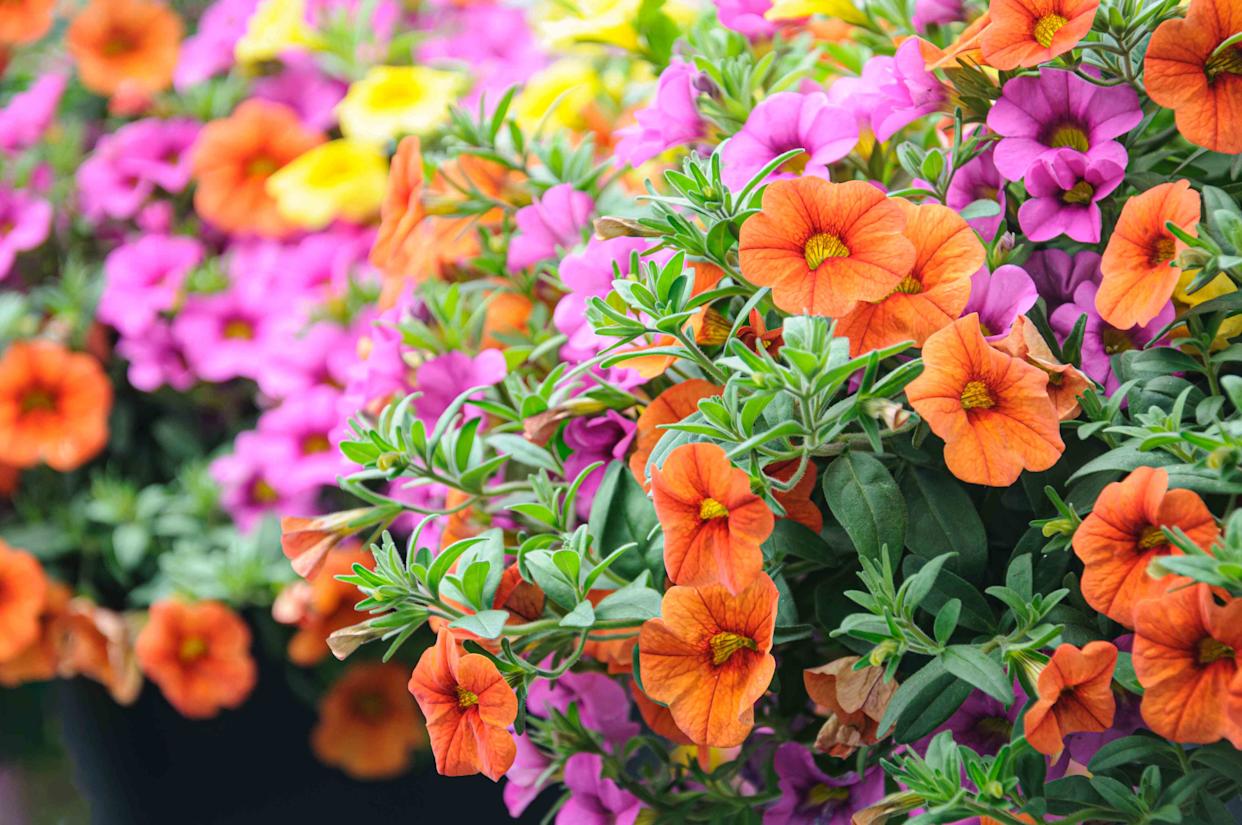
Annuals are known for their amazing flower power, putting on an endless show from spring through frost. Many perennials also bloom repeatedly throughout the year, providing lasting color that shines from one season to the next. We’ve gathered the best of the best: annuals, perennials, and even woody shrubs and vines to plant in spring for blooms that last through summer and beyond. Use these long-blooming beauties in patio and porch containers, or plant them in your beds and borders for a stunning display.
01 of 11
Firestorm™ Lantana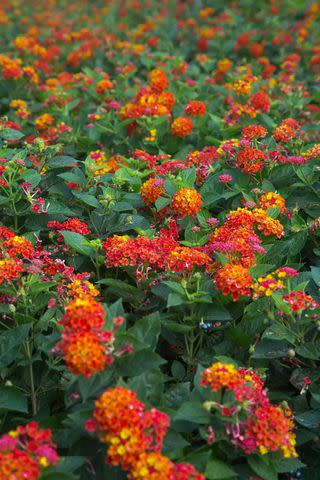
Credit: Southern Living Plant Collection
Botanical Name: Lantana camara ‘CCCF1’
Soil Type: Medium to moist, well-draining
Soil pH: Slightly acidic to neutral (6.0-7.5)
USDA Hardiness Zones: 8 to 10
Firestorm™ Lantana thrives in hot, dry locations, producing clusters of fiery red and yellow blooms that attract butterflies and hummingbirds to the garden from spring through fall. This compact variety is perfect for containers or spilling over retaining walls and makes a fabulous border or mass planting in garden beds. Foliage remains evergreen in locations where plants are winter hardy. Plant Firestorm™ Lantana as an annual in colder locations.
02 of 11
Summer Snapdragon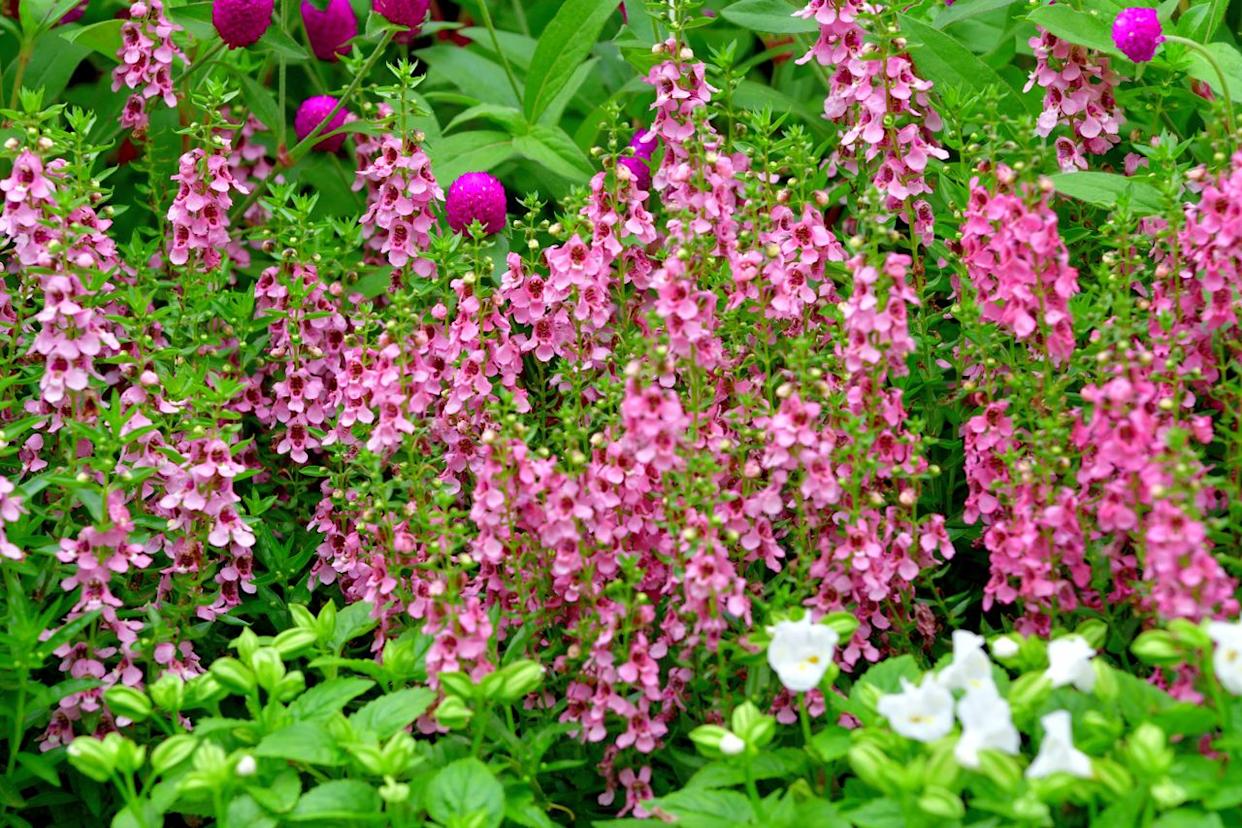
Credit: Getty Images
Botanical Name: Angelonia angustifolia
Soil Type: Medium to moist, well-draining, rich
Soil pH: Slightly acidic to neutral (5.5-6.8)
USDA Hardiness Zones: 9 to 11
Commonly grown as an annual bedding plant, summer snapdragon resembles its namesake with long spikes of two-lipped blooms opening all summer long in rich pink, blue, lavender, and bi-color hues. Summer heat and humidity don’t phase this drought-tolerant beauty.
03 of 11
Diamond Spire® Gardenia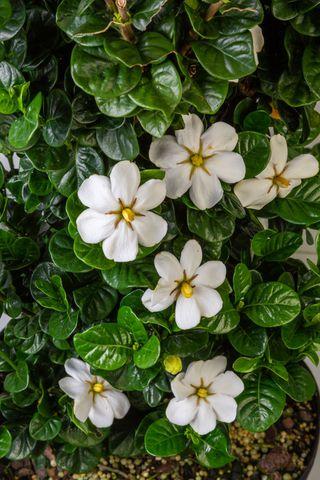
Credit: Southern Living Plant Collection
Botanical Name: Gardenia hybrid ‘Leefive’
Sun Exposure: Full sun to part shade
Soil Type: Well-draining, rich
Soil pH: Acidic (5.0 to 6.5)
USDA Hardiness Zones: 7 to 10
Infuse the garden with the heavenly perfume of Diamond Spire® Gardenia. This slender take on a Southern classic is sized just right for tight spaces and containers, growing three to four feet tall and only two feet wide. Clip the star-shaped, single white blooms by the handful for fragrant cut flowers and don’t worry – the plant will produce more, continuing to bloom all season long.
04 of 11
Catmint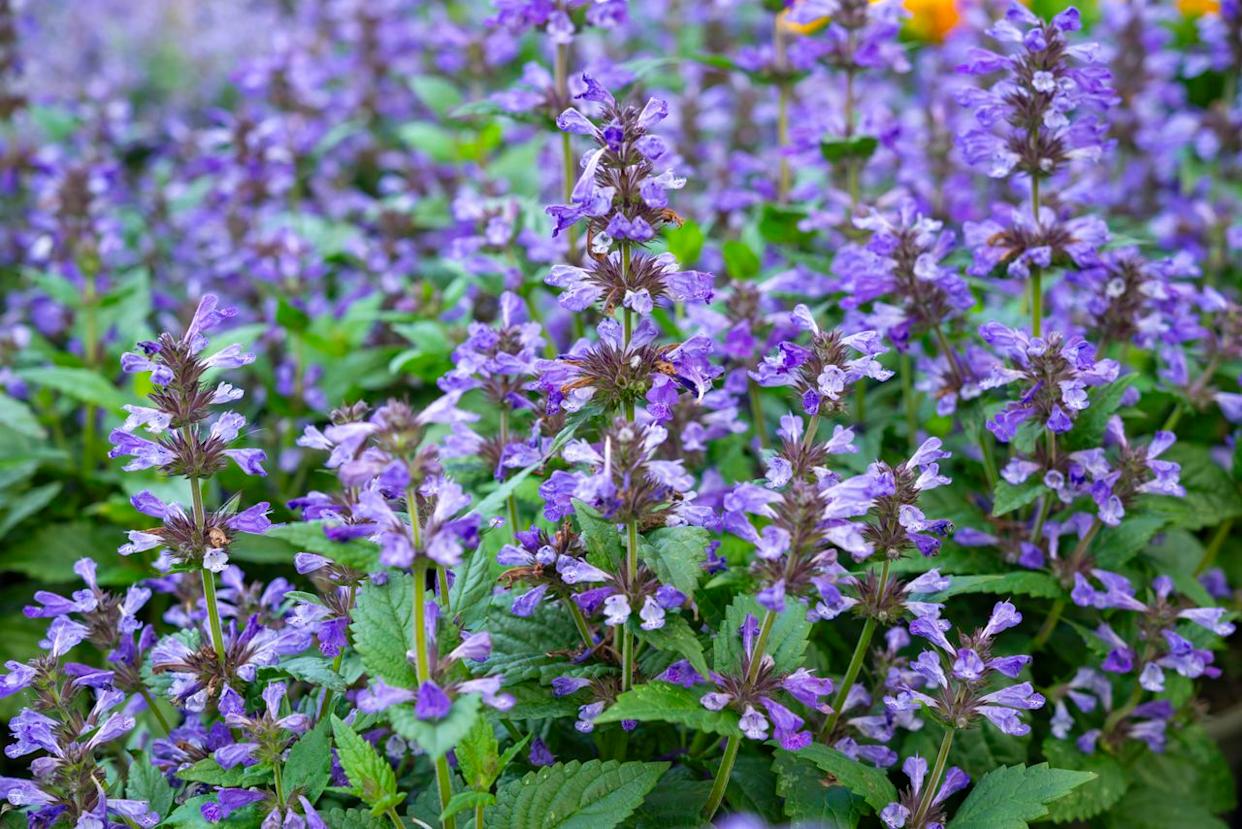
Credit: Getty Images
Botanical Name: Nepeta spp.
Soil Type: Dry to medium, well-draining, average
Soil pH: Acidic to alkaline (5.5-8.0)
USDA Hardiness Zones: 4 to 9
Catmint is seldom seen without pollinators buzzing among its lavender blooms, though pest insects leave this plant alone. It blooms with abandon all season long and stands up to heat and drought. Look for sterile varieties such as ‘Select Blue’, ‘ Walker’s Low’, and ‘Cat’s Meow’, as seed-grown varieties reseed freely and can become a bit weedy in the garden.
05 of 11
It’s a Breeze® Red Rose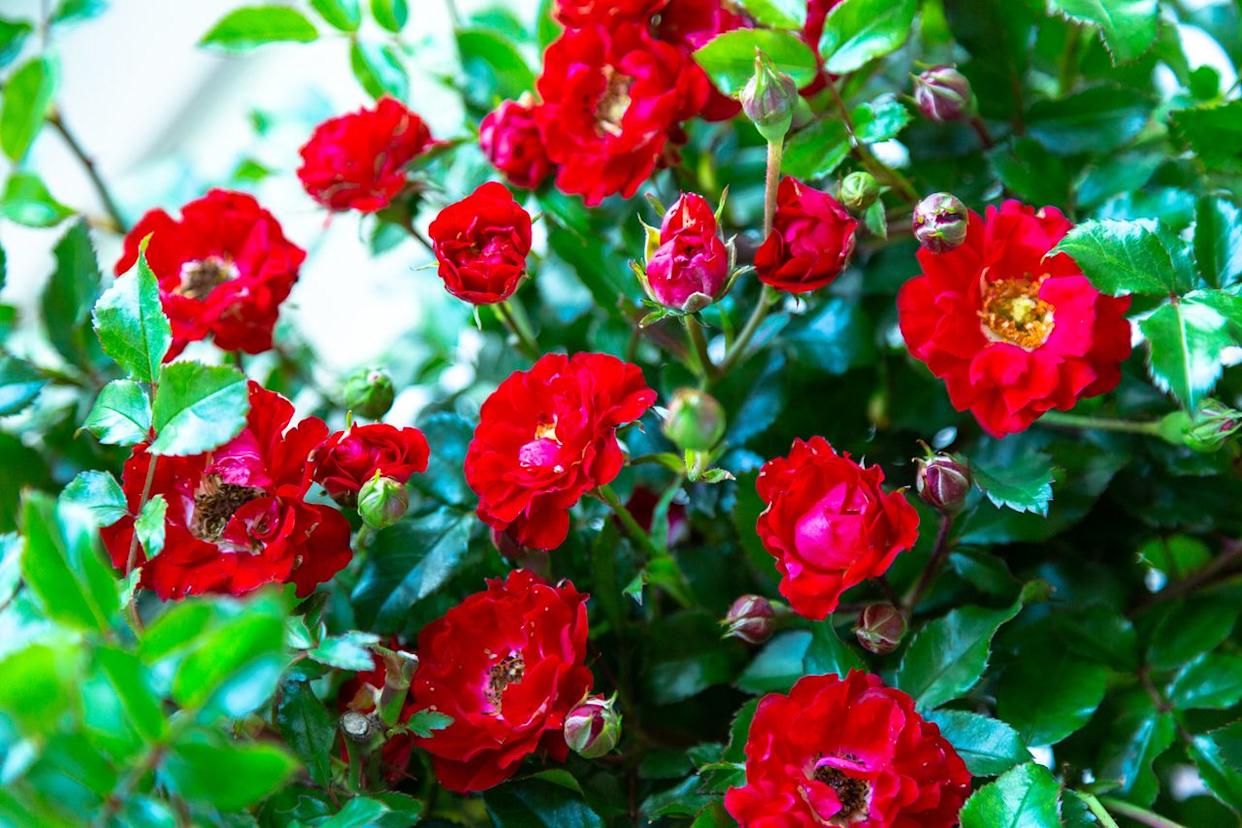
Credit: Southern Living Plant Collection
Botanical Name: Rosa hybrid ‘Meigremlis’
Soil Type: Medium, well-draining, average
Soil pH: Slightly acidic (6.0-6.9)
USDA Hardiness Zones: 4 to 11
A scrambling groundcover rose perfect for massing in borders or spilling from containers, It’s a Breeze® Red Rose produces 20 to 30 dark red double blooms per stem. The aromatic blooms appear in spring with repeat blooming through fall. This hardy variety is disease resistant and heat tolerant.
06 of 11
Blanket Flower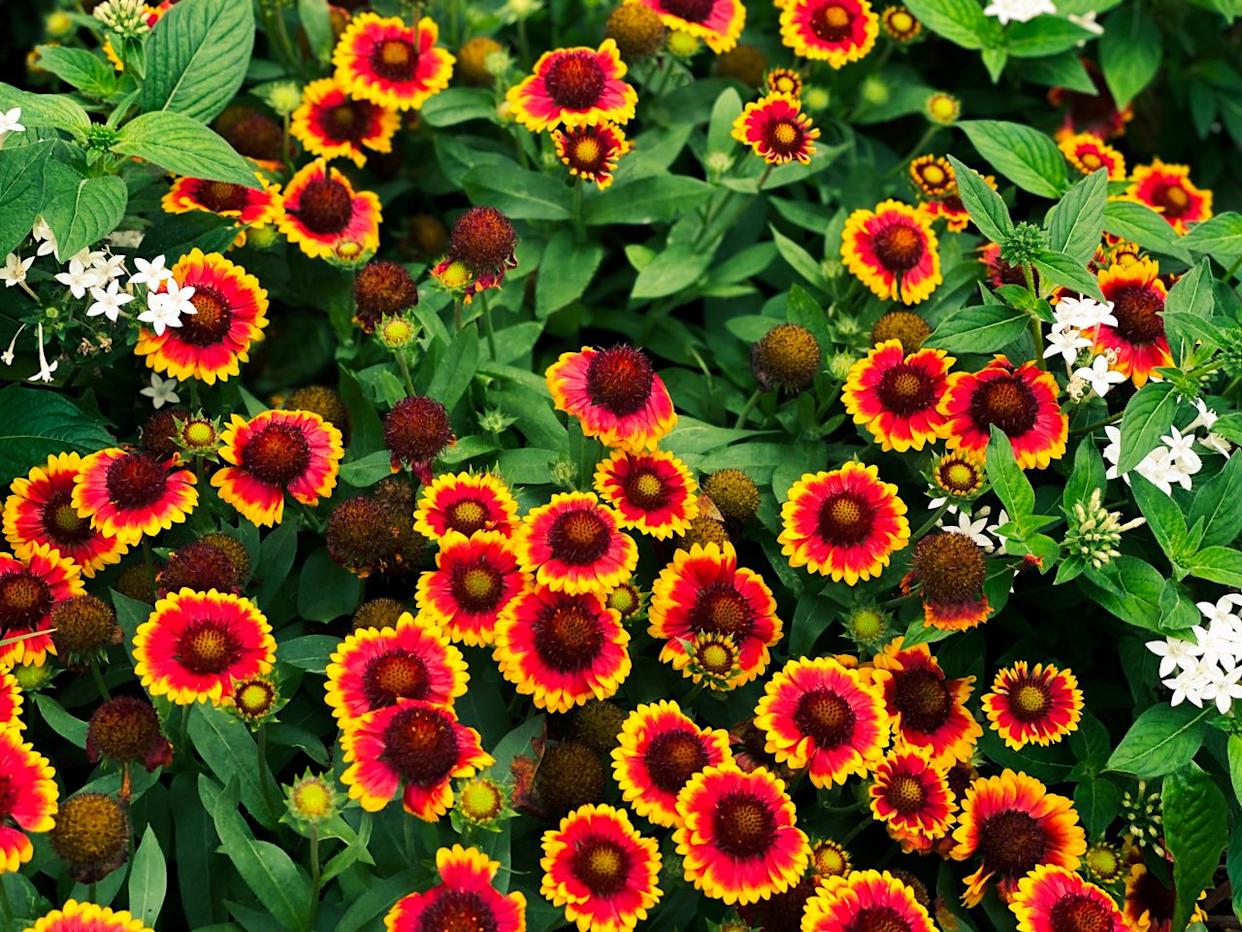
Credit: Getty Images
Botanical Name: Gaillardia spp. and hybrids
Soil Type: Dry to medium, well-draining, average
Soil pH: Mildly acidic to slightly alkaline (6.0-8.0)
USDA Hardiness Zones: 3 to 10
Sun-loving blanket flowers blooms all season long, carpeting the ground with brilliant red and yellow blooms. This native wildflower has exceptional heat and drought tolerance and supports a diversity of wildlife, from native bees and butterflies to goldfinches and other songbirds that feast on the tiny seeds in autumn. The genus Gaillardia includes annual, perennial, and biennial species, all of which perform beautifully in mixed borders, cottage gardens, or meadow plantings.
07 of 11
Pentas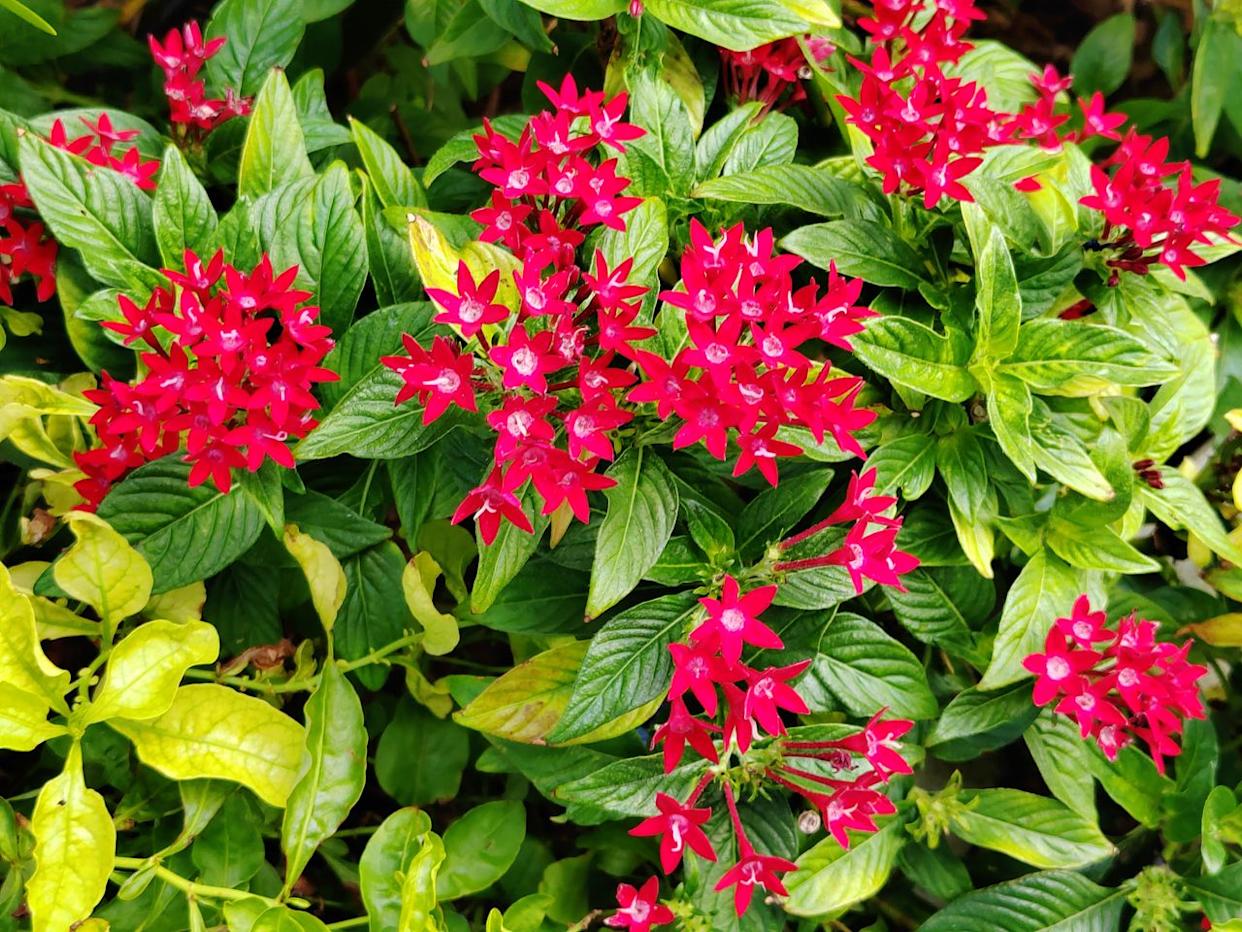
Credit: Getty Images
Botanical Name: Pentas lanceolata
Sun Exposure: Full sun to partial shade
Soil Type: Medium, well-draining, average
Soil pH: Neutral (6.5-7.2)
USDA Hardiness Zones: 10 to 11
Grown as an annual through much of the South (plants are winter hardy in zones 10-11), pentas or Egyptian start flower is a fuss-free pollinator favorite. Hummingbirds are drawn to red cultivars, while butterflies enjoy all the colorful varieties including vibrant pink, magenta, lilac, and white blooms. Pentas tolerates some shade but flowers best with full sun.
08 of 11
Saucy™ Salvia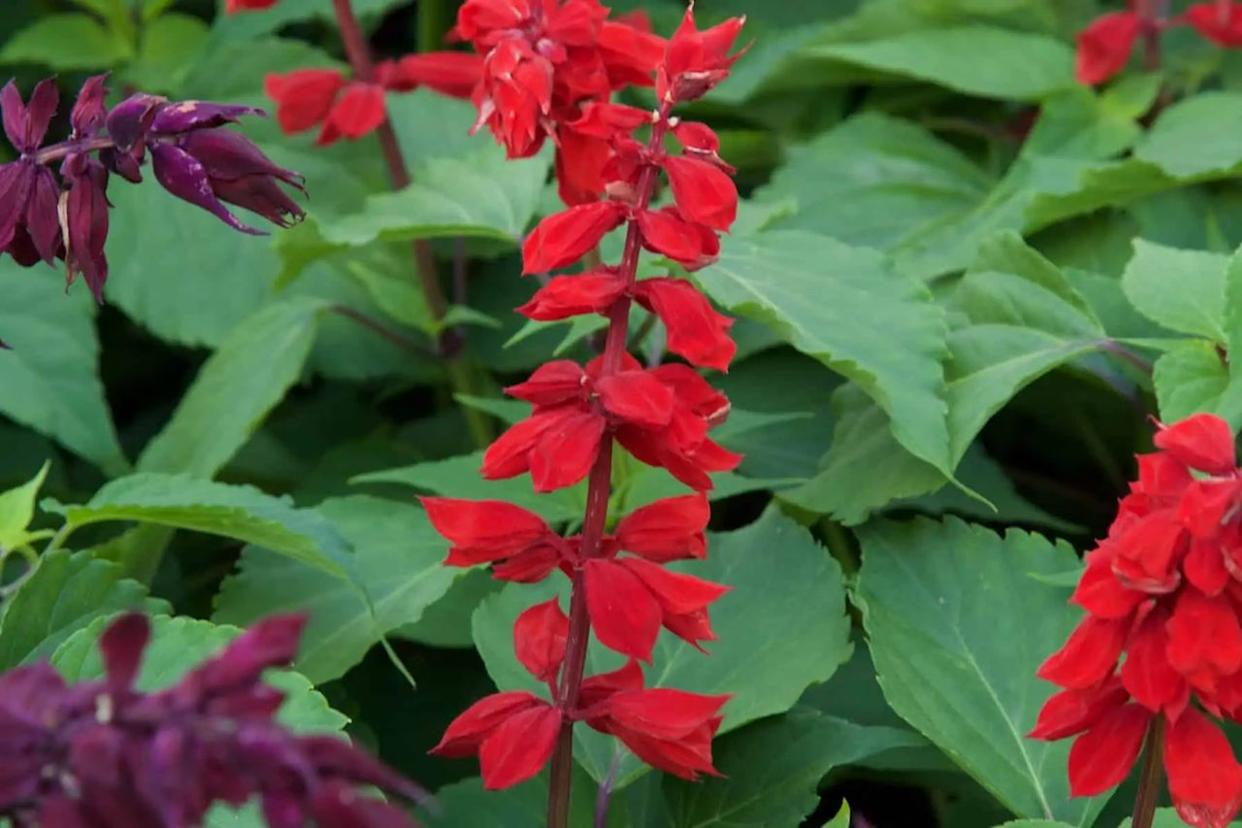
Credit: Southern Living Plant Collection
Botanical Name: Salvia splendens
Sun Exposure: Full sun to part shade
Soil Type: Well-draining, rich
Soil pH: Slightly acidic (5.5-6.2)
USDA Hardiness Zones: 9 to 10
Available in red or purple varieties, Saucy™ Salvia is a sterile and self-cleaning series of salvia that blooms from April to November with no deadheading. Spikes of showy, long-tubed blooms are a favorite of butterflies and hummingbirds, and also make great cut flowers. Lush green foliage grows in a vigorous but tidy two- to three-foot clump.
09 of 11
Million Bells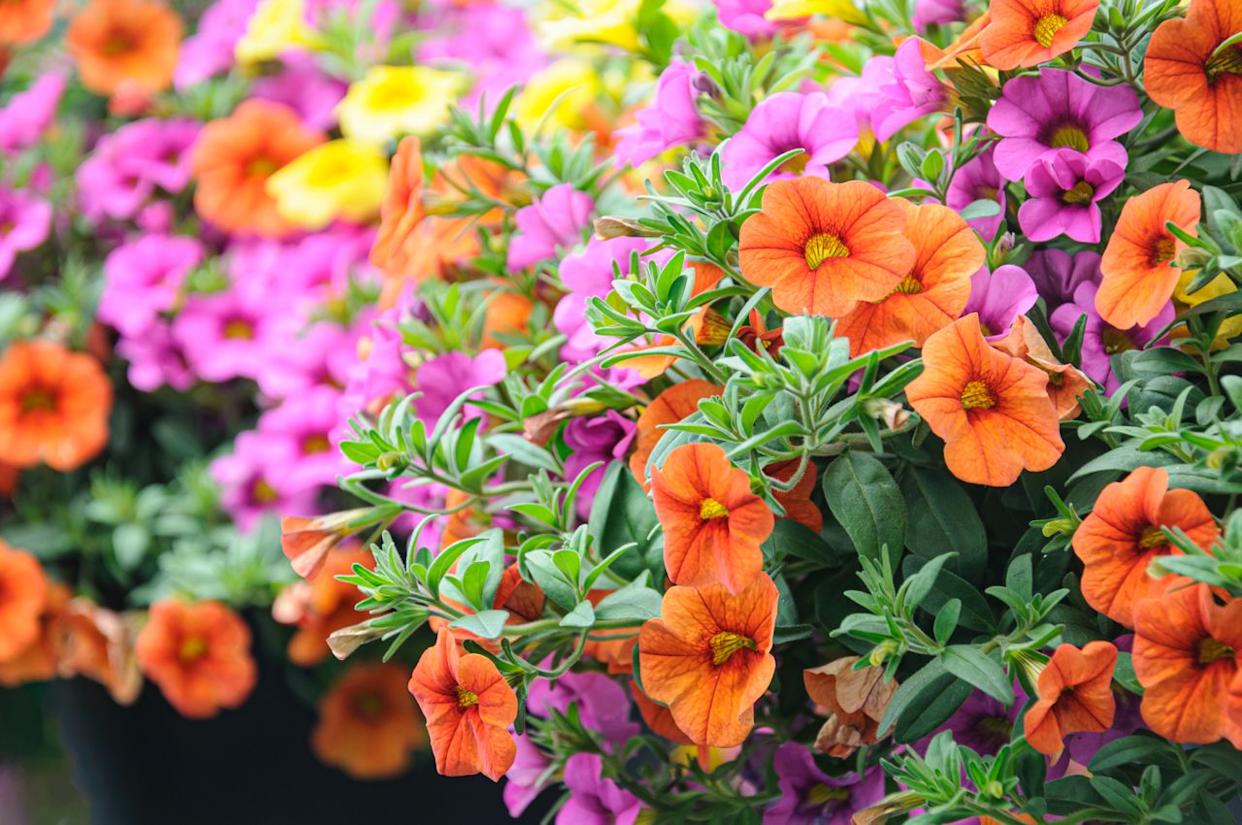
Credit: Getty Images
Botanical Name: Calibrachoa hybrids
Sun Exposure: Full sun to part shade
Soil Type: Moist, well-draining, rich
Soil pH: Acidic (5.0-6.5)
USDA Hardiness Zones: 9 to 11
Sometimes called trailing petunia, the flowers of this low-growing rambler resemble their namesake, covering the clean green foliage spring through frost. Flowering in nearly every color of the rainbow, the vibrant and often bi-color blooms are self-cleaning, so there is no need to deadhead plants to keep them blooming. Hummingbirds adore this heat and drought tolerant beauty.
10 of 11
EnduraScape™ Verbena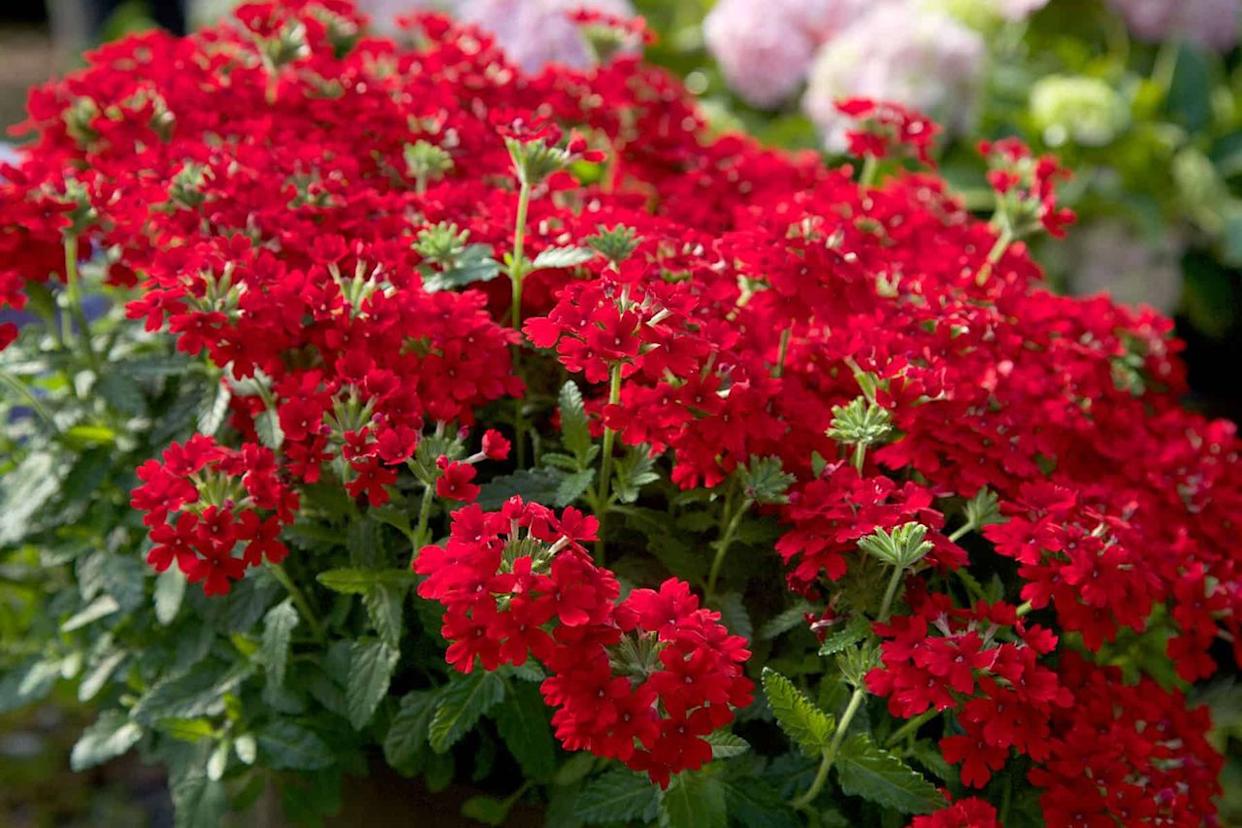
Credit: Getty Images
Botanical Name: Verbena peruviana
Soil Type: Well-draining, rich
Soil pH: Slightly acidic (5.5-6.2)
USDA Hardiness Zones: 8 to 10
EnduraScape™ Verbenas go above and beyond, flowering longer than other varieties in rich purple, vivid red, or blushing pink and white hues. Plants exhibit excellent branching, producing a dense, gently spreading mound of foliage covered in blooms, perfect for trailing over retaining walls and spilling from containers.
11 of 11
Bat-faced Cuphea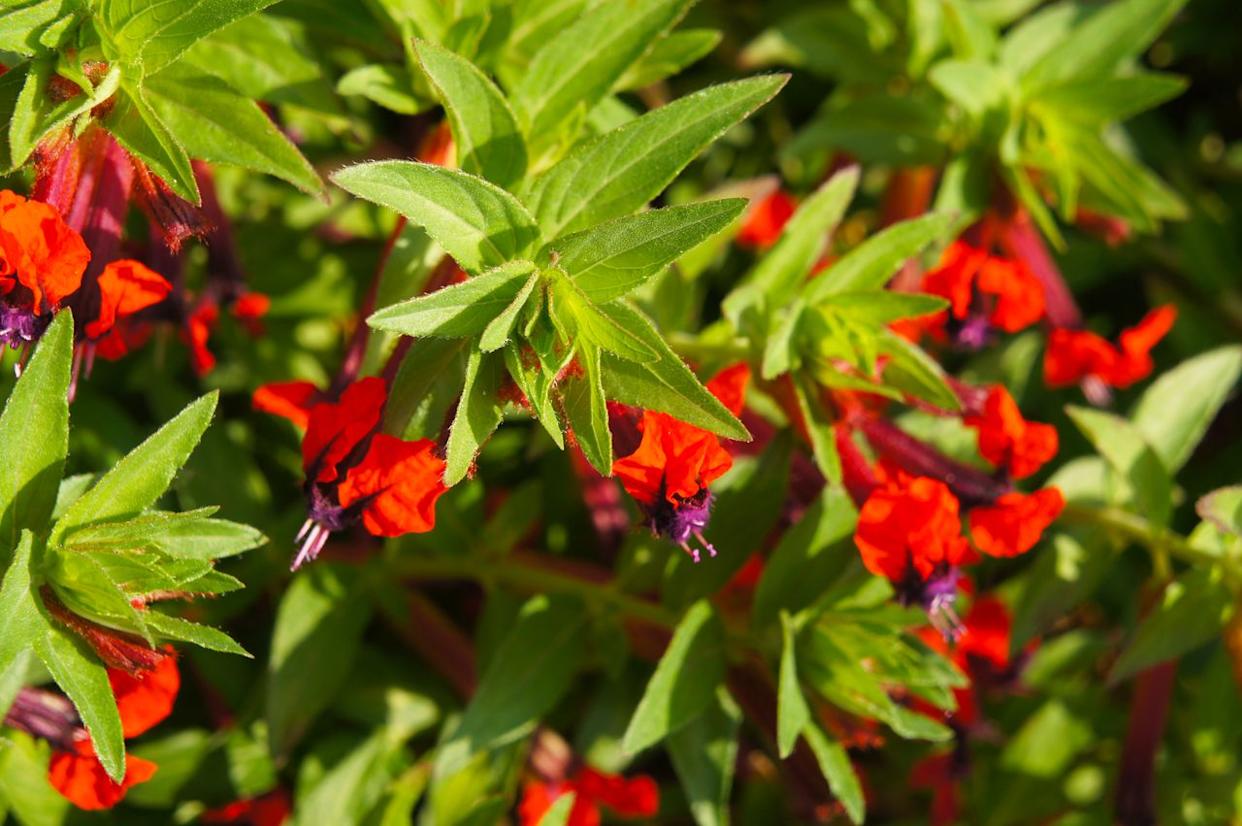
Credit: Getty Images
Botanical Name: Cuphea llavea
Sun Exposure: Full sun to partial shade
Soil Type: Moist, well-draining, fertile
Soil pH: Mildly acidic to neutral (6.0-7.5)
USDA Hardiness Zones: 10 to 12
There are many different cupheas available for the garden and all are worth trying, but this is perhaps the most playful. Each one-inch bloom has a hairy purple calyx with two red petals, resembling the face and ears of a bat. Hummingbirds, bees, and butterflies frequent the unusual blooms. Grow as an annual in a location where you can get a close-up look at the flowers.
Read the original article on Southern Living
Comments are closed.