
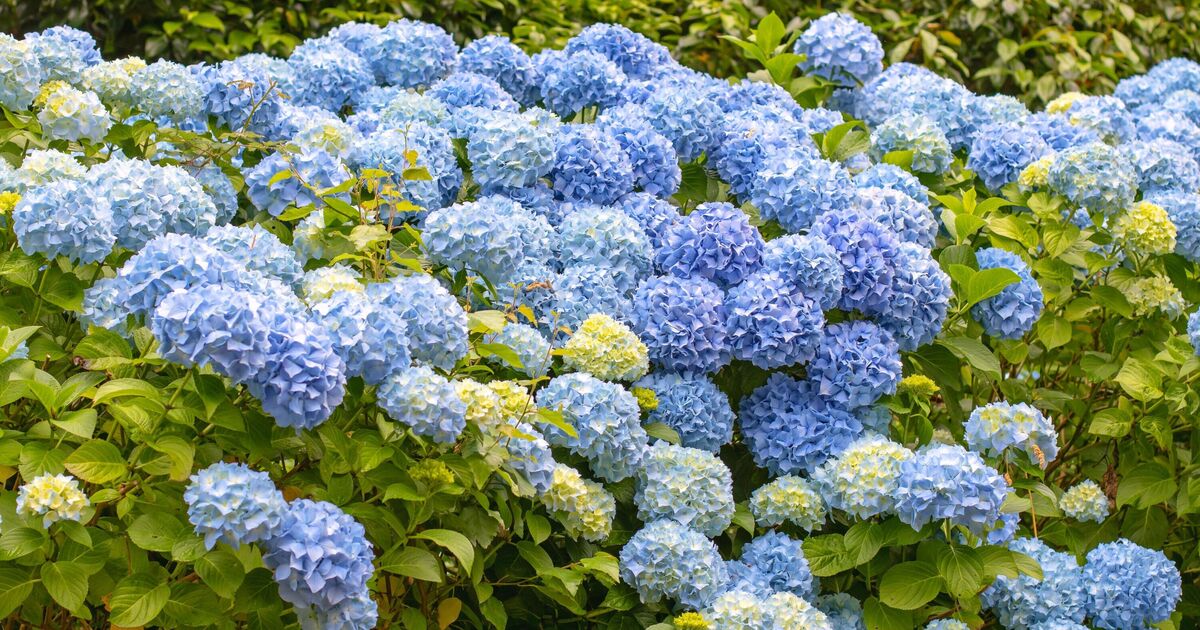
Hydrangeas are a very popular garden plant for a reason. They come in many different varities, from mophead to mountain, and thanks to their vibrant colours, they bring a burst of vibrancy to any garden.
Bigleaf hydrangeas, which are one of the most popular kinds, tend to bloom during late spring to early summer, so there’s still a while before you’re likely to see any flowers. However, it’s important to put the work in now so that you get those stunning blooms. Pruning your plant is a must during early spring, but according to one gardening expert, a common mistake could mean you end up with no flowers at all.
The Walking Talking Gardeners on YouTube recently shared a video about all things hydrangea pruning, noting that they tend to fall under two categories depending on the type – those that flower on old wood, and those that flower on new wood.
Hydrangeas that flower on new wood, such as aborescens and paniculata, can be pruned at the beginning of the year so that flowers bloom when they regrow in summer.
That means that all other types of hydrangea, including the most popular bigleaf, flower on old wood. And the ‘biggest mistake’ that hydrangea owners can make in spring is pruning this type of plant too early.
Because these kinds of hydrangeas produce their flowers on the buds from last season, the last thing you want to do is cut them off, as they will not grow back in summer.
The gardener called this the ‘number one biggest mistake’ you can make with your hydrangeas.
He said: “You’re cutting away all the old wood that would have had the flowers on it. That’s the big mistake. That is where the confusion comes from.”
The expert named a couple of varities that fall under this category, such as the oak leaf, climbing, lace cap and serrata hydrangeas.
When to prune your hydrangeas
If you have got any of these old wood types in your garden, it’s best to wait until immediately after they have finished flowering, which is usually in summer or late spring. Doing it too early will remove this season’s buds and leave you with none.
On the other hand, if you have new wood bloomers, you can still give them a prune in spring, with April generally serving as the cut-off point.
At this point, the buds will have begun to grow, but the growth won’t have fully started yet. Pruning these now will help to produce bigger flowers and stronger stems, without actually getting rid of any of the blooms.
Comments are closed.