
As the weather turns into spring, it’s the perfect time to contemplate gardens, flowers and lush yards of green.
One doesn’t have to be a master gardener to prepare for the season, putting us in the mood for warmer days and budding landscapes.
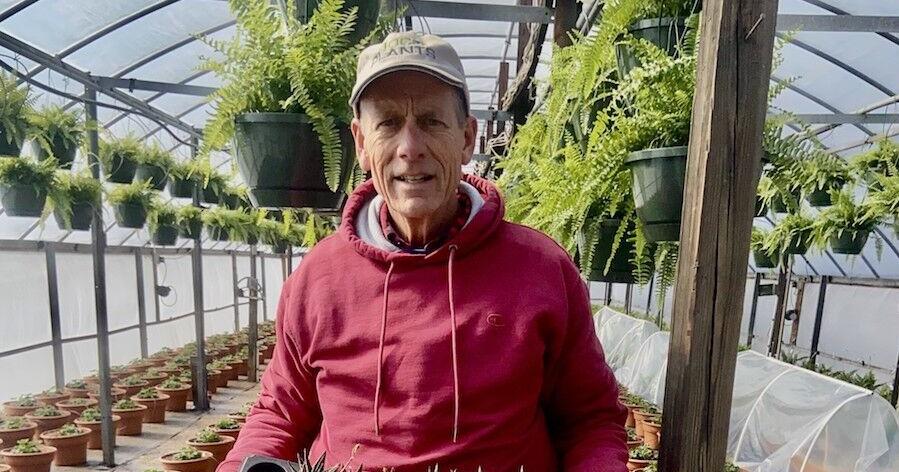
Whether or not you have a green thumb, or if you are just an avid do-it-yourselfer with a desire to spruce up the front yard, now is the perfect time to tackle some of the initial projects, says Daniel Casey of Casey Garden Center.
“For February and early March, I would recommend any heavy pruning that needs to be done,” he said, starting with bushes and overgrown areas. “Anything, if you have hollies, or a lot of different shrubs, camellias, sasanqua can all be pruned back.
“Roses, definitely, this time of year, and then they flush out, they’re really pretty.”
That doesn’t apply to everything, though. Casey cautioned against some plants.
“The things you do not want to cut back quite yet are azaleas because you want to let them bloom and then prune them back,” he said. “If you prune them before they bloom, you’re cutting off your flowers.
“But any plant that needs to be cut back, say you’ve got a big holly tree on the corner of your house and it’s got way too big. You want to take it back, you can cut it in half and let it come back. We call that heading back or just hard pruning.”
Another area that is time-sensitive is putting out pre-emergent herbicides on grass that hasn’t come in yet.
“The old rule of thumb was to make sure you had your herbicide out before the dogwoods bloom,” Casey said.
He also offered some tips for prepping for gardens, things like cleaning out weeds and tilling in compost. It’s also wise to have a plan, which would include which vegetables are in season.
“It’s a good time to plant the cool season vegetables like cabbage and collards, broccoli, cauliflower, carrots, all of the cool season crops,” Casey said. “I would not plant any tender plants as a minimum before the 15th of April, you know, marigolds, impatiens, tomatoes, peppers, any of the very tender plants that have been grown in greenhouses.”
Frost dates can vary, even as late as April 22, Casey said, and for the more tender plants, that cold snap will burn or even kill them. The April 15 date is a good rule of thumb.
“You’re fairly safe at that point to plant your flowers and your vegetable garden and that kind of thing,” he said.
Casey Garden Center, located at 2360 U.S. 70 West, carries everything from seeds to vegetable and flowering plants, succulents and shrubs, to topsoil, compost, fertilizer and pesticides. He also doles out free advice to many a customer.
“Just walk through the door and ask,” he said. “We do our best to give them the best guidance we can.
“They can give us square footage of their yard and we can tell them how much fertilizer to use.”
Of course, weeds are always a concern year-round, for any type of garden. There are products to alleviate the various issues.
“You can spray for chick weed and dandelions and all, you can spray to kill them with a post-emergent herbicide, for weeds that are already up,” he said. “We sell one called Weed-Out, that is to kill a weed that’s already up, and Weed Freezone.
“Pre-emergent (products) inhibit seed germination so that’s what this time of year is to top crabgrass, goose grass, some of the summer annual weeds from ever germinating and getting started.”
The spring is also optimum for fertilizing pecan trees, but there is a trick to it. Basically, making sure to distribute the fertilizer evenly throughout the drip zone of the tree, Casey says.
“You need to see how wide the tree is, the drip zone is the edge of the leaves,” he explained. “You want to fertilize all the way out to the edge of that tree because that’s where the feeder roots are.”
The amount of fertilizer, whether for trees or turfgrass, also varies. A rule of thumb for fertilizing non-bearing trees, for example, is a product like 10-10-10, which contains zinc, not to exceed 25 pounds per tree.
“With turfgrass it’s too early to fertilize warm season grass, so your bermuda (grass) and all that, that’s more done once it’s greened up,” he said. “A mature tree is three-quarters to one pound split in two applications per foot of height.”
Another concern around this area is fire ant activity, Casey said, and he fields calls coming in as soon as it warms up.
“It doesn’t take but one or two days, I bet you anything when we have two or three days and it’s in the 70s, you’ll start seeing fire ants,” he said.
March is a great time to use fire ant baits, he said. They’re easy to use and effective, as well as fairly inexpensive.
“Be on the lookout for fire ants and start treating,” he suggests. “Baits work really well in the early spring and a lot of people will use (products containing) Bifenthrin and different contact killers, too.
“They’re a granule and you just put them in a small hand-held spreader and you can walk around your yard, or you can individually treat mounds.”
For the uninitiated, or those unfamiliar with fire ant activity, Casey offered a quick and easy test.
“You can do what’s called like a potato chip test or a hot dog test,” he said. “Just take an old potato chip or some people will take a hot dog and chop it up, just sit a piece out in your grass somewhere.
“If they’re active, it won’t be but a few minutes, it’ll be covered in fire ants. That lets you know it’s a great time to treat, because they’re active.”
The fire ant baits work well since “workers” forage out and pick up the bait thinking its food. They take it back to the queen, which in turn kills the whole mound.
Casey Garden Center is open weekdays from 8 a.m. to 5 p.m. and Saturdays from 8 a.m. to 3 p.m.. Starting April 1, the business will be open Monday through Saturday, 8 a.m. to 5 p.m. for the spring season.
The family business launched almost 100 years ago, in 1927 by Luby Casey, Daniel’s grandfather before Daniel’s father, Martin took the helm. It was then called Goldsboro Nursery.
“This is my 34th year that I have actually run it, I came and reopened it in 1992,” said Daniel, whose brother, Lee, also handles aspects of the nursery operation.
In addition to preserving the family legacy, Daniel Casey’s enjoyment comes from serving their customers.
“My father taught me a long time ago, he said, ‘You’re not out trying to sell,’ ” Casey said. “I’ve always had the attitude that I’m trying to help somebody.
“I think that’s a great philosophy. It’s all about helping people.”
Comments are closed.