
An upscale Massachusetts island is poised to outlaw one of America’s fastest-growing landscaping trends, with officials citing fears over toxic chemicals and environmental damage.
Nantucket’s Board of Health is expected to decide this week whether to ban artificial turf entirely across the island, a move that would impact not only sports fields but also the increasingly popular use of fake grass in private gardens and backyards.
The push comes as the school district seeks about $25 million to upgrade Vito Capizzo Stadium, including $2 million for an artificial turf field expected to last 10 to 12 years, a proposal that has raised wider safety concerns.
For now, officials have been forced to limit how often the existing grass field is used in order to preserve its condition during the season.
The proposal has ignited fierce debate in the affluent coastal community, where the average home costs $3million and several have already sold for $15million this year.
Artificial turf, once largely confined to sports stadiums, has surged in popularity in recent years among homeowners looking for a low-maintenance, year-round green lawn.
But critics said the plastic grass may come with hidden health risks, while many have derided the plastic covering as distasteful, while claiming it is a crime against nature to cover soil with plastic instead of letting plants and grass grow.
Landscape designer Adam Robinson told Martha Stewart the material can appear ‘flat and a little unnatural’ and lacks the ‘texture, variation, or life of real grass.’
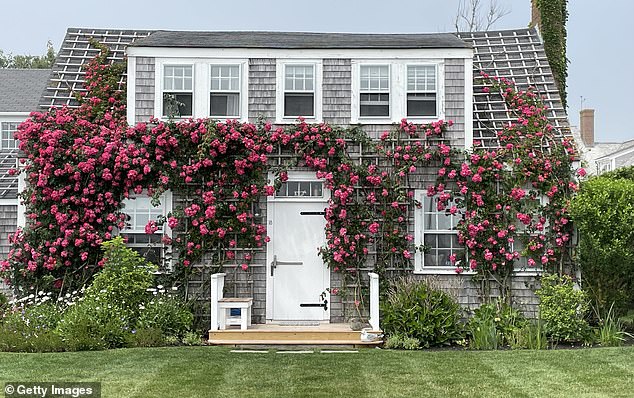
Nantucket officials weigh full ban on artificial turf over toxic chemical fears

Artificial turf has come under scrutiny over fears it may contain PFAS, or ‘forever chemicals,’ linked to cancer and other health issues
At the center of the controversy are PFAS, a class of synthetic chemicals linked to cancer and immune disorders that are known for their ability to persist in both the human body and the environment.
Traces of these chemicals have already been detected in drinking water on Nantucket, raising alarm among residents who fear synthetic turf could worsen contamination.
Ayesha Khan, a parent, co-founded the Nantucket PFAS Action Group after her firefighter husband, who was exposed to the chemicals on the job, was diagnosed with cancer.
‘The direction that the science is going in just leads me to believe that it’s not as safe as we’re being told,’ Khan told the Boston Globe.
Opponents also warn that artificial turf sheds microplastics, which can wash into groundwater or be absorbed by children playing on the surface.
Others point to the extreme heat the material can retain during summer months, far hotter than natural grass, potentially putting users at risk of burns and heat-related illness.
Still, advocates argue the benefits outweigh the risks.
Artificial grass has become a go-to option for homeowners looking to avoid watering, mowing and mud, particularly in coastal climates where maintaining a natural lawn can be difficult.
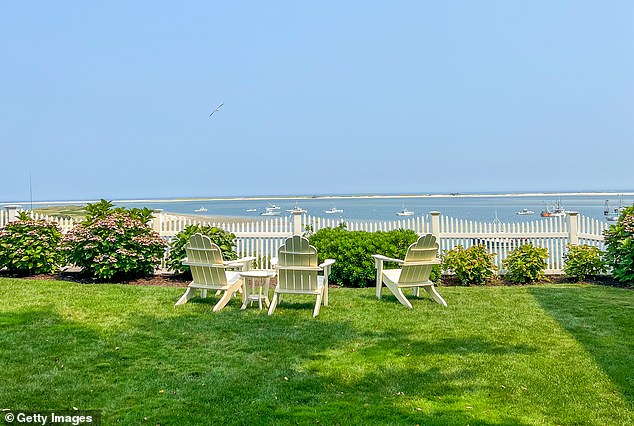
Critics warn synthetic grass can retain significantly more heat than natural lawns, increasing the risk of burns and heat-related illness

Design experts have also criticized artificial grass for its appearance, with one saying it looks ‘flat and a little unnatural’ compared to real lawns
‘There’s a risk in everything,’ Nantucket parent Graham Veysey told the Boston Globe. ‘I have to put my trust in that they’re doing their research.’
Officials have said any turf used on the island would be rigorously tested and would not knowingly contain added PFAS, with systems in place to prevent groundwater contamination.
But skeptics remain unconvinced.
A report submitted to officials found trace levels of PFAS chemicals in samples of the proposed turf system, a finding critics said undermines claims that the material is safe.
‘Every time you add more, the contamination gets worse,’ Kyla Bennett of Public Employees for Environmental Responsibility told the Boston Globe. ‘How can they say that’s PFAS-free?’
The potential ban would place Nantucket among a small but growing number of communities pushing back against synthetic turf, amid a broader reckoning over the presence of toxic chemicals in everyday products.
Several towns in Massachusetts have already enacted restrictions, while states including New York and Vermont have moved to limit PFAS in turf.
Comments are closed.