
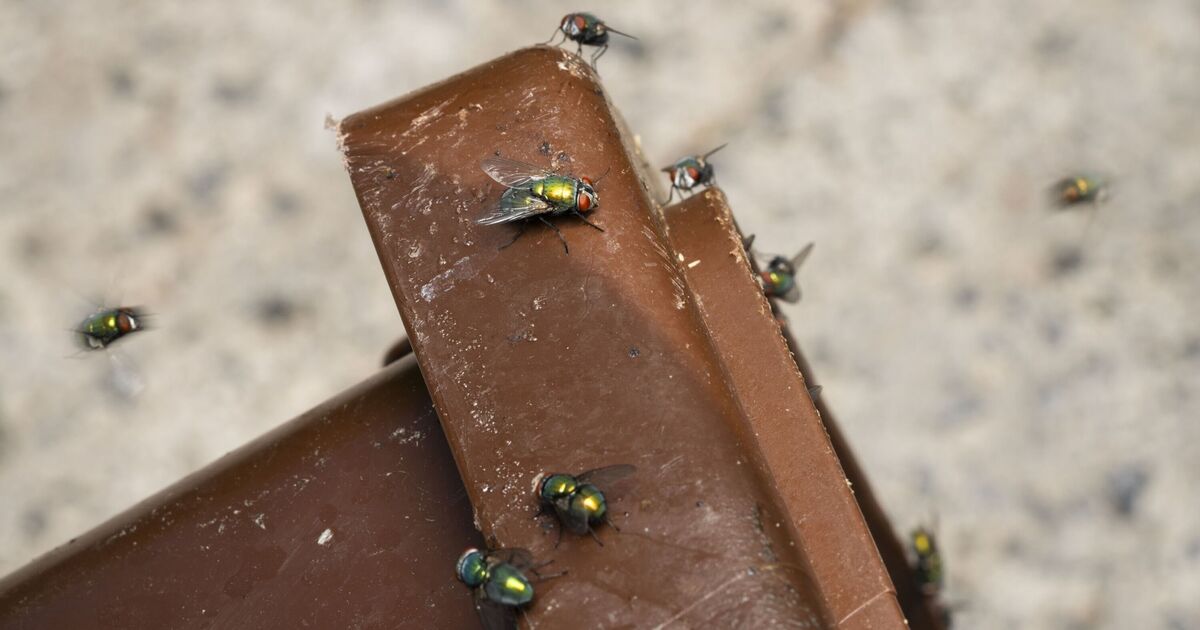
Flies tend to be drawn to wheelie bins in gardens, primarily due to the abundance of food found inside. Once they arrive, they deposit their eggs, which can develop into maggots within a mere 24 hours. With the weather warming up nicely as we enter spring, these pests become more attracted to wheelie bins. Flies typically become an issue around late March when temperatures consistently hit 10°C, as they thrive in warm, moist environments like bins.
While many people tend to spray their wheelie bins with a hose, this method merely loosens some dirt without effectively removing the sticky residue or bacteria that accumulate on the plastic. To avoid flies and maggots in your household waste bin, a commercial cleaning expert who runs the Instagram page @thecleangroup, has shared a two-step process, claiming that this will “keep those maggots from feasting on your bin juice for good”.
The first step is to remove any maggots that may already be housed in your wheelie bin. To do so, start by boiling a kettle and pouring the water into your bin. The cleaning experts noted that “boiling water kills maggots instantly”.
After pouring in the water, simply empty out the maggots and give it a light clean with some washing up liquid if you wish to do so. Failing that, “a quick blast with the garden hose will do”, says the cleaner.
The next step is the most important part if you don’t want to attract more flies – and that’s to grab some salt from your kitchen cupboards.
Sprinkle a handful of table salt after every time you empty your bin, as “flies hate salt”.
The expert explained: “It [salt] stops any stray eggs or larvae from hatching, soaks up your bin juice and will kill any flies who eat it.”
Household waste frequently holds liquids from uneaten food, which may seep out of plastic bags and gather at the base of a bin, leading to unpleasant odours that draw in flies.
As well as adding salt, the cleaner also recommends lining the bottom of your bin with newspaper as it “absorbs drips”.
Newspaper is very absorbent, so putting it at the bottom of the bin will absorb extra moisture and help keep the area dry, which lowers the risk of pests or bacteria.
You have the option to either lay multiple sheets of newspaper directly at the bottom of the bin or to crumple a bunch of newspaper and put it inside. Make sure to replace the newspaper once a month, as this will help maintain a cleaner bin.
Comments are closed.