

Spring is the season of renewal, when the natural world stirs back to life. Saplings push through the soil, blossoms unfurl and a new generation of animals begins to appear.
Springtime offspring include lambs, calves, fox cubs – and little chicks.
The exact time birds build their nests and lay eggs depends on the species as well as factors like food availability, migration, fledging time and if they have more than one brood, according to RSPB. The main nesting period, however, starts in March and runs to the end of August.
“Once spring has sprung, in early March and April, many birds are already pairing up and starting the process of breeding and nesting, scouting for sites, and beginning to build their nests,” says James Ewens, bird and wildlife expert at Green Feathers.
What birds are nesting in my garden now?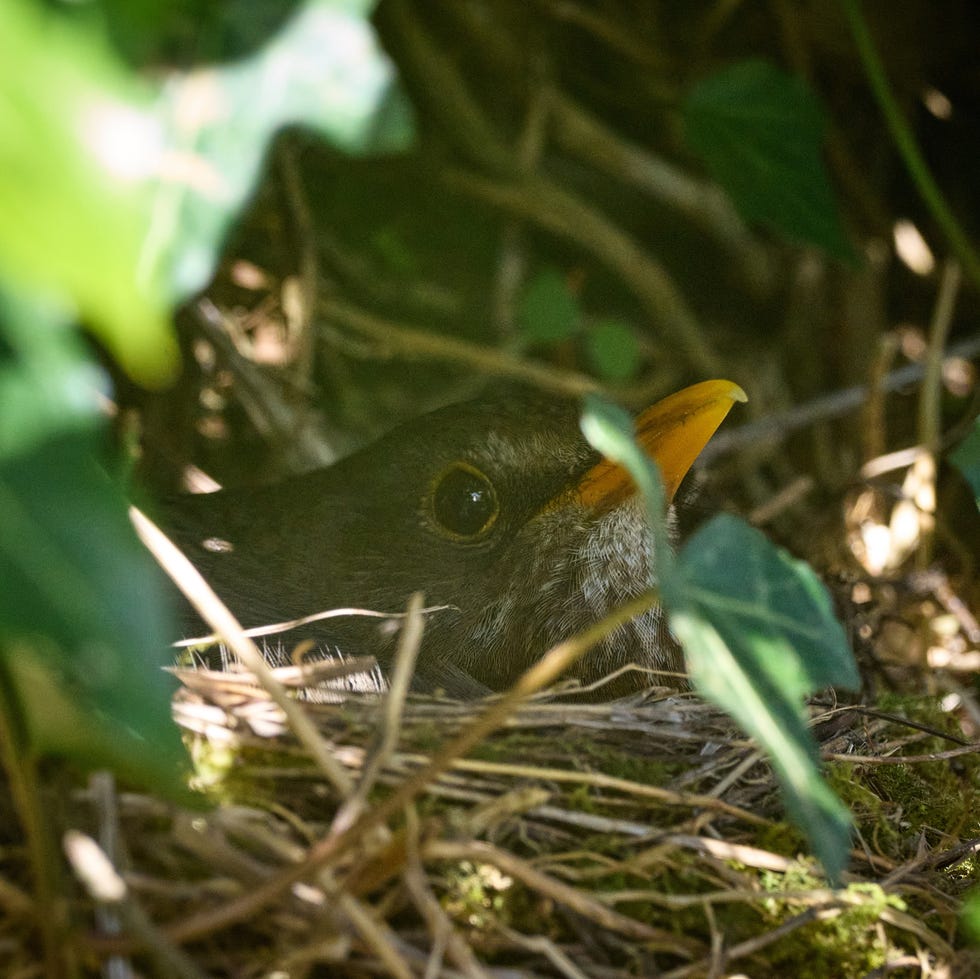
 Will Tudor//Getty Images
A female blackbird sitting in its nest
Some of the birds you might find nesting in your garden in March include blackbirds, robins, blue tits – the most common garden nesters.
“Blackbirds and robins like to build within vegetation, so if you have any hedges or climbers such as ivy or honeysuckle, these can be excellent for birds to be safe. If you have a box in place, you may be seeing blue tits inspecting or tapping away at the entrance,” explains Katie Nethercoat, Wildlife Expert for the RSPB.
You’ll start hearing their gentle chirps, and those of early-nesting long-tailed tits, in April – but some are faster still. “Some ‘early birds get the worm’ quite literally,” says James. “The chicks of robins and blackbirds usually hatch a fortnight after laying their eggs, as early as March through to summer.”
How can I help nesting birds?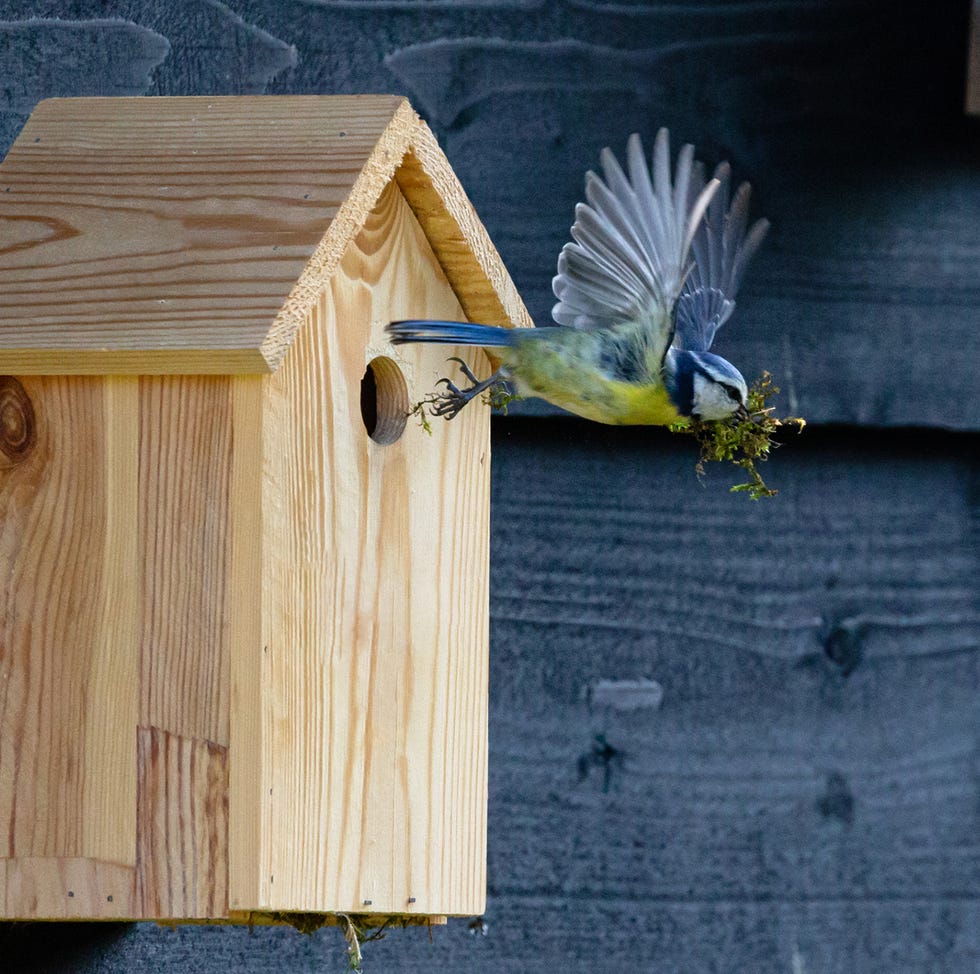
Jaap2//Getty Images
If you’ve spotted nesting birds in your garden, you might wonder what to do. First of all, it’s important to know that it is illegal to disturb or damage a wild bird’s nest. Under the Wildlife and Countryside Act 1981, penalties include unlimited fines and up to six months in prison, so a bird’s home should only be admired from a distance.
Next to installing a nest box, one of the best ways to support nesting species in your garden is by providing plants that act as a natural source of food. “Birds need a healthy ecosystem to allow their chicks to thrive,” Katie explains. “If we can provide food plants for insects and create spaces for them to build nests within trees and vegetation, this will only help support them in the best way.”
You can also keep the bird feeder topped up with high-energy feed, like suet balls or mealworms, and provide a fresh supply of water. Then, sit back and watch this spectacle of nature unfold from a safe and respectful distance.
Gardening must-haves Filberts of Dorset Gardeners Hand Salve
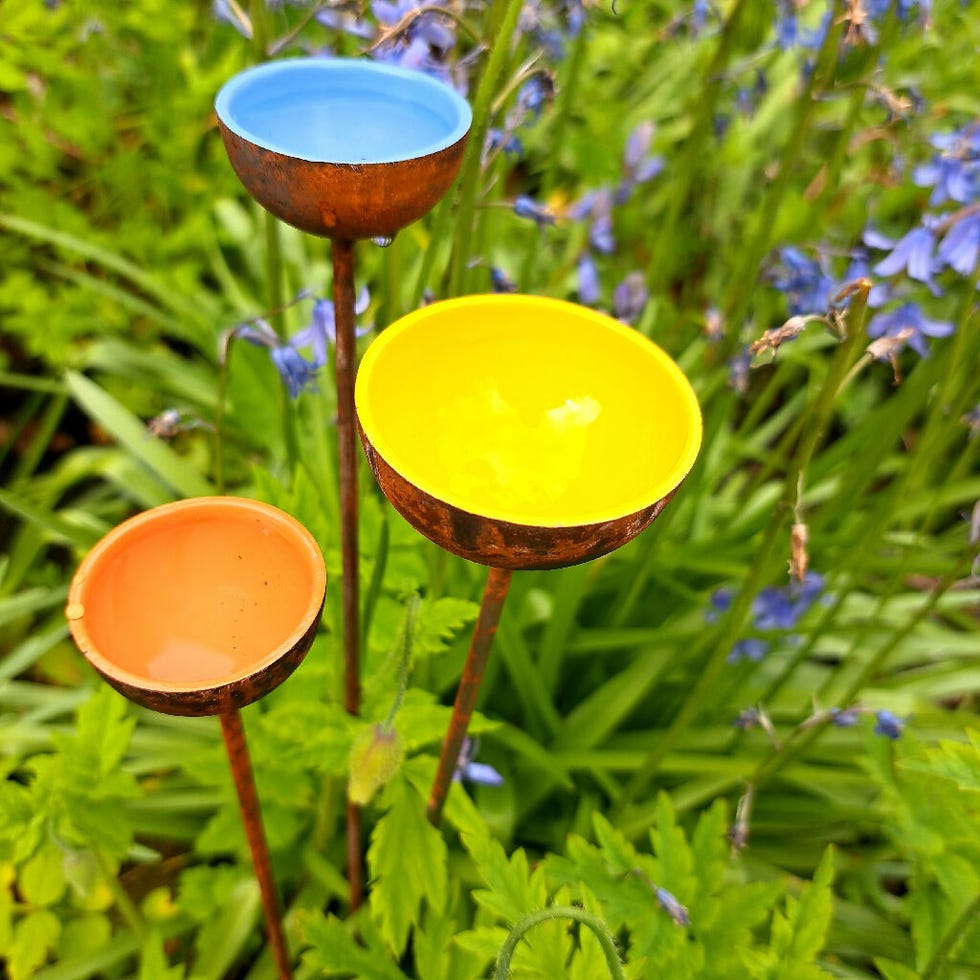 Haywards Garden Bee and Butterfly Water Stations, Garden Décor, set of three colourful bee water cups .
Now 17% Off
 Home Sussex Handmade Peg Apron
 Garden Snips in Leather Pouch
 The Fae Potter Wild Bird Feeder ceramic hanging
 WhinnyPoo WhinnyPoo Box of 3 Plant Feed

Wanda Sachs is the Daily Writer for House Beautiful and Country Living, exploring the latest in interior design, home trends, property news, wellbeing and sustainable living. With a keen eye for style and a passion for storytelling, she previously served as an Associate Editor at The Berliner in Berlin, where she launched and led the magazine’s monthly style vertical, covering emerging fashion trends. Wanda holds a combined BA in English and German from Goethe University Frankfurt.
Comments are closed.