
Credit: Getty Images
There’s a world of garden activity once the sun goes down, when nighttime pollinators appear. Whether you design an entire moon garden filled with white and silvery plants that reflect the low light or simply plant a few containers with night-blooming plants, nighttime pollinators will appreciate the effort. The pale and white blooms in a moon garden are highly reflective, making them easily visible in moonlight. This allows moths, bats, fireflies, and other nocturnal insects to locate flowers for feeding and pollination efficiently. Learn more about native and non-native plants that attract nighttime pollinators.
“Native plants provide the most benefit to nighttime pollinators in your area,” says Mary Phillips. “Reduce unnecessary artificial light sources in the landscape, as they confuse night pollinators, causing them to become disoriented, vulnerable to predation, waste energy, and struggle to find food or mates, which ultimately harms their populations.”
01 of 08
Pale Purple Coneflower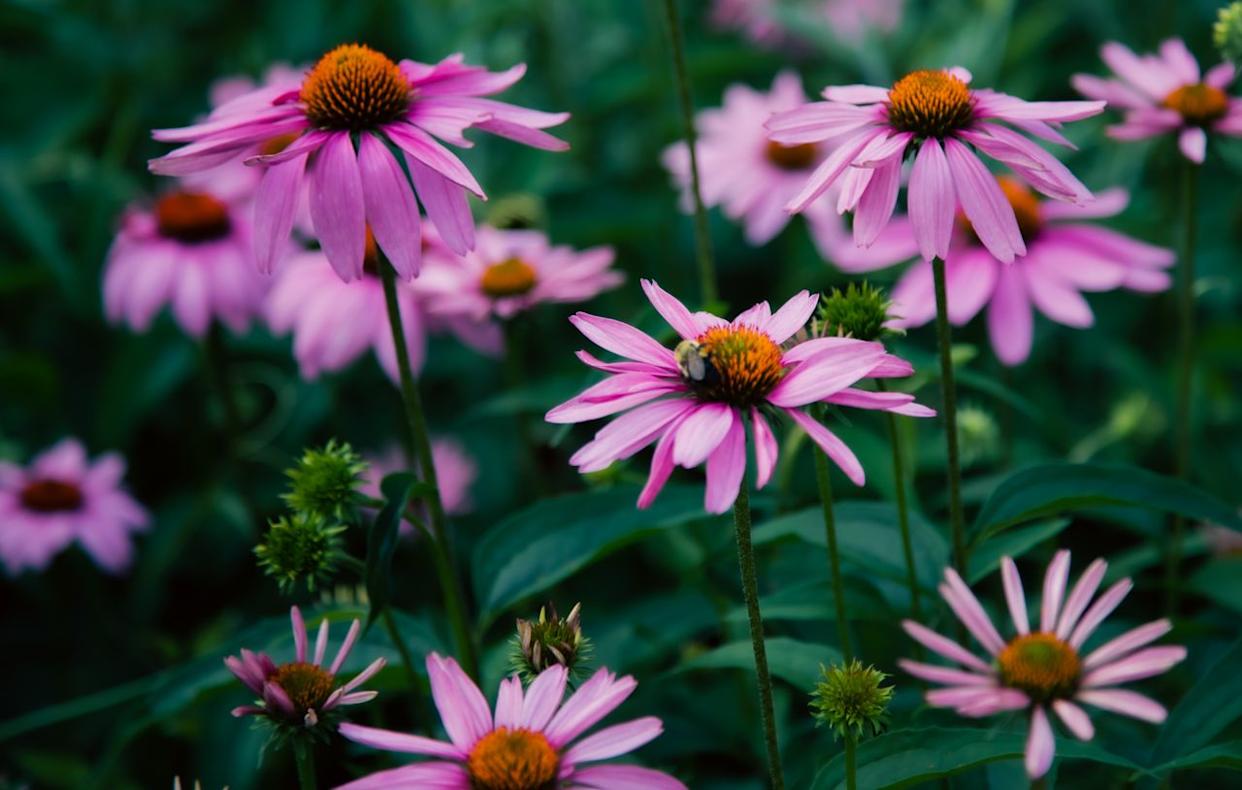
Credit: Getty Images
Pale purple coneflower (Echinacea pallida) is a native plant across much of North America. The tall flower stalks with drooping, elongated pale-colored petals offer a luminous and ethereal quality and serve as a larval host plant for several species of moths. They bloom 2 to 3 weeks earlier than purple coneflowers (Echinacea purpurea).
Botanical Name: Echinacea pallida
Sun Exposure: Full sun to partial shade
Soil Type: Clay, loam, sand
Soil pH: Acidic to Neutral
Learn More
02 of 08
Angel’s Trumpet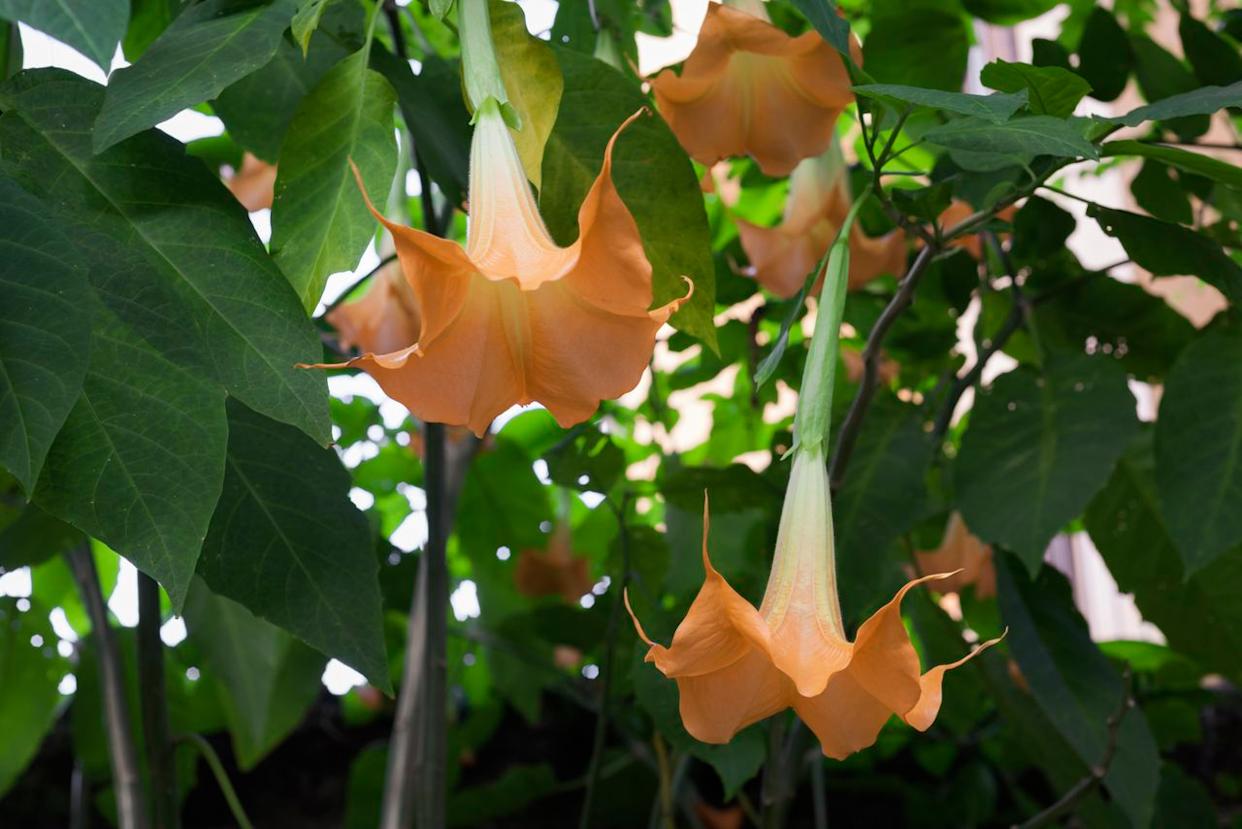
Credit: Getty Images
The white, light yellow, or soft pink trumpet-shaped, ruffled-edged, pendulous blooms of angel’s trumpet announce their presence every night with their heavy fragrance. They can grow up to 1 foot long. During the growing season, the plant is a heavy feeder that needs regular fertilization to stimulate new growth and flowers. In cooler growing zones, it will die back to the ground but will overwinter if given some protection from the cold. The plant’s flowers, leaves, and seeds are toxic if ingested.
Botanical Name: Brugmansia
Sun Exposure: Full sun to partial shade
Soil Type: Organically rich with good drainage
Soil pH: Neutral to acidic
Learn More
03 of 08
Moonflower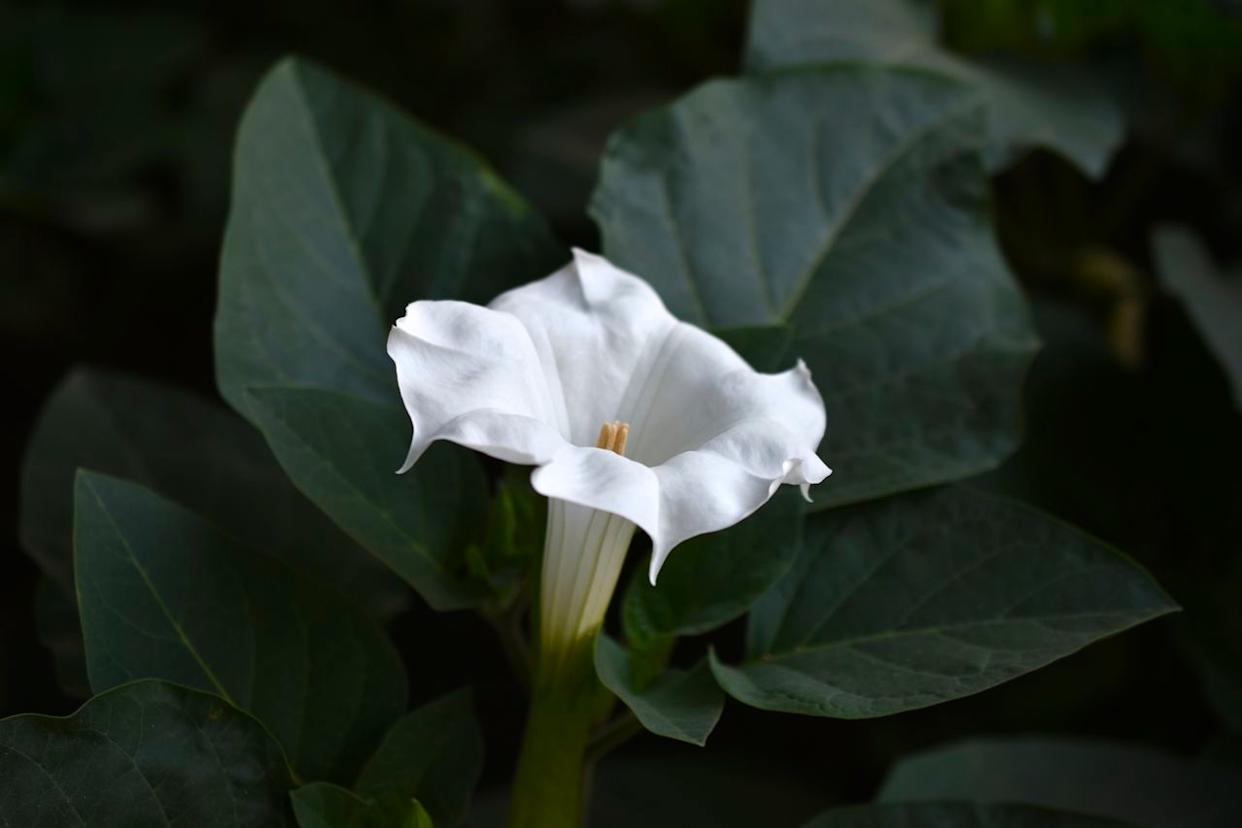
Credit: Getty Images
Moonflower is a tropical vine usually grown as an annual that can reach a height of up to 20 feet in one growing season. Its white, upright, funnel-shaped flowers remain tightly closed during the day and open fully to a width of 4 inches or more in just a few minutes in the evening. Its delightfully sweet fragrance attracts night-flying pollinators.
Botanical Name: Ipomoea alba
Soil Type: Clay, loam, sand
Soil pH: Alkaline to acidic
04 of 08
Evening Primrose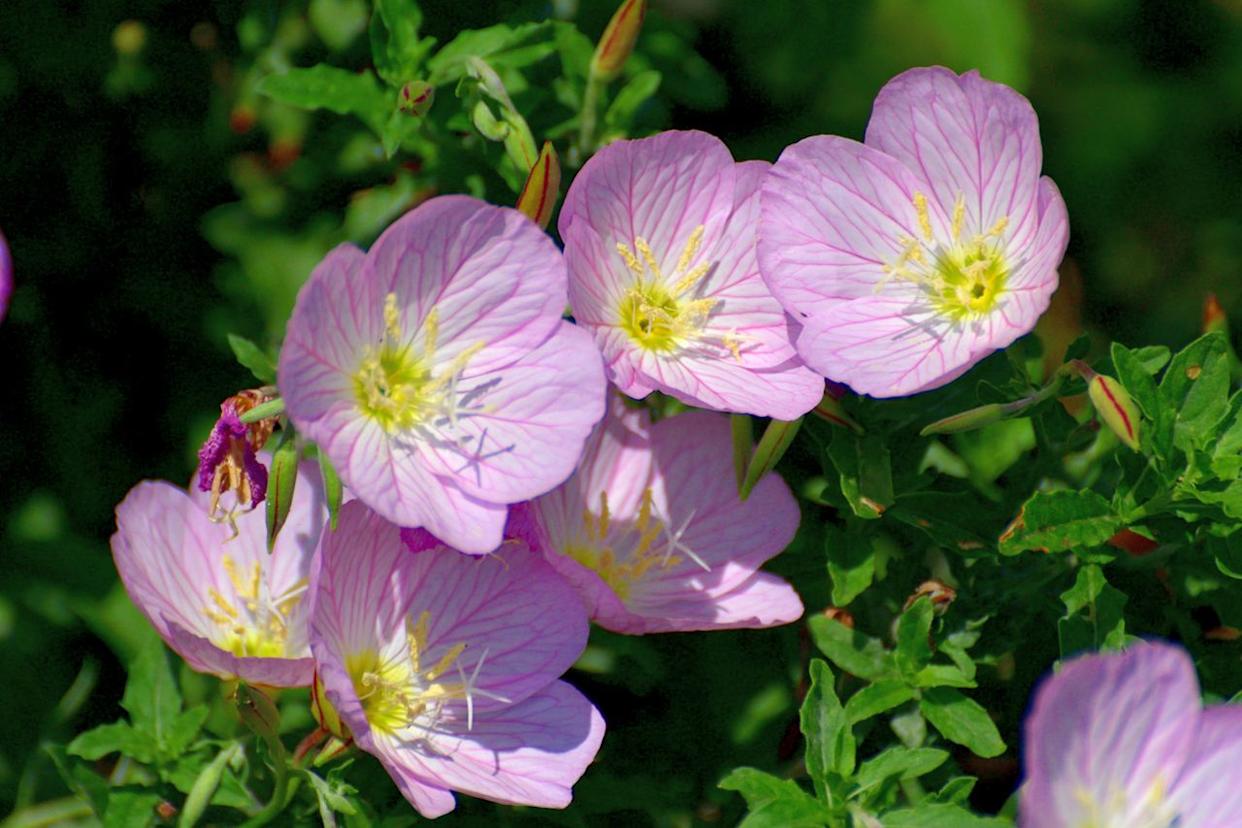
Credit: Getty Images
A hardy perennial in cooler areas, evening primrose is a fast-spreader and forms mounds of foliage about 12 inches in height. The large, cup-shaped, pale pink flowers open in the evening or on cloudy days and release a fragrant aroma into the garden. It is drought-tolerant and grows in any soil type except those with poor drainage.
Botanical Name: Oenothera speciosa
Sun Exposure: Full sun to partial shade
Soil Type: Rocky, clay, sand
Soil pH: Neutral to alkaline
05 of 08
Night-Blooming Jasmine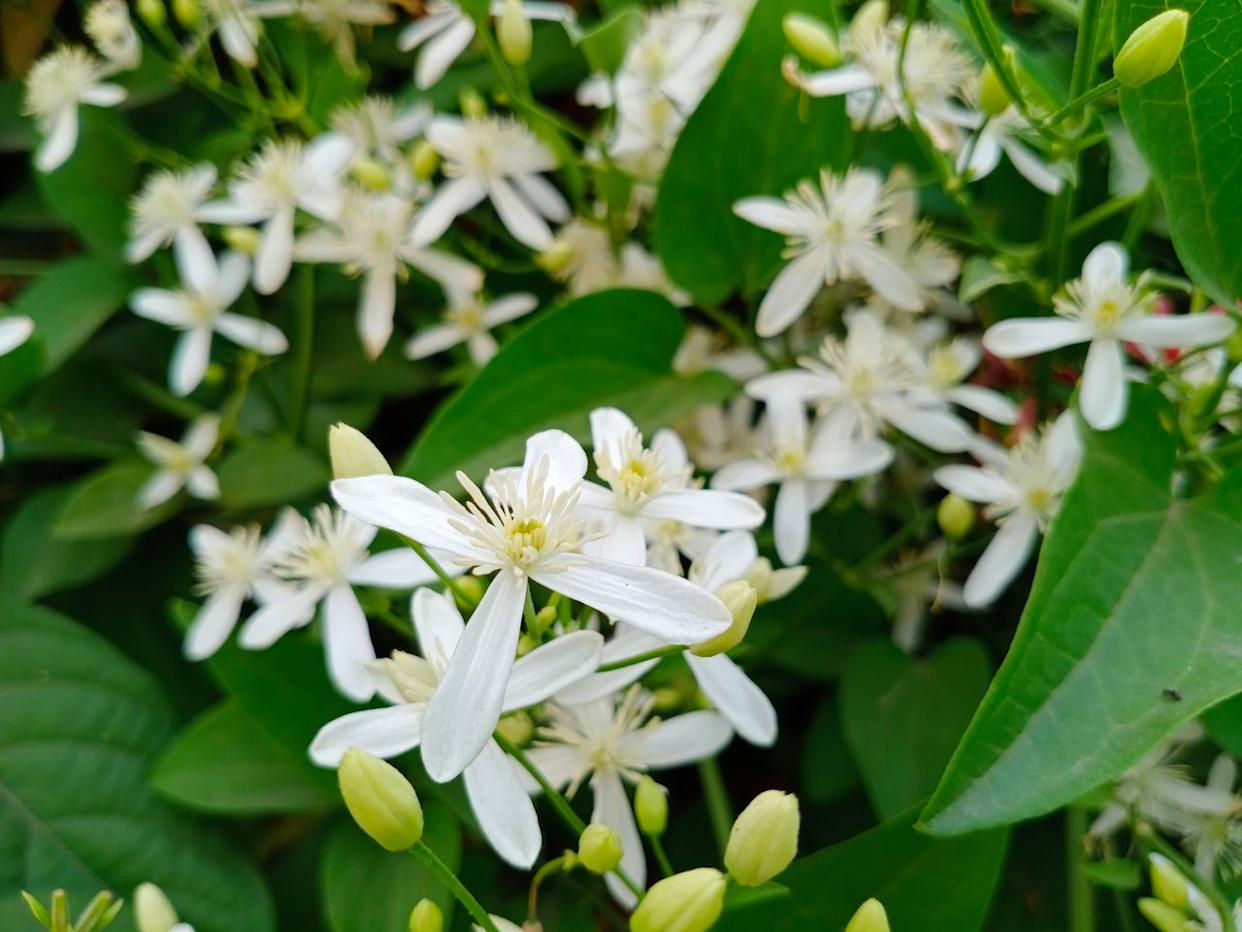
Credit: Getty Images
Covered with fragrant, large, tubular orange flowers from spring until fall, night-blooming jasmine is a perfect choice for nighttime pollinators. It can form a small shrub in warm growing areas, but in most growing zones, it is a woody vine that fills a trellis. In cooler areas, it may die back, but is root hardy to zone 7.
Botanical Name: Centrum aurantiacum
Sun Exposure: Dappled sunlight to partial shade
Soil Type: Clay, loam, sand
Soil pH: Alkaline to acidic
06 of 08
Calico Aster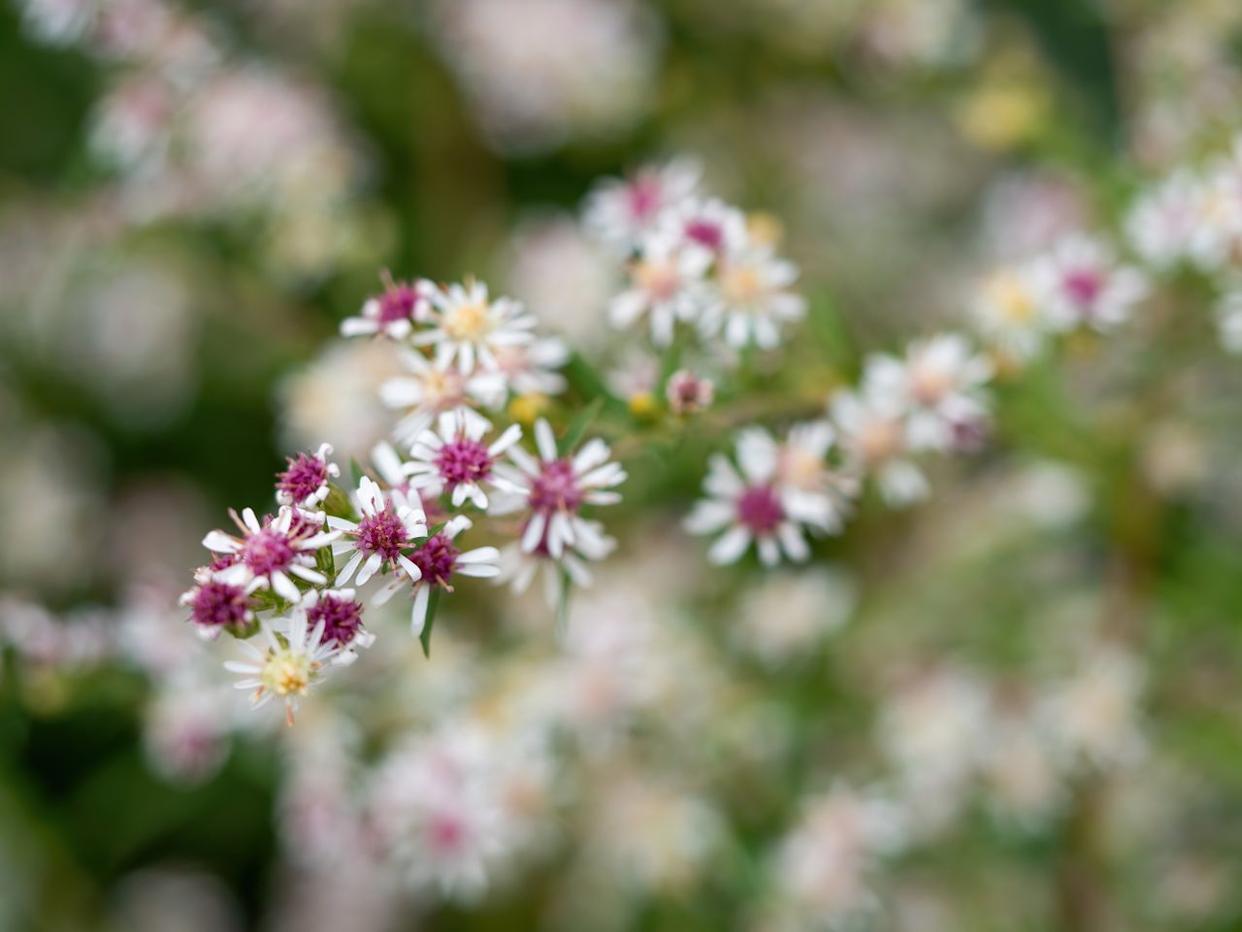
Credit: Getty Images
If you’re looking for a late summer blooming native plant, calico asters are a perfect choice. They have a profusion of petite white, daisy-like flowers that subtly catch and reflect moonlight. The plants reach 2 to 3 feet tall and wide and serve as larval hosts for several species of moths.
Botanical Name: Symphyotricum lateriflorum
Sun Exposure: Full sun to partial shade
Soil Type: Well-draining, clay, loam, or sand
07 of 08
Night-Blooming Cereus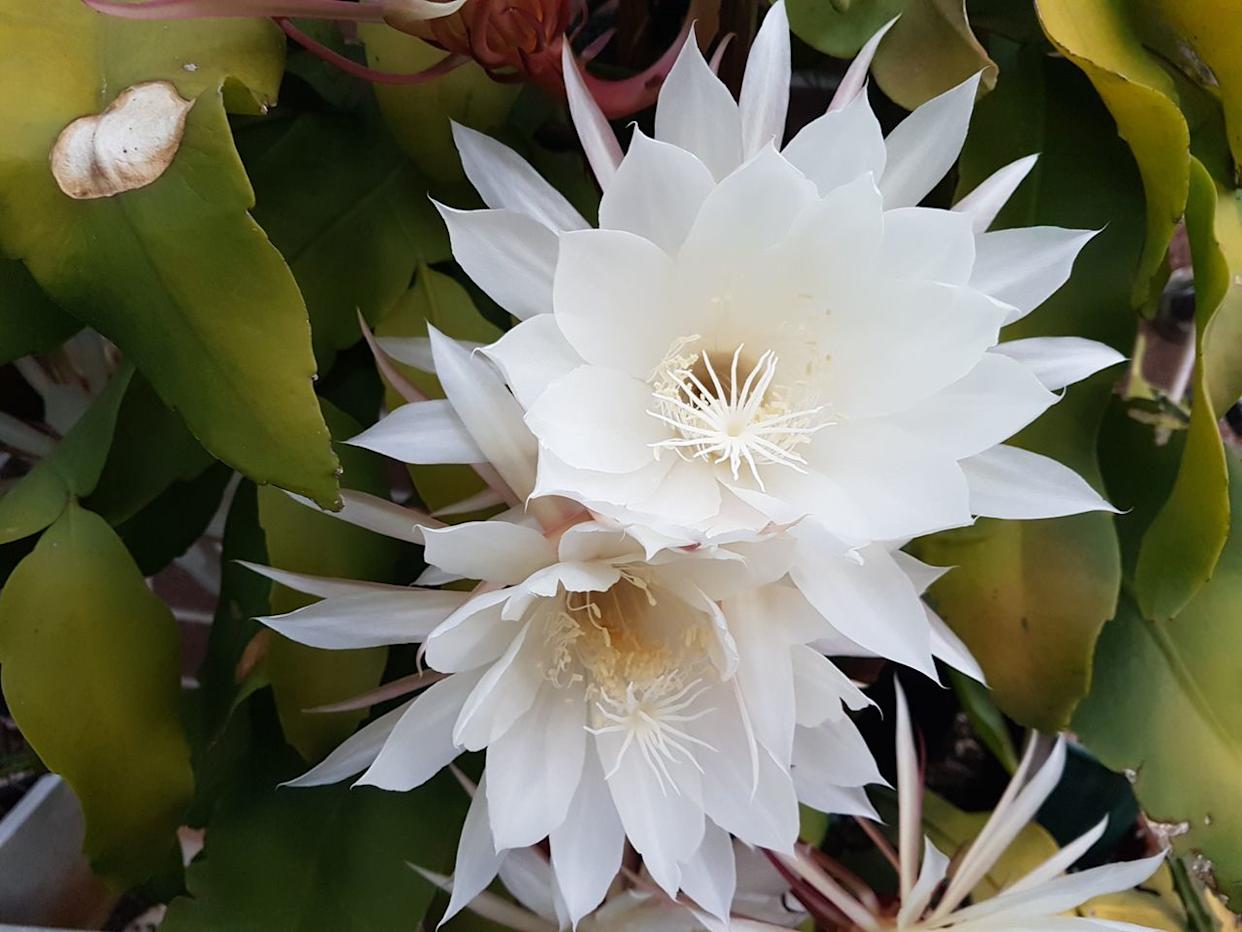
Credit: Getty Images
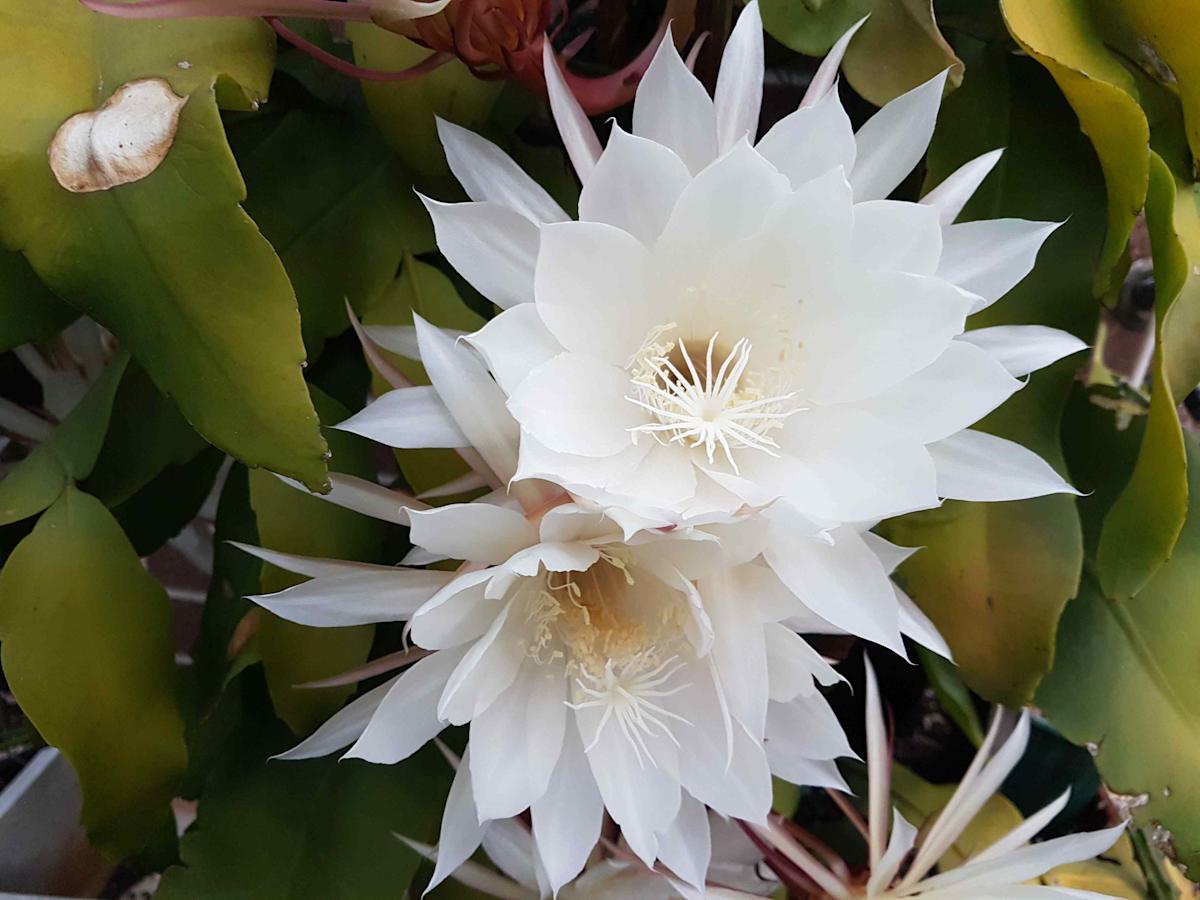
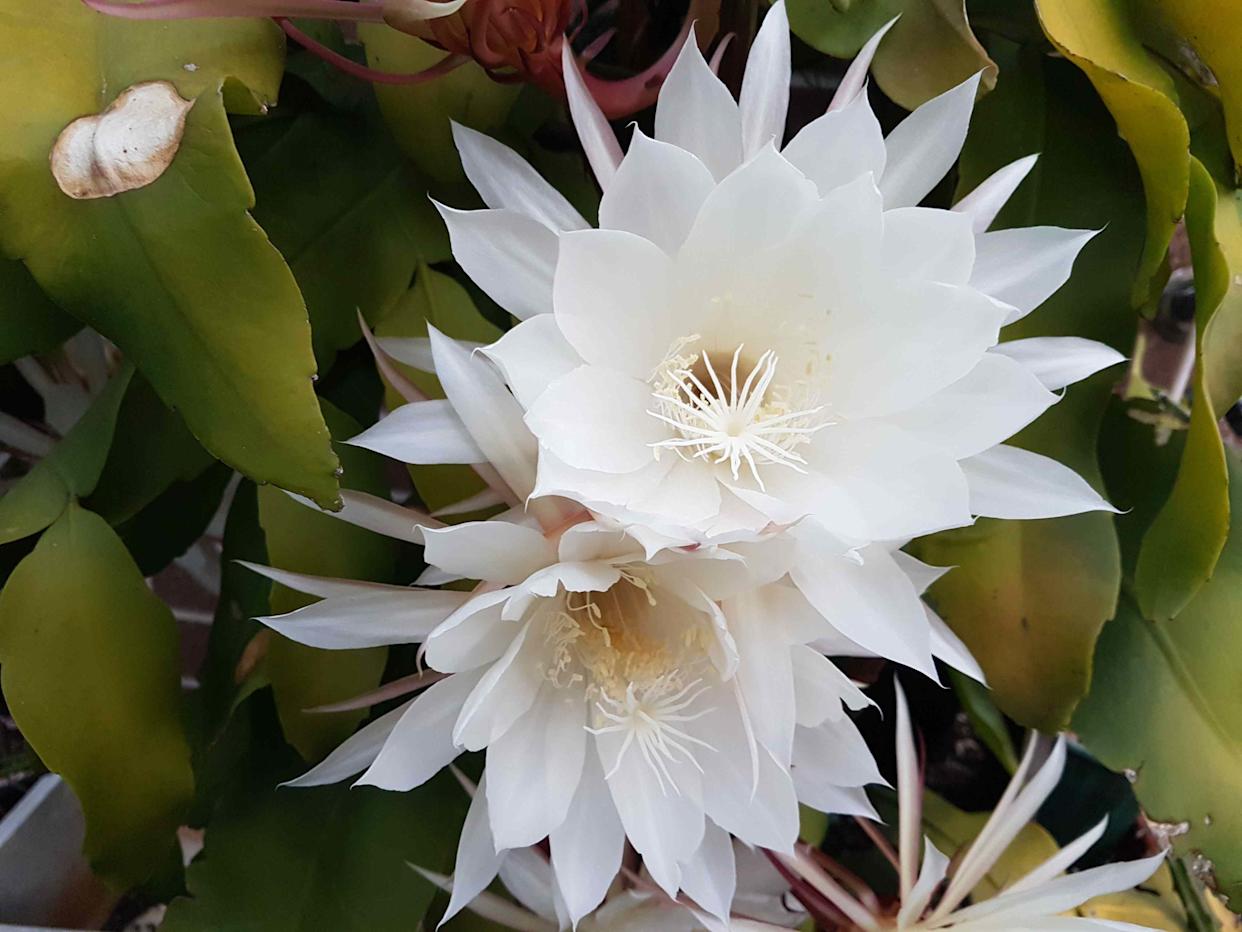
Usually grown as a houseplant, a night-blooming cereus is a perfect addition to a container in a warm, humid, summer Southern moon garden. An erect, sprawling, and spineless cactus, the flowers are white, fragrant, and measure 12 inches long and 8 inches wide. Blooming in late spring to early summer, the flowers open at night and wither by the next morning. The flowers are pollinated by bats and moths and produce purplish-red fruits.
Botanical Name: Epiphyllum oxypetalum
Sun Exposure: Partial shade
Soil Type: Well-draining sand or loam
Soil pH: Acidic to Alkaline
08 of 08
Four O’Clock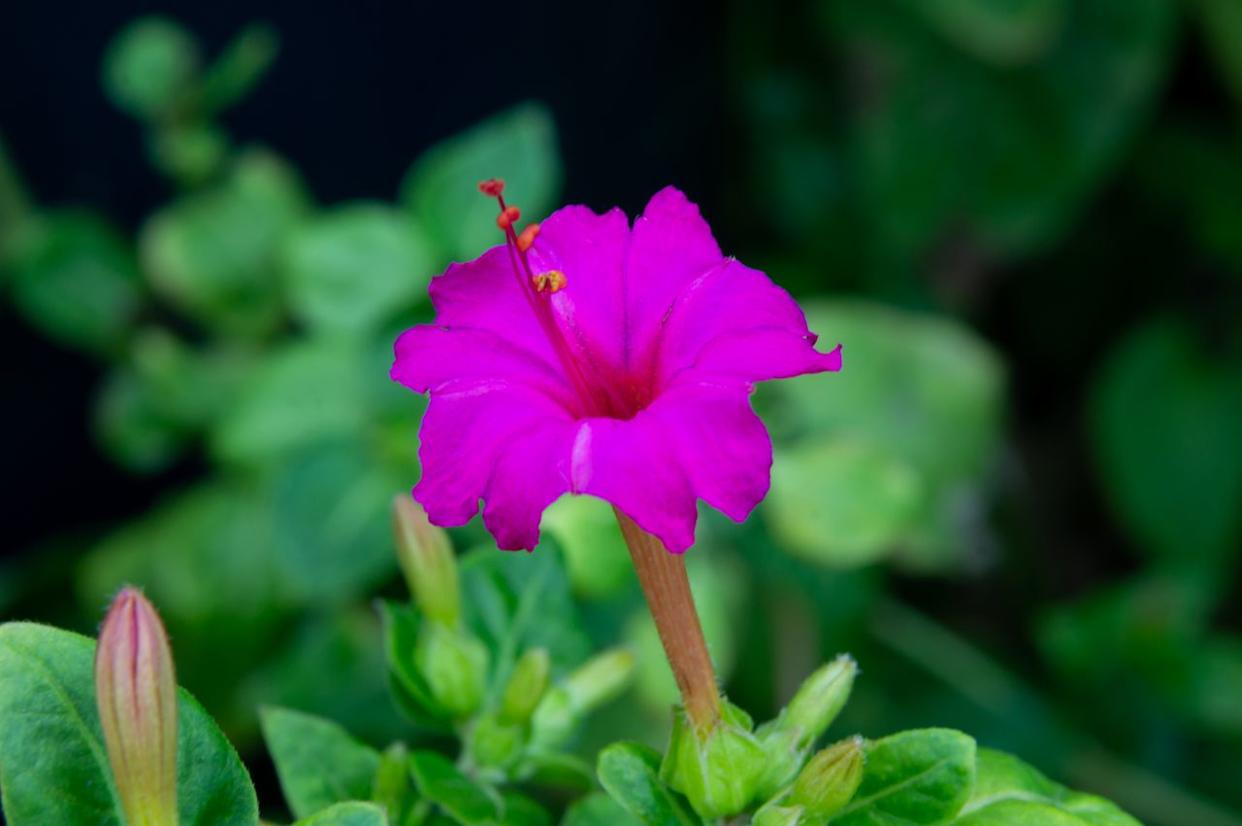
Credit: Getty Images
Four o’clock is a must for a moon garden because its flowers open late in the afternoon and remain open all night while emitting a pleasant fragrance. An annual with bush-like foliage and white, pink, or yellow blooms, it grows to around 15 inches tall and reseeds readily. Four o’clock is a favorite of night-flying moths looking for nectar.
Botanical Name: Mirabilis jalapa
Sun Exposure: Full sun to partial shade
Soil Type: Clay, loam, sand
Read the original article on Southern Living
Comments are closed.