
 www.provenwinners.com
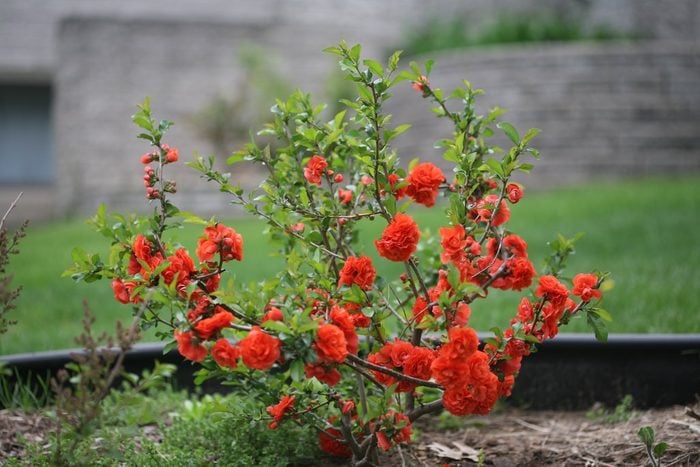
Double Take Orange Quince
Chaenomeles speciosa, Zones 5 to 9
This orange flowering shrub is so beautiful you may not realize how resilient it is! Heat and drought tolerant once established, this plant will delight you with large double candy colored blooms in spring. Plants grow 4 to 5 feet tall and do not produce fruit.
Why we love it: The Double Take quinces are thornless and easy to grow.
 Courtesy Gilberto Sanchez
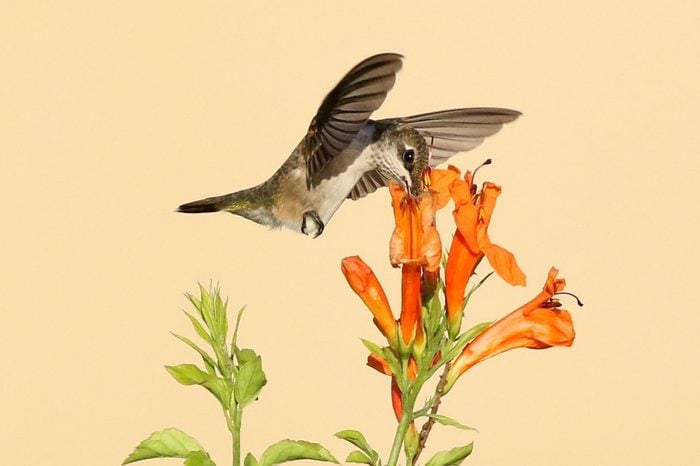
Cape Honeysuckle
Tecomaria capensis, Zones 9 to 11, annual elsewhere
Hummingbirds love cape honeysuckle, which grows as a perennial in warmer zones and an annual throughout the rest of the country. Growing between 3 and 10 feet tall and 7 and 10 feet wide, it’s a great pick for a large pollinator garden. Cape honeysuckle prefers full sun or part shade and tolerates both sandy and clay soils.
Why we love it: While it’s possible to grow cape honeysuckle as a shrub, many also train it to grow as a vine up a trellis.
Pomegranate
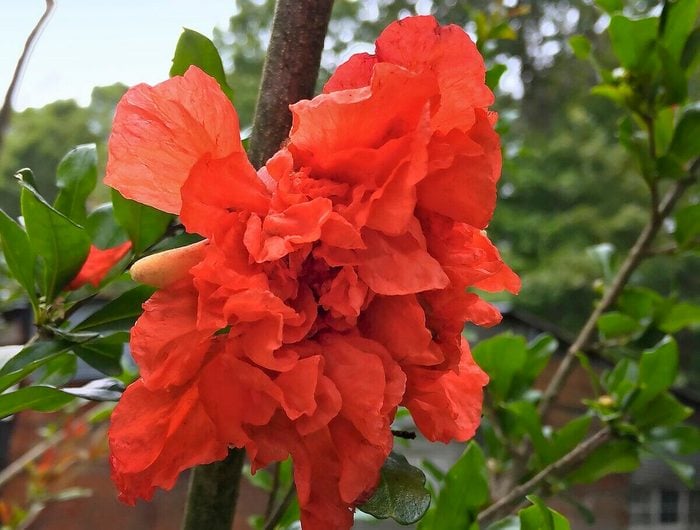
Punica spp., Zones 8 to 10
Pomegranates are known for gorgeous orange flowers but not all produce fruit. The double-flowering types of edible pomegranates form few, if any, fruit. Ornamental trees are slightly more cold hardy but do not fruit. Pomegranates are somewhat hardy in Zone 7 but grow more reliably in Zones 8 to 10. Gardeners should plant them in a protected location when growing them in their northern hardiness limits. Prune as needed in late winter, and occasionally remove the oldest stems on shrubby types to encourage new, stronger growth.
Why we love them: These plants can tolerate an array of soil types, flowering and fruiting best in full sun.
 Doreen Wynja/Monrovia
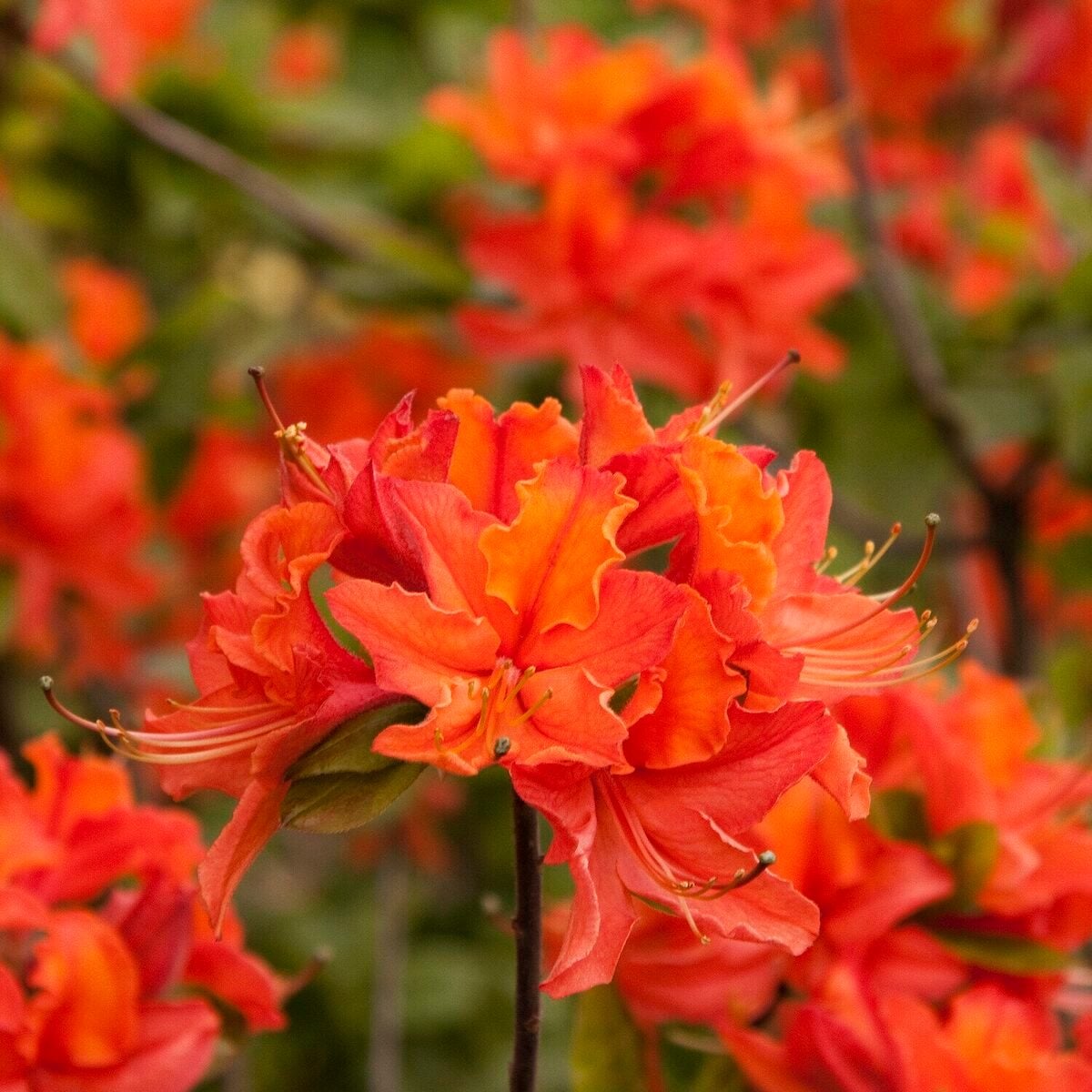
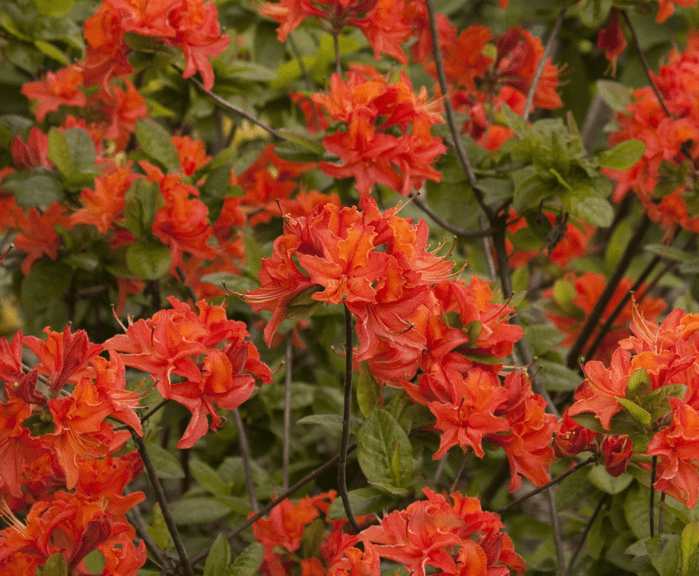
‘Mandarin Lights’ Azalea
Rhododendron ‘Mandarin Lights’, Zones 3 to 7
Add a bit of fire to your garden with this cold hardy azalea bush. Blooming in spring, this shrub’s flowers are bright mandarin orange. Typically, the shrub grows 4 to 5 feet tall and 4 feet wide. It grows best in full to partial sun and moist, well-draining soil.
Why we love it: The colorful showy blooms attract pollinators, including hummingbirds.
 www.provenwinners.com
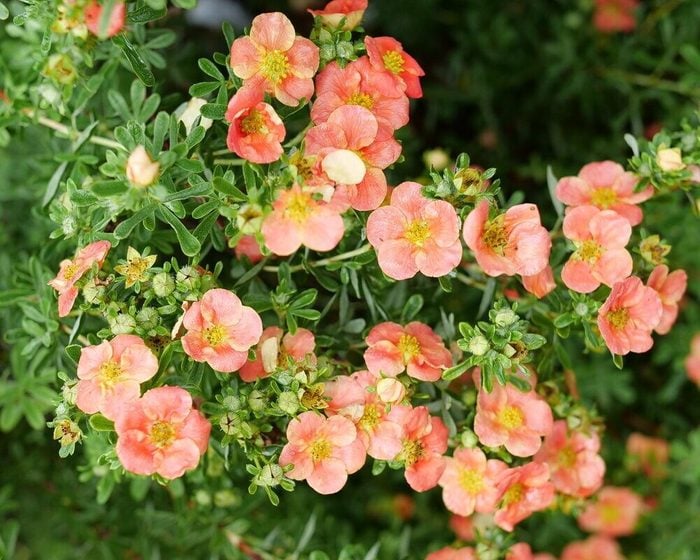
Happy Face Orange Potentilla
Potentilla fruticosa, Zones 2 to 7
These shrubby cinquefoil plants are covered in small creamsicle colored blooms that will delight you all season long. Happy Face will thrive wherever you plant it, and is useful as an edging plant, groundcover, or as a mass shrub planting when grouped.
Why we love it: These tough native plants keep blooming, no matter the growing conditions, and can fight back against salt, deer and drought.
 Courtesy Jan Bullard
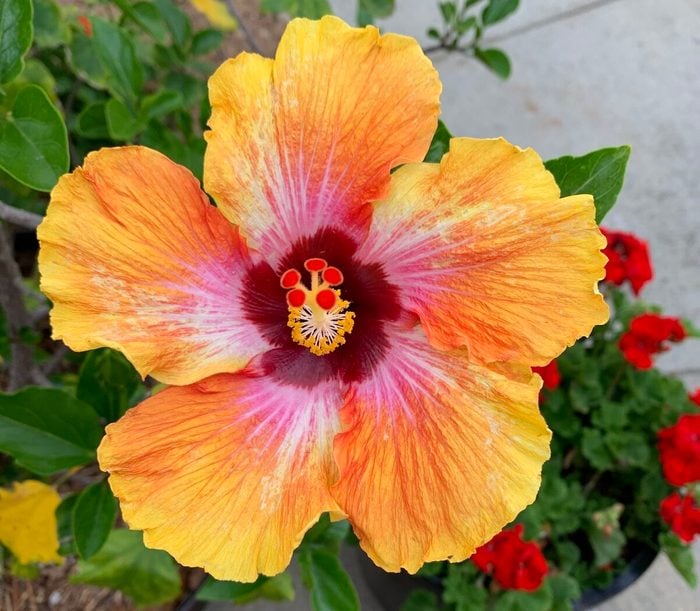
Tropical Hibiscus
Hibiscus rosa-sinensis, Zones 9 to 11, annual elsewhere
Tropical hibiscus is one of many hibiscus cultivars that gardeners can add to their yards. While its range as a perennial is limited, gardeners in colder climates can grow it in a container and bring it inside during winter. Either way, the plant becomes sizable. Those grown outside can grow up to 12 feet tall; those in containers reach up to 6 feet tall. They grow best with consistent moisture and full sun.
Why we love it: While tropical hibiscus’ flowers only last for a day, those flowers can grow up to 10 inches in diameter.
 La_Corivo/Getty Images
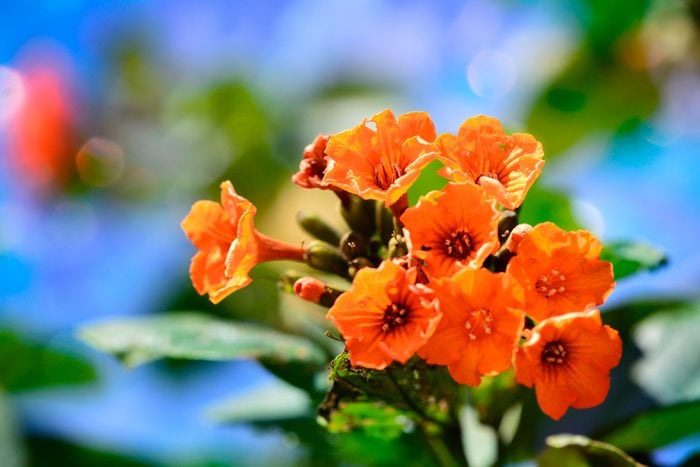
Orange Bells
Tecoma fulva subsp. guarume, Zones 8 to 11
As is the case with many orange flowering shrubs, orange bells — also called “flaming bells” or “orange trumpet bush” — grows as a perennial in warm climates and as an annual where temperatures go cold in winter. Its orange, tube-shaped flowers bring in butterflies and hummingbirds. For the highest number of flowers and the healthiest plant, plant it in full sun. It can grow up to 15 feet tall and 10 feet wide.
Why we love it: Moths are just as important as butterflies and orange bells is a host plant for the plebian sphinx moth’s caterpillars.
 www.provenwinners.com
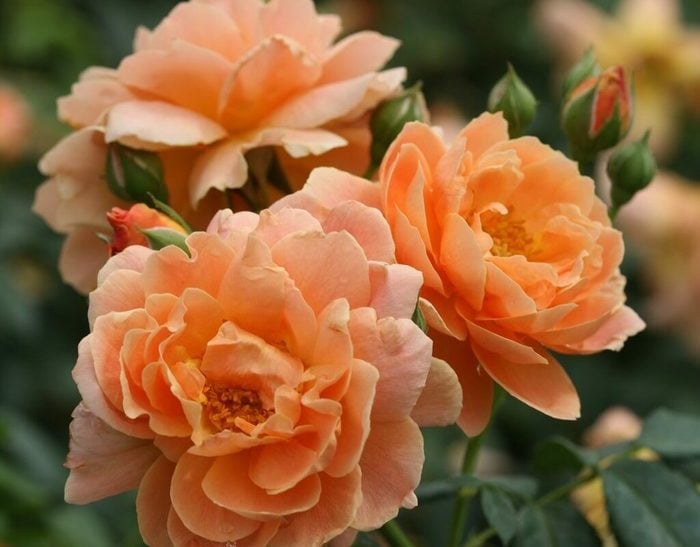
At Last Rose
Rosa, Zones 4 to 9
This sunset orange rose will delight you with its sweet perfume fragrance. Plants bloom non-stop from late spring through the first fall frost. These rose bushes grow up to 3 feet tall and wide and maintain a tidy, rounded form. In early spring, prune canes by approximately one-third.
Why we love it: In addition to being beautiful, this rose is also disease resistant.
 Carolyn Ann Ryan/Getty Images
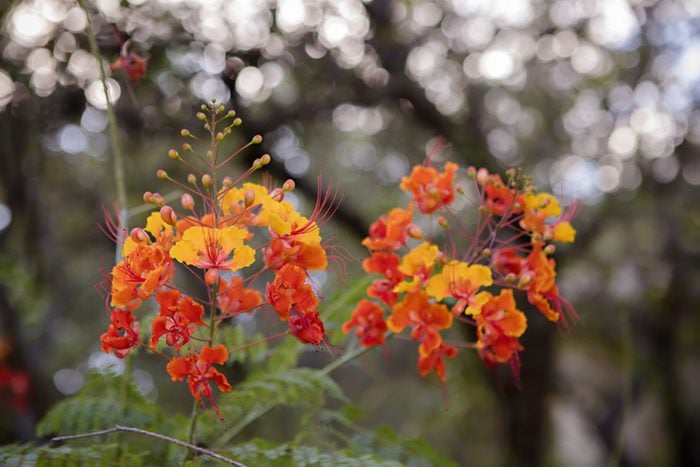
Red Bird of Paradise
Caesalpinia pulcherrima, Zones 9 to 11
Red bird of paradise is beloved by gardeners in the southwest. Gorgeous orange-red flowers cover these large shrubs (which grow up to 10 feet tall) all summer long. It’s also known by different common names, including peacock flower and pride of Barbados, so be sure to use the botanical name to make sure you get the right plant.
Why we love it: Hummingbirds and butterflies flock to the nectar-rich flowers.
 SHUTTERSTOCK / TMSARA
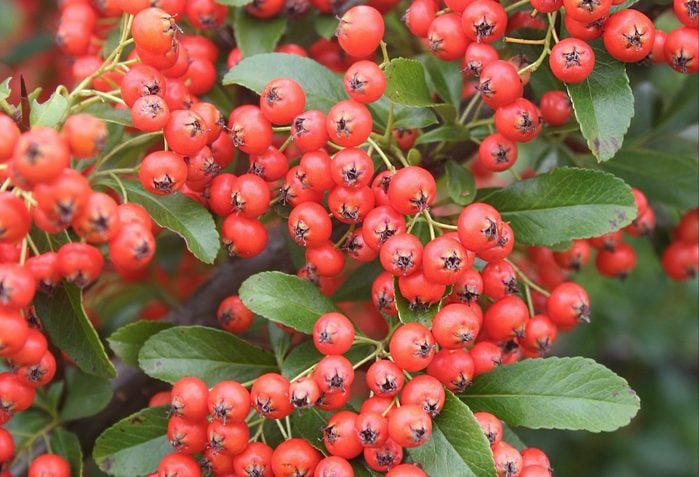
Firethorn
Pyracantha, Zones 6 to 9
Firethorn plants technically aren’t orange flowering shrubs (the flowers are white), but its striking orange berries provide a burst of warmth at a time when most plants are past their season. In fall, firethorn sports clusters of reddish orange berries. It can grow up to 10 to 15 feet tall and wide, so plant it where it’ll have plenty of space.
Why we love it: Firethorn is a favorite of berry-eating birds. Beloved backyard visitors such as cedar waxwings and American robins will likely stop by.
Comments are closed.