
Image Credit: Shutterstock.
You don’t need a backyard. You don’t need a plot at the community garden. You don’t even need to dedicate that much time. Truly, all you need is a pot, some potting mix, a sunny spot, and the right vegetables.
Container gardening has exploded in popularity for a simple reason: it works. Whether you’re working with a tiny balcony in the city, a front stoop in the suburbs, or just a few feet of patio space, growing your own food in pots is one of the most rewarding projects you can take on.
The secret, though, is knowing which vegetables actually thrive in containers — not just survive, but genuinely flourish. As a Master Gardener, I’ve pulled together the 15 absolute best picks, along with practical growing tips, pot size recommendations, and the top varieties to try. Your freshest summer yet starts here.
Before You Plant: 3 Container Garden Rules That Actually Matter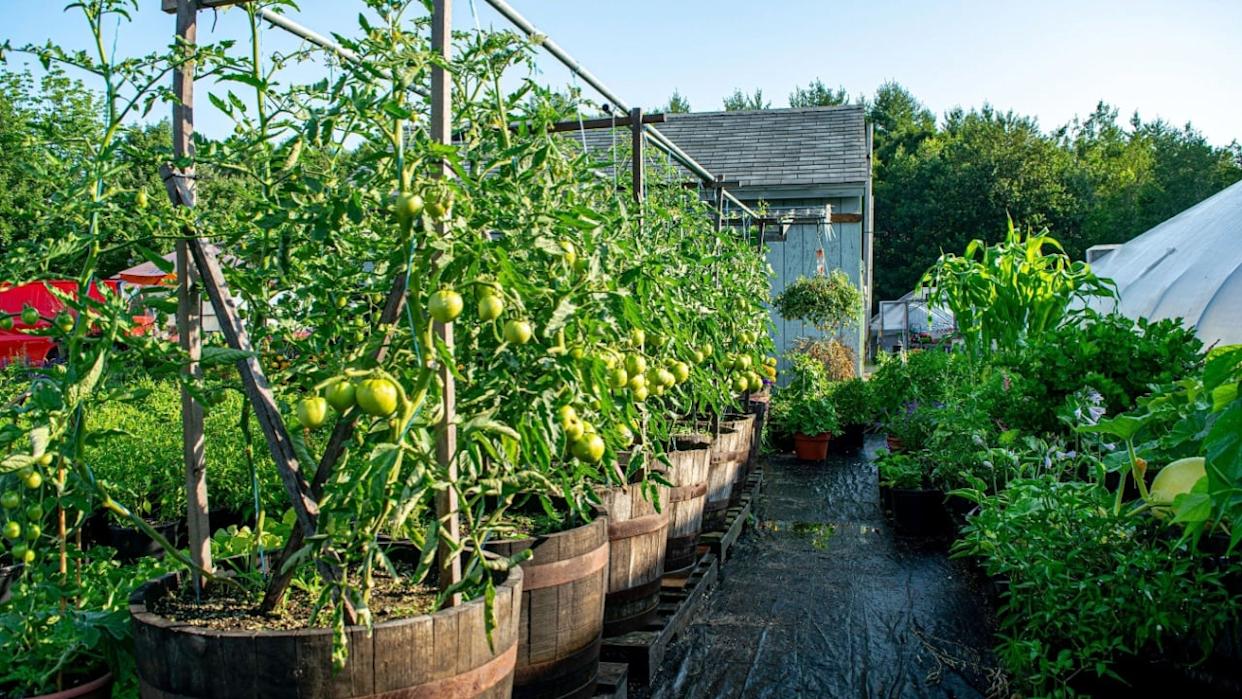
Image Credit: Shutterstock.
Every successful container vegetable garden rests on three fundamentals. Get these right, and almost everything will grow.
Use the right soil, says Penn State Extension. Never use garden soil in pots because it will compact, drain poorly, and can carry pests and disease. Always use a high-quality potting mix formulated for containers.
Size matters. Bigger pots hold more moisture, regulate temperature better, and give roots room to grow. When in doubt, go larger. Most vegetables need at least a 5-gallon container, according to the Old Farmer’s Almanac; tomatoes and squash need 10+.
Water consistently. Container plants dry out much faster than in-ground plants, writes the University of Maryland Extension. Check the soil daily in summer by pressing a finger an inch deep; if it feels dry, water until it drains from the bottom. You can always opt for installing an automated watering system to lessen the watering labor load.
1. Cherry Tomatoes — The All-Star of Patio Gardening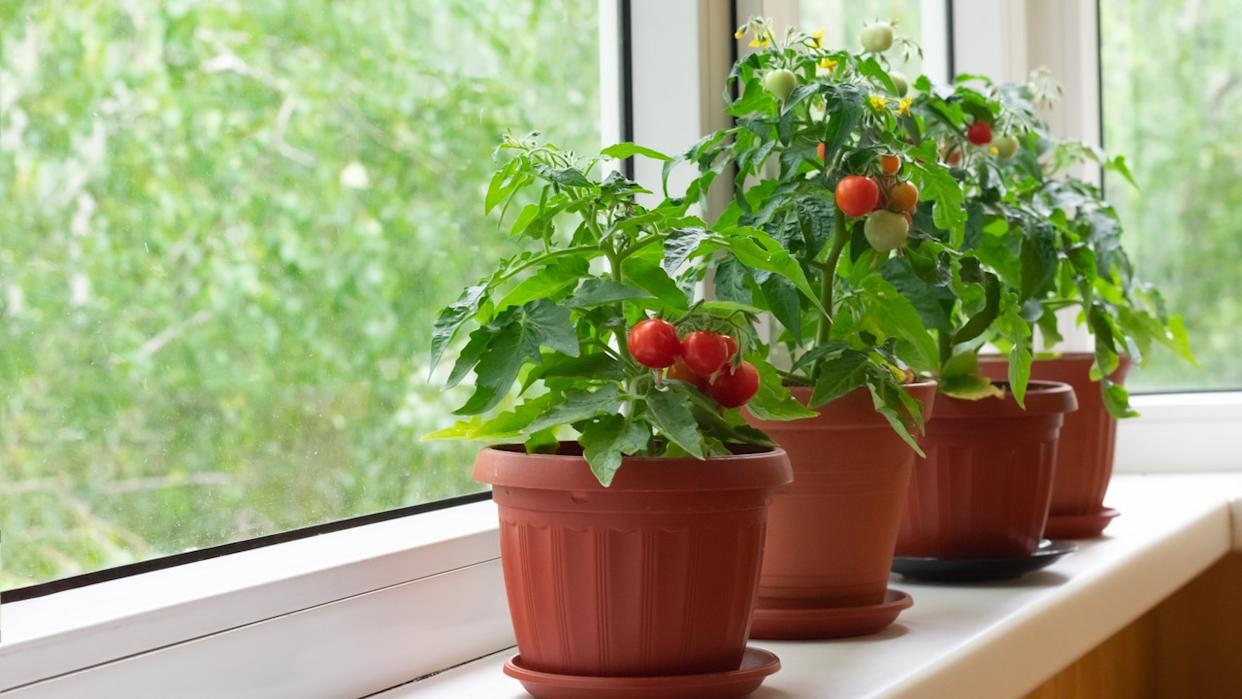
Image Credit: Shutterstock.
If container gardening had a mascot, it would be the cherry tomato. These prolific little producers love warm soil, full sun, and the snug confines of a pot, according to Bright Lane Gardens, and they’ll reward your devotion with clusters of sweet, bite-sized fruit all summer long. Compact and determinate varieties like ‘Tiny Tim,’ ‘Tumbling Tom,’ and ‘Sweet 100 Cherry’ are bred specifically for small-space growing. They ripen fast, produce heavily, and look absolutely gorgeous spilling over a terracotta pot on a sunny balcony.
Pot Size: 5+ gallons | 12–14 inches deep
Sun: Full sun (6–8 hrs/day)
Best Varieties: Tiny Tim, Tumbling Tom, Sweet 100 Cherry
2. Lettuce & Salad Greens — Fastest Return on Investment in the Garden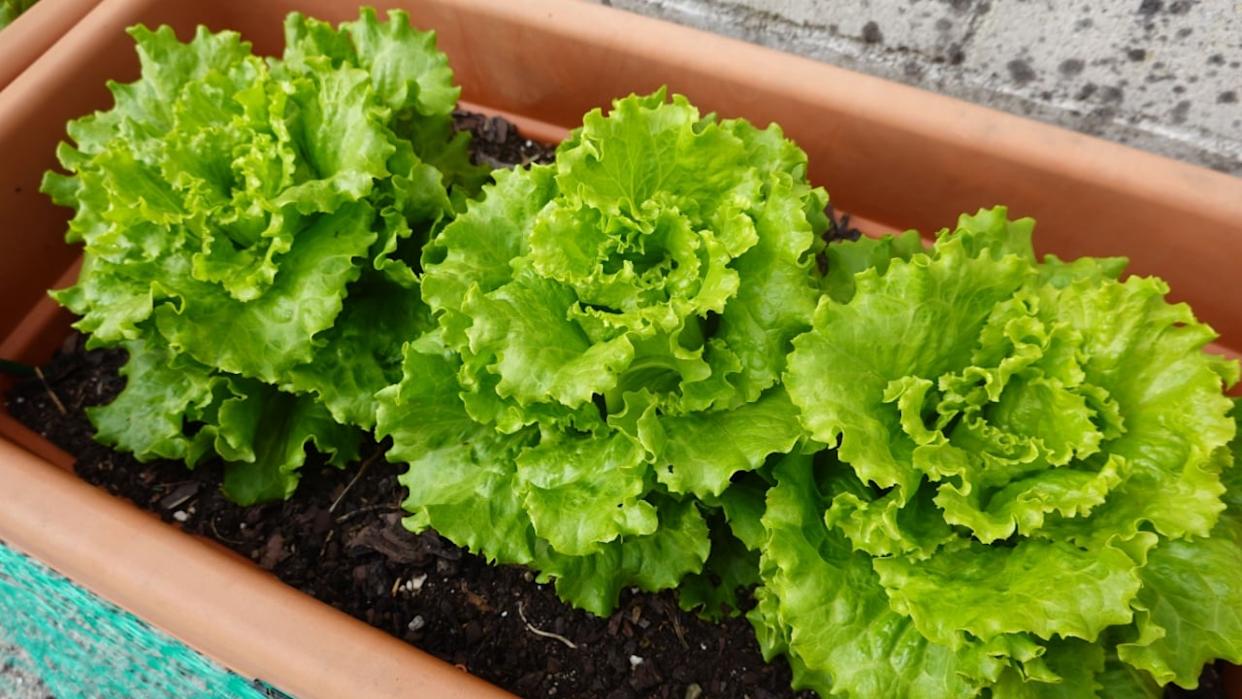
Image Credit: Shutterstock.
Want a harvest in under 30 days? Lettuce is your answer. With a shallow root system, lettuce thrives in nearly any container. “Cut and come again” loose-leaf varieties like ‘Black Seeded Simpson’ or a mixed mesclun blend let you snip a handful of leaves and watch them regrow for multiple harvests, according to Northern Gardener by the Minnesota State Horticultural Society. The trick with lettuce is timing: it loves cool weather, so plant in spring or fall. In summer heat, tuck the pot in afternoon shade to prevent bolting.
Pot Size: 2+ gallons | 6–8 inches deep
Sun: Partial shade OK (4–6 hrs)
Best Varieties: Black Seeded Simpson, Buttercrunch, mixed mesclun
3. Peppers — Hot, Sweet, and Made for Containers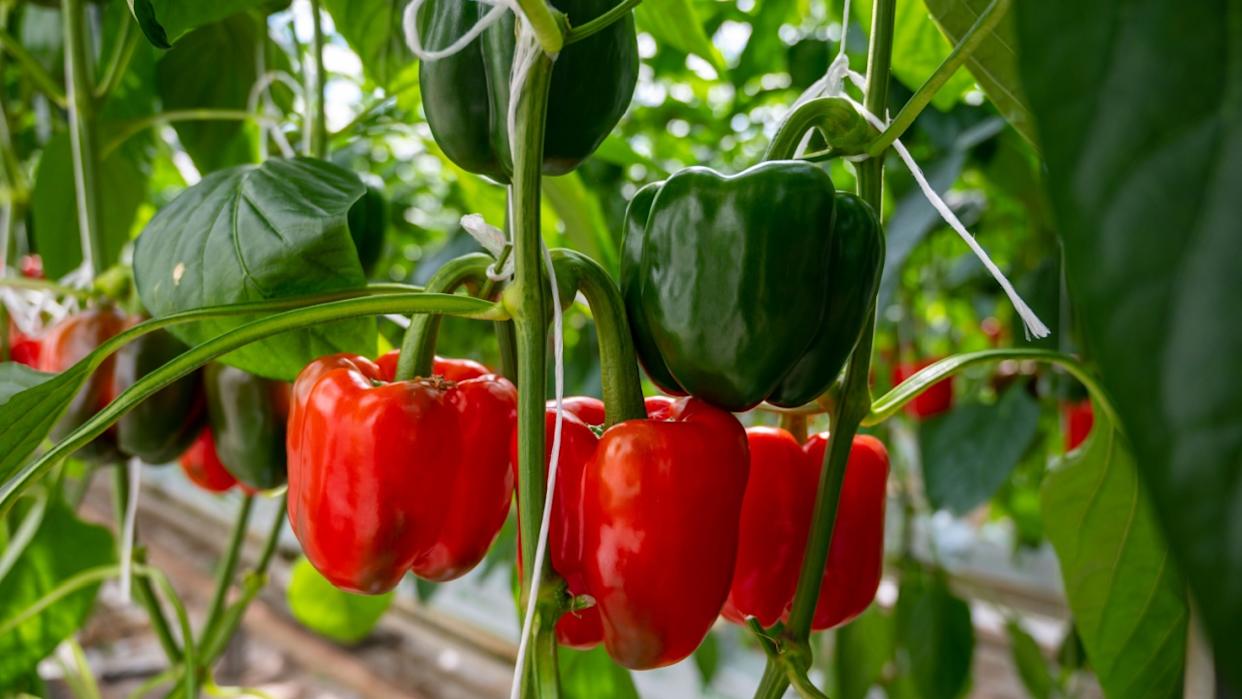
Image Credit: Shutterstock.
Here’s a secret most gardeners don’t know: peppers actually prefer their roots slightly constrained, says Tim McSweeney of Food52, making them one of the happiest pot-grown vegetables out there. Whether you’re growing sweet bells, mild banana peppers, or fiery jalapeños, the formula is the same: give them full sun, warm soil, and consistent moisture. Container-grown peppers often outperform their in-ground counterparts in cooler climates because pots heat up faster in spring, giving peppers the warm start they crave. Dress them up with companion flowers in a larger pot, and they become a real showpiece.
Pot Size: 3–5 gallons | 12–14 inches deep
Sun: Full sun (6–8 hrs/day)
Best Varieties: Mini Bell, Lunchbox Sweet, Jalapeño, Cayenne
4. Spinach — Popeye Was Onto Something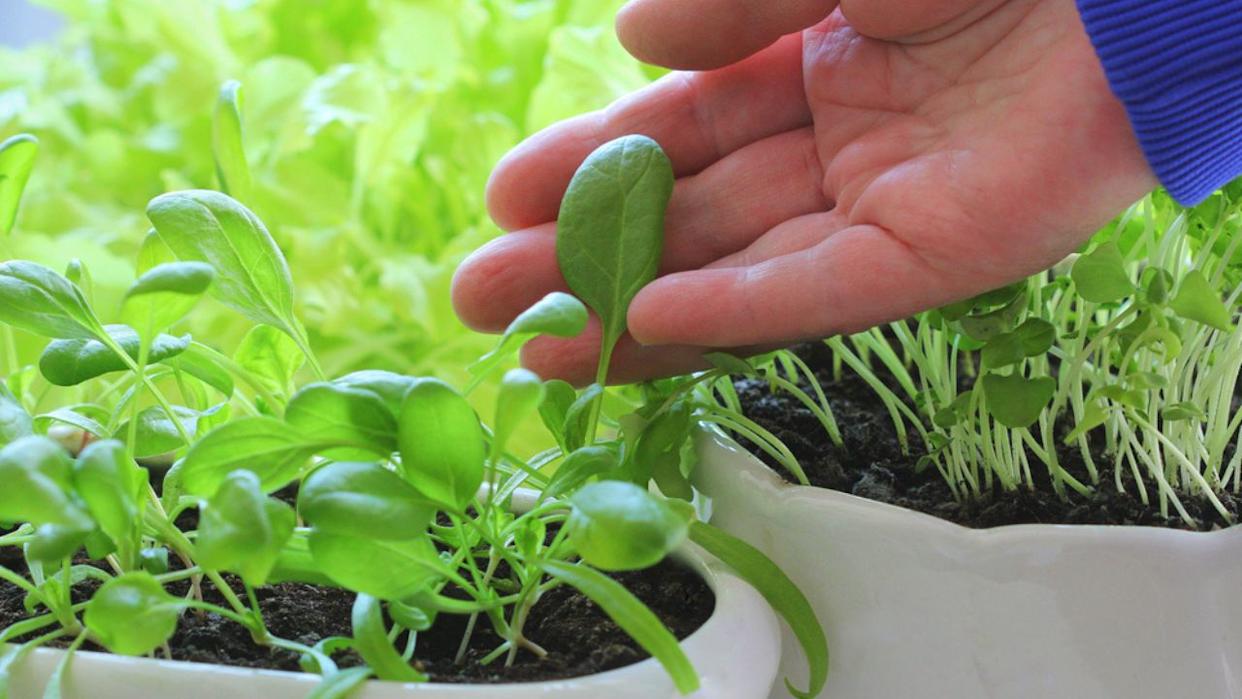
Image Credit: Shutterstock.
Spinach is one of the most forgiving and nutritious vegetables you can grow in a pot, according to ProMix Gardening. Unlike most vegetables, it actually tolerates partial shade, making it an excellent choice for balconies or patios that only get a few hours of direct sun. Rich in iron, folate, and antioxidants, a single pot of spinach can supply a steady stream of leaves for smoothies, salads, and sautés. It prefers cooler temperatures, so it’s ideal for spring and fall growing. In warm climates, grow it during winter for a year-round supply.
Pot Size: 2+ gallons | 6 inches deep
Sun: Partial shade to full sun
Best Varieties: Bloomsdale, Baby Spinach, Tyee
5. Radishes — The Instant Gratification Vegetable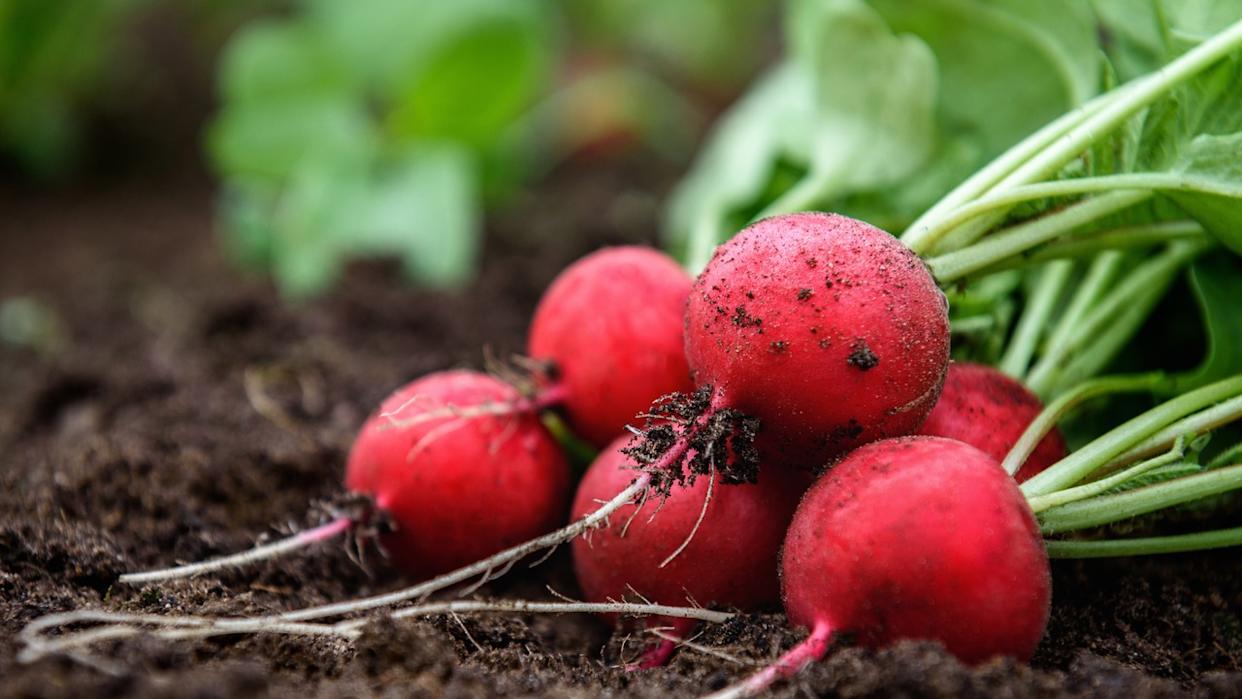
Image Credit: Shutterstock.
Radishes are the ultimate beginner vegetable, and for impatient gardeners, they’re pure magic. Many varieties go from seed to harvest in just 20–30 days. They need minimal space, grow perfectly in shallow pots, and are incredibly satisfying to pull from the soil. Kids especially love growing them. Beyond the classic red globe, try ‘French Breakfast’ (long and mild), ‘Watermelon’ radish (green outside, vibrant pink inside), or spicy ‘Daikon.’ Because they grow so fast, says Wisconsin Horticulture, you can easily plant two or three successive crops in the same pot before summer hits.
Pot Size: 2 gallons | 6–8 inches deep
Sun: Full sun to partial shade
Best Varieties: Cherry Belle, French Breakfast, Watermelon, Easter Egg
6. Kale — The Superfood That Keeps on Giving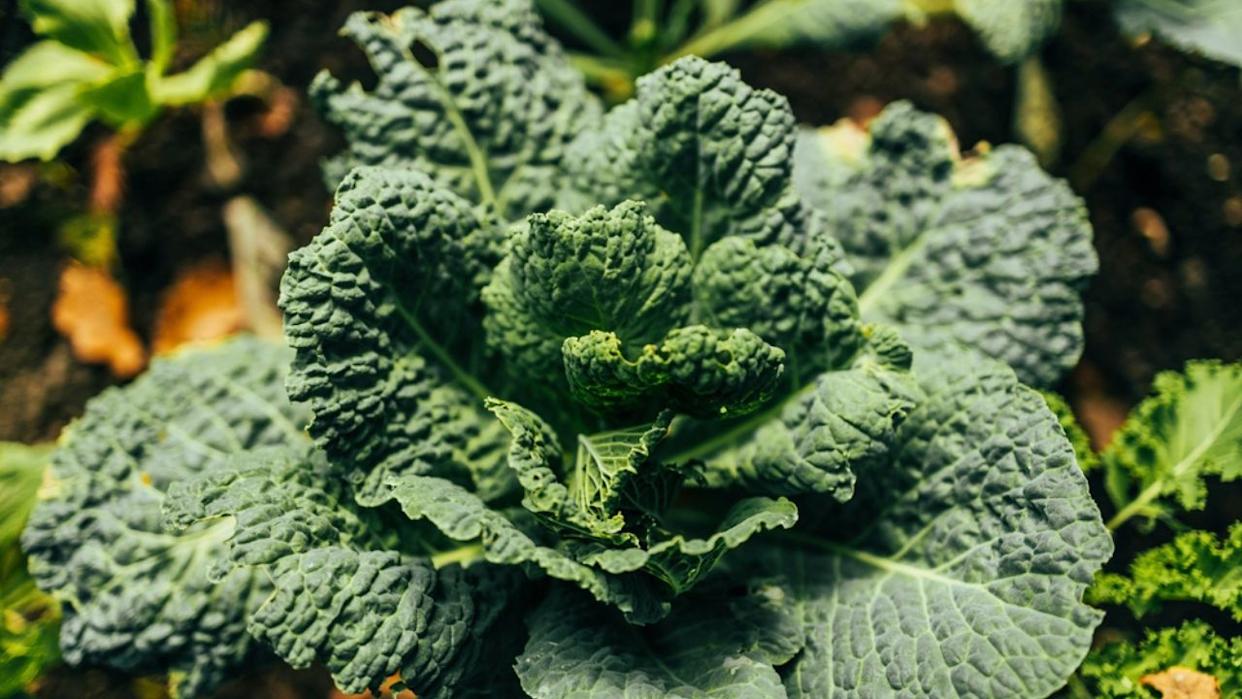
Image Credit: Shutterstock.
Kale is one of the most ornamental edibles you can grow, says Steven Biggs of Food Garden Life, and in a container, its ruffle-edged leaves in deep blue-green or vibrant purple make it a serious conversation piece. Beyond good looks, kale is a nutritional powerhouse and one of the most cold-hardy vegetables you can grow, often surviving frosts that would kill other container plants. Plant it in the fall, and it can provide fresh greens well into winter. The “cut and come again” nature of kale means one plant can produce leaves for months. Look for compact varieties like ‘Dwarf Blue Curled’ for best results in pots.
Pot Size: 3–5 gallons | 12 inches deep
Sun: Full sun (tolerates partial shade)
Best Varieties: Dwarf Blue Curled, Red Russian, Lacinato (Dinosaur Kale)
7. Cucumbers — Vertical Growers, Massive Payoff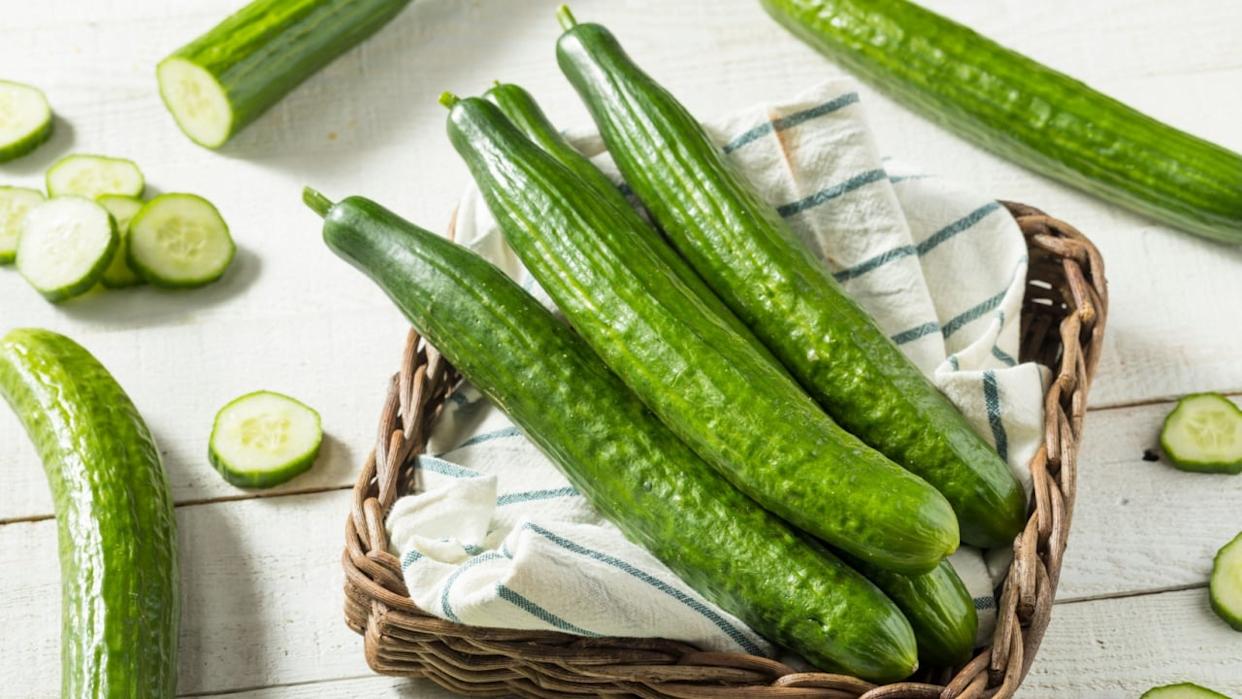
Image Credit: Shutterstock.
Cucumbers in a pot? Absolutely, if you give them a trellis or some kind of vertical support. These enthusiastic climbers can transform a plain balcony into a lush, leafy green wall while producing pounds of crisp cucumbers. The key is choosing compact or ‘bush’ varieties bred for container growing, like ‘Bush Pickle’ or ‘Patio Snacker.’ Cucumbers are thirsty plants, so self-watering containers or regular deep watering are essential, writes the New York Botanical Garden. In return, they produce quickly and abundantly; one healthy plant can yield cucumbers every few days at peak season.
Pot Size: 5 gallons | 12 inches deep
Sun: Full sun (6–8 hrs/day)
Best Varieties: Bush Pickle, Patio Snacker, Spacemaster
8. Carrots — Root Vegetables That Love a Deep Pot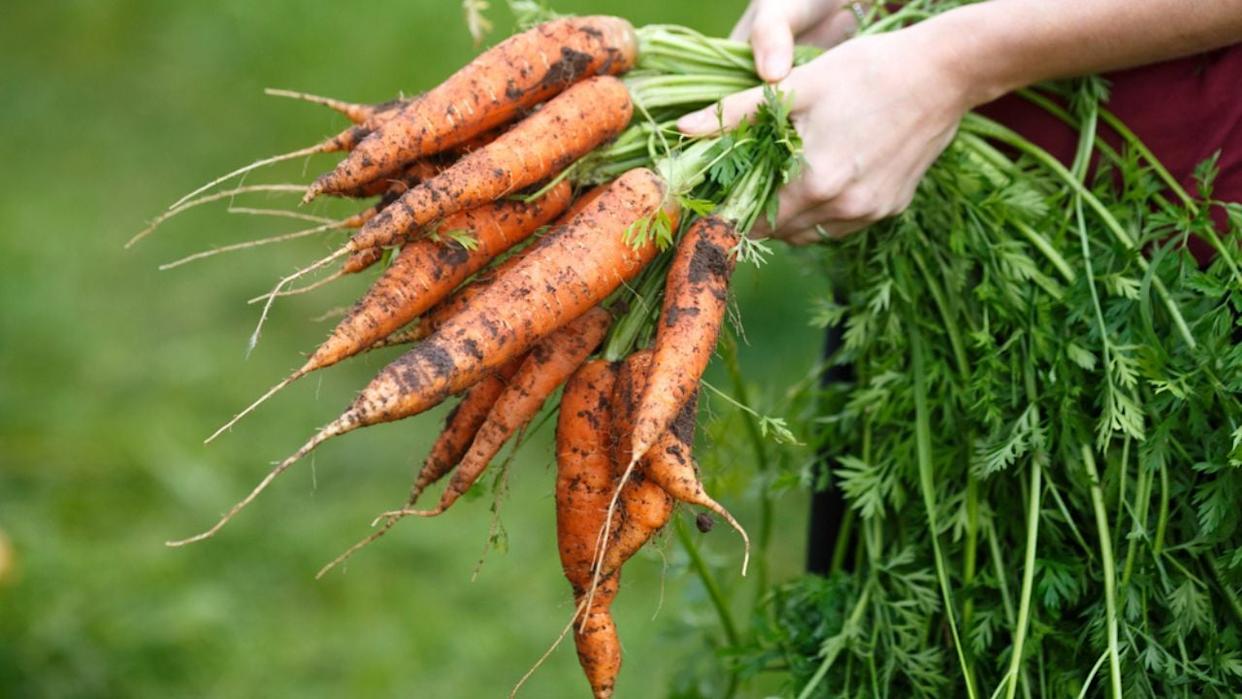
Image Credit: Deposit Photos.
Carrots are a surprising container success story because pots filled with light, loose potting mix are actually ideal for root development compared to compacted garden soil, according to Wisconsin Horticulture. The trick is choosing the right varieties. Short or round types like ‘Thumbelina,’ ‘Paris Market,’ and ‘Chantenay’ are specifically well-suited to shallower containers. For full-sized carrots, use a deep pot of at least 18 inches. Sow seeds directly (carrots dislike transplanting), thin them when small, and water consistently. The result is perfectly formed, deeply sweet homegrown carrots.
Pot Size: 3+ gallons | 12–18 inches deep
Sun: Full sun (6+ hrs/day)
Best Varieties: Thumbelina, Paris Market, Chantenay, Little Finger
9. Bush Beans — Low-Maintenance, High-Output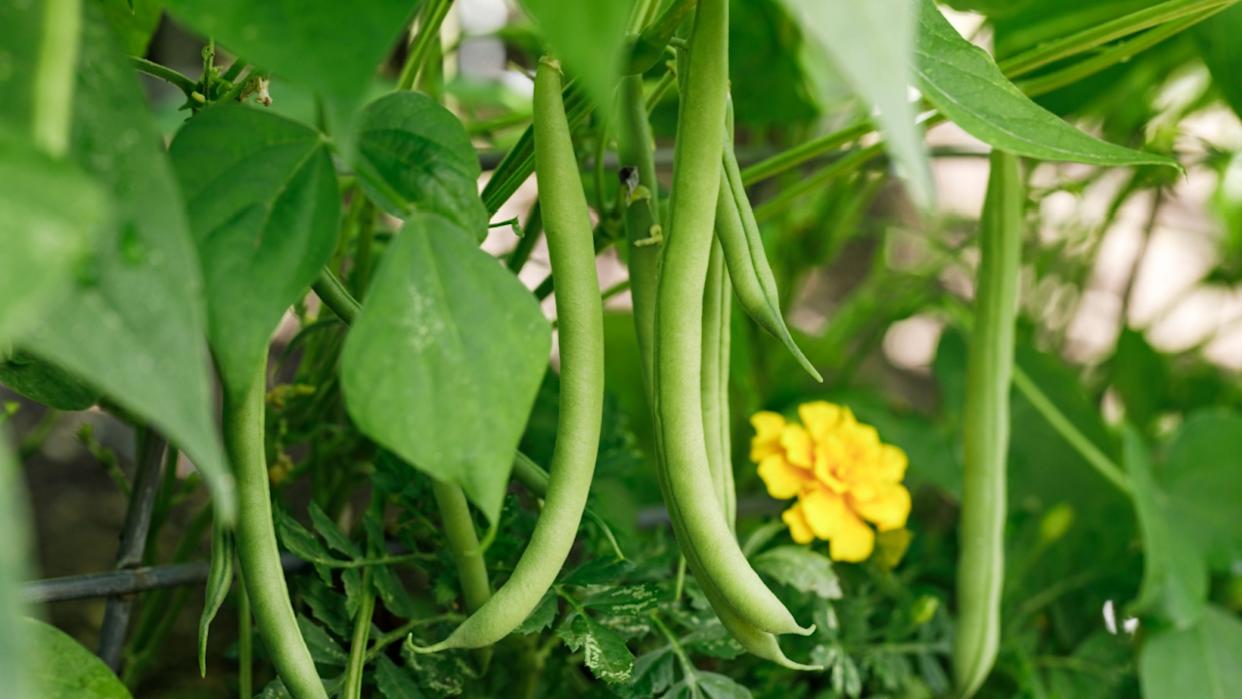
Image Credit: Shutterstock.
Bush beans are the definition of a low-maintenance, high-reward crop. Unlike pole beans, they don’t require staking or trellising, making them one of the easiest veggies to grow in a container, says Wisconsin Horticulture. They grow fast, produce a generous harvest over several weeks, and fix nitrogen in the soil, leaving your potting mix in better shape than they found it. Plant seeds directly in a large pot, water consistently, and within 50–60 days, you’ll be snapping fresh beans. For an extended harvest season, plant a second container 3 weeks after the first.
Pot Size: 5 gallons | 8–10 inches deep
Sun: Full sun (6+ hrs/day)
Best Varieties: Provider, Blue Lake Bush, Contender, Dragon Tongue
10. Eggplant — The Secret Heat-Lover of Container Gardens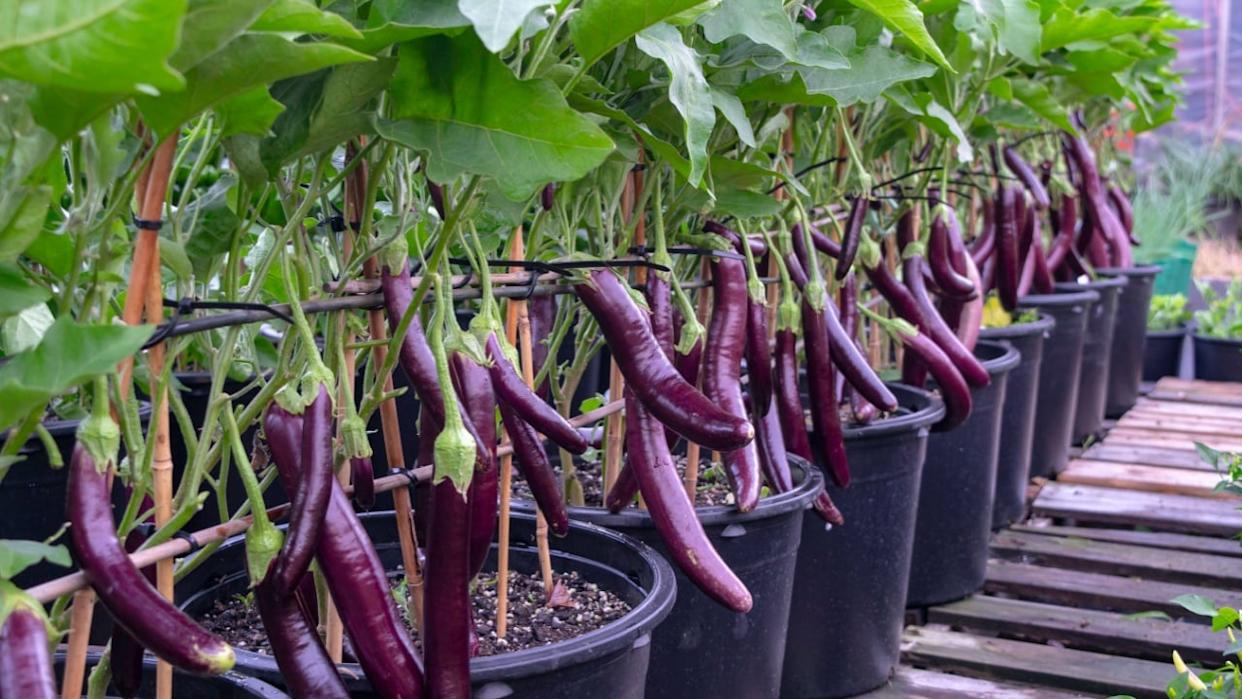
Image Credit: Shutterstock.
Eggplant is perhaps the most underrated container vegetable. It absolutely loves the warm soil that pots provide; heat radiating through the container walls mimics the warm-climate conditions where eggplant evolved, according to Steven Biggs at Food Garden Life. The flowers are stunning: purple star-shaped blossoms that earn their spot purely on aesthetics before the fruit even appears. For containers, choose compact varieties like ‘Fairytale,’ ‘Bambino,’ or ‘Patio Baby.’ These mini eggplants produce prolifically, ripen faster than full-sized varieties, and are perfect for roasting, grilling, or making baba ghanoush.
Pot Size: 5 gallons | 12–14 inches deep
Sun: Full sun — the more, the better
Best Varieties: Fairytale, Bambino, Patio Baby, Hansel
11. Green Onions & Scallions — Kitchen Garden Staples in Tiny Spaces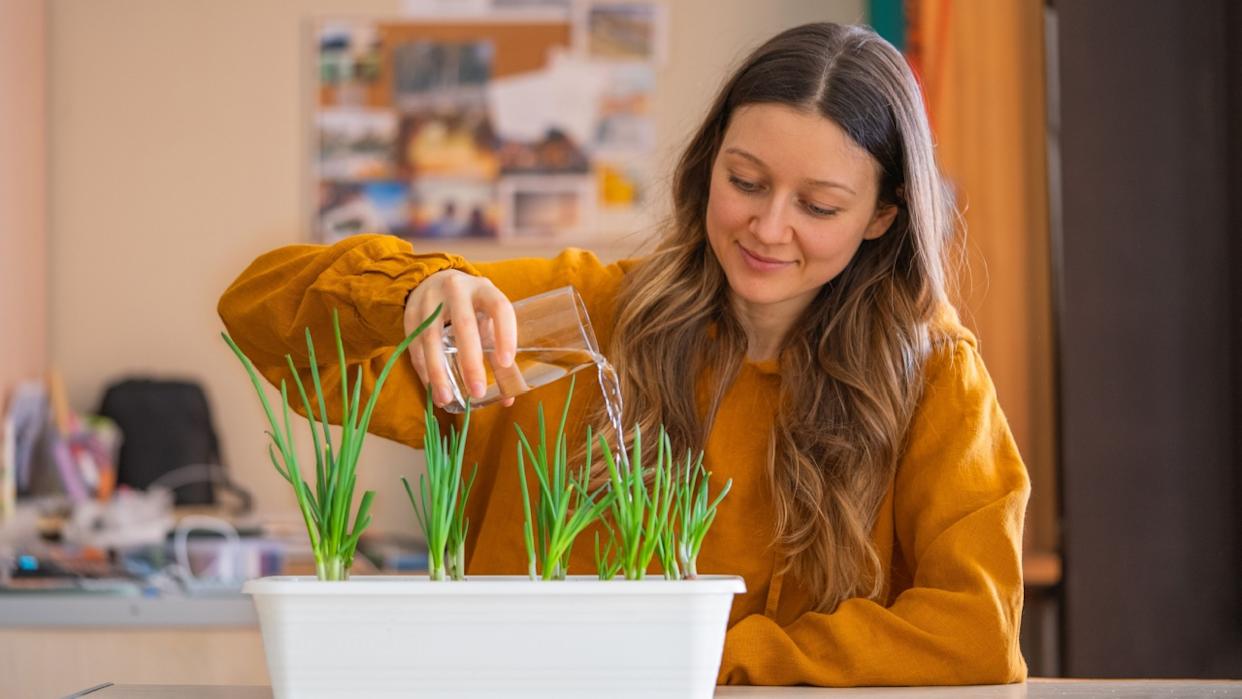
Image Credit: Shutterstock.
If you cook regularly and have even a windowsill, you need a pot of green onions. They grow in almost zero space, need very little care, and provide a constant supply of fresh flavor for eggs, soups, stir-fries, and salads. Plant scallion sets or seeds thickly and harvest by snipping from the top; they’ll regrow several times from the same plant, according to Wisconsin Horticulture. Green onions are also remarkably cold-tolerant, meaning you can often grow them outdoors well into fall or indoors year-round on a sunny kitchen shelf.
Pot Size: 2 gallons | 6 inches deep (bulbing onions: 12 inches)
Sun: Full sun to partial shade
Best Varieties: Evergreen Bunching, White Lisbon, Tokyo Long White
12. Beets — Double the Harvest in Half the Space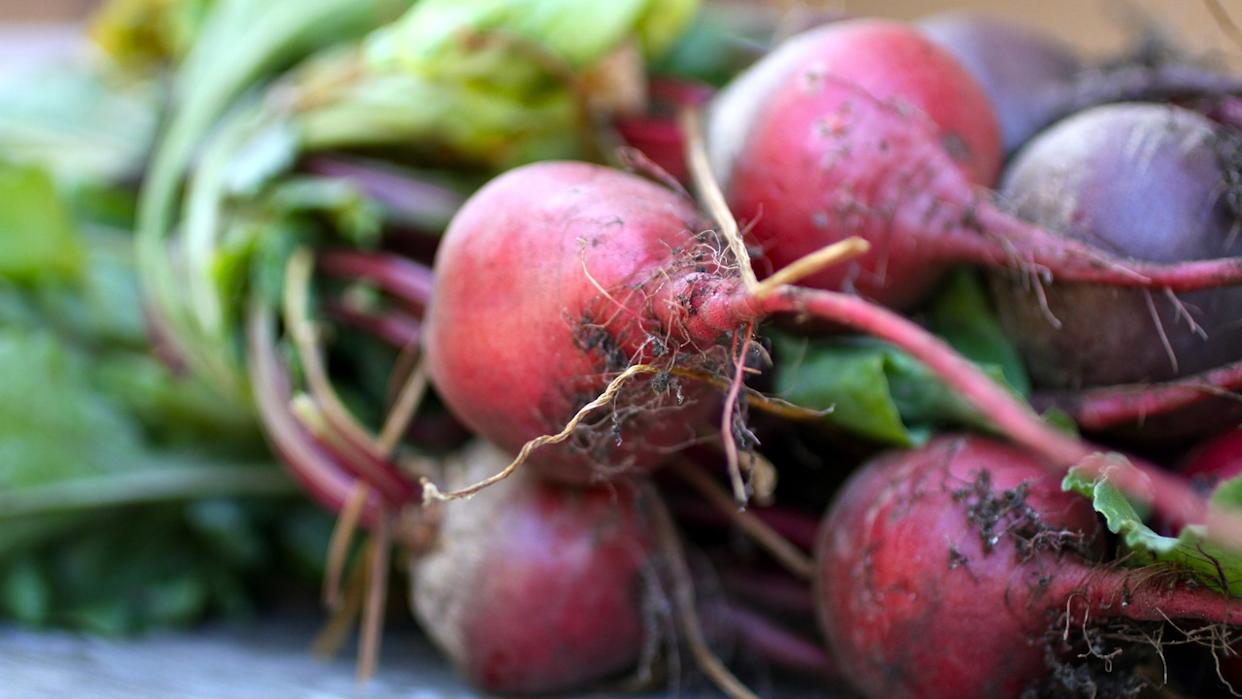
Image Credit: The Farmstrs – CC BY-SA 2.0/Wiki Commons.
Beets are the ultimate two-for-one container vegetable: you get the root AND the greens. Young beet tops are tender, mildly earthy, and delicious sautéed with olive oil and garlic. The roots develop beautifully in the loose, well-draining potting mix typical of containers, writes Earthbox. Beets prefer cooler temperatures, making them ideal for spring and fall growing. Choose round or short cylindrical varieties like ‘Detroit Dark Red,’ ‘Chioggia,’ or the golden ‘Burpee’s Golden’ for best results in pots. Direct-sow seeds and thin to 3 inches apart as seedlings appear.
Pot Size: 3+ gallons | 12 inches deep
Sun: Full sun (tolerates light shade)
Best Varieties: Detroit Dark Red, Chioggia, Burpee’s Golden, Baby Ball
13. Zucchini & Summer Squash — Go Big or Go Home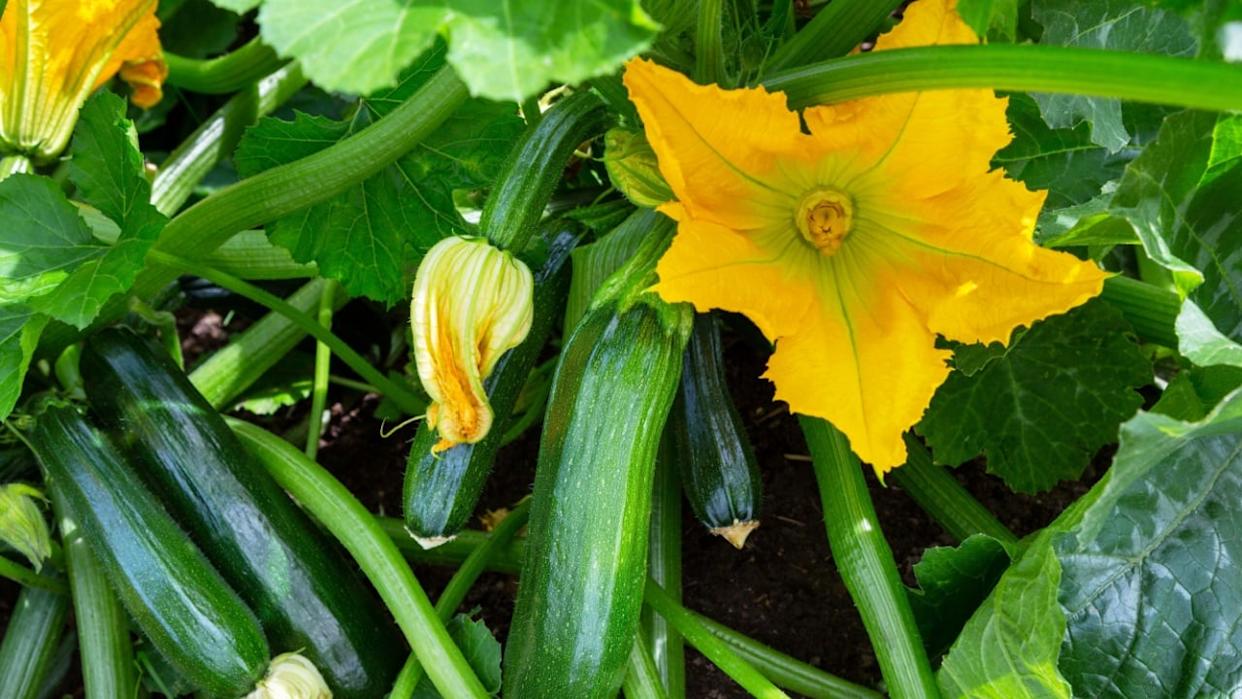
Image Credit: Shutterstock.
Fair warning: zucchini is not a ‘small’ plant. But it is a container-friendly one, with the right pot size and the right variety, says Angela Judd at Growing in the Garden. Unlike sprawling winter squash, summer squash varieties stay bush-shaped and don’t produce long vines, making them manageable on a patio or deck. Use a large container (at least 10 gallons), give it full sun, water it generously, and a single ‘Patio Star’ or ‘Bush Baby’ zucchini plant can produce more squash than you can eat in a week. It’s one of the most satisfying container crops for sheer abundance.
Pot Size: 10+ gallons | 12 inches deep
Sun: Full sun (8+ hrs/day)
Best Varieties: Patio Star, Bush Baby, Black Beauty (in large pots)
14. Peas — Sweet, Crisp, and Cool-Season Magic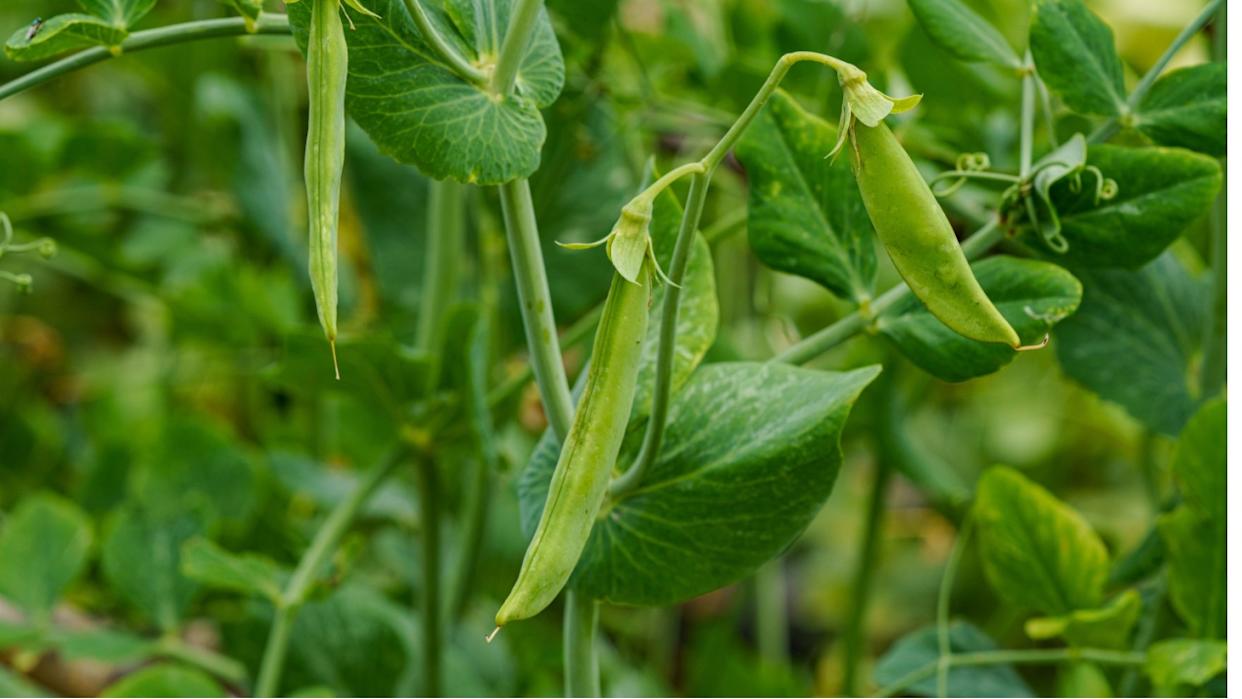
Image Credit: Shutterstock.
Fresh peas plucked straight from the vine and eaten right there on your balcony, warm, sweet, and nothing like anything from a grocery store, is one of the great small joys in gardening. Peas are cool-season crops that thrive in spring and fall, making them perfect for gardeners who want to get started before summer officially arrives. Container-friendly varieties include snap peas and snow peas, says the University of Maryland Extension, which produce tender edible pods. Give them a small trellis, plant in early spring, and harvest regularly to keep the plants producing.
Pot Size: 3–5 gallons | 8–12 inches deep
Sun: Full sun to partial shade
Best Varieties: Sugar Snap, Oregon Sugar Pod, Little Marvel
15. Garlic — The Long Game That’s Absolutely Worth It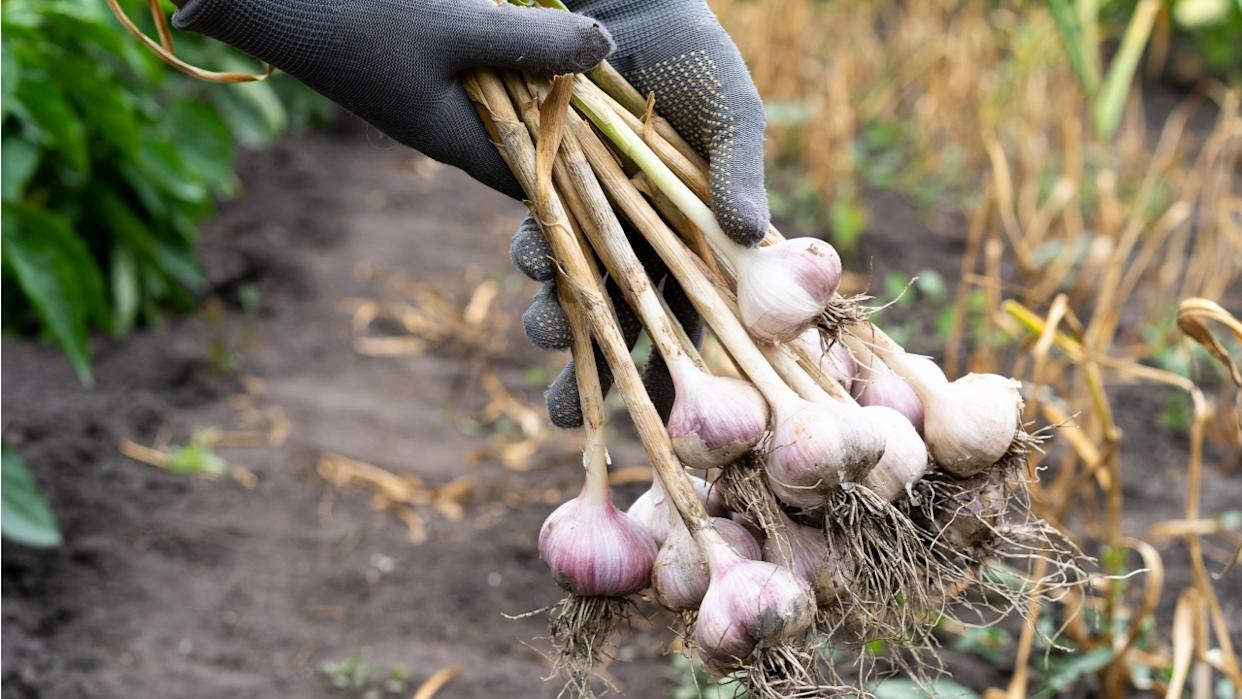
Image Credit: Shutterstock.
Garlic takes patience. You plant in the fall and harvest the following summer, but growing it in a container is genuinely satisfying, especially for anyone who cooks. It requires minimal space and virtually no maintenance, says ProMix Gardening: plant individual cloves pointed-side-up in fall, water occasionally, and wait. By mid-summer, the leaves will begin to yellow and fall over, signaling that plump bulbs are ready below. Container-grown garlic also lets you grow gourmet varieties (like ‘Music’ or ‘Chesnok Red’) that are rarely found in grocery stores. Plus, the bonus crop of garlic scapes in spring is a culinary treat.
Pot Size: 3 gallons | 12 inches deep
Sun: Full sun (6+ hrs/day)
Best Varieties: Music, Chesnok Red, German Red, Softneck California Early
Your Future Is In Container Gardening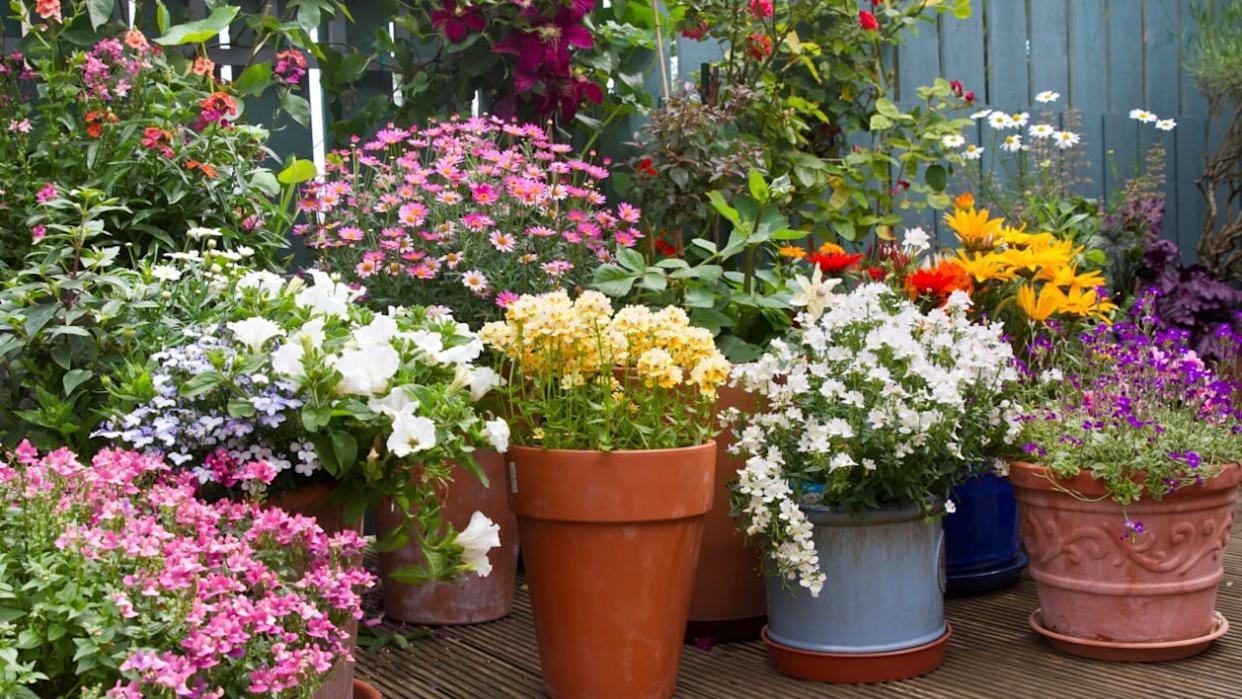
Image Credit: Shutterstock.
Container vegetable gardening is one of the most accessible, rewarding, and space-efficient ways to grow your own food. The 15 vegetables on this list are all proven performers in pots — but the best one to start with is simply whichever sounds most delicious to you. Start with two or three containers this season. Water consistently, choose the right pot size, and use quality potting mix. Before long, you’ll be harvesting your own tomatoes, snipping fresh herbs, and wondering why you waited so long to start.
Read more
These Are The 12 Cheapest Vegetables to Grow at Home
The 6 Easiest Vegetables to Grow for Beginners
Comments are closed.