
What stayed with me most after the show at Lunuganga Estate had nothing to do with the runway itself. It was the hour after — when the structure dissolved and the garden simply absorbed everyone into it. Guests were scattered across the lawns in their Lovebirds outfits, champagne in one hand, paper fan in the other, trying to survive the Sri Lankan humidity. Some sat along the garden walls, others wandered toward the butterfly ponds. Conversations overlapped, laughter carried across the water, someone tugged at a hemline, two women stood comparing sleeves. And everywhere you looked there were sculptural silhouettes, vibrant colours and breezy fabrics moving through the gardens.
Advertisment
I remember thinking at that moment that this one scene summed up the entire show. Lovebirds at Lunuganga. Fashion people spread across one of Geoffrey Bawa’s most iconic estates, dressed exactly the way the collection intended them to be.
Lunuganga itself is an extraordinary setting. The estate began as Bawa’s country home long before he formally trained as an architect. In 1948 he purchased what was then a rubber plantation in Bentota and gradually transformed it into a layered garden estate over the following decades. It became his weekend retreat, a place where he constantly experimented with landscape, architecture and spatial planning. Today Lunuganga stretches across a vast series of garden rooms, terraces, pavilions and water bodies. Walk a few minutes and the scenery shifts completely. Lawns open into courtyards, pathways lead to shaded pavilions, and ponds appear unexpectedly between clusters of trees. The estate is often described as one of the clearest examples of tropical modernism in South Asia.

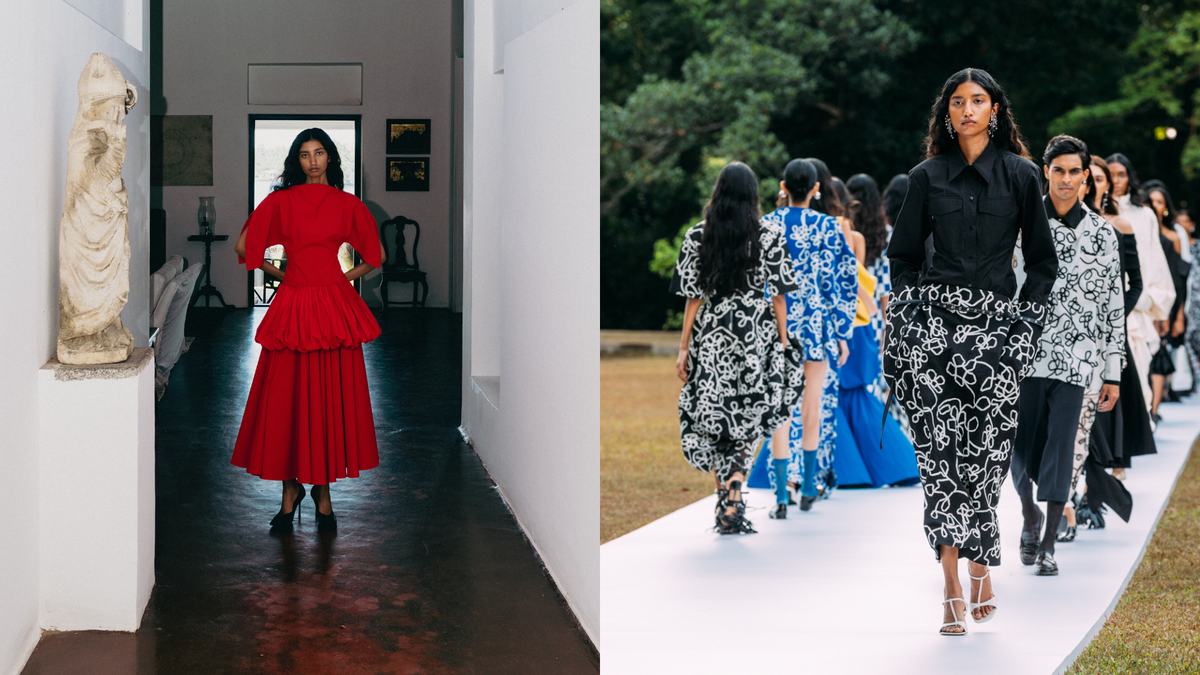
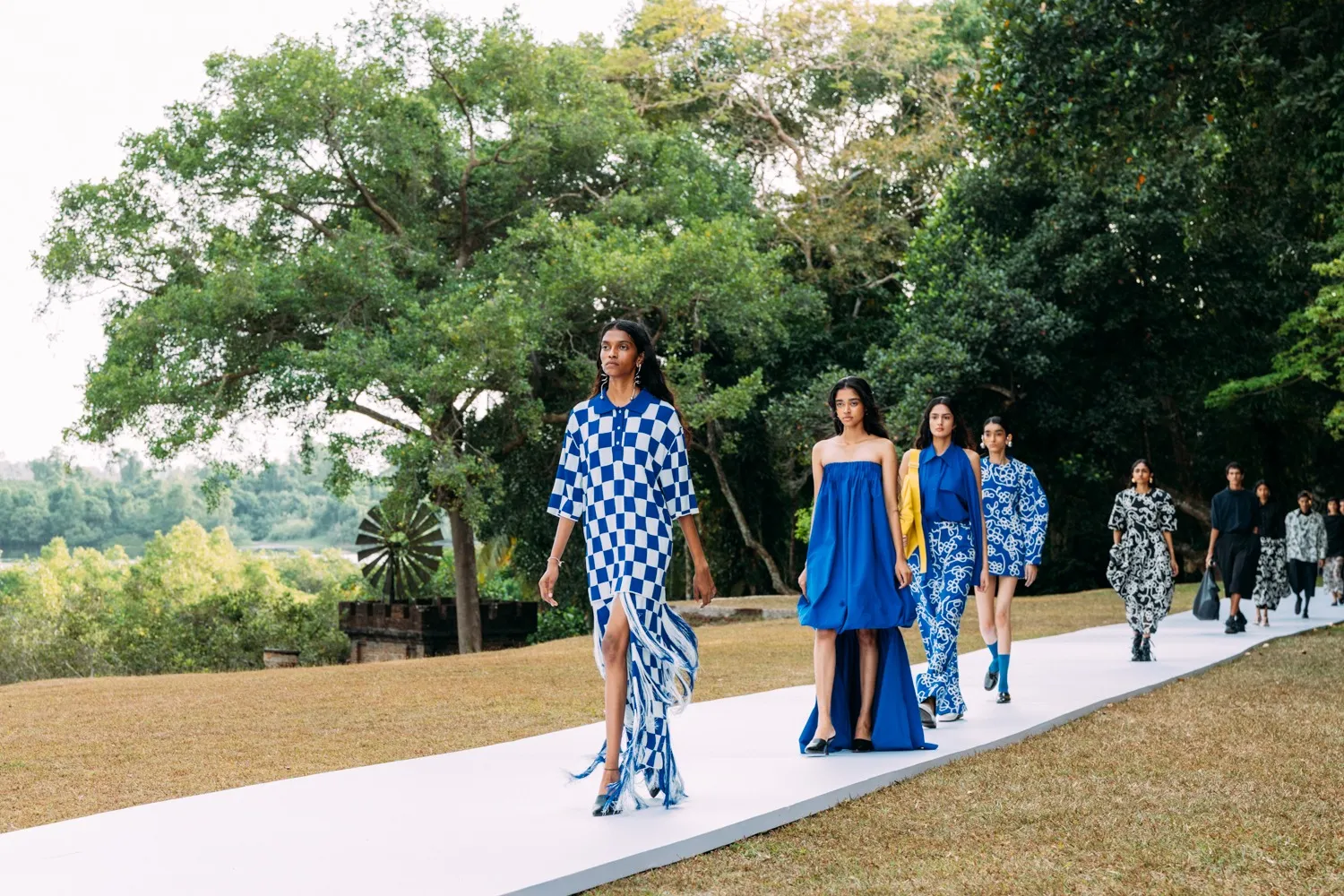
The Lovebirds team hosted guests in Bentota for the show, but the runway itself unfolded inside Lunuganga’s gardens. The setup was simple and clever. Models walked along a clearing framed by dense foliage, with a small pond to one side and a gentle hill forming the backdrop. The landscape did most of the visual work.
Advertisment
For founders Gursi Singh and Amrita Khanna, Lunuganga had stayed in their minds for years. Their first encounter with Bawa’s work happened during early travels through Sri Lanka, long before the idea of staging a show here even existed.
“Our first real encounter with Geoffrey Bawa’s work was visiting Lunuganga Estate itself,” they say. “What struck us wasn’t just the scale of it, but how a space of such expanse could simultaneously turn you inward. The mind moves through layers from room to window, to patio, to garden, all the way out to Dedduwa Lake and yet you never feel untethered.”
That layered spatial experience became an interesting reference point for the Resort 2026–27 collection. Lunuganga has often been described as “outward-looking yet inwardly meditative,” and Singh and Khanna say that phrase resonated strongly with their approach.
“At Lunuganga there’s a constant dialogue between openness and introspection,” they explain. “The architecture at the estate opens outward but encourages one to look within and this is exactly how we approached the collection.”
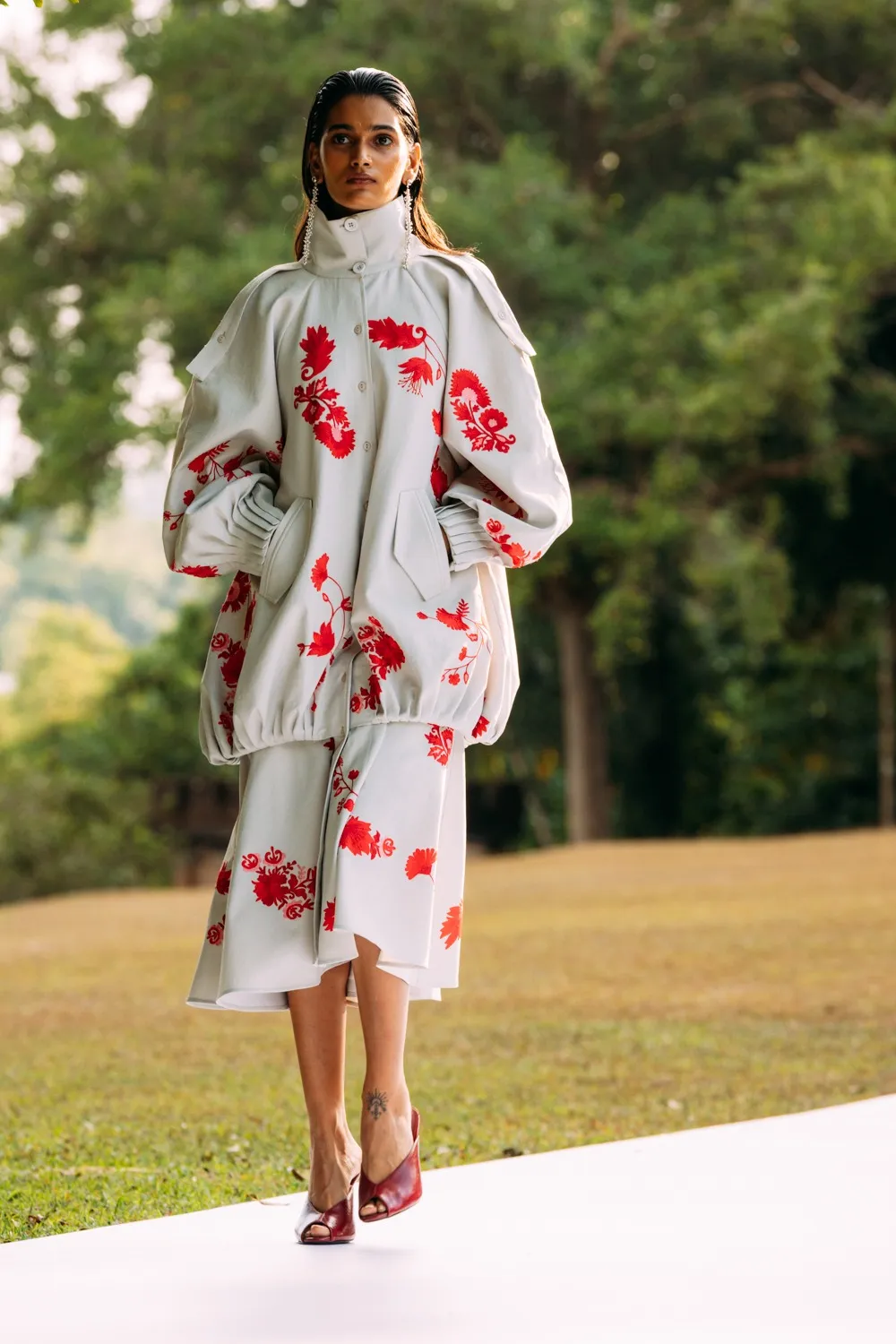
You could see traces of Bawa’s world across the clothes in subtle ways. Paintings displayed inside the Lunuganga house appeared as prints across a few garments. The silhouettes carried a similar balance between structure and movement. Sculptural shoulders, defined waists and controlled shapes anchored the garments, while flowing hems softened the overall look.
The collection played heavily with volume. Bubble hems, balloon silhouettes and dropped waists dominated the runway. Structural drapes, sarongs and lungis wrapped around the body in interesting ways without looking rigid. Fringed heels skimmed the ground as models walked. At one point a fringe tassel even dropped off mid-walk, which honestly felt like the kind of unscripted moment that makes a show more memorable.
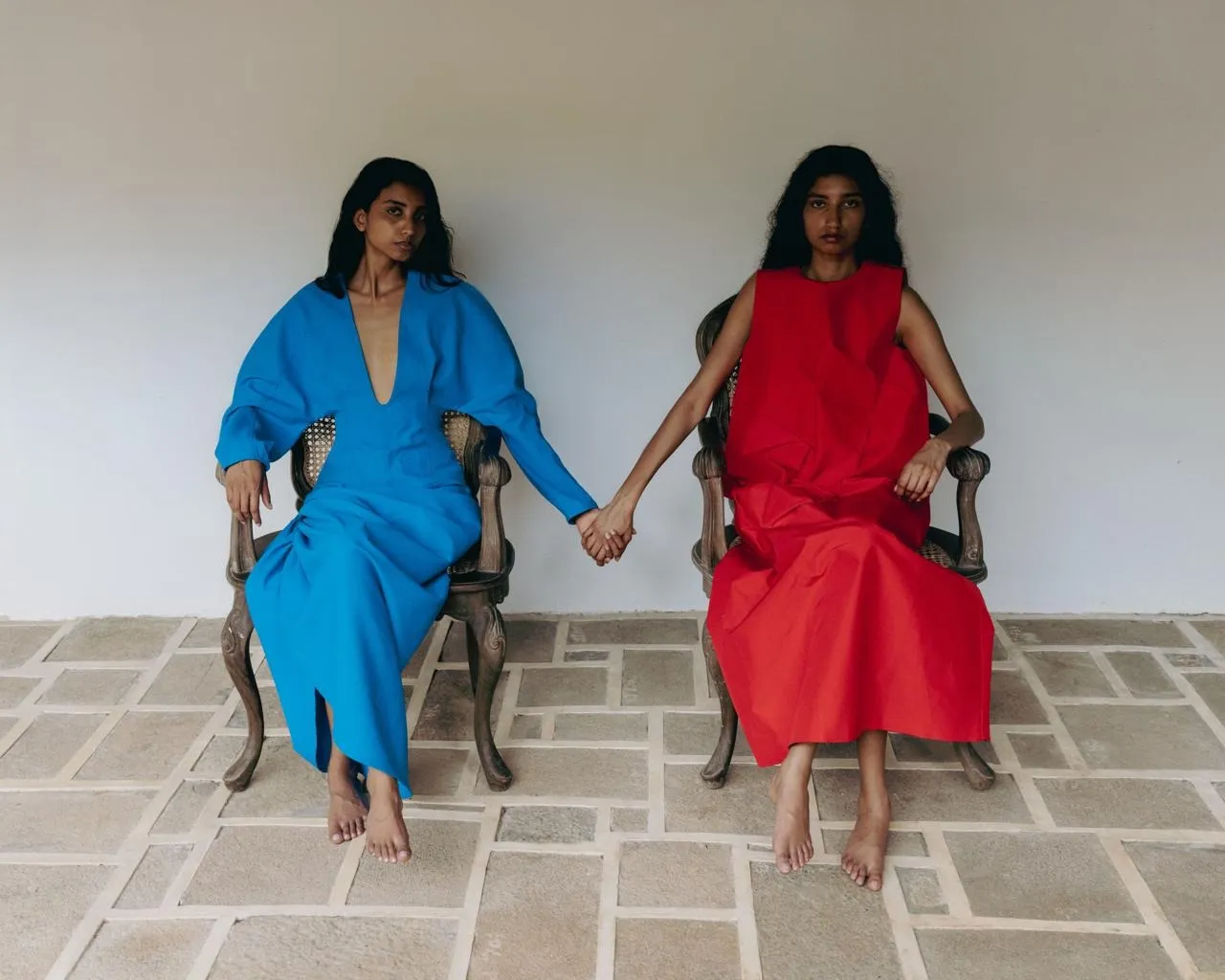
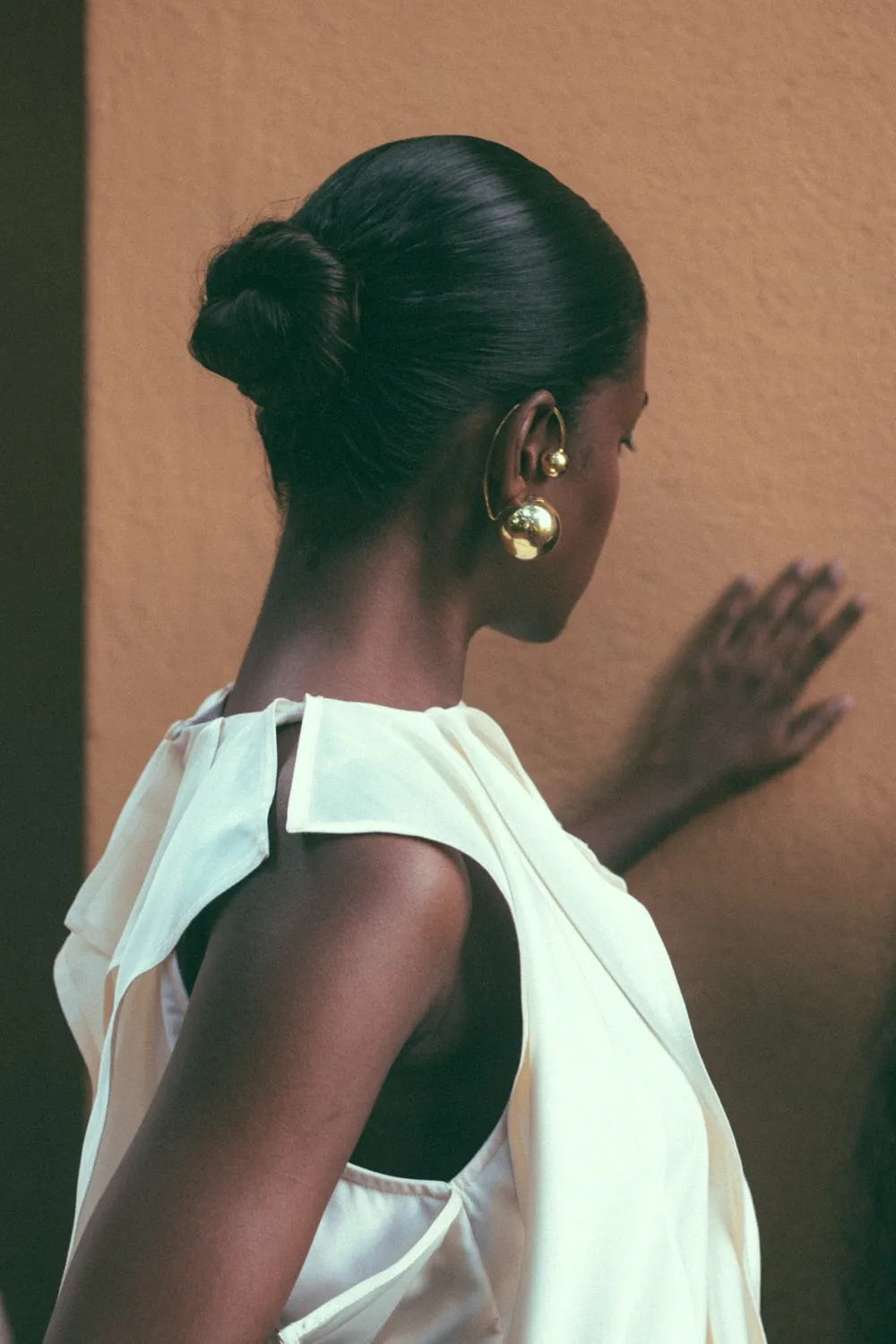
Styling added another layer to the looks. Belts cinched relaxed shapes, stacked bangles appeared across several outfits, and oversized earrings completed the styling. Stripes appeared on dresses and tailoring, while batik prints ran throughout the lineup. The colour palette was particularly striking against Lunuganga’s green landscape. Red, butter yellow, powder blue and a few other bright shades moved down the runway one after the other.
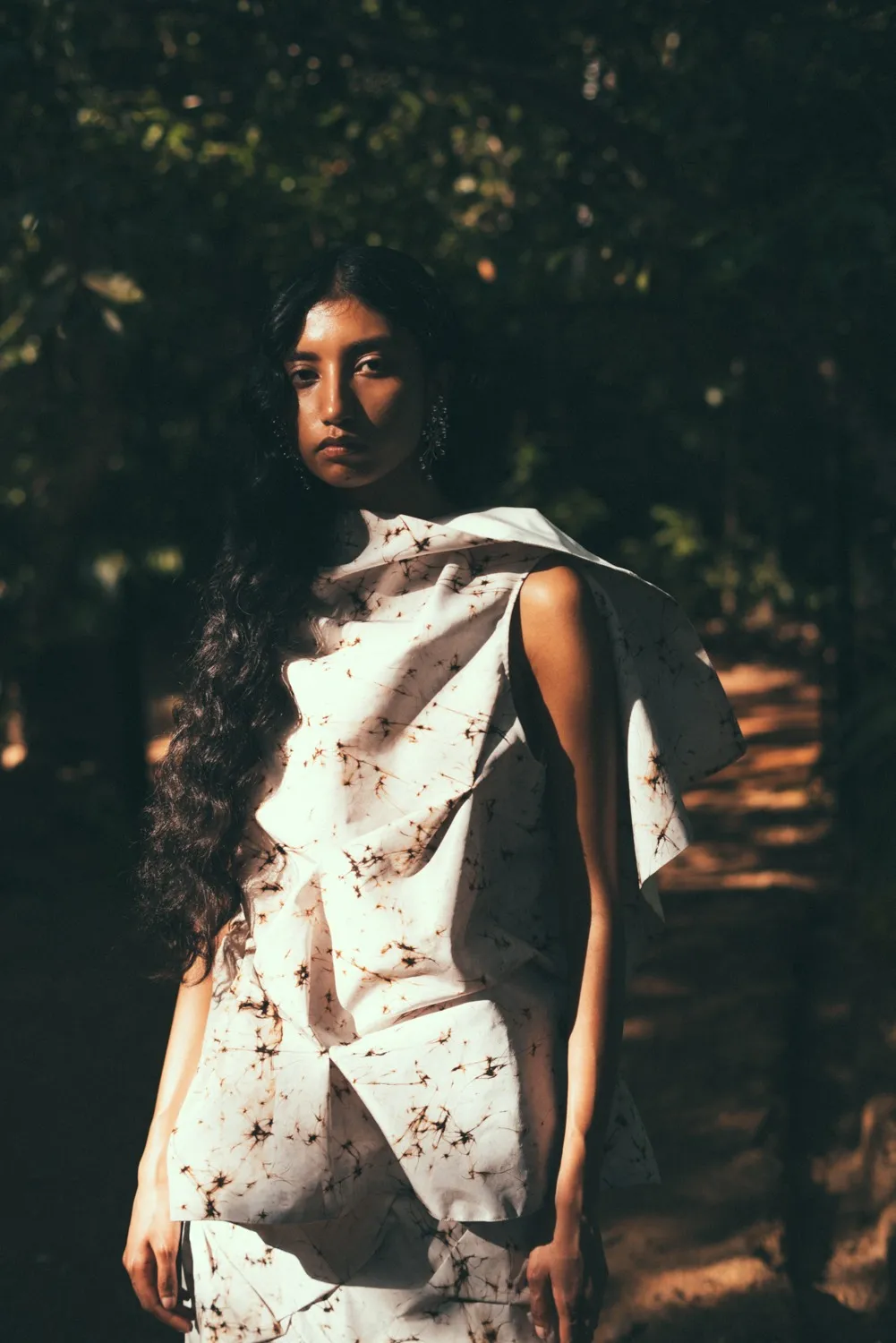
Batik formed the craft backbone of the collection. The designers approached the technique as a shared cultural language rather than a surface detail.
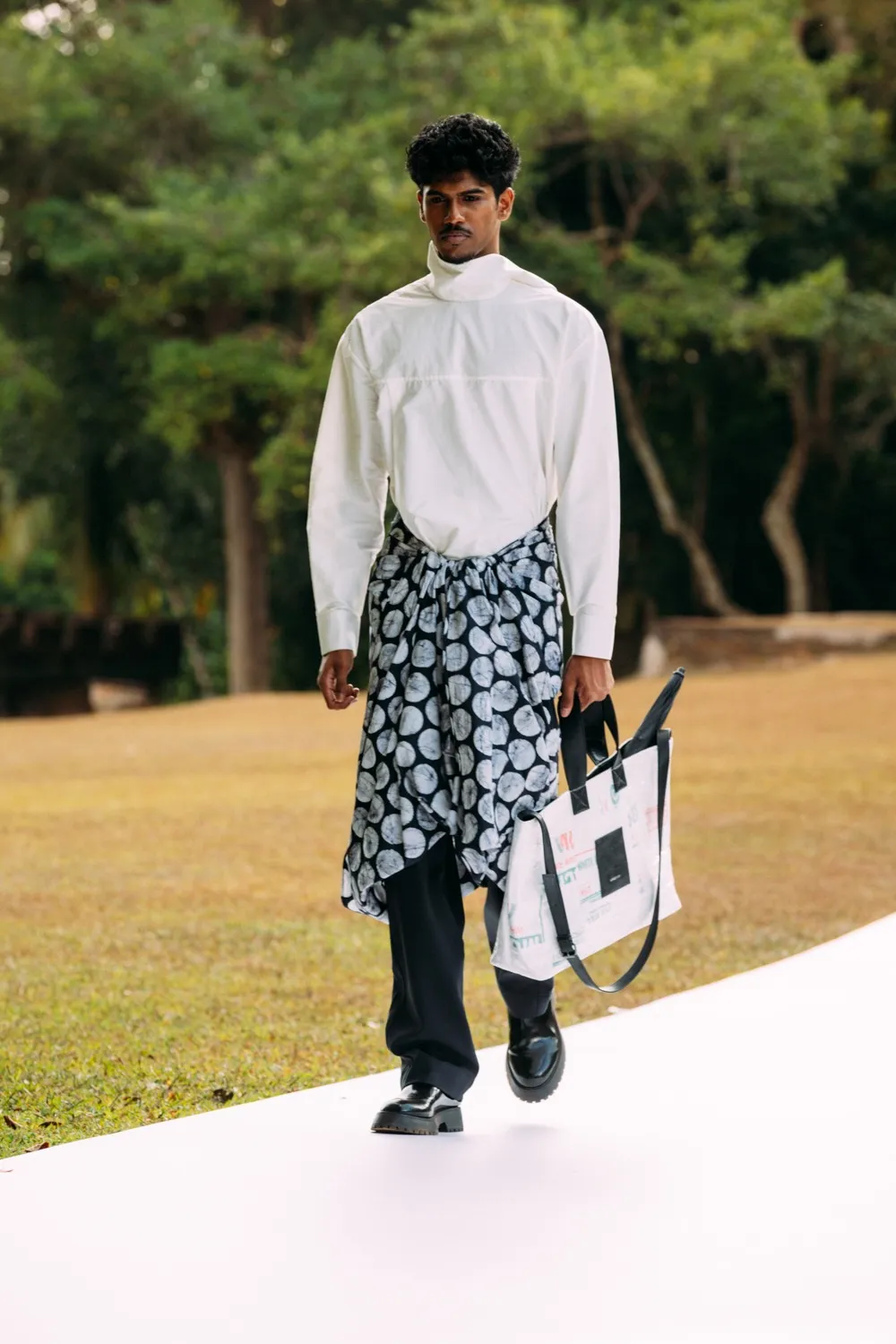
“Our approach was to engage with batik as a living lineage of craft rather than treating it as a visual motif,” Singh and Khanna explain. “Through this process we learnt how craft cross pollinates across cultures and countries, how it adapts as it travels and how it shapes and is in turn shaped by micro communities.” Working with the technique also required them to adapt their process. “The biggest lesson was patience and respect for process,” they say. “Batik is inherently unpredictable. The dye, the wax and the hand of the artisan all influence the final outcome.”
I have to say this as someone who attends a lot of shows. Lovebirds genuinely knows how to stage a fashion moment. There is always a strong sense of environment, community and atmosphere surrounding the clothes. Lunuganga amplified that approach perfectly.
Presenting a collection at Lunuganga comes with its own challenge. The estate carries the unmistakable vision of Geoffrey Bawa, and any creative intervention risks feeling out of place. Lovebirds handled that balance remarkably well. The collection absorbed cues from the landscape and architecture of Lunuganga Estate and translated them into clothing that felt sculptural, vibrant and fluid at the same time. Instead of competing with Lunuganga, the show entered into conversation with it.
For now, the memory of Lovebirds at Lunuganga stays behind in those gardens. Until the next show. Until the next collection.
Comments are closed.