
Breadcrumb Trail Links
HomesGardening
Add pockets of a few easy-growing annuals for patches of colour and to attract bees and butterlies.
Published Mar 16, 2026 • Last updated 13 hours ago • 1 minute read
You can save this article by registering for free here. Or sign-in if you have an account.
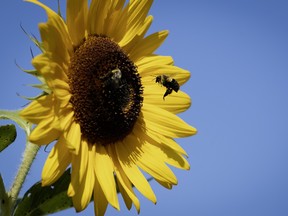 Planting annuals such as sunflowers around your veggie garden will attract pollinators, says Helen Chesnut. Photo by Pierre Obendrauf /Montreal GazetteArticle content
Reviews and recommendations are unbiased and products are independently selected. Postmedia may earn an affiliate commission from purchases made through links on this page.
Q. Do you include annual flowers in vegetable plots to attract pollinating insects? If you do, which ones do you plant? This year I’d like to add pockets of a few easy-growing ones in the vegetable garden, for patches of colour as well as for pollinators.
Advertisement 2
This advertisement has not loaded yet, but your article continues below.

THIS CONTENT IS RESERVED FOR SUBSCRIBERS ONLY
Subscribe now to read the latest news in your city and across Canada.
Exclusive articles by top sports columnists Patrick Johnston, Ben Kuzma, J.J. Abrams and others. Plus, Canucks Report, Sports and Headline News newsletters and events.Unlimited online access to The Province and 15 news sites with one account.The Province ePaper, an electronic replica of the print edition to view on any device, share and comment on.Daily puzzles and comics, including the New York Times Crossword.Support local journalism.
SUBSCRIBE TO UNLOCK MORE ARTICLES
Subscribe now to read the latest news in your city and across Canada.
Exclusive articles by top sports columnists Patrick Johnston, Ben Kuzma, J.J. Abrams and others. Plus, Canucks Report, Sports and Headline News newsletters and events.Unlimited online access to The Province and 15 news sites with one account.The Province ePaper, an electronic replica of the print edition to view on any device, share and comment on.Daily puzzles and comics, including the New York Times Crossword.Support local journalism.
REGISTER / SIGN IN TO UNLOCK MORE ARTICLES
Create an account or sign in to continue with your reading experience.
Access articles from across Canada with one account.Share your thoughts and join the conversation in the comments.Enjoy additional articles per month.Get email updates from your favourite authors.
THIS ARTICLE IS FREE TO READ REGISTER TO UNLOCK.
Create an account or sign in to continue with your reading experience.
Access articles from across Canada with one accountShare your thoughts and join the conversation in the commentsEnjoy additional articles per monthGet email updates from your favourite authorsSign In or Create an Account
or
Article content
A. I always have plantings of annual flowers that nurture pollinators sprinkled around vegetable plots.
Article content
Recommended Videos
Article content
I grow small groups of sunflowers at plot corners. The blooms attract and feed bees and other pollinators. Calendula and alyssum make attractive plot edgings, as do nasturtiums.
In general, single-flowered daisy type flowers like cosmos and zinnia are effective pollinator attractors. The California poppies in my vegetable garden are always buzzing with bees. Poppy pollen attracts bees and cilantro flowers become full of hover flies — effective aphid predators.
Q. I am thinking about using saved newspapers as weed barriers in the vegetable garden this year, but I’m concerned about the possible toxicity of the inks used in printing the papers. I try to avoid using any harmful chemicals in my garden.
A. Inks used now for printing our newspapers are not toxic. The issue was once a concern, but newspapers switched to soy-based inks a long time ago.
Advertisement 3
This advertisement has not loaded yet, but your article continues below.
Article content
Newspaper is recommended for using in shredded form in compost heaps and as mulch in gardens. I’ve seen sheets of newspaper, two or three layers thick, used as a weed barrier arranged around newly planted perennials before the paper is covered with compost or some other mulch.
The same method can be used between rows of vegetables and around perennial food plants like rhubarb and globe artichokes.
On pathways between plots, I use thicker layers, often putting down cardboard first, then newspaper six or seven layers deep, which I top with wood shavings.
I avoid using any glossy paper in the garden. Its slippery nature, even under shavings, makes it hazardous for walking on in wet weather.
Read More
Best sources for container vegetable seed varieties
Keep garden soil in place with these edging solutions
Article content
Share this article in your social network
Comments are closed.