
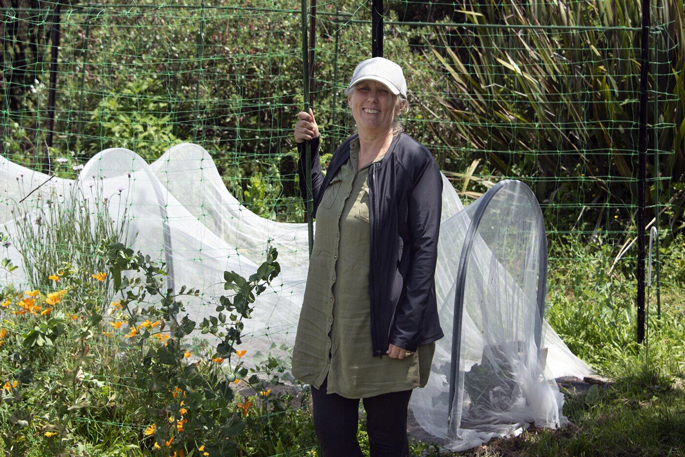
Sarah Oliver has grown food at every property she has rented, which was often challenging and not always approved of by her landlords. In her 20s, her then-partner leased land for a market garden, but a late frost wiped out a main crop and curtailed their plans for fulltime market gardening.
Sarah, married to museum technician and artist/sculptor Stuart Bridson, lives on 1.2ha near Waitetuna in the Waikato. Now in her 50s, she is finally pursuing her dream of market gardening.
“I became a vegetarian in my early 20s, influenced by the ‘cool’ group of women I was mixing with in those days. I became a vegan in my late 30s, this time on more ethical grounds,” says Sarah.
“I’m not anti‑farming at all – the world has to be fed, and unless the movement for plant‑based food really takes off, people will continue to eat animal products. It’s a personal decision for me not to eat factory‑farmed food or byproducts.”
While Sarah has always been interested in growing organically, the veganic aspect followed later.
“Veganic gardening means you don’t use any inputs from farmed or fished animals – so no fish‑based products, no blood and bone, no sheep pellets, no animal manure, and an important one for me, no chicken litter from factory‑farmed poultry.”
Stuart is a big supporter of Sarah’s veganic gardening and has helped with the infrastructure for the garden, including an additional water tank, water lines to the gardens, a polytunnel, and a processing shed.
From 2015, Sarah began seriously experimenting with veganic techniques, and the land was fully certified organic in 2019. This year, she has taken the plunge and upscaled to a market garden.
A learning curve
“I’ve found that being vegan and growing food veganically and organically means I’m constantly learning. It takes a lot of time, experimenting, and gaining knowledge.”
In her own diet, she finds good plant‑based protein sources in nuts, lentils, soybeans, corn, chickpeas, linseeds, and beans of all kinds. She has had some success growing the latter three in the Waikato climate.
“The market garden covers around 400 square metres, which is potentially enough for market requirements, but I would like to increase the size.”
She uses a “chop and drop” approach with cover crops, including clover, lupins, and phacelia to build fertility. Keeping the soil well mulched with grass clippings from around the property makes a huge difference, along with crop rotation. She is also exploring polycropping, influenced by another grower who is having great success with the technique.
Two seasons ago, non‑invasive willow trees were planted along a small wetland area on the property. Sarah has started coppicing them and using the branches for ramial woodchip mulch.
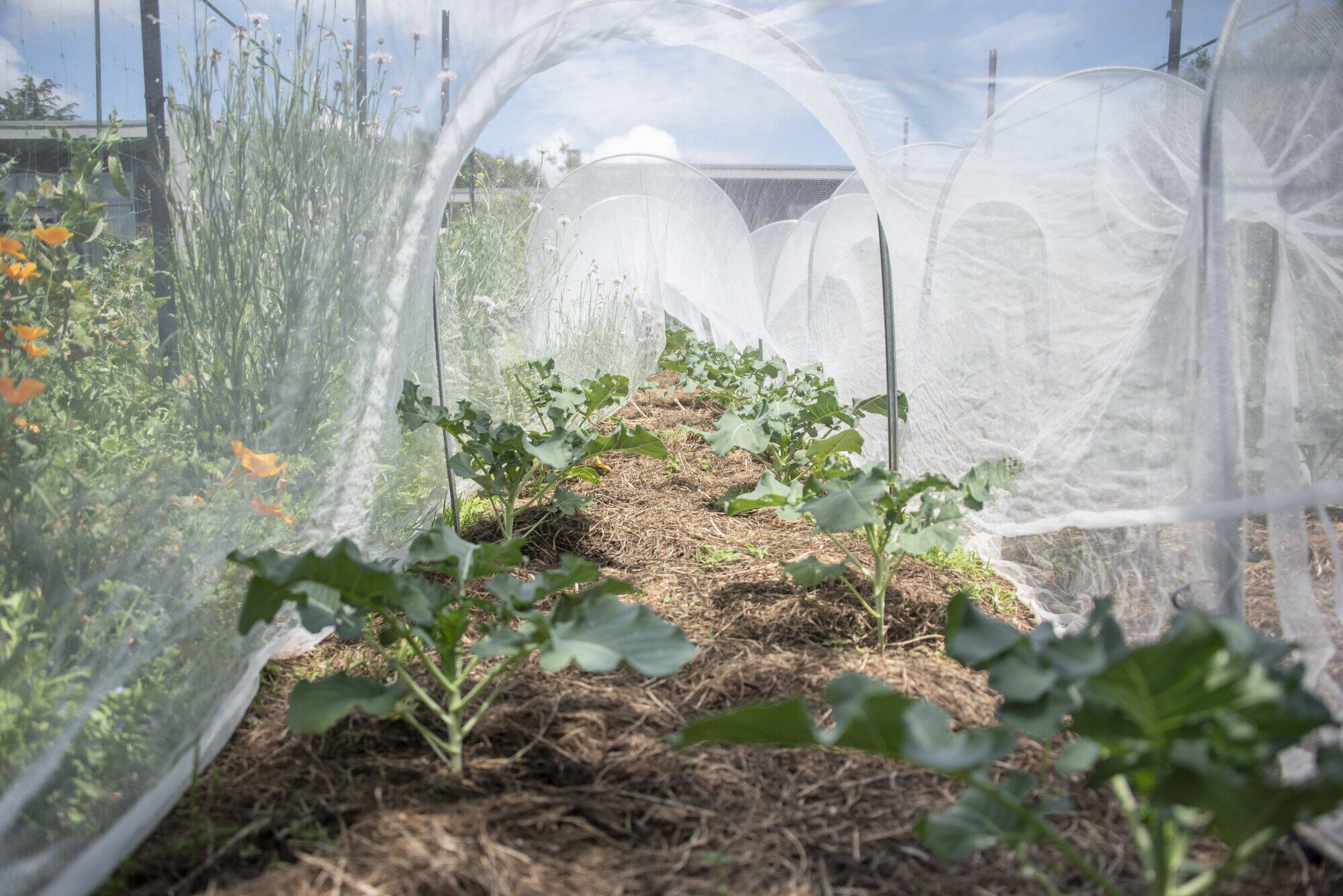
Netting stops the white butterfly getting to the brassicas. Photo / Catherine Fry
“The method is to cut branches less than seven centimetres in diameter from deciduous trees in winter, chip them, and lay them around fruit trees. A small amount is also used in the green‑manure phase of the rotation cover crop plan.
“Compared to larger trunk wood, this material is rich in nutrients and minerals and has a lower carbon‑to‑nitrogen ratio.”
Sarah is slowly building up her own compost and sometimes buys compost made from plant material. She also uses seaweed fertiliser products.
Friends and foes
“I’m passionate about encouraging native species, whether it be worms, bees, birds or other fauna.”
The key to this is diversity. Native bush has been planted throughout the property, along with fruit trees such as plums, apples, and figs, providing a large variety of food sources that attract beneficial creatures.
“There are so many birds in the garden, and they take care of the snails for me. This year, we were inundated with slugs, and I collected them for several weeks and relocated them to another area of the property – that worked well to rebalance the population.”
The cabbage white butterfly is kept at bay using butterfly netting, and Sarah says the difference is significant.
Netting stops the white butterfly getting to the brassicas. Photo / Catherine Fry
Mulching encourages worms, other soil life, and moisture retention. There are about 180 known native species of worms in New Zealand, as well as introduced species.
Native planting brings beneficial insects and native bees to the garden. Some bees nest in the ground, others in wood, and the family ensures they have space to go about their business.
Sarah would love to expand her veganic market garden. She spends time visiting other growers, watching YouTube videos, and reading widely on the topic.
Comments are closed.