
As I wrote in my last article, we winter-weary gardeners are eager to get our vegetables and herbs growing as soon as possible in early spring. Because the last frost date in the Pee Dee region is usually around the last week of March, it’s almost time to get some plants in the ground!
Many folks around here plant their summer gardens around the weekend of Easter. While that’s easy to remember, it’s highly variable each year.
Easter Sunday can fall on any day between March 22 and April 25 — a span of more than a month. In a general sense, Easter is the first Sunday following the first full moon after the vernal equinox. (Don’t get me started on the ecclesiastical full moon.)
If you plant in late March, you are gambling that a freeze won’t happen and kill your delicate young plants. If you plant in late April, you should be safe but will lag behind your fellow gardeners. I would recommend planting in mid-April for most of the plants described in this article.
It’s a little late to plant onions, garlic, beets, turnips, carrots and cruciferous (cole) plants such as broccoli, brussels sprouts, cabbage, cauliflower, collards and kale. If you decide to try growing cole plants now, don’t start from seed. Buy transplants, get them in the ground ASAP and hope for a harvest before any flower stalks emerge.
The same is true for cold-loving herbs such as cilantro and parsley. Buy these as transplants and grow them until they start to flower. I always let them flower, for the bees and butterflies to visit for nectar. Hummingbirds arrive this month and will also visit the flowers.
Potatoes (Irish potatoes, not sweet potatoes) should have been planted in February. But you can still plant some in late March and get “young potatoes” before the heat of summer kills the plants. Many farmers allow potatoes to sprout, or “chit,” before planting, but it’s too late for that.
Buy potatoes for planting, rather than using grocery store potatoes. Set the potatoes about a foot apart in a shallow trench and cover them with a few inches of soil or mulch. After the leaves emerge and grow a few inches high, cover them with another layer of soil or mulch. As they grow, you can sample them by sticking your hand in from the side and picking out small potatoes.
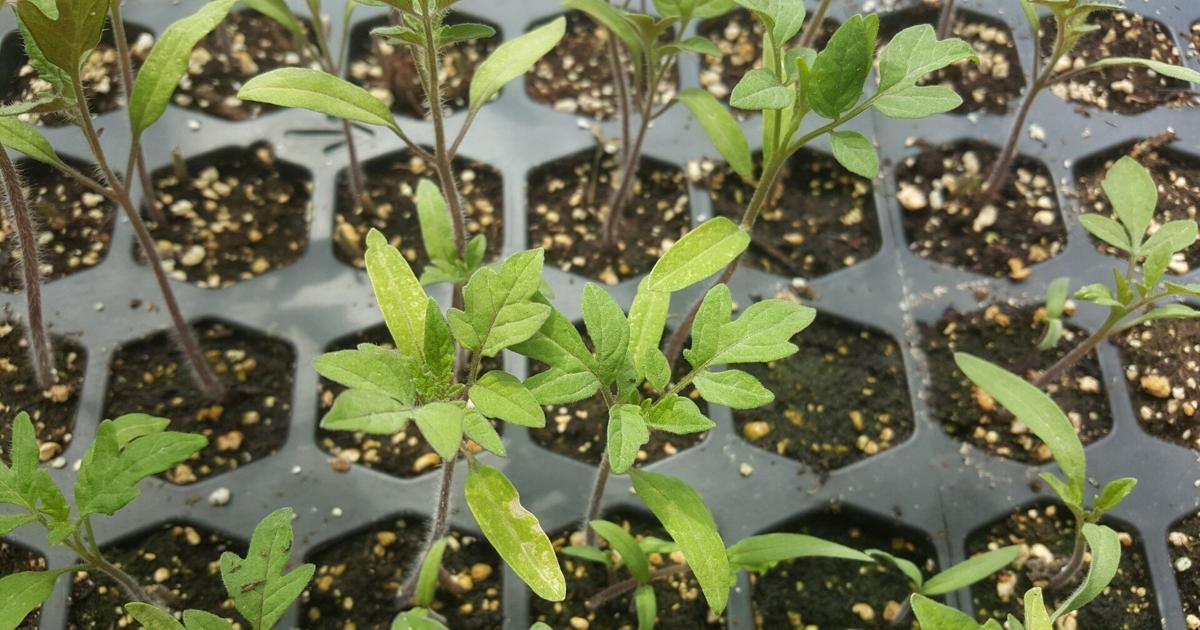
When it comes to tomatoes, peppers and eggplants, most gardeners buy seedlings then transplant them in April into the ground or soil-filled containers. If you try to start from seed now, you will be weeks behind. These plants need to be started from seed 6 weeks before transplanting into the garden.
Tomato seedlings should be planted deeply. Pinch off all but the topmost leaves and bury the roots and most of the stem. New roots will grow from the underground stem and make a strong, well-anchored plant. Don’t forget that tomatoes will need support, so when you transplant them, plan for this. Pound in a tall stake next to each plant, set up a trellis line or grow them inside a wire cage.
All the vegetables mentioned as follows can be grown from seed in April, directly sown into the dirt. Seeds are much cheaper than seedlings and these plants will grow quickly and catch up to the size of transplants in very little time. Furthermore, some of these (such as corn and beans) are not readily available as seedlings and are impractical to transplant.
Corn takes up a lot of garden space because each stalk only produces one or two ears. Plant seeds directly into the soil, about an inch deep and a few inches apart. Plant corn in blocks, which means plant several rows next to each other. This is to optimize pollination, which occurs via the wind.
Peas and beans should be planted as seeds in rows. Plant them an inch deep, spaced a few inches apart. You might want to add powdered bacteria inoculants to the soil before planting. These beneficial bacteria boost the growth and productivity of these legumes and come in packs that are available online and at local gardening stores.
Okra should be planted as seeds, in rows. Plant them an inch deep, spaced a few inches apart.
Cucumbers are readily grown from seed. Plant the seeds under a trellis to promote vertical growth. A trellis is easy to build, and some common designs are A-frames, cattle panels, twine or netting tied to T-posts.
All squashes are easy to grow from seed. Summer squashes include yellow squash and zucchini. Winter squashes include butternut and acorn squashes, and pumpkins. In the garden, sow a few seeds next to each other about an inch deep, in a shallow mound of soil. Summer squashes can be planted 3 or 4 feet apart, but pumpkins and other winter squashes need a lot of room for their vines to spread. Planting them 8 to 10 feet apart would not be unreasonable.
Like squashes, you can plant melon seeds directly into the soil. You can also plant them as transplants. Give watermelons and cantaloupes plenty of room to spread out in all directions. My melon patch is often covered with vines over 10 feet long.
It’s still too early to plant heat-loving sweet potatoes. In late May, you can plant sweet potato “slips.” These can be bought from a local store, or you can start your own. Stick a few toothpicks around the middle of a sweet potato and place it upright in a jar or glass of water so that the toothpicks rest on the rim and the bottom end of the sweet potato is in the water. If you keep it in a sunny location, the sweet potato slips will emerge after a week or so. When the slips are at least 6 inches long, pluck them off and plant them directly in the ground with only the leafy end above ground.
I wish you all the best with the upcoming garden season. As always, if you have any questions, feel free to contact me.
Happy homesteading!
Comments are closed.