
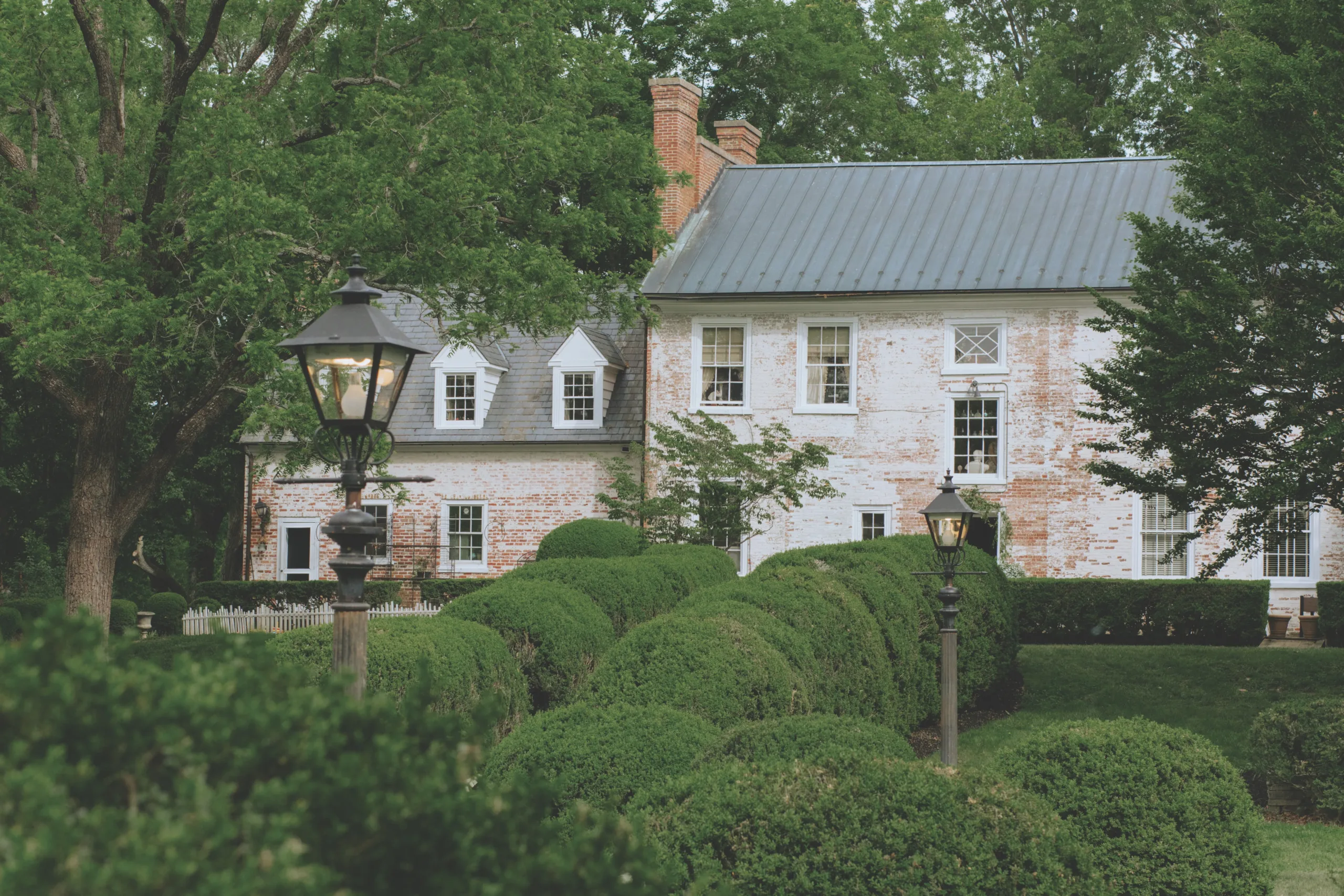
For generations, a secret sunken garden lay in wait beneath brambles, ivy, and centuries of history at Merrifield Farm in Staunton. The land’s records date back to the 1730s, when it was first granted to William Beverly and later purchased by Robert Poage, who built the Georgian-style home in the 1790s. Merrifield has since served as a Civil War hospital, a Thoroughbred breeding farm, and, as of last year, a wedding venue.
“Merrifield’s hidden treasure is her garden,” says Alison Hereford, one of the property’s current stewards. She and her husband, Lee, named it the Sunken Garden, and for years it sat as a forgotten world—overgrown and shadowed beneath great oaks. Believed to have been designed by Charles Gillette, it whispered of its past grandeur through overturned statues and lichen-fretted stonework. Their daughters, Charlotte and Lillian, spent their childhoods exploring its wild corners.
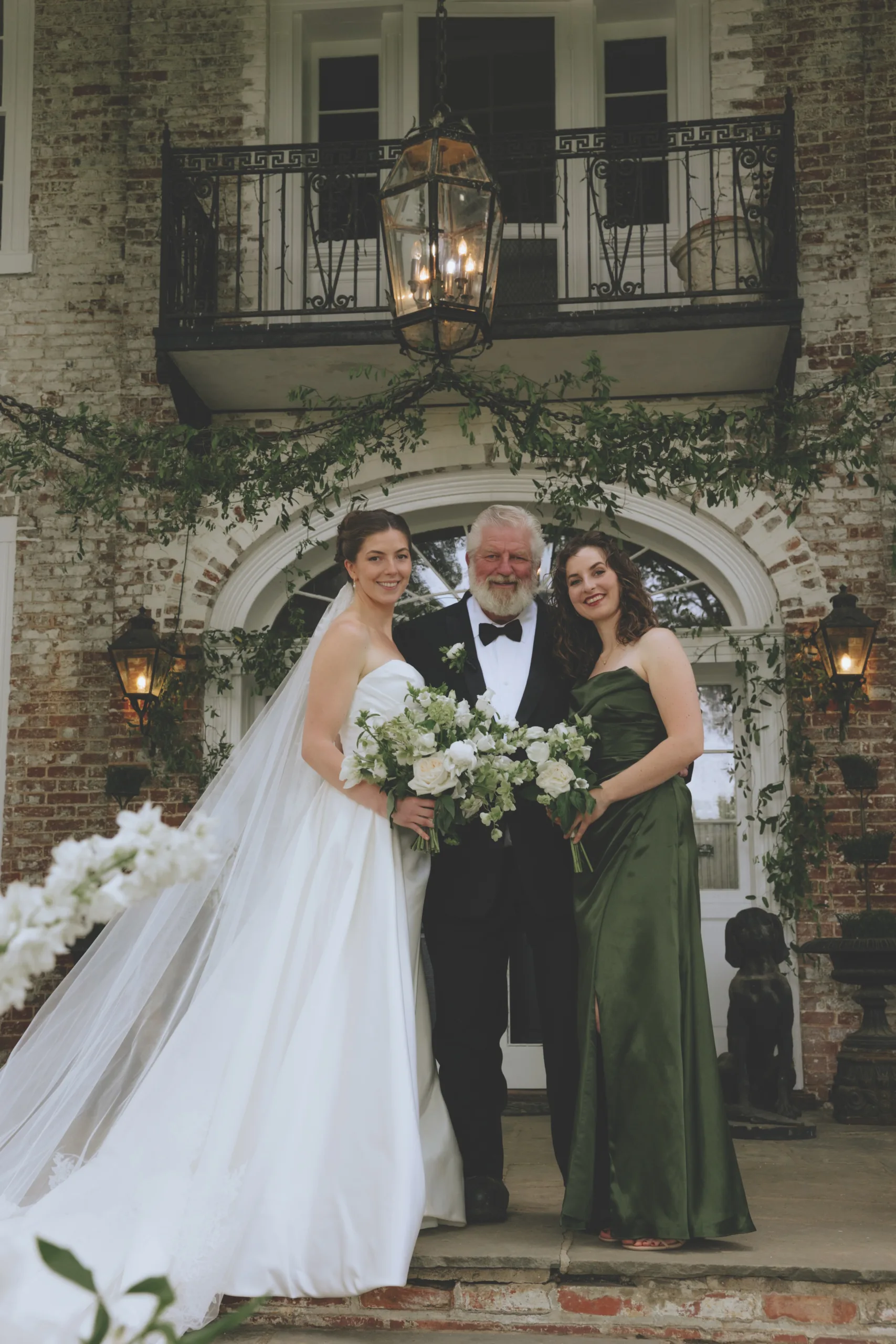 Lillian Hereford with her father, Lee Hereford, and sister, Charlotte Hereford. Photography by Michelle Elyse Photography
“It grew alongside the two of them, but as they began to mature, we realized that the garden needed to do so as well,” Alison says. When Lillian became engaged to Thomas Gates, the path forward was clear: the garden would be restored for the wedding.
“I wanted our venue to hold deep sentimental meaning, and nothing felt more perfect,” Lillian says.
The family had less than a year to transform the garden into a setting fit for celebration—without erasing its history.
“You have to decide: do you preserve it as-is, replace it, or reinterpret it?” Alison explains.
Merrifield’s brick, Georgian-style farmhouse dates to the late 18th century.
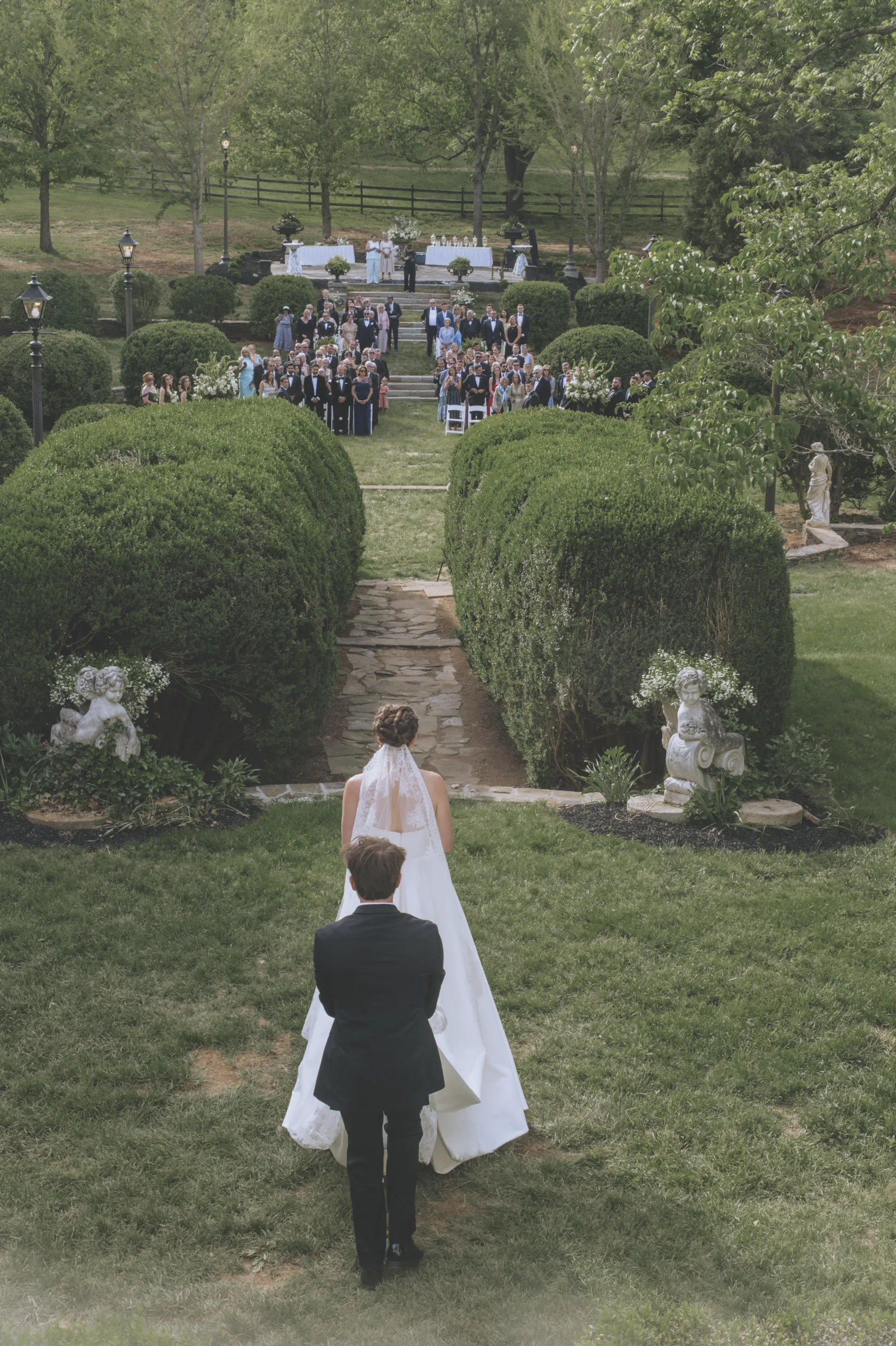
Lillian made a grand entrance to exchange vows with Thomas in the Sunken Garden.
Lillian and her father, Lee, took the lead, united by a shared love of gardening, influenced by the legendary Bunny Mellon. After a recent surgery and amputation, Lee found renewed purpose in the project. Together, he and Lillian drew up blueprints, researched historic materials, and sifted through a lifetime’s collection of antiques in family storage to revive the space.
They also had to plan for the big day itself—“Questions such as: Where will the ceremony take place? How will the wedding party enter? Seating for guests? Cocktail patio area location?” Alison says. In August 2024, with plans finalized, they began the physical work.
“When you begin clearing decades of overgrowth, it is not weekend weeding, it is excavation!” Alison says. What started as a cleanup became a full-scale revival—leveling hills, trimming boxwoods, and uncovering the garden’s old bones. By September, they’d brought in a stonemason to repair and enhance the historic walls, replace steps, and add terraced stairs, a stone cocktail patio with a tiered fountain, and millstones repurposed as entryways and foundations. Antique urns, benches, statues, and even light fixtures once used at the White House were restored and installed. Underground power and water lines were trenched across the grounds. As rain, mud, and broken lines piled on, “the garden looked like a war zone,” Alison recalls. Still, the family pressed on—laying sod, painting, and fencing until the very day before the wedding.
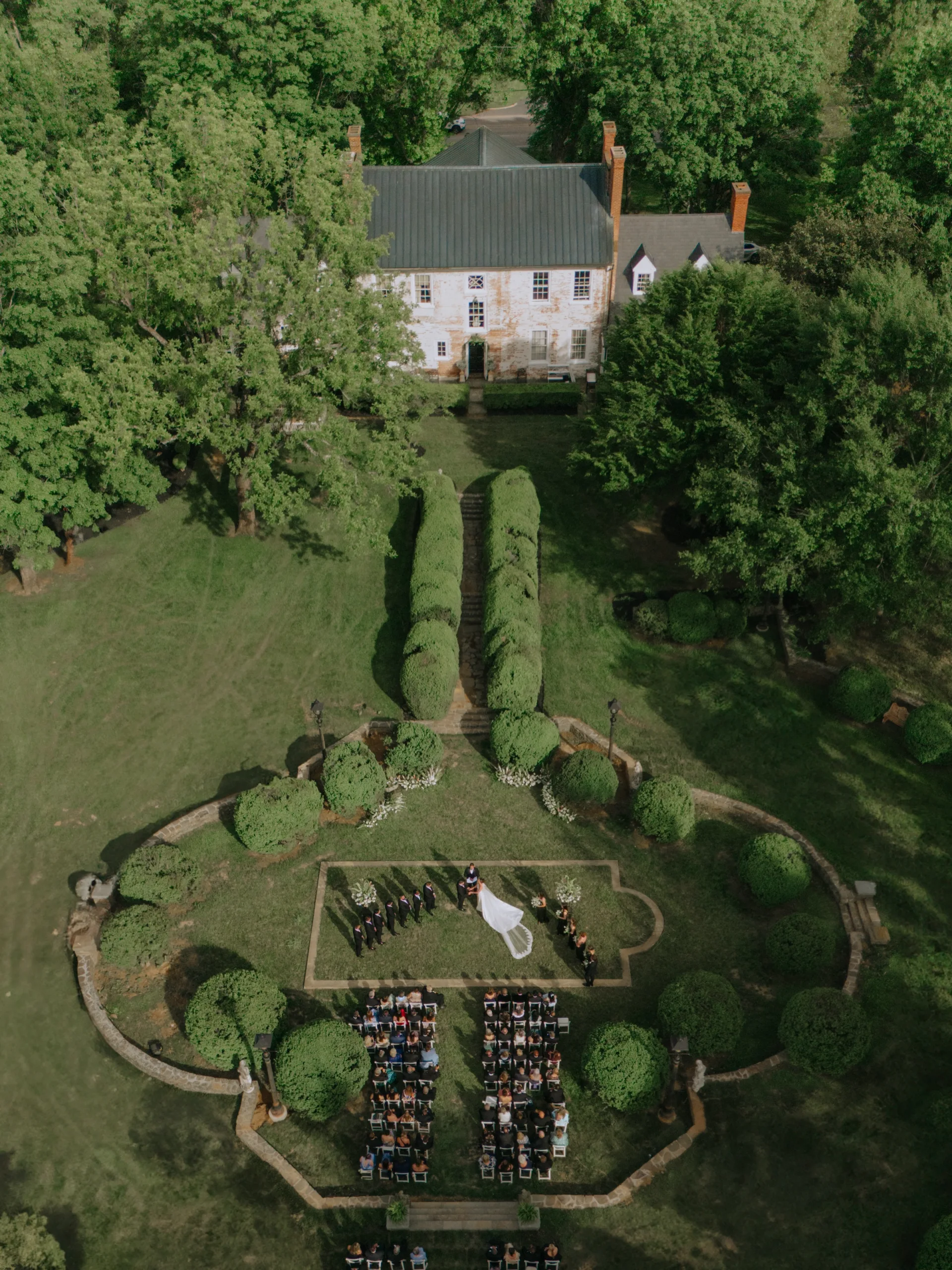
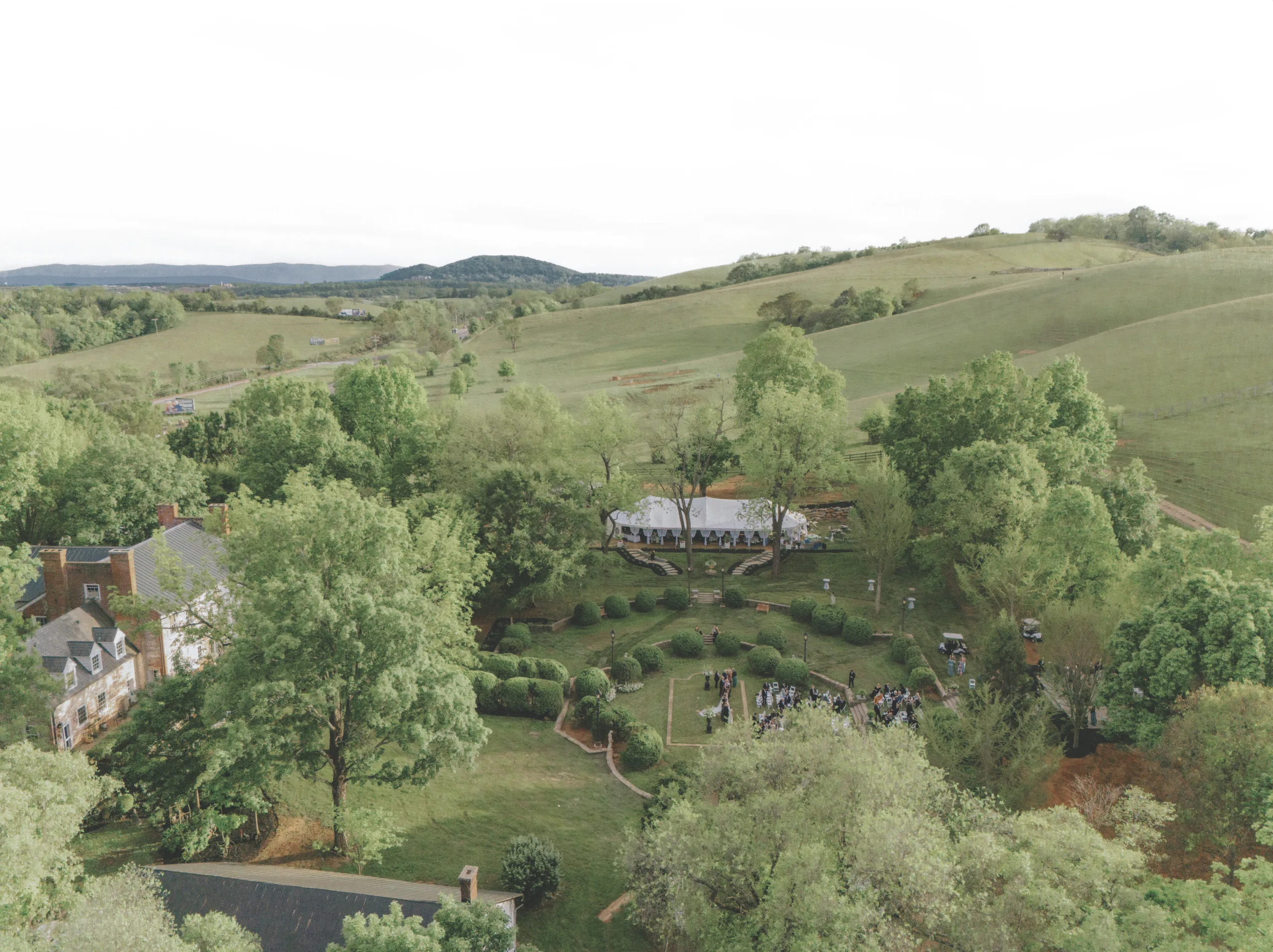 Merrifield from above on the day of Lillian’s wedding. It’s “like the garden has awakened from a long sleep to witness this day,” says her mother, Alison Hereford.
When the wedding day arrived, May 10, 2025, the garden had become a glorious thing: a tribute to family, love, and resilience. It marked both Lillian’s marriage and her father’s renewal.
“My vision was for the garden to speak for itself—to let its natural beauty shine and to greet our guests with warmth and wonder,” Lillian says. “Now, whenever I return home, I wander through that garden, reliving the magic of our wedding day and cherishing each moment I spent with my dad, planning and creating his dream garden.”
Restoring a family estate or garden for a wedding is no small feat. The Herefords’ advice? Start at least a year ahead, and “don’t fight the garden’s will; work with it,” Alison says. Above all, “include your family, and create new memories.”
Because when you set the scene for a wedding, you’re really setting the stage for a legacy—one to be passed down through generations, displayed through love, and rooted in care. It is, Alison says, “a living memory to be shared and embraced.”
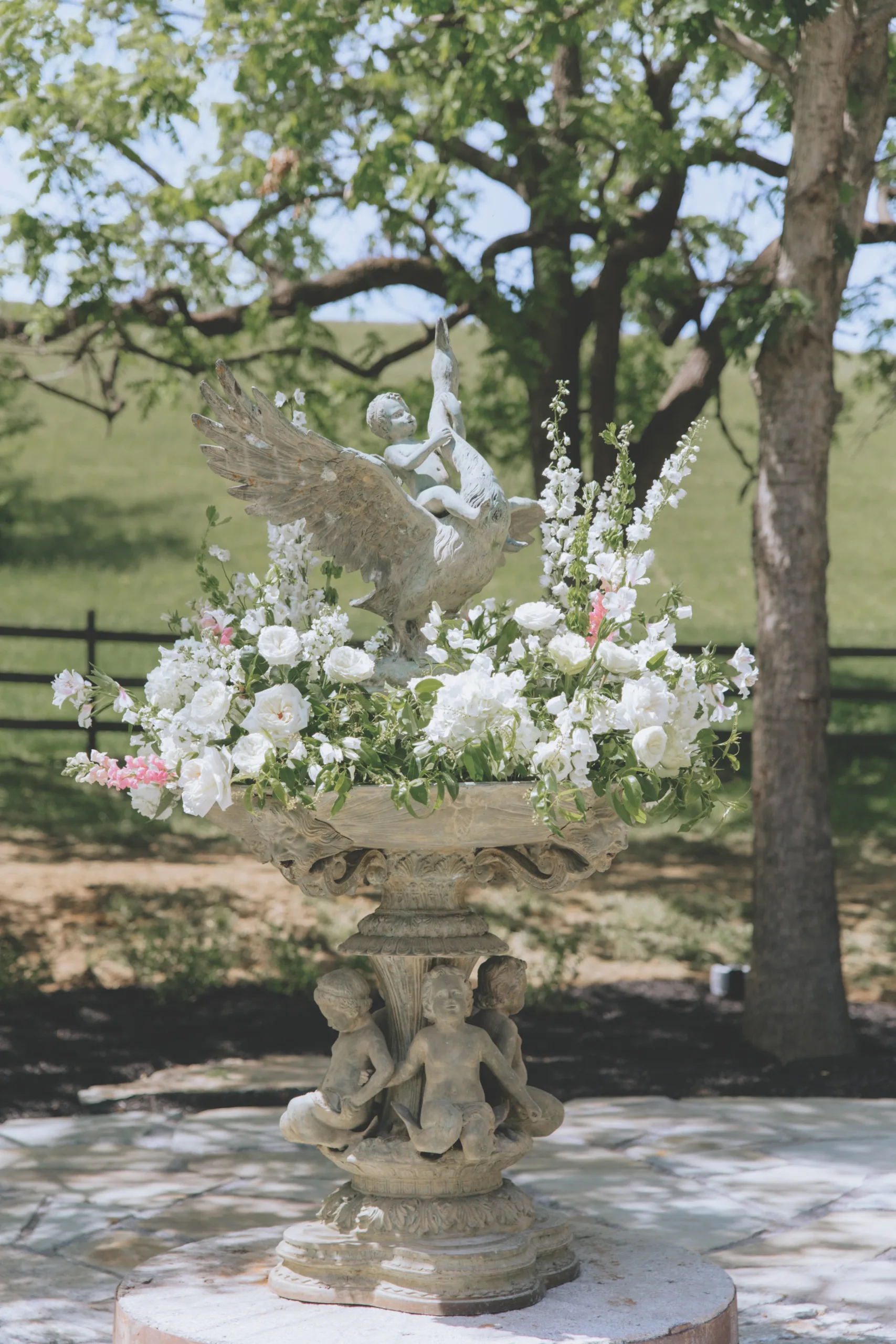
Antique statues were repurposed for the wedding to showcase flowers in bloom.
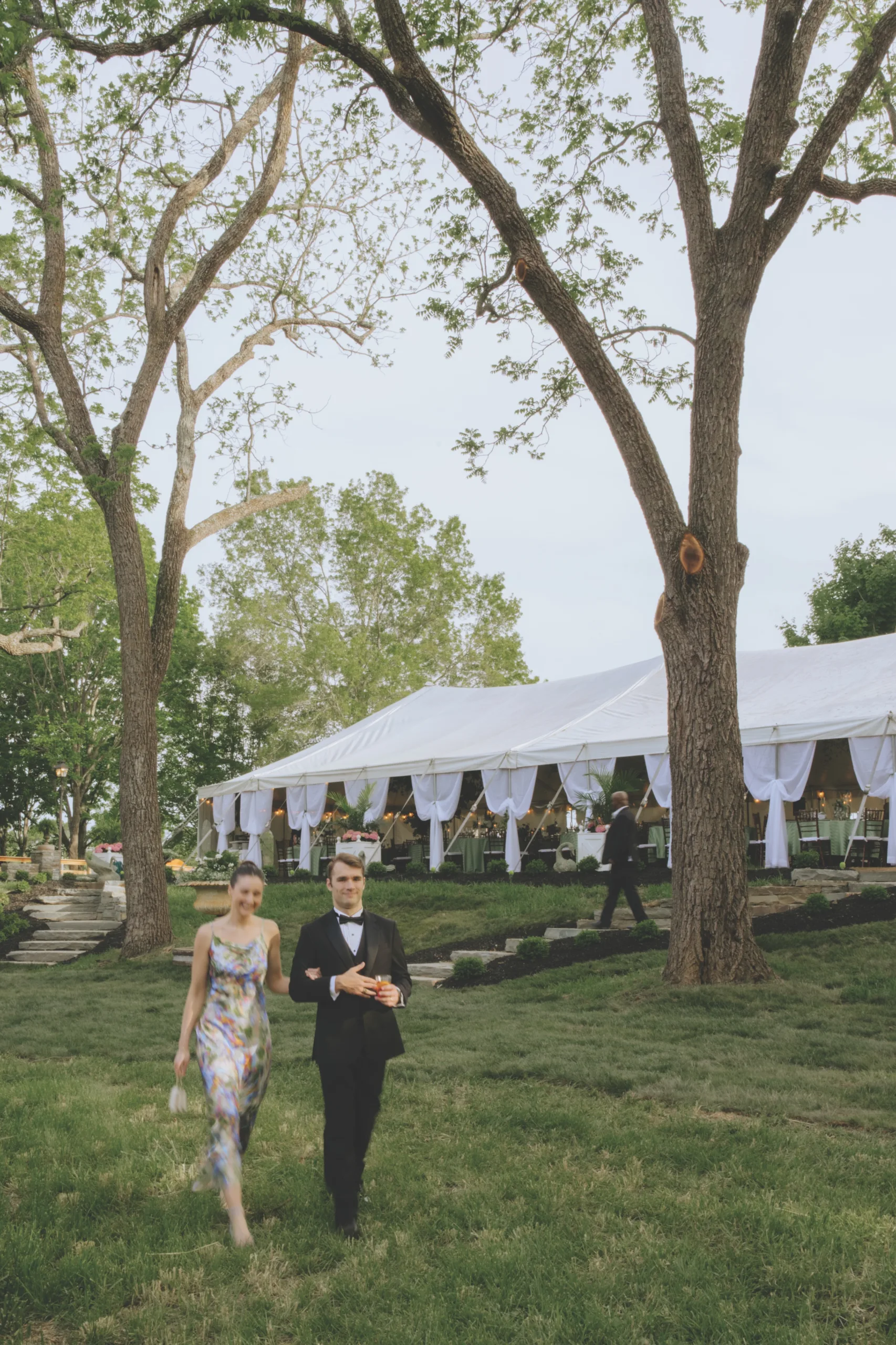
The Herefords’ stonemason revived the garden’s old walls and reimagined the layout, adding capstones, a cocktail patio, and double flanking curved steps that sweep guests from the terraced garden to the reception.
This article originally appeared in the February 2026 issue.
Comments are closed.