
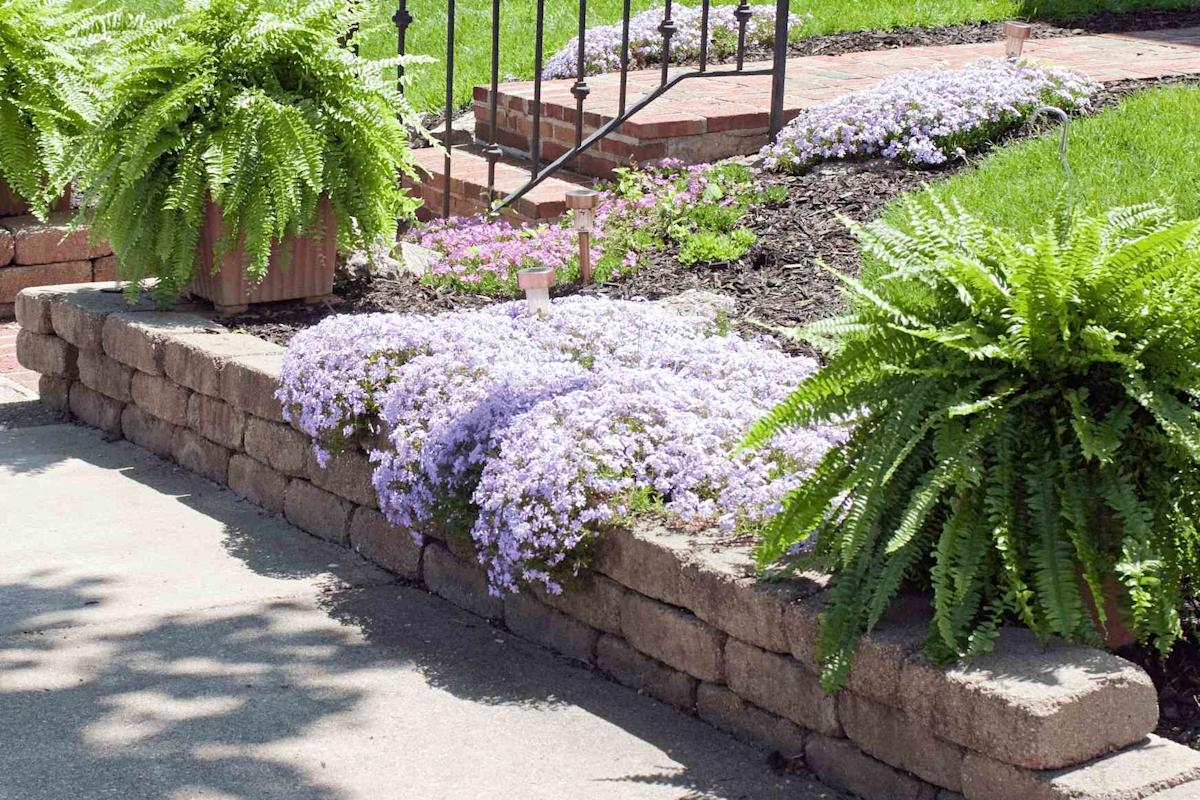
Does your garden need a retaining wall? There’s no need to resign yourself to having a large stone or concrete eyesore in your yard. Instead, use it as an opportunity to create a waterfall of blooms or a flowing trail of foliage. With a thoughtfully curated lineup of plants, you can take advantage of the natural growth patterns of cascading plants and channel a soft, romantic garden aesthetic.
Whether you want vibrant blooms to tumble overboard in the spring or you’re looking for a stream of green that will maintain its color all summer long, here are the ten best cascading plants for your retaining wall.
01 of 10
Creeping Phlox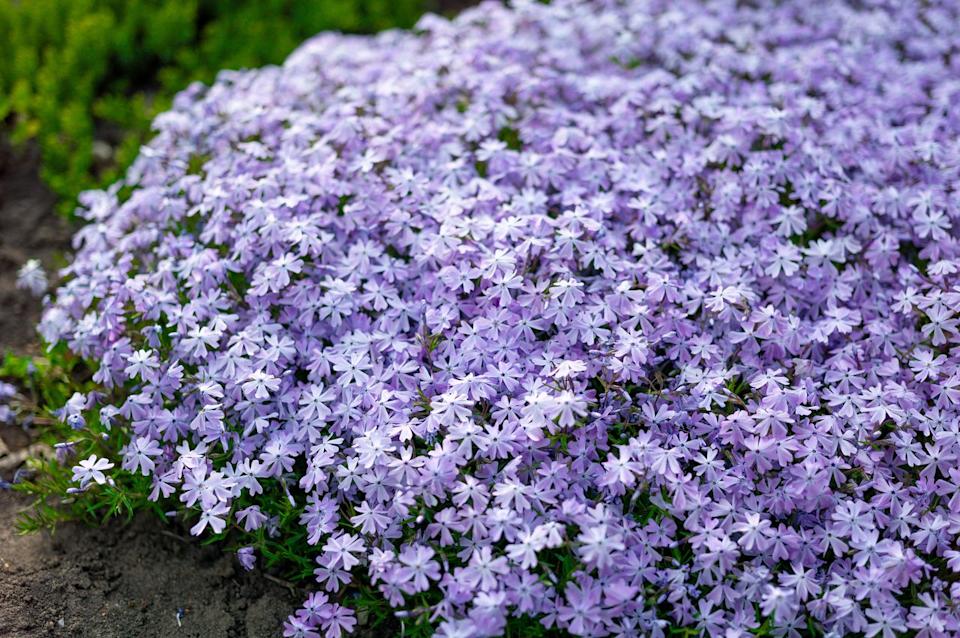
Credit: Getty Images / bazilfoto
Botanical Name: Phlox stolonifera
Sun Exposure: Full, partial
Soil Type: Loamy, well-drained
Soil pH: Acidic, neutral, alkaline
USDA Plant Hardiness Zone: 5-9
With its signature pink and purple flowers appearing in March and early April, creeping phlox is one of the first harbingers of spring. Its delicate, cheerful blooms tumble over walls and sidewalks alike, filling them with tiny blossoms. Phlox will spread quickly, which is perfect if you want to cover an area in short order but, keep an eye on it, or it can quickly take over a garden.
02 of 10
Candytuft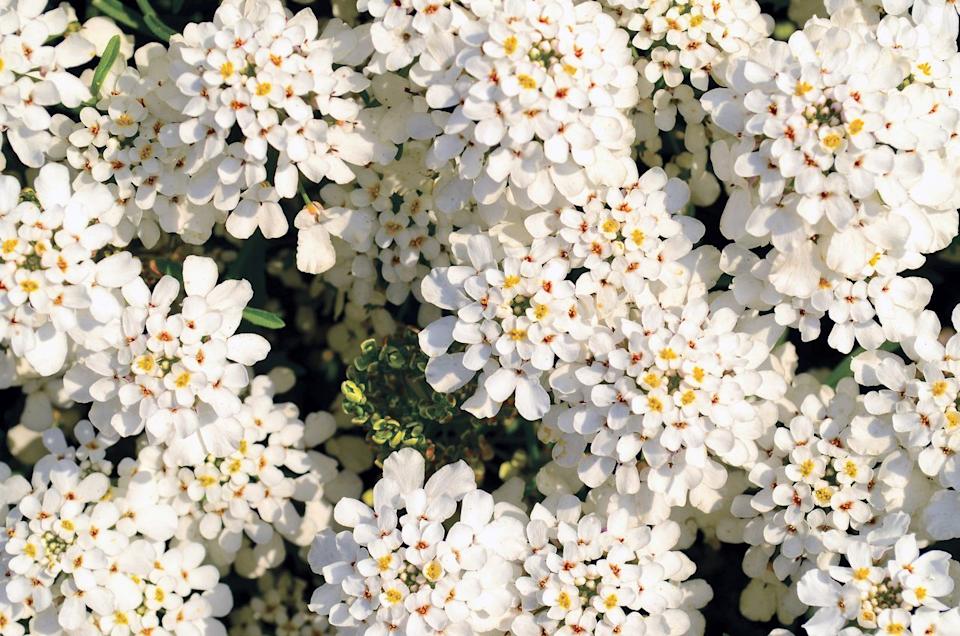
Credit: Getty Images / anand purohit
Botanical Name: Iberis sempervirens
Sun Exposure: Full, partial
Soil pH: Acidic, neutral, alkaline
USDA Plant Hardiness Zone: 3-9
The perky white flowers of candytuft make it easy to see how it got its name. These perennial blooms have abundant clusters of tiny white petals, and they’ll bloom from late spring into summer, producing flowers until the summer sun gets too hot. Candytuft is low-lying and will spread over time, but it is generally slow to make its way through the garden.
03 of 10
Trailing Lobelia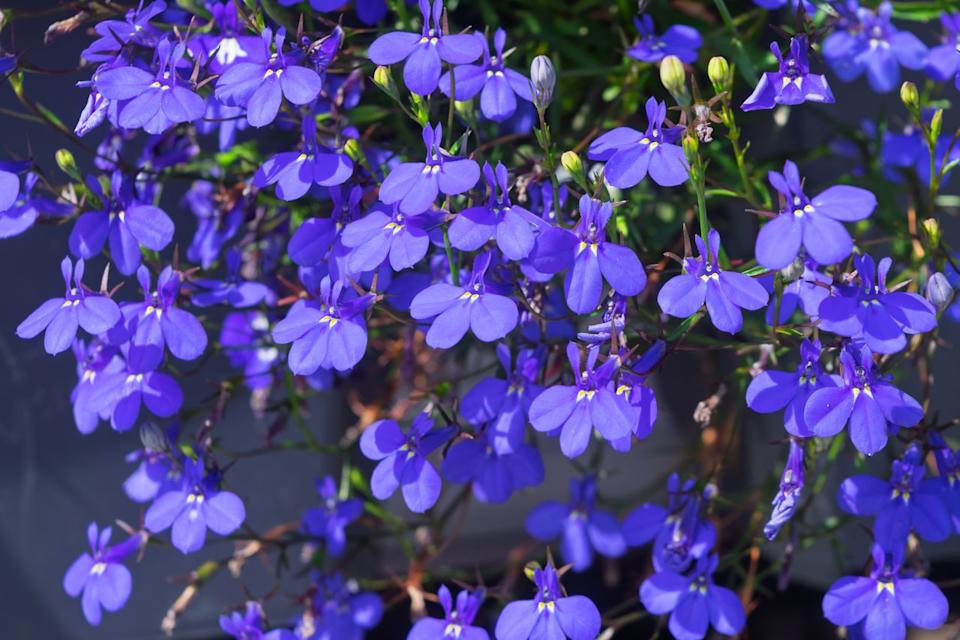
Credit: Getty Images / Anatoliy Berislavskiy
Botanical Name: Lobelia erinus
Sun Exposure: Full, partial
Soil Type: Moist, well-drained
Soil pH: Acidic, neutral
USDA Plant Hardiness Zone: 10-11
If you want maximum blooms, trailing lobelia will have you covered all summer long with its darling blue flowers. Because of its color, it’s a favorite of pollinators, including butterflies, and its trailing pattern will tumble delicately over walls without taking over your garden.
04 of 10
Creeping Jenny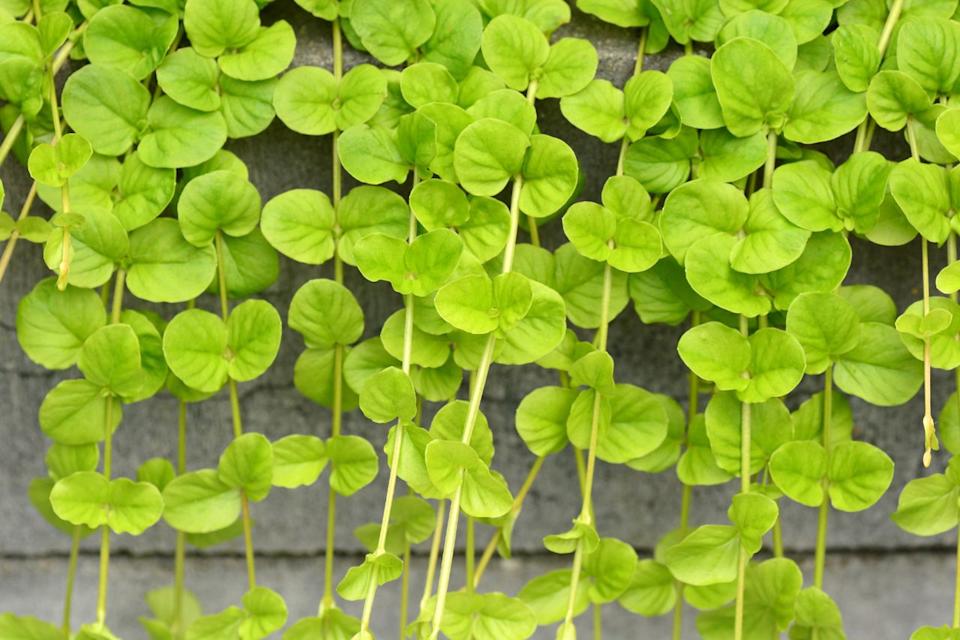
Credit: Getty Images / 49pauly
Botanical Name: Lysimachia nummularia
Sun Exposure: Full, partial
Soil Type: Well-draining sandy, loamy, or clay
Soil pH: Acidic, alkaline, neutral
USDA Plant Hardiness Zone: 4-9
Creeping jenny will quickly cover your retaining wall—and perhaps your entire garden—with its chartreuse, coin-shaped leaves (hence the nickname moneywort!). This perennial creeps along the ground, rapidly taking over a garden, which, if you’re in the market for a “spiller,” is exactly what you want. It’ll bloom briefly in the summer, producing small yellow blooms.
05 of 10
Purple Rock Cress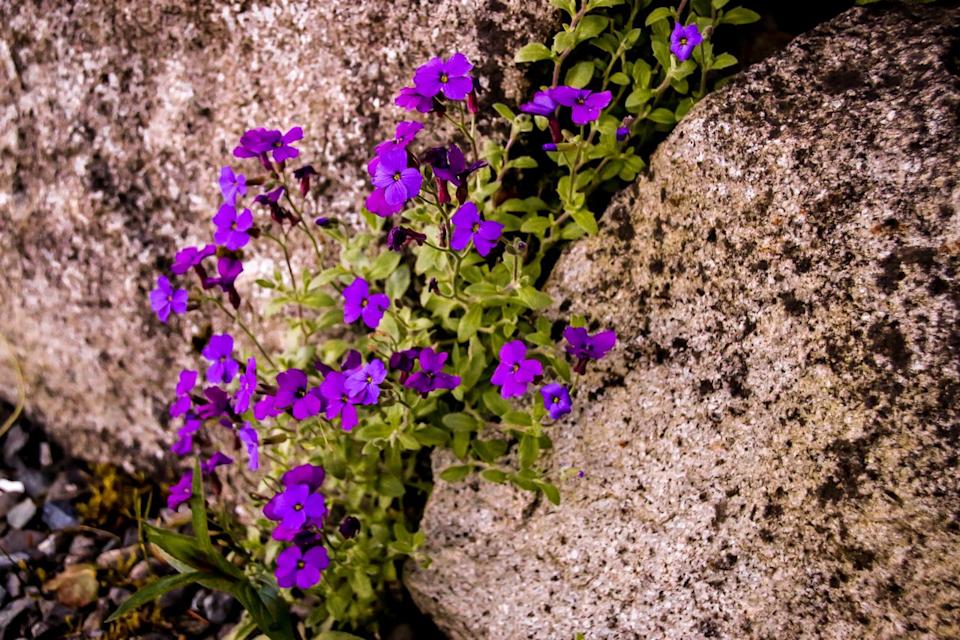
Credit: Getty Images / ChristinaFelsing
Botanical Name: Aubrieta deltoidea
USDA Plant Hardiness Zone: 4-7
When you have a retaining wall in a region that is prone to drought, purple rock cress is the cascading plant that should be at the top of your list. Just like its name would indicate, this low-growing plant thrives in areas where it’s grown along the edges of rocks and stone. Its vibrant purple blooms will appear from April to June, giving you a pop of color in the garden.
06 of 10
Dichondra Silver Falls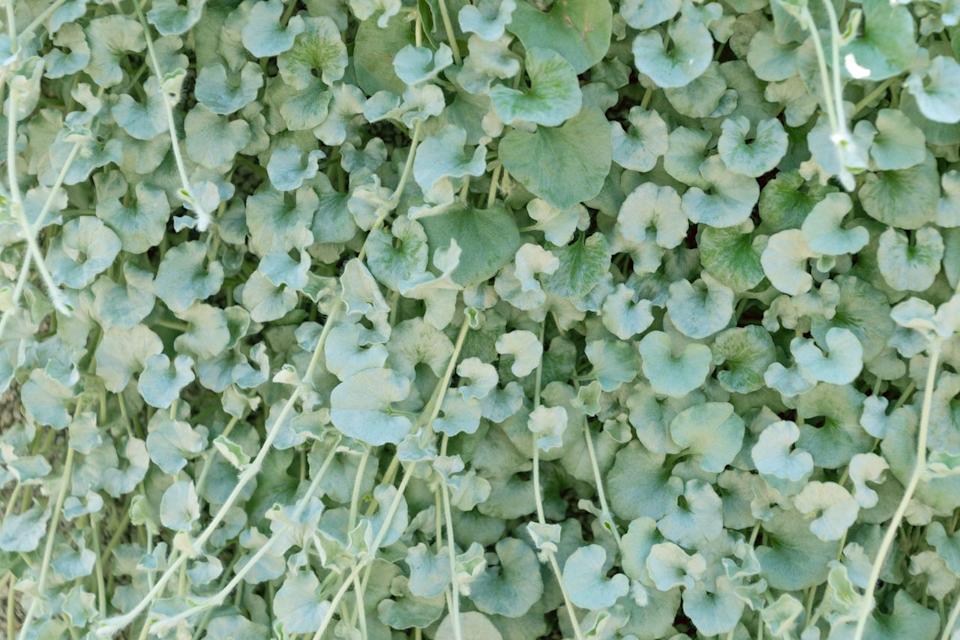
Credit: Getty Images / Katsiaryna Yeudakimava
Botanical Name: Dichondra argentea
Soil Type: Well-draining sandy loam
Soil pH: Slightly to moderately acidic
USDA Plant Hardiness Zone: 10-12
While dichondra silver falls is a desert plant in its native environment, it’s grown as a striking annual across the South. The silver-green leaves will cascade over a wall, creating a soft, ethereal look. It has small white flowers that may appear during the summer, but it’s lovely as an accent to bolder trailing blooms, like creeping thyme.
07 of 10
Creeping Thyme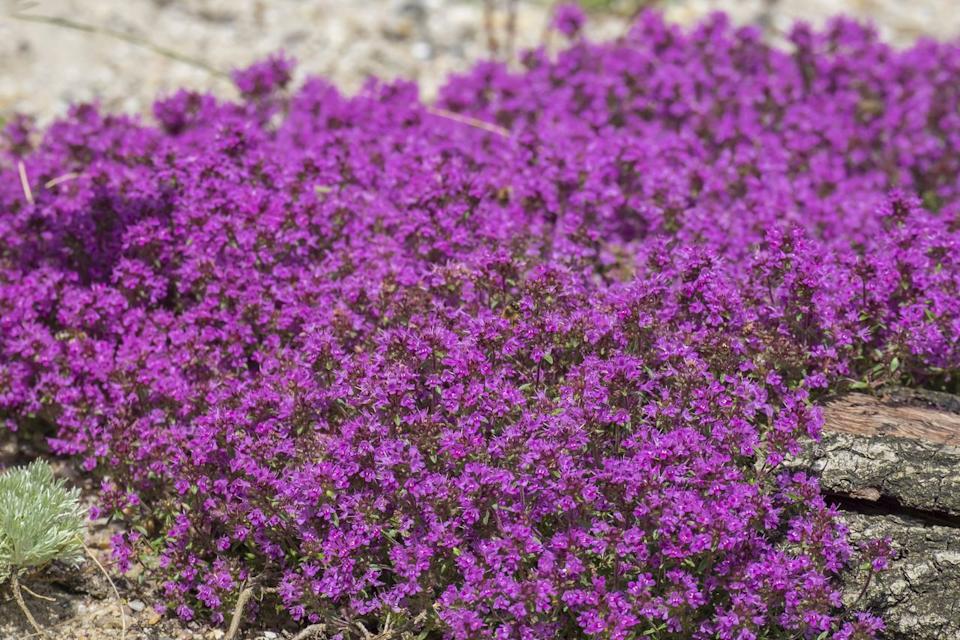
Credit: Getty Images / imageBROKER/AnnaReinert
Botanical Name: Thymus spp.
Soil Type: Well-drained, sandy
Soil pH: Neutral, alkaline
USDA Plant Hardiness Zone: 2-9
Creeping thyme isn’t exactly the thyme that you use in the kitchen, but it could be cooked with if you so desired (but wouldn’t you rather look at its charming blooms?). Luckily, in addition to its pink and purple flowers, it also has a savory fragrance that will remind you of cooking delicious meals. This low-maintenance groundcover spreads easily, covering everything from garden borders to retaining wall edges.
08 of 10
Vinca Vine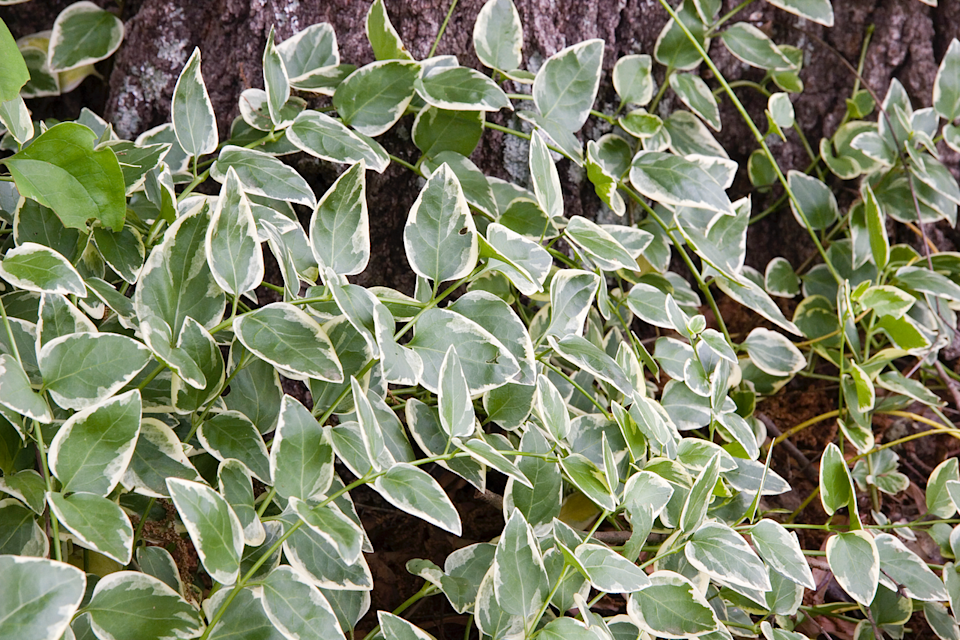
Credit: Getty Images / JillLang
Botanical Name: Vinca Major ‘Variegata’
Sun Exposure: Full, partial
Soil Type: Moist, well-drained, rich, loamy
USDA Plant Hardiness Zone: 7-9
Many people have a love-hate relationship with vinca vine. The light and dark green colors of this vine are striking in the garden, and it spreads quickly, covering a retaining wall with little effort. But spreading quickly can also mean finding it in areas where you didn’t intend for it to take root. The perennial vinca vine also has sweet periwinkle blooms that soften its invasive reputation.
09 of 10
New Dawn Rose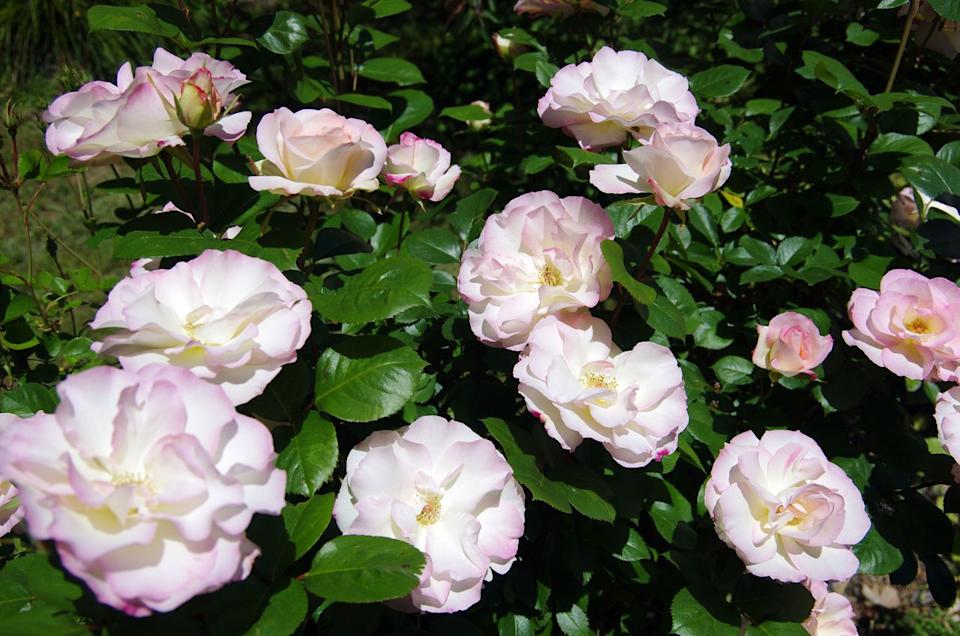
Credit: Getty Images / Simon McGill
Botanical Name: Rosa ‘New Dawn’
Sun Exposure: Full, partial
Soil Type: Moist, well-drained
Soil pH: Slightly acidic
USDA Plant Hardiness Zone: 5-9
A waterfall of climbing roses is one of the most romantic garden sights. It’s reminiscent of quaint cottages and secret gardens. And the new dawn rose is exactly what you should look for if you want that cascade of blooms to tumble from your retaining wall. You’ll have years of gorgeous light pink blooms gracing your garden year-after-year.
10 of 10
Lemon Coral Sedum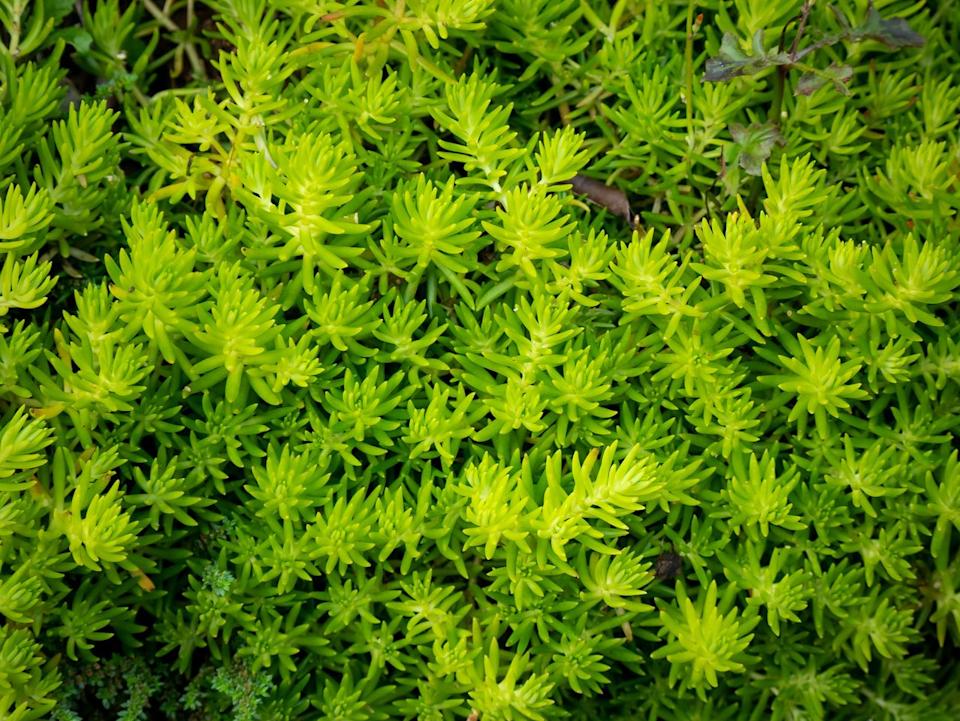
Credit: Getty Images / Alexandre Morin-Laprise
Botanical Name: Sedum mexicanum ‘Lemon Coral’
Sun Exposure: Full, partial
Soil Type: Well-drained, sandy, rocky
Soil pH: Slightly acidic, neutral
USDA Plant Hardiness Zone: 7-11
The bright chartreuse hue of lemon coral sedum makes a statement in the garden, and it’ll easily form a hanging carpet off any retaining wall. It easily roots, so watch any pieces that may drop off or you could end up with a secondary bed of sedum just below.
Read the original article on Southern Living
Comments are closed.