
Credit: Getty Images / the_burtons
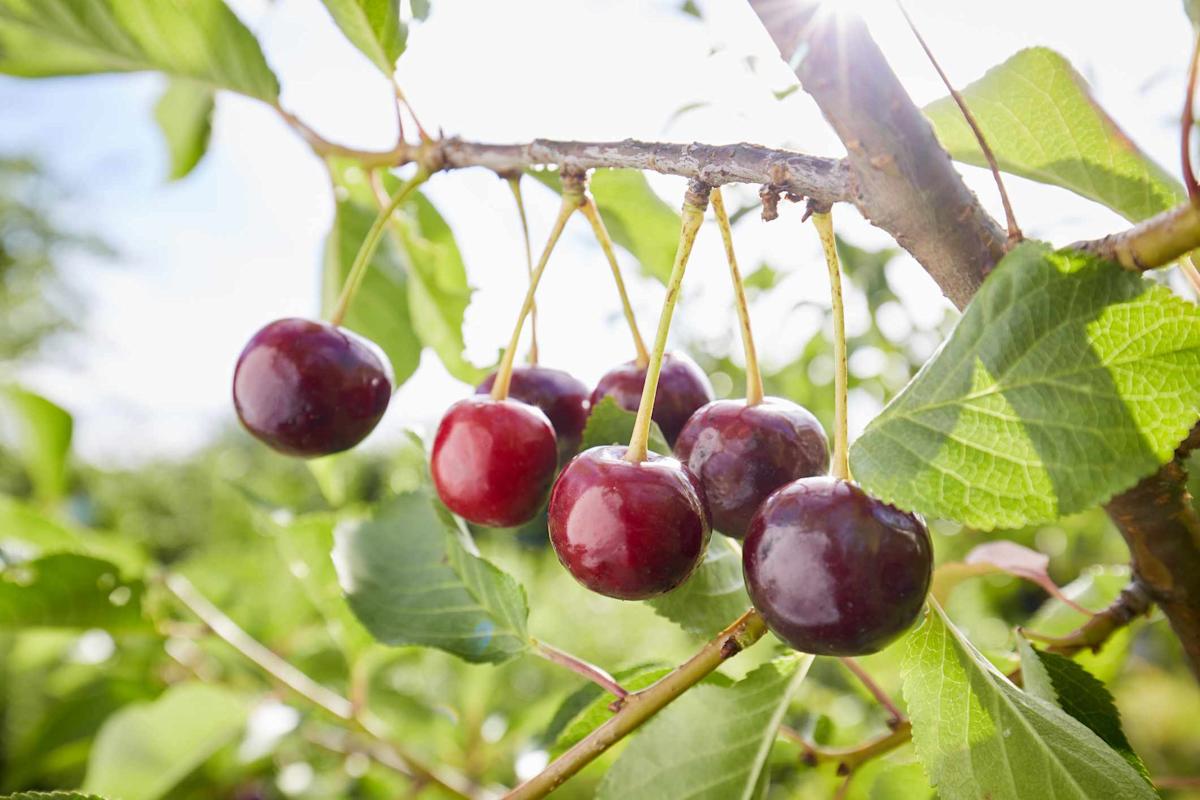
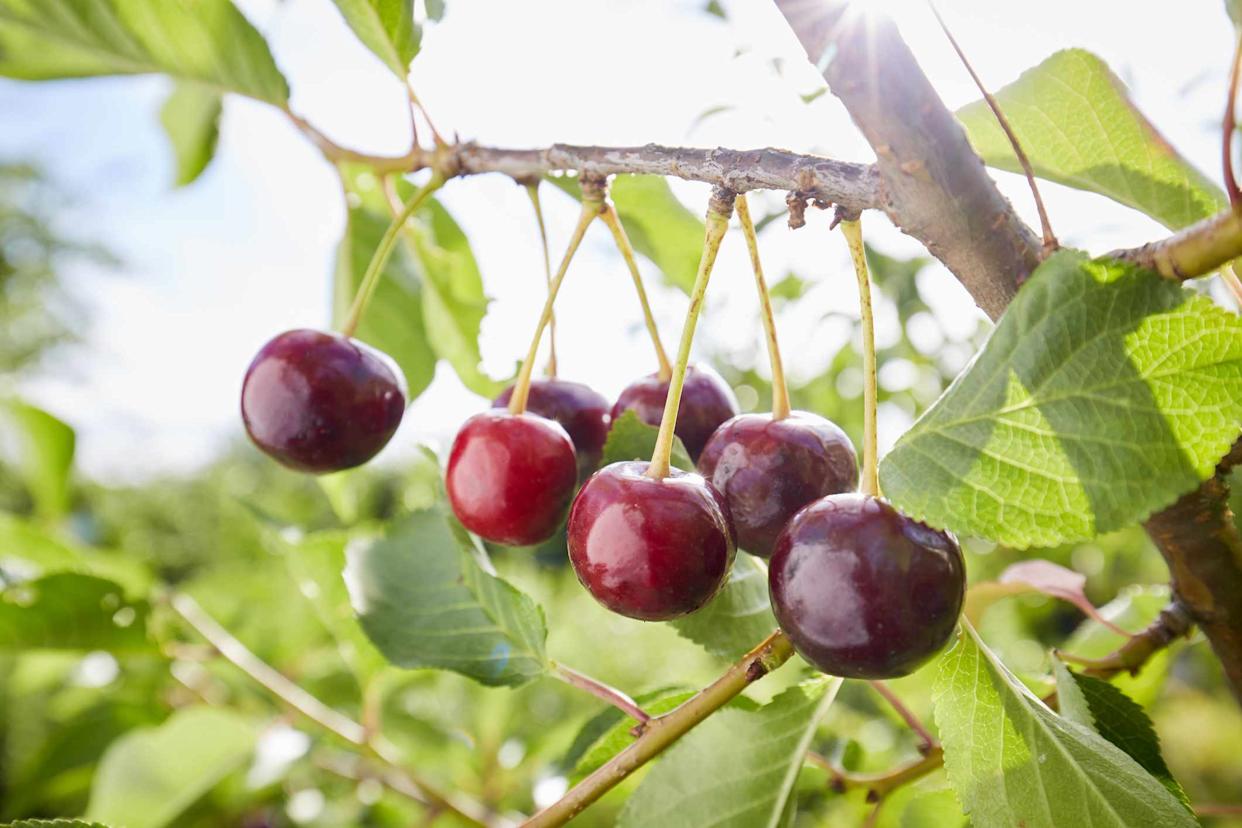
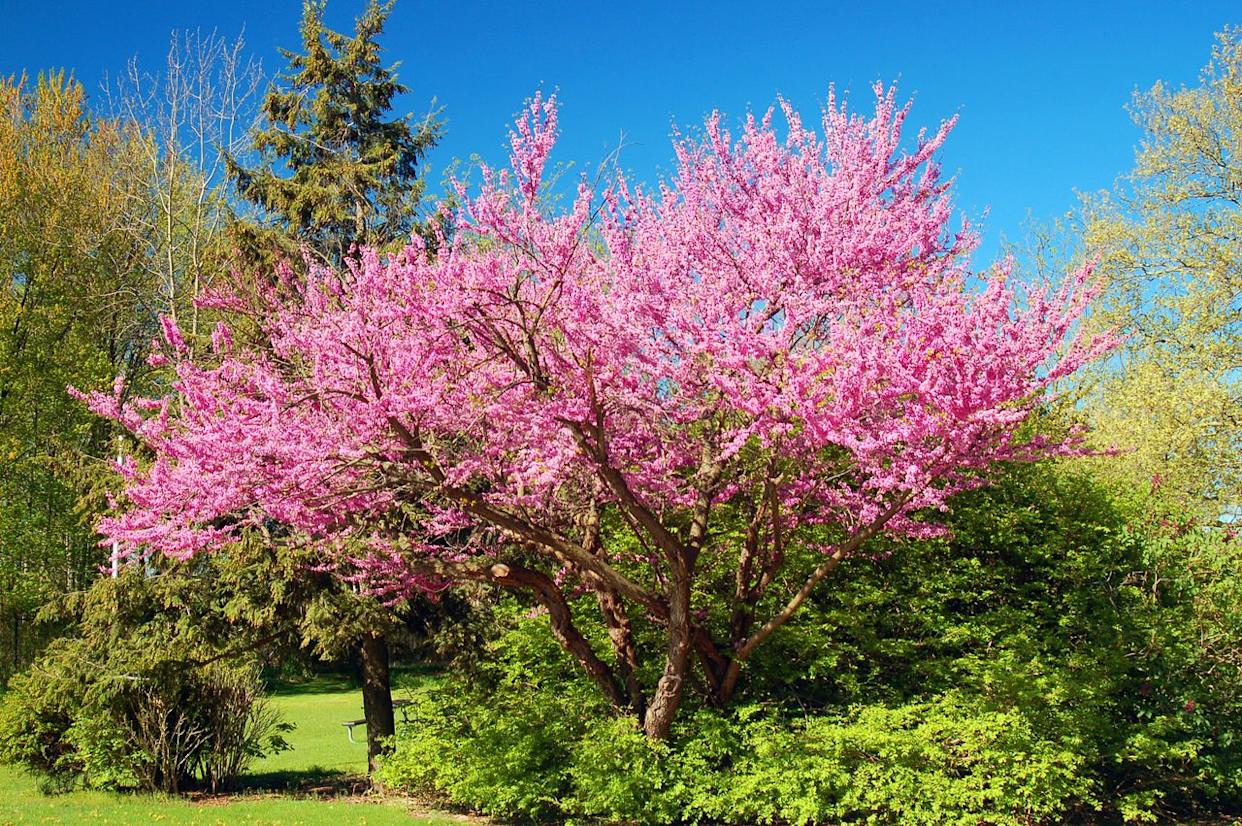
Growing a cherry tree in your own yard is a win-win situation. Not only will you have a juicy summer harvest headed your way, but you’ll also usher in spring with some of the prettiest and most classic blossoms. And, while parks and curated gardens often get all the fanfare for the pink-tinted snowfall from their legions of cherry trees, you can also grow a cherry tree right at home.
Already combing through cherry pie recipes? Here’s the expert-backed advice on exactly how to choose the right type of cherry tree for your yard, how to grow a cherry tree, and when to plan on picking the most delicious cherries.
Can You Grow Cherry Trees At Home?
As long as you have a full sun location, cherry trees are surprisingly easy to grow. You can grow larger varieties of cherry trees in a sunny spot in your yard but, if you’re short on space, you also choose a dwarf variety that will grow happily in a container.
While most people will grow cherry trees from store-bought saplings, it is possible to grow them from seed. You’ll just need a little more patience (not just for the tree to grow, but during the several year waiting period before it produces fruit , too!).
Credit: Getty Images / Kirkikis
When To Plant Cherry Trees
Young cherry trees prefer cooler temperatures as they establish their roots, and the best time to get saplings in the ground is in late fall or early spring.
“Generally, nurseries ship cherry trees to consumers in late winter and early spring, starting in March. In most locations this is a good time to plant them, preferably when deciduous trees are dormant or not far beyond dormancy,” says Frank Levering, owner of Levering Orchard.
If you decide to plant your cherry tree from seed, aim for late fall. This will give them the cold stratification period they need to germinate over the winter.
How To Choose The Right Type Of Cherry Tree
There are multiple types of cherry trees, and not every variety is suited to produce edible fruit on a small scale. Ideally, if you’re planting a singular cherry tree in your yard, you’ll want to look for a self-fertile variety. That means it does not rely on other cherry trees to cross-pollinate.
Beyond choosing a self-fertile cherry, you’ll also need to think about whether sour cherries or sweet cherries are better suited to how you plan to use your harvest. If you enjoy baking cherry pie or making preserves, then you’ll actually want a sour cherry variety, like Northstar or Meteor. For those who prefer snacking cherries, sweet cherries, like Stella or Sunburst, are best.
How To Plant A Cherry Tree
The first step to growing a cherry tree that will thrive and produce fruit all season long is to pick the right spot. Levering recommends choosing somewhere with full sun, which means at least six hours of direct sunlight daily. He also points out that cherry trees don’t respond well to wet areas with poor drainage. “‘Wet feet’ can drown cherry tree roots or, at minimum, hinder growth,” says Levering.
If you are planting a sapling, Levering says to dig a hole that is roughly 18 inches deep and 18 inches wide. It should be twice the width of the rootball. Make sure that any hard areas have been broken up to allow the roots to settle in and spread.
Fill the hole back in, then water thoroughly. Resist the urge to add fertilizer immediately after planting the sapling in your yard. “Apply fertilizers with nitrogen, lightly, three to four weeks after planting,” says Levering.
How To Care For A Cherry Tree In The South
Cherry trees traditionally thrive in the north, where the cold temperatures of winter lead to the juiciest, most delicious fruit. But there are low-chill varieties, like Mini-Royal and Royal Lee, that do well even in climates where temperatures rarely drop before freezing.
Beyond planting the cherry tree in a sunny spot, make sure to give it the correct amount of moisture throughout its early years. The trick is finding the sweet spot—not too much, not too little. “Adequate moisture is essential for the young tree. In dry weather, water the tree once a week with three to four gallons of water per tree,” says Levering.
Cherry trees only need fertilizer once annually, typically during the spring. Levering adds, “The best mulches for young cherry trees are large hardwood chips or crushed limestone.”
When To Harvest Cherries
In the South, cherry season runs from mid-May through July, and you can start picking cherries as soon as the fruit looks as if it’s reached peak color. If the cherries pop right off the branches, then they’re ripe. Of course, cherry trees don’t necessarily make it easy to harvest the fruit, particularly as they get bigger, so this is when you get to live out your dreams of carrying a ladder around and plucking fruit from branches that reach high into the sky.
How Long Does It Take to Harvest Cherries?
Cherry trees don’t produce fruit immediately. Depending on the variety, cherry trees can take years to start producing a sweet harvest each summer. Dwarf varieties will produce fruit the quickest, often in one to three years, while full size sweet cherry trees can take up to seven years.
Common Issues With Cherry Trees
Levering recommends keeping a close eye on your cherry trees, particularly during the early days when they’re trying to establish themselves. This is when they’re the most susceptible to pest damage, including aphids and Japanese beetles. You should also keep an eye out for common diseases that plague cherry trees, including cherry tree leaf spot, which causes dark spots on leaves, powdery mildew, which will leave a white powdery substance on leaves, and bacterial canker and black knot, both of which cause swelling and issues on branches.
Additionally, Levering says, “Controlling weeds is also a must, to eliminate competition in the early stages of growth.”
Read the original article on Southern Living
Comments are closed.