
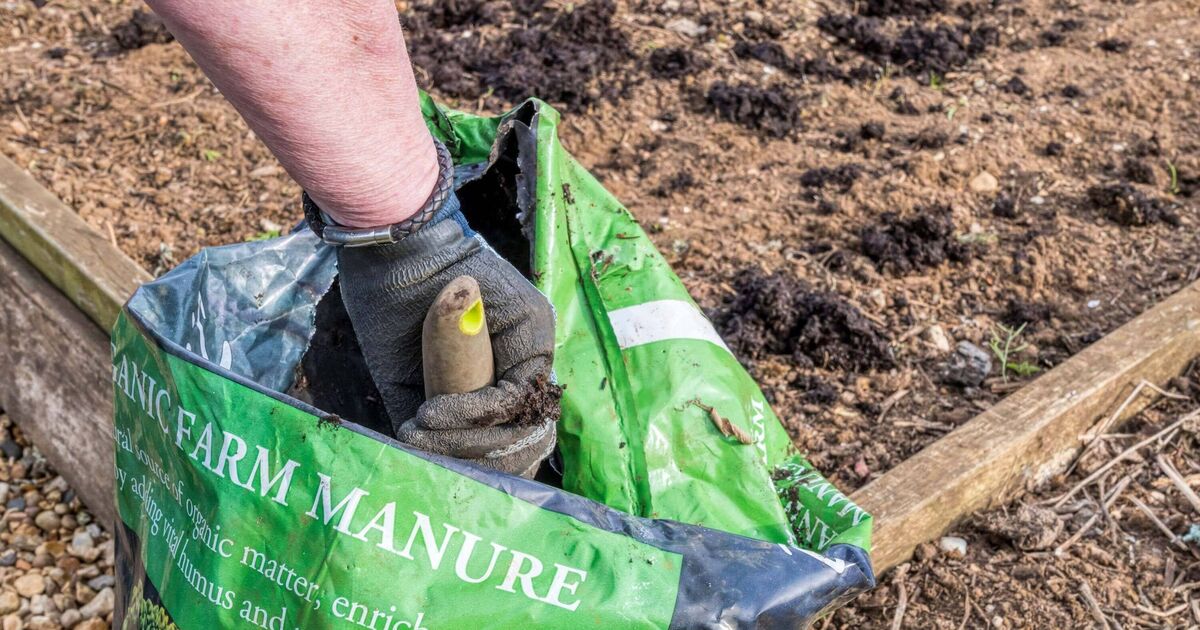
Spreading farmyard manure over a garden bed (Image: Alamy/PA)
If you’ve started your spring weeding routine, the next stage is probably mulching – applying a layer around your cherished plants in beds and borders, whether to suppress weeds, lock in moisture or enrich your soil with nutrients. But which mulches are appropriate for particular tasks?
People become puzzled when selecting appropriate mulches, says David Stanford-Beale, doctor of entomology at MAD (Make A Difference) Company, which develops and sells organic, sustainable and peat-free growing media products.
“Nine times out of 10, a customer is going to choose aesthetics over nearly everything. You want something that just looks nice in your garden and the same with houseplants. The one gardener out of 10 cares about the ingredients, the provenance and what they are actually putting in their garden,” he says. “When you’re looking for a mulch at your garden centre, the key is read the bag, look for an origin and, if you can, buy local.”
Different mulches are appropriate for a range of tasks.
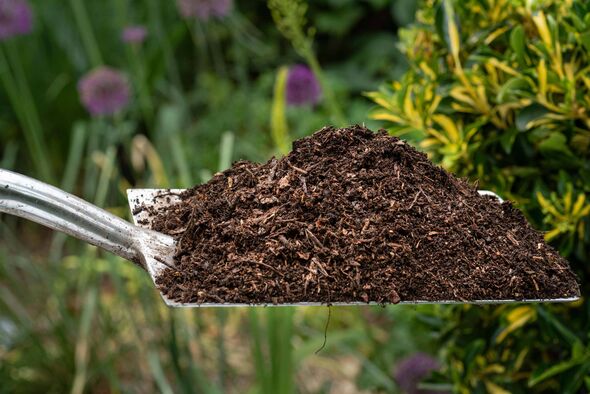
A spade full of compost (Image: Alamy/PA)
Read more: Gardening experts say best thing to do with expired seeds
Read more: Hedge height rules in the UK and when neighbours can complain to council
Compost
Whether homemade or purchased from shops, compost delivers the nutrients that demanding plants such as roses and hostas require, whilst also suppressing weeds. Apply it to all soil types to help lock in moisture and enhance soil structure, but avoid spreading it around plants such as lavender or salvias, which favour drier, nutrient-poor soil, the RHS advises.
Additionally, be mindful that some compost may contain weed seedlings, which you’ll need to remove as you spot them. Nevertheless, if you have a substantial area and you are not producing your own compost, purchasing bags of compost can be a truly costly option for mulching, says Stanford-Beale.
Farmyard manure
This is an incredibly rich compound which is excellent for moisture retention and adding an abundance of nutrients to the soil in beds and borders, so ideal for roses, shrubs and other demanding plants. It will enrich and enhance soil structure and you are unlikely to get weed seedlings in it.
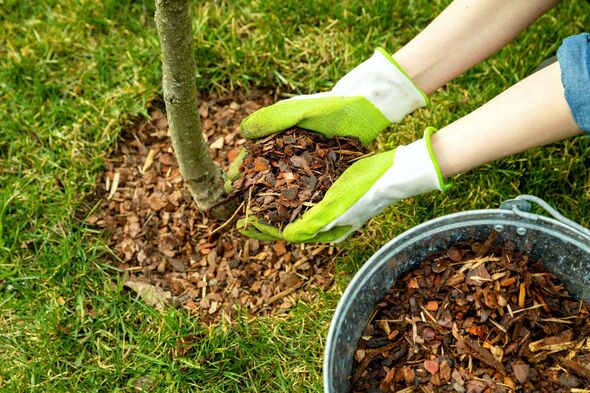
Mulching around a tree with bark chippings (Image: Alamy/PA)
The main thing is to ensure that the manure is well rotted, or it will scorch the plants, according to the RHS. If it’s smelly or steaming you may want to leave it a bit longer.
Straw
“Straw-based mulches are OK. They look and smell nice, so the customer has a great reaction. They break down really quickly and release loads of potassium in the soil,” says Stanford-Beale.
“It’s fine to use a straw mulch on a raised bed or allotment in spring, but you need to make sure that younger plants, brand new seedlings, don’t get too much potassium all at once. It only becomes an issue when you go year after year after year with straw mulch and it will build up, but if gardeners are sensible about what they are putting in, there shouldn’t be any problems.”
Bark
Many gardeners utilise a mulch of bark chippings in their borders to suppress weeds and retain moisture and it does have other advantages, says Stanford-Beale. “If you have more moisture you end up with less air and get slightly different cycles going on in your soil, so it encourages worms and lots of burying insects to come up through that mulch and recycle it around. It’s like what happens in the forest and in nature, the leaves will come down, act as a big mulch and stimulate the ecosystem around it to pull that nutrition down.”
He suggests applying a bark mulch around the base of trees – though advises sticking to the same family of bark where possible.
“If you have an oak tree, try to use oak bark. If you have a pine tree, use pine bark. But be careful where you are sourcing it from.”
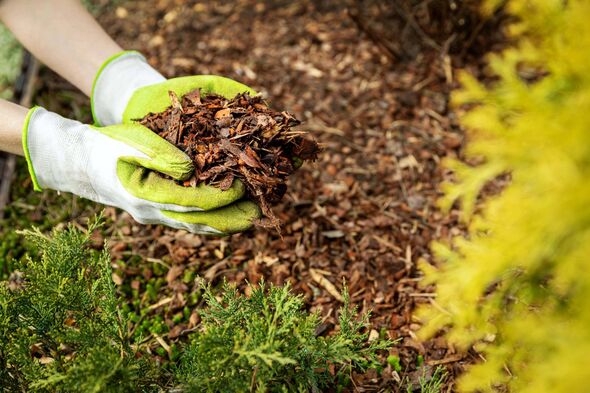
It’s important to get the right type of mulch (Image: Alamy/PA)
Check the packaging to see if the bark is sourced in the UK and attempt to avoid mulches containing treated wood, he advises, though sometimes it’s difficult to determine.
He warned: “People are not labelling responsibly or properly and it’s making it difficult for customers to choose responsibly, but places like Crocus and Blue Diamond Garden Centres are starting to do that, where they make sure that their suppliers label what the product is and what it’s made of.”
Non-biodegradable materials
Slate, stone chippings, pebbles and shingle are frequently used as a mulch to improve the appearance of a border and they will help retain moisture and suppress weeds, as will decorative glass in containers, but Stanford-Beale considers all the problems they may bring.

Dr David Stanford-Beale (Image: Hannah Stephenson/PA)
“That slate and glass will go on to your grass and break your lawnmower. And for the rest of time you’re going to be finding that product in your bed. So if you use something today which you like because of aesthetics, make sure you’ll like it in 20 years, because it’s still going to be there.”
How deep should your mulch be?
“If you really want to suppress weeds and don’t want to use a weed membrane, your mulch needs to be three inches deep,” he believes. “But any amount helps, even if it’s just a scattering to add organic matter to your soil.”
Comments are closed.