
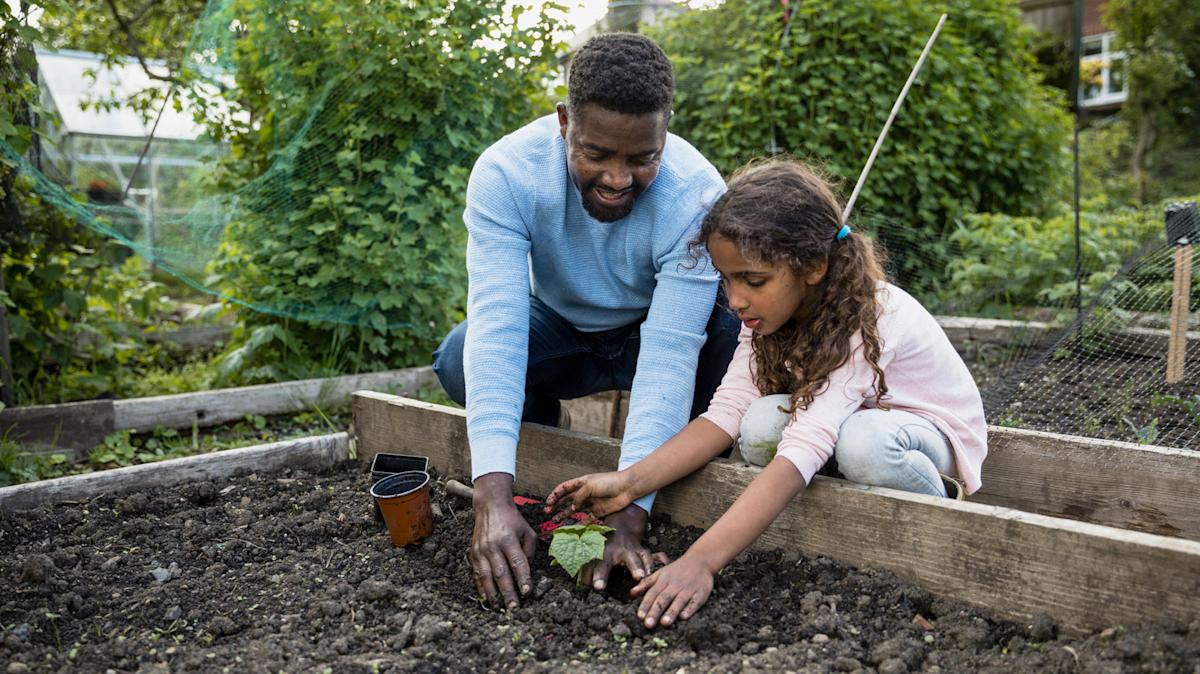
Ever find yourself basking in the summer sun, looking at your not-exactly-bountiful garden, wishing you would have gotten started months earlier? Us too. When the chill of winter is still lingering in the air, it can be tempting to stay cozy indoors, but bundling up and planting certain veggies can help increase the likelihood of a successful harvest a few months down the line. Knowing exactly which ones to start growing in early spring can help you get your garden started right, setting the stage for a gorgeous bounty of fresh veggies once summer rolls around.
Here, we’ve compiled a list of the seeds and plants you’ll want to get into the ground early. Before you start digging, it’s important to check out the recommended planting times on the back of the seed package and determine what zone you live in, as the exact timing for planting is region-dependent due to varying weather patterns. Then, once you’ve picked the best spot for your garden and you’re ready to go, grab your trusty old pair of gardening gloves and let’s (literally) dig in.
Read more: 7 Must-Have Canned Foods And 7 To Avoid In Your Pantry
Plant lettuce early for perfectly fresh summer salads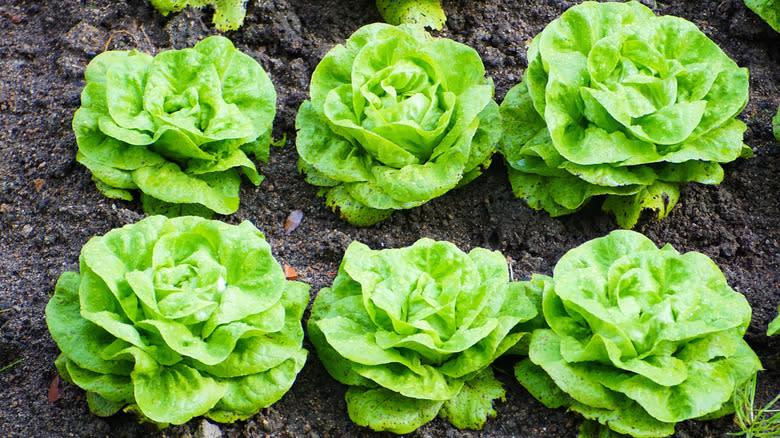
Lettuce gems growing in garden – Marinopili/Getty Images
Whether you’re in the mood for a fresh salad or you’d prefer to use leafy greens to convert your sandwich into a lettuce wrap, it’s tough to beat lettuce straight from the garden. You’ll want to plant lettuce a month or so before the last frost. Lettuce typically grows pretty quickly, so you might want to plant a row one week, then wait a week or two before you plant the next so you don’t end up with more than you can eat. Lettuce typically takes about two months to fully mature.
Once your lettuce begins to grow, it’s a good idea to harvest it quickly so common garden critters don’t get to enjoy it before you do. Tons of insects — like beetles, crickets, aphids, and grasshoppers — love to munch on lettuce, as do larger animals, like birds and reptiles. Wire fencing and draped netting can both help to keep pests away from your lettuce plants. Quick harvesting is also important to help your lettuce grow; when you remove outer leaves, you give the inner leaves a chance to mature.
Spice up spring by planting radishes early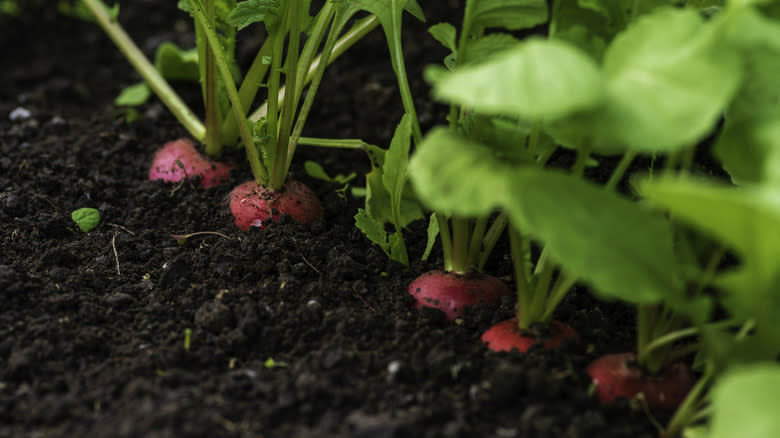
Radishes peeking through garden soil – Victoria Moloman/Getty Images
Spicy, zesty, and vibrantly colored, radishes are a welcome addition to salads and sandwiches. You can plant radishes in your garden super early — as soon as the soil is soft enough for you to start digging; late winter is totally fine if you’d like to get an early start, although you may want to put them in containers or protected cold frames. Radishes actually grow best with fewer hours of sunlight (they only need six hours or so per day), so getting them into the ground before the start of daylight saving time is ideal. Most salad varieties are fast-growing, so you can expect your first radishes to be fully grown and ready to eat about a month after planting.
When you’re enjoying these fresh veggies from the garden, you don’t need to throw away the tops. Radish greens are edible and loaded with nutrients. The greens are at their most tender when they’re young, so you’ll want to eat them within a month or so of planting your radishes. For a vitamin-packed side dish, try sauteing radish greens with a bit of olive oil and seasonings the same way you’d saute spinach.
Snap into warmer weather with sugar snap peas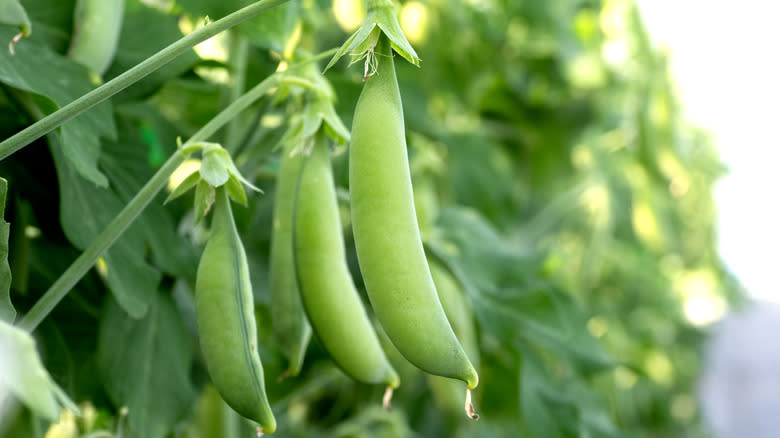
Sugar snap peas hanging off of vine – Y-studio/Getty Images
The experience of biting into a sugar snap pea pod straight out of the garden can throw you right back to childhood. The combination of the crunchy pod and the sugar-sweet peas inside are perfect for snacking, salads, and more. Peas are pretty easy to plant and manage — you don’t need to worry about spacing, as they’re happy to grow in close quarters. But while they don’t mind growing without a ton of space, they do prefer a lot of sunlight and more light tends to result in sweeter peas. You can get this veggie started in your garden as early as mid-February, if you’re able to get through the soil. You can typically expect to start snacking on peas two months or so after you’ve planted them.
If you’re able to keep sugar snap peas in your kitchen long enough to use them in an actual recipe (instead of just going to town on them as snacks), you’ve got a ton of options to put them to good use. Consider including them in stir-fry recipes or soups, or roast them with a bit of olive oil, salt, and pepper for a sweet and simple side dish.
Plant kale in early spring for a taste you’ll actually love (seriously)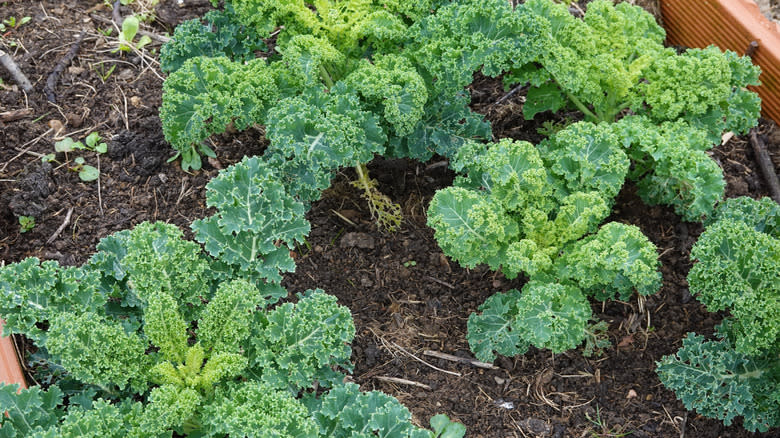
Kale growing in a raised garden bed – Toni Jardon/Getty Images
Kale has been having a moment for, well, years now. Once relegated to decorating salad bars, kale is now quite the hot commodity. The dark leafy green is super healthy, but its tough texture and bitter taste can make it a little hard to enjoy on its own. Good news: Kale that’s grown in gardens tends to be less tough than the mass-produced stuff you’d get at the grocery store. You can plant kale a month or so before the last frost, and it’ll take about 50 days to become harvest-ready. If you plant in early spring, you’ll likely be able to start enjoying the veg before summer officially kicks off.
Well-fertilized soil can help kale leaves stay tender, so you may want to treat your garden prior to planting kale if you’re looking for an especially tender base for summer salads. If you’d prefer to enjoy crunchy kale instead of kale salads, you can look forward to getting your leafy greens in by using your air fryer to create snackable kale chips that are seasoned to savory perfection.
Add a touch of sweetness to your summer by planting carrots early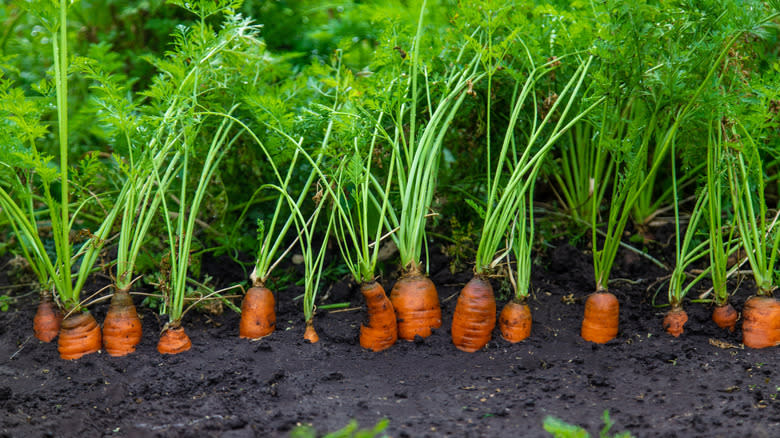
Carrots peeking through garden soil – Tatevosian Yana/Shutterstock
Like kale, fresh carrots from the garden tend to beat out the store-bought version in the taste department. While some carrots from home gardens often take on an interesting appearance, they’re delicious and well worth the extra effort you’ll need to take to prepare the soil and create an ideal growing environment. You can plant carrots a few weeks before the last frost, just be sure to take the time to truly work your soil. In order for them to grow into the ground, it needs to be broken up and cleared of obstacles like rocks. Be mindful that carrots take some serious time to grow. You can expect to wait three to four months after planting for them to be harvest-ready, so you’ll want to be sure to get them in the ground as soon as possible to enjoy them throughout the summer.
Carrots straight out of the garden are delicious on their own, but you can take them to the next level without a ton of extra effort. Use your grill to create sweet, tender, smoky carrots that’ll make veggies feel like a treat. If you prefer them raw, dip them in a side of homemade ranch dressing (bonus points if you add a bit of heavy cream for a chef-approved flavor boost).
Want more food knowledge? Sign up to our free newsletter where we’re helping thousands of foodies, like you, become culinary masters, one email at a time. You can also add us as a preferred search source on Google.
Read the original article on Chowhound.
Comments are closed.