
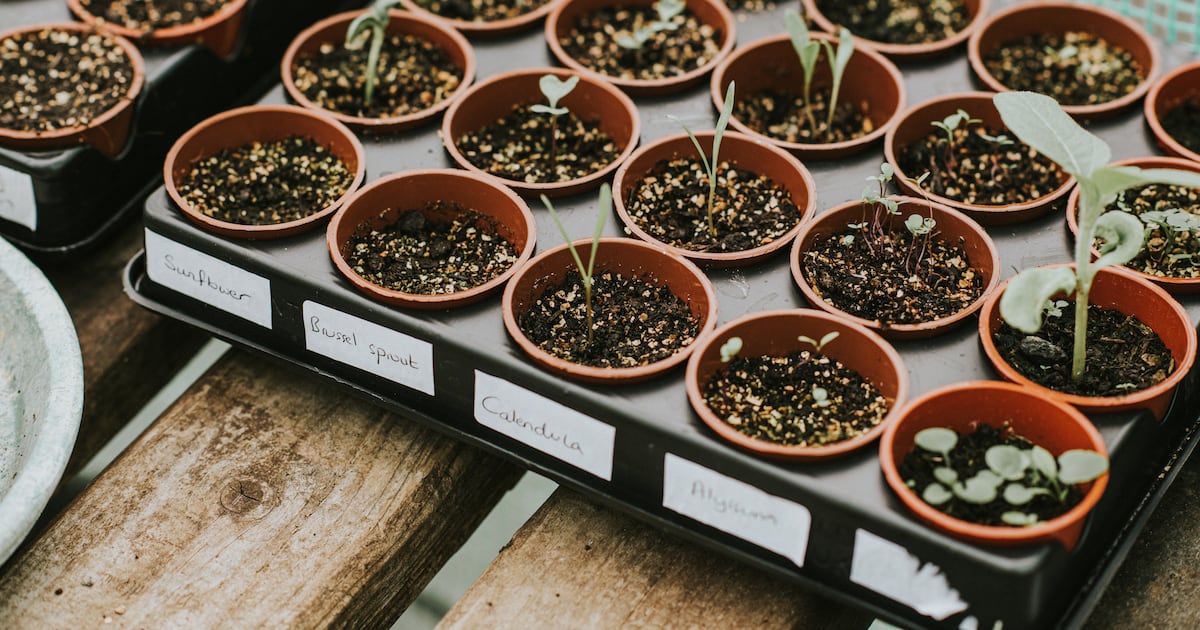
Despite the wind, the frost, the rain, and the cold, this remains one of my favourite times of the year for one simple reason: it’s prime time for sowing seeds. Not that I’ve always felt this way. In fact, I’d probably grade my earliest seed-sowing efforts at somewhere between a lowly E and a C-minus. But much like learning how to cook, time and error taught me that seeds fail to germinate and seedlings fail to thrive for a variety of usually simple reasons that I call the rule of “too”. Avoid these common pitfalls – see below – and you’ll be pleasantly surprised by how relatively straightforward it usually is.
Too old? No, not you, I mean the seed. Because the fresher it is, the greater the chances of successful germination, and vice versa. This doesn’t necessarily mean that you’ll get zero germination with older seed, but that the percentage of seeds capable of successfully germinating declines with age, as does the speed of germination. With some plants – for example, parsnips – that decline is surprisingly rapid. So always check the “sow by” date on the packet and store all seeds in a cool, dry, dark place to conserve freshness.
Too cold? Remember, just one night of harsh frost can wipe out months of hard work, so always err on the side of caution and have plenty of protective layers of horticultural fleece and bionet to the ready when needed. Likewise, invest in an electric propagator or heated mat for more tender, heat-loving species.
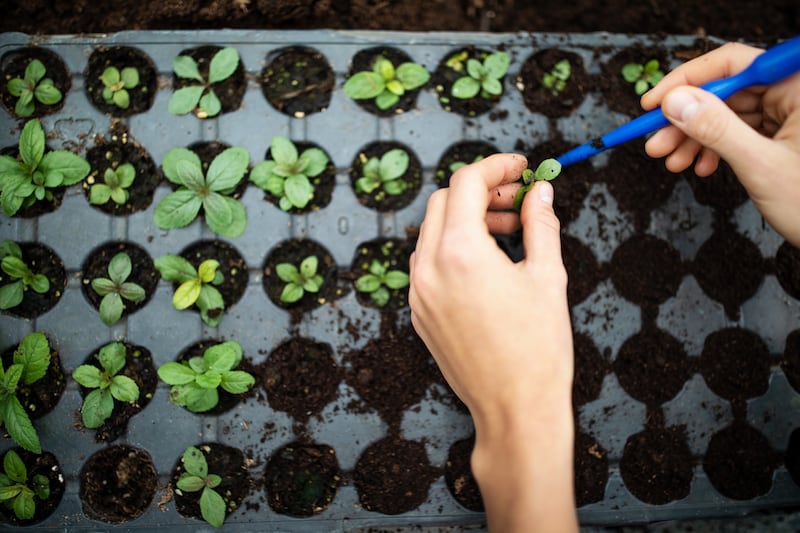 Planting seedlings in a plastic tray. Photograph: Getty Images
Too hot? Picture this. Your pots or trays of seedlings and freshly-sown seed are sitting pretty on a windowsill indoors, or in a frost-free glasshouse or polytunnel. The problem is, the bright, warm spring sunshine has rapidly raised the ambient temperature to where both seed and seedlings are being rapidly broiled alive, something you discover just a smidgen too late to save them. To prevent this from happening, remember that seedlings being raised undercover are not unlike newborn babies, requiring careful, regular monitoring. To protect them and freshly-sown seed from extremes of heat, always provide sufficient ventilation on bright spring days and keep the pots and trays out of direct sunshine.
Too dense? Restraint is a surprisingly difficult thing to exercise when you’re holding the equivalent of a packet of magic spells between your fingertips, with the result that seed is often sown far too densely. But without sufficient growing space, seedlings are likely to quickly succumb to disease or to become weak and leggy.
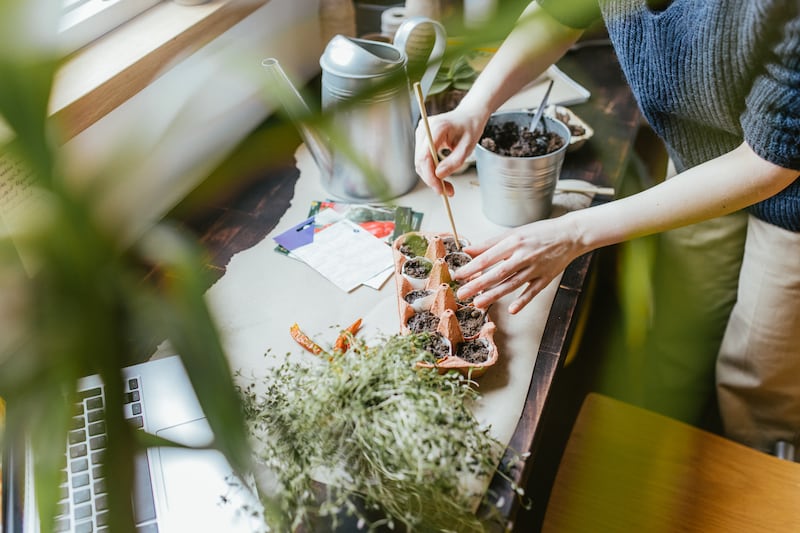 Planting seeds at home. Photograph: Getty Images
Too deep? The smaller the seed, the closer to the surface of the compost you should sow it. In the case of truly tiny seeds, such as foxgloves or poppies, these should be surface-sown on to compost covered with a shallow layer of fine vermiculite.
Too light or too dark? Some species require darkness to germinate, others require exposure to bright sunshine. If in doubt, research it online.
Too soon, or too late? Timing is everything. Sow under cover too early in the year, for example, and you’ll be left with hordes of hungry, thirsty seedlings but nowhere suitable to plant them, with the result that they’ll soon become leggy and pot-bound. But sow too late and the seedlings will struggle to catch up. My advice? When it comes to calculating the optimum sowing time, always consider the typical life cycle of the plant as well as the risk of a killing frost right up to late May. For example, many kinds of half-hardy annual flowering plants – examples include amaranthus, helipterum, tagetes, nicotiana – are best sown under cover and with gentle heat, roughly six to eight weeks before planting outdoors at the beginning of June. By comparison, broad beans, a hardy annual, can be direct-sown outdoors in milder gardens from late February.
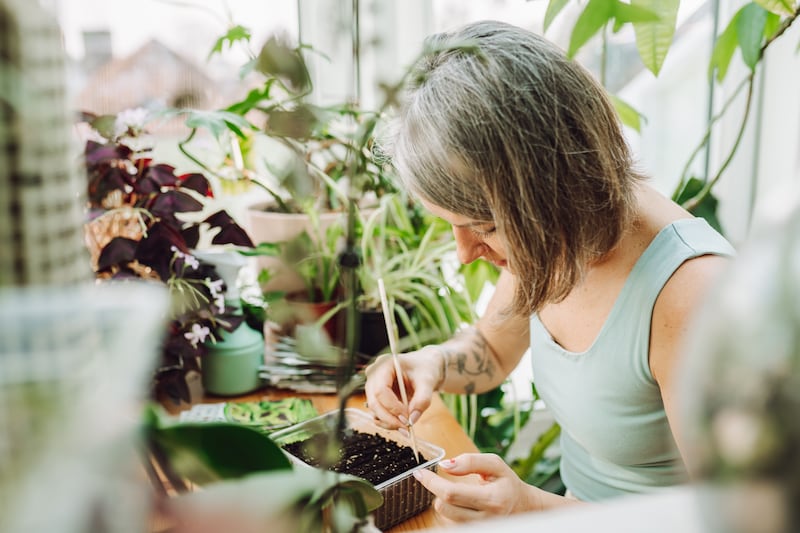 Planting seeds with a stick into soil in a domestic garden. Photograph: Getty Images
Too slow? Seedlings sown under cover must be pricked out into individual small pots or modules as soon as their proper/true leaves have developed. Leave it any later and it will have a lasting negative effect in terms of optimum plant growth and health.
Too tasty? Unfortunately, you’re not the only one who loves your seedlings. Slugs and snails do too, so take timely precautions.
Too wet, too dry? No seed will germinate without at least some moisture to trigger the process. But one of the most common causes of failure is overwatering, leading either to seed rotting before it has germinated or the seedlings succumbing to diseases such as damping-off. The same goes for direct-sowing into sodden ground. On the other hand, seedlings can quickly die from lack of water. How to gauge the perfect amount? If you’re sowing into pots or trays of compost, it should be damp but not wet to the touch. The best way to achieve this is by placing the freshly-sown pot or tray up to its waist in clean, tepid water and then leaving it to bottom-soak until it feels heavy and the surface looks and feels damp.
To create a humid atmosphere conducive to germination, cover the container with a clear lid or an inverted freezer bag sealed with an elastic band, removing this gradually once the seedlings emerge. At the other end of the spectrum, pale, limp, curling leaves and compost pulling away from the edges of the pot or tray are serious warning signs of insufficient water, so keep the compost damp by bottom watering as required. Crucially, bottom watering also avoids serious damage to young seedlings caused by heavy-handed overhead watering.
Too cheap? You get what you pay for. In particular, using a high-quality seed compost is essential in terms of supporting good germination rates and healthy growth. My favourite is the organic, peat-free option from Klasmann.
This week in the garden
Use a sharp secateurs and a garden shears to cut back dead leaves and any old, faded flower stems from perennials growing in pots and mixed borders to make way for fresh, new growth.
Deadhead daffodils by cutting out the faded flowers off at the top of the stem but leaving the foliage to die back. This discourages the plants from developing what’s known as “blindness”, where leaves but no flowers appear.
Dates for your diary
Talks at the National Botanic Gardens Visitor Centre, Glasnevin, Dublin 9; Saturday, March 21st. Raw Gardening: Working with Nature in Your Garden, by Vicky Ind of the Individual Plants Nursery, on behalf of the Irish Garden Plant Society, at 11.30am, followed by RHSI Live with Oliver Schurmann of Mount Venus Nursery at 2.30pm. botanicgardens.ie.
RHSI Bellefield Plant Fair Shinrone, Co Offaly; Sunday, March 22nd (11am-4pm). With stalls from many of Ireland’s best independent plant nurseries and plant growers, see rhsi.ie.
Comments are closed.