
I have developed an interest in bird-watching and would like some advice on how to attract more birds to my garden.
— Maria Alvarez, Grayslake
I was also motivated to start bird-watching after a fun vacation sighting of a pink flamingo on St. John, U.S. Virgin Islands, last December. Another highlight this winter was seeing eight mourning doves feeding on the ground outside my home at one time. Winter is a good time to plan to enhance your garden with plants that will attract birds all year long. It takes more than feeders, birdhouses and a bird bath, along with some flowers for a truly bird-friendly garden. Birds need a complete habitat that includes food, shelter, nesting areas and perching spots. A good garden for birds tends to have more of a natural look. Design your garden so that there are different vertical levels, each attracting and providing something important to different bird species. Some birds prefer the canopy of tall trees, while other birds perch in the understory trees and shrubs. Different species of birds have varying requirements and preferences for nesting, eating and shelter. Try to create as many of these levels as possible in your backyard garden to attract a larger variety of birds. Birds use a stand of hemlocks in my garden for shelter while using the feeders. Even open areas of soil can be beneficial by providing an area for birds to take a dust bath.
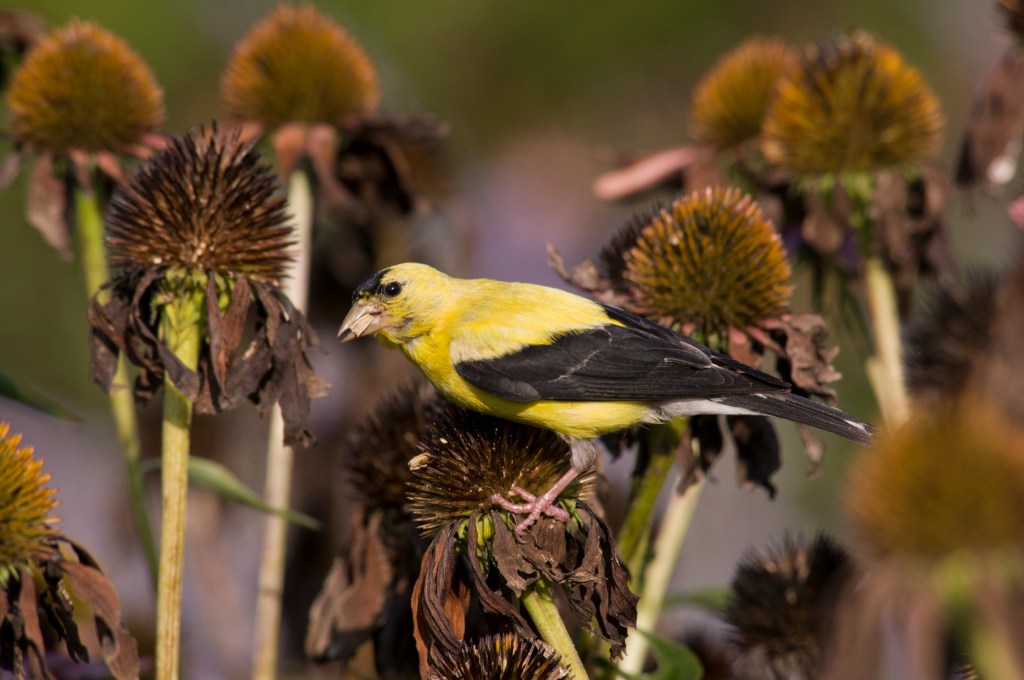
Select plants to provide food for birds at different times of year. Fruits of different plants ripen in different seasons. For example, serviceberries provide spring-ripening fruit, red-twig dogwoods provide summer fruit, while hawthorns and crabapples provide fruit in fall and winter. I just replaced some invasive Callery pear trees with serviceberries in my garden. Perennials such as purple coneflower and grasses such as a prairie dropseed provide seed for a food source. Sunflowers are quick-growing annual flowers that produce seeds that are attractive to birds. Nectar-producing plants such as penstemon, bee balm, and columbine appeal to hummingbirds. Include a mix of evergreens in your planting to provide year-round shelter for birds. When feasible, leave some dead branches on living trees to provide something for the birds to perch on. Prune any dead branches that are safety hazards though.
Leave the leaf litter in your garden beds next fall as an easy and environmentally friendly method to recycle material and help meet some of a bird’s basic needs. Other organic materials such as small twigs, fallen seeds, fruits and berries should be left in the litter too. Many insects thrive in leaf litter and insect-eating birds will be attracted.
There are many kinds of seeds and feeders to choose from if you decide to start a feeding program. Squirrels can be a nuisance and eat more seed than birds do, so choose a squirrel-resistant feeder. We have had good luck with a cylindrical, squirrel-resistant feeder. Take time to research options, as different species of birds prefer different types of seeds and feeders, and no one type is preferred by all birds. Avoid buying bags of mixed birdseed as they tend to contain a lot of filler such as red millet, which most birds won’t eat. The filler ends up on the ground where it rots. Place your feeder in an open area where it is easy to see, 10 feet or so away from protective cover and convenient to refill. If feeders are too close to large plants, squirrels will have easy access to them. Be consistent feeding birds and they will become accustomed to your feeder. Stamp the snow down under the feeder to accommodate ground-feeding birds such as doves and dark-eyed juncos. To maximize the number of species that visit your feeders, offer a variety of food at different heights above ground.
Black oil sunflower seeds attract a wide variety of birds including cardinals, woodpeckers, blue jays, goldfinches, purple finches, chickadees, titmice, and nuthatches. Safflower seeds also attract a wide variety of birds, with the advantage that squirrels, blue jays, starlings, and grackles do not like this seed. Nyjer is a good seed to attract goldfinches. Nyjer is a very small, black seed best used in a feeder designed for it, which can be hung close to a viewing window under an eave. White millet seed can be spread on the ground to attract ground-feeding birds. Suet is another option for feeding birds. Suet is rendered animal fat that is usually mixed with seeds and dried fruit and sold in small cakes. It is best to place it in a cool, shaded area in amounts that the birds can eat in a few days to keep it from spoiling, so it works well for winter feeding.
For more plant advice, contact the Plant Information Service at the Chicago Botanic Garden at plantinfo@chicagobotanic.org. Tim Johnson is senior director of horticulture at the Chicago Botanic Garden.
Comments are closed.