
March is the busiest month of the year for most gardeners.
The list of jobs seems to be endless.
There is the last of the pruning to get done, the final moment to order and plant bare-root shrubs and perennials, the cutting back of stems and seed heads left to stand over the winter and the sowing of endless seeds.
You won’t be surprised to hear that we have been doing all of those things and more over the past week.
Introduction to Garden Design final presentations (Image: Norfolk School of Gardening)
The garden is looking very different from just a couple of weeks ago.
All of the grasses have been cut back to make way for the new green shoots which are already appearing and we have pruned gaura, salvia, sedum, penstemon and hydrangeas to allow them to shoot lower down.
One compost heap is piled high with prunings and another is almost empty as we dig out the black gold to mulch new plants and newly pruned roses.
My office is full of seedlings which will be pricked out this week, making way for new seed trays.
Pruning vines (Image: Norfolk School of Gardening)
As the temperature rises we will be able to move some of the seedlings to the greenhouses, where on the sunniest days we have had to lower the blinds to prevent leaf scorch.
There is a lot going on, but it is such an optimistic time of year.
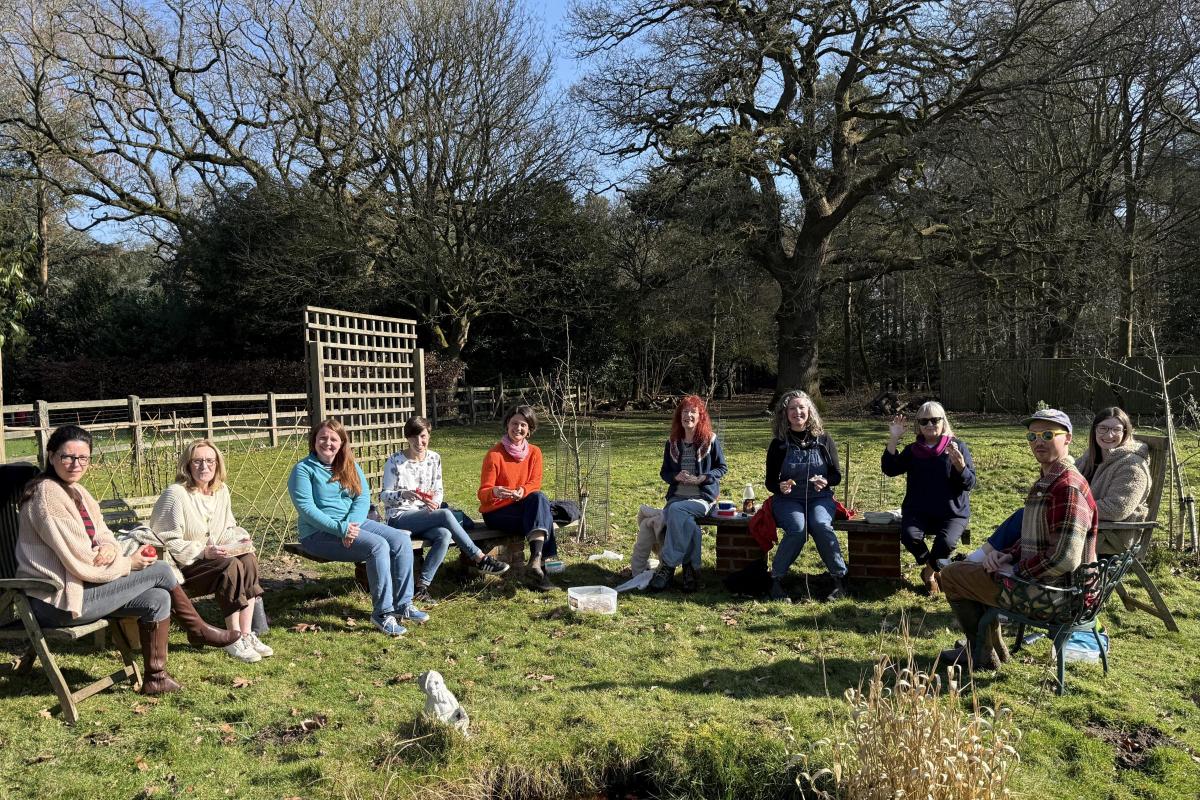
The Introduction to Garden Design students had the best of the sunshine on their final day and lunched in the orchard, beside the pond.
They have worked so hard and their final presentations of their case study designs, including detailed planting plans which ensure interest and colour for each month of the year were incredibly impressive.
The course has taught them a lot but above all they have gained the confidence to go and put this new knowledge into practice, for themselves or for clients.
Certificate in Practical Horticulture tree planting (Image: Norfolk School of Gardening)
Some of them will be back to deepen that knowledge soon and we can’t wait to see them.
This was planting week on the Certificate in Practical Horticulture and they learned to plant perennials, shrubs and trees.
This is such an important skill and one which, if not done properly, can shorten the life of a plant dramatically, and I’m delighted to say that we increased our little coppice of silver birches with some very well-planted trees this week.
Have you booked your tickets for RHS Sandringham Flower Show yet?
This year the RHS is bringing one of their big flower shows to Norfolk for the first time.
It will replace the annual Sandringham Flower Show, but only once every three years.
I can’t say anything yet, but it’s going to be an exciting week for us.
There are some great courses coming up which still have spaces.
Let us know if you’d like to join one of these:
· Advanced Practical Gardening – 18th March
· Planting for Year-Round Colour – 19th March
· Sustainable Cutting Garden – 24th March
· Plants for Free (propagation workshop) – 25th March
· Border Renovation – 26th March
Omphalodes verna (Image: Norfolk School of Gardening)
Plant of the Week
Omphalodes verna, commonly known as creeping forget-me-not, is a charming, low-growing perennial native to southern Europe.
It forms a spreading carpet of soft green leaves, making excellent ground cover in shady areas.
From early spring, the plant is covered with small, bright blue, forget-me-not-like flowers that bring welcome colour to woodland gardens and shaded borders.
It thrives in partial shade and moist, well-drained soil rich in organic matter.
Hardy and easy to grow, it gradually spreads to form attractive clumps but is not invasive.
Cut back tired foliage after flowering to encourage fresh growth and keep plants looking neat.
Contact us via www.norfolkschoolofgardening.co.uk or follow us on Instagram or Facebook.
Comments are closed.