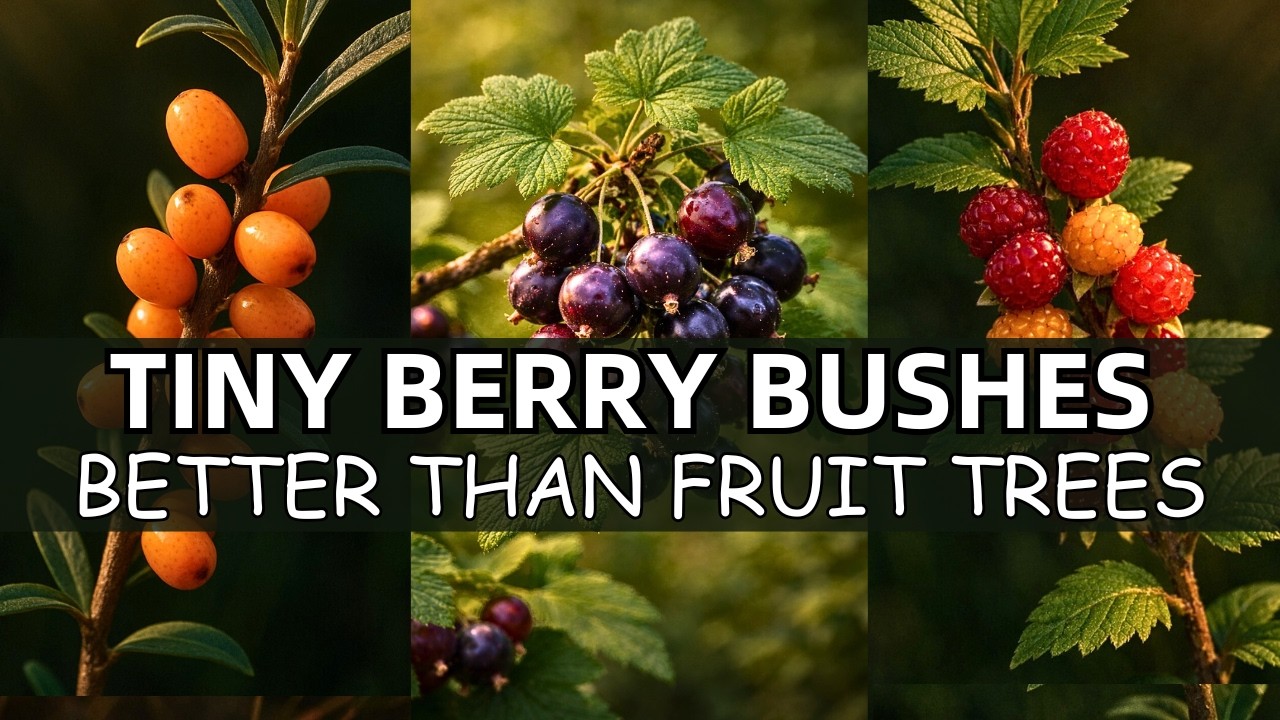
Discover 20 tiny berry bushes and fruiting shrubs that produce more food per square foot than fruit trees. In this video, we break down the most productive edible shrubs for homesteads, food forests, backyard gardens, and self-sufficient properties — from aronia, honeyberry, black currant, red currant, gooseberry, and jostaberry to elderberry, blueberry, raspberry, blackberry, goumi berry, sea buckthorn, serviceberry, salmonberry, lingonberry, barberry, highbush cranberry, and maqui berry.
If you want to grow more food in less space, these high-yield berry bushes are some of the best plants you can add to your property. Many of these shrubs start producing years before fruit trees, require less maintenance, tolerate poor soil, survive harsh winters, and deliver massive harvests of nutrient-dense fruit. Whether you’re building a productive homestead, designing a permaculture food forest, or just trying to create a more resilient backyard garden, these plants can completely change how you think about food production.
In this video, you’ll learn which small fruiting shrubs are best for cold climates, shade, wet soil, drought tolerance, antioxidant-rich harvests, medicinal uses, jam-making, preserving, and long-term self-sufficiency. We cover powerhouse plants like black currant, honeyberry, elderberry, gooseberry, sea buckthorn, and maqui berry, along with overlooked backyard crops that most gardeners never think to plant.
These are the kinds of plants that fed families before grocery stores, helped communities survive hard winters, and still outperform many popular fruit trees today. From fast-bearing bushes to superfruit shrubs packed with vitamins, antioxidants, and productivity, this list is built for serious growers who want maximum return from every square foot.
Whether you’re into homesteading, gardening, permaculture, survival gardening, food security, self-reliance, off-grid living, edible landscaping, or backyard farming, this video is for you.
Subscribe to Homestead Roots for more videos on:
homesteading, productive gardening, self-sufficiency, food forests, edible plants, medicinal plants, permaculture design, survival crops, backyard orchards, and growing your own food.
#BerryBushes #Homesteading #Permaculture #FoodForest #SelfSufficiency #Gardening #BackyardFarming #GrowYourOwnFood #EdibleLandscaping #FruitShrubs #SurvivalGarden #HomesteadRoots

32 Comments
1. Aronia (Chokeberry) (1:27)
2. Honeyberry (Hascap) (3:30)
3. Black Currant (5:18)
4. Red Currant (7:14)
5. Gooseberry (8:44)
6. Jostaberry (10:34)
7. Elderberry (12:16)
8. Blueberry (14:12)
9. Raspberry (16:13)
10. Blackberry (17:58)
11. Loganberry (19:37)
12. Goumi Berry (21:16)
13. Sea Buckthorn (23:28)
14. Serviceberry (Saskatoon Berry) (25:34)
15. Nanking Cherry (27:42)
16. Salmonberry (29:42)
17. Lingonberry (31:15)
18. Barberry (33:03)
19. Highbush Cranberry (34:51)
20. Maqui Berry (Chilean Wineberry) (36:51)
Wow! Many if these I never heard of.
Amazing and informative video.
Thank you.
🌺🌺 ❤️❤️❤️💯💯💯💯
Tjank you Homesteader!! ALL of them 😮🔥 Aronia, (Chokeberry) is that Chokecherry ? Hascap, ( Honey Berry), Barberry, Nanking Cherry, Saskatoon, Goomy Berry, Sea Buckthorn Elderberry, Maki berry, , and Blueberry and Blackberry love ALL of them though ‼️🐜💥💯☄️
I grow blackberry and raspberry😊
When visiting my aunt & uncle, we used to go out and pick wild grown Logan berries in Northern California. My uncle made the best wine.
interesting topic
WHO ARE YOU TRYING TO TEACH MAYBE HEAD OVER TO YOU TUBE KIDS
no Goji Berries on this list?? Should be maybe
Nice ❤
Yeah, my want-to-grow list got a lot longer; literally two days after I told myself (and put in my calendar on daily repeat) not to buy any more seeds or new plants this spring! Oh well, resolutions are nade to be broken or at least fudged.
Wow, I had no idea tiny bushes could produce that much food! Definitely adding some of these to my garden.
If I want apples I will plant apple trees it's ok to plant both types because most people want variety of fruits and vegetables. 73
Goumi
Berries are food for animals. Birds and deer. You can have some in fall but meat feeds humans.
Black current, red currant, gooseberries, currant hybrids are illegal to grow in some states due to spreading fungal infections to white pine. Sea buckthorn is illegal in some states (invasive).
Can you do one for zone 9b? None of these work
Most sites say service berry is only up to zone 7
I had no idea there were this many berry bushes that produce food every year with so little care. Aronia, sea buckthorn and goumi berry especially surprised me.
I have Rasberries, Blueberries, I also have 2 Cheery trees (to young to produce still). I also have 4 Prunus Virginiana (Bitter-berry), they are for birds but technically I can eat the berries too. I also have a Berberis (not Barberis) thunbergii "sunsation" and I didn't know the berries were edible altho they are very small.
Tried honeyberries and black currants, neither di well for me. Blackberries, red raspberries and blueberries have done very well.
Ticks like to be around barberry. Not worth it
Most berries have better nutrient profile than imported goods
interesting VIDEO
How'd you not include Blackberries?
Everbearing varieties will bear giant fruit every month between May and September… with a small pause if it gets too hot.
I bought a bare root, 3 year old plant… it grew canes, fruited and kept fruiting until frost. Thornless varieties are there too, but the really productive and jumbos usually have thorns.
Thank you so much!
Aronia tastes bad
i got gooseberry, saskatoon berry, wild black berry and wild raspberry. My maples give me 3L of syrup each year and im trying to get red currant going. My neighbor cut his elderberry , it gave so much each year so dumb move.
Could you please give growing zones and sources to purchase.
currently I grow Aronia, honeyberry, gooseberry, elderberry, blueberry, raspberry, blackberry, Sea Buckthorn, 4 different saskatoons, im trying salmonberry, barberry, cranberry and lots of others on this list. Some are established, and some are just 1 or 2 years old.
Where can i buy plants for zone 10b to buy
Raspberries, blueberries, honeyberries, and jostaberries will be what I plant soon. I won't have space to plant until summer, and summer here is brutally hot and humid, so I may have to put off planting until fall. When most people are planting for summer, we're planting for a spring harvest and a fall harvest if plants will survive summer heat and 60 inches of rain per year.