
Story audio is generated using AI
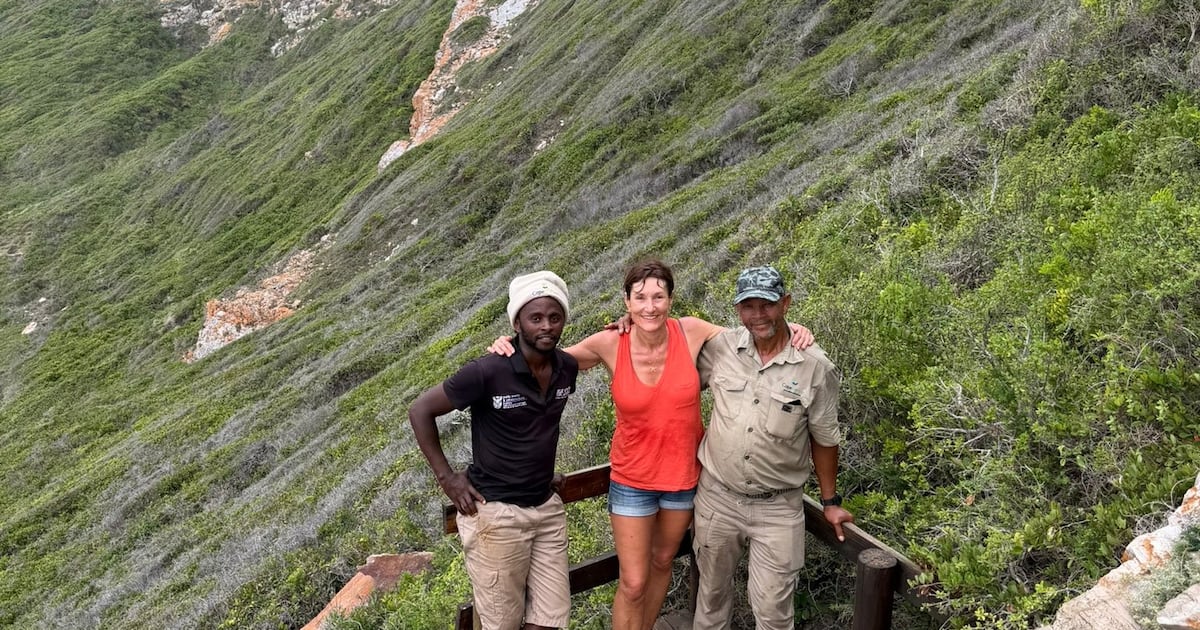
CapeNature rangers were recently praised for the heroic rescue of a stranded UK tourist on a popular mountain hike and, if you live here, you will know that all too often these scenarios play out on Garden Route trails.
British tourist Rosalind Innes had put the Robberg hike in Plettenberg Bay firmly on her South African travel itinerary.
But as she navigated one of the narrow, rocky sections near the point of Robberg, her adventure took a sudden and frightening turn.
A slip on the rugged terrain left her with a broken ankle, stranded in a secluded area under rapidly worsening weather conditions.
It is a terrifying scenario. I can picture exactly where this part of the walk is and know it requires careful navigation, but it is also still a long way from help.
I can’t even begin to imagine how tough it must have been to tackle that final stretch injured because there is a lot of climbing and some very steep wooden steps.
In this latest incident, it was a stroke of luck that CapeNature general worker Vuyani Charlie was doing trail maintenance nearby on the boardwalk.
Innes’s husband was able to call out to him.
Realising the gravity of the situation, Charlie reassured the couple that he would return with help.
Once he reached higher ground in search of a cellphone signal, he managed to contact the field rangers on duty and, fortunately, Charles Minnaar and Petrus Lamini were able to come to the rescue.
The men worked together navigating slippery rocks while supporting and protecting Innes’s injured leg.
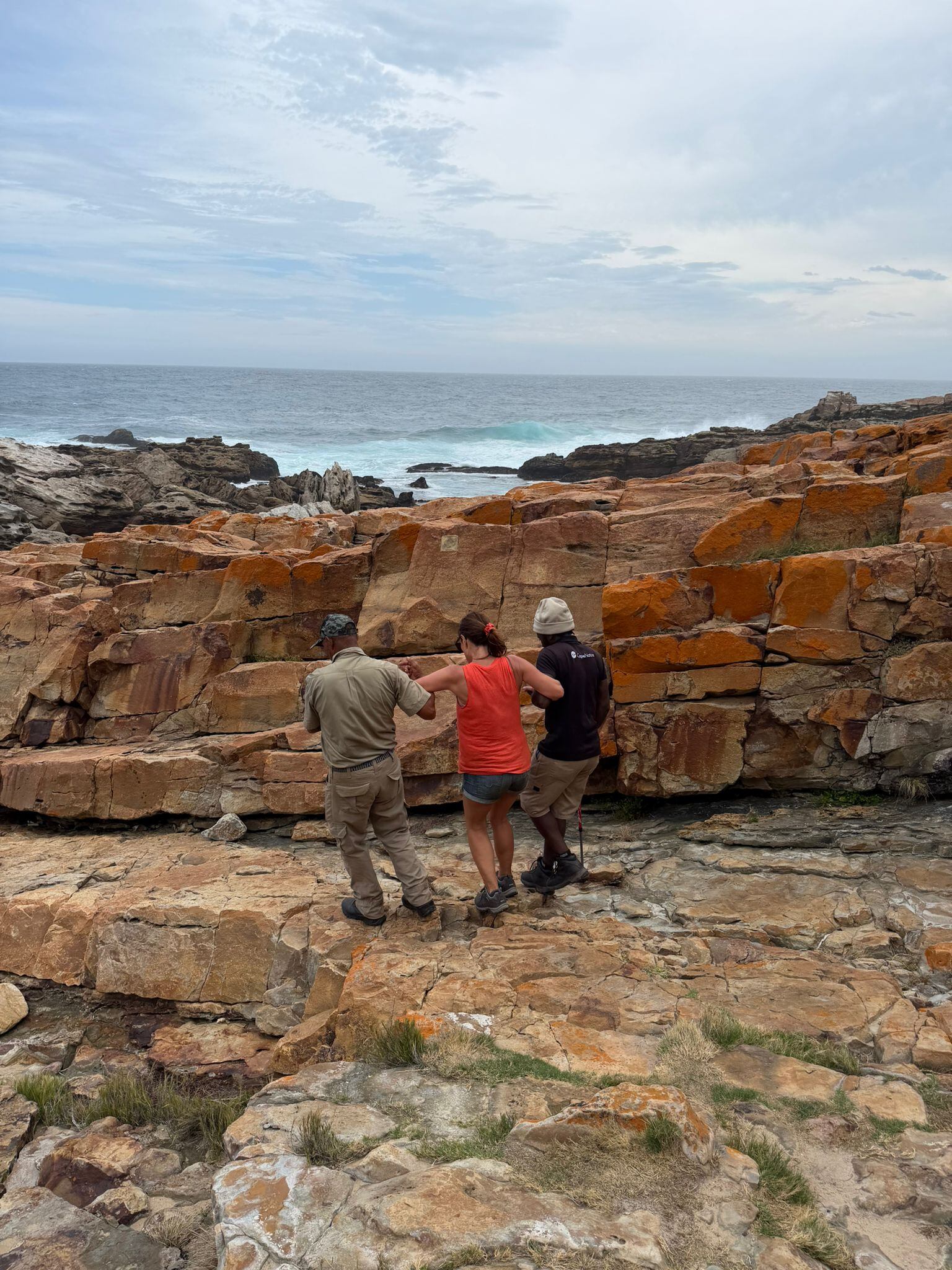 Rosalind Innes being assisted by staff from Robberg Nature Reserve (SUPPLIED)
It took a gruelling four-hour rescue and three strong men to get her safely off the trail.
“I truly do not know what I would have done without them,” Innes said.
“I owe them my life, particularly Vuyani Charlie, as I was simply not strong enough to get out on my own.
“They kept me calm and safe, and supported me both physically and mentally through a horrendous ordeal.”
She was taken to hospital for treatment and has since recovered, though her ankle remains in a cast.
In the past couple of weeks, CapeNature have assisted both Innes and a woman in her 30s who became dehydrated and unable to complete the hike.
Over the years, I have heard many stories of people coming short on the Robberg trail.
When we first came to Knysna we were not hiking fit.
In fact, we had never before walked challenging terrain through forests and along cliffs like we have here on the Garden Route.
We bought good hiking shoes, which is the first step if you are going to take walking seriously.
Then we invested in lightweight backpacks to carry water, sunscreen, snacks and a phone with the NSRI number on it. We also started walking regularly to build fitness.
Ten years later we are much fitter, but also far more sensible about hiking, having made the usual rookie mistakes like setting off on a 10km walk and not being fit enough to finish it comfortably.
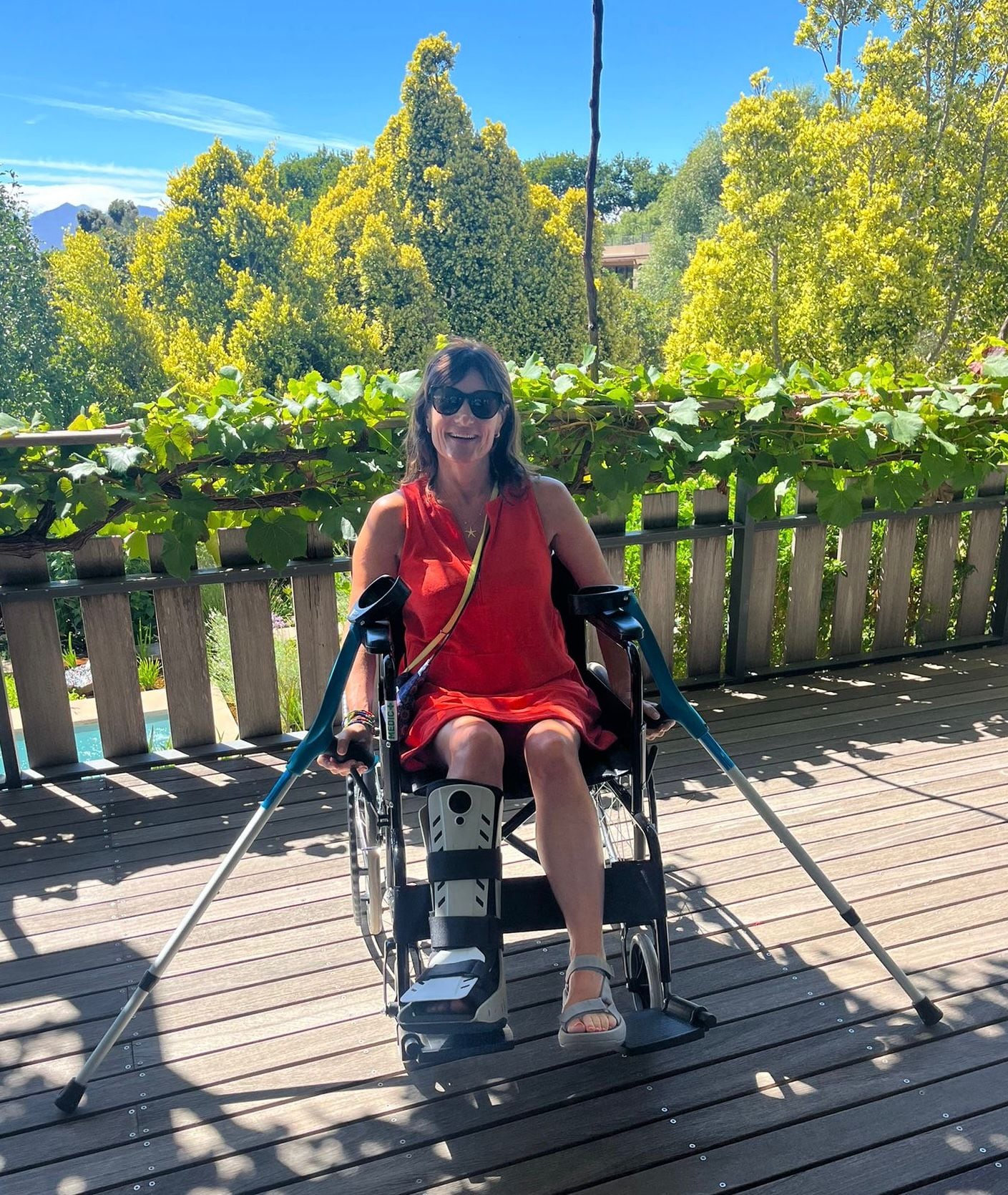 UK visitor Rosalind Innes recovers from her ordeal (SUPPLIED)
Looking back, the first time we hiked Robberg we probably weren’t fit enough, even though we were seriously amped and very stiff when we finished.
I will never forget walking the full Kranshoek Trail near Plettenberg Bay, a rugged 9km route along the cliffs through forest and fynbos before dropping down to the coastline, with places where you literally scramble over rocks before a huge climb back up the mountain.
As breathtakingly beautiful as it was, it nearly did us all in.
My friend ended up at her doctor the next day with heatstroke and the rest of us felt like old crocks for days.
In my opinion, a hike should feel like a challenge, but not to the extent that you suffer while you are doing it, or afterwards for that matter.
It is really about being fit enough and properly equipped.
Doing your homework before hiking is essential.
Very often, information about a hike will say only moderate fitness is required, when in fact you need to be quite fit to enjoy it.
Luke Folb of CapeNature offers the following advice to hikers.
“Be reasonably fit when planning to do the long route. Alternatively, choose the shorter route.
“Do not overestimate your physical ability and do not attempt to walk the long trail late in the afternoon when daylight is limited.
“Decent hiking shoes are not negotiable as we normally rescue people hiking in slip-slops or sandals.
“Carry adequate water, especially in summer. Come prepared.
“Wear a hat or peak cap and bring a windbreaker jacket if the forecast indicates changing weather. Conditions can change quickly.
“Inform family, friends or your guesthouse or hotel of your intention to walk and your expected time of return.”
Folb says though Robberg is not a large reserve, it receives some of the highest visitor numbers in CapeNature.
“Incidents and injuries occur when people are simply not equipped for the hike they are undertaking.
“The Robberg trail also offers shorter routes and an escape route.
“Plan your hike carefully, taking into account the time you have available and your level of fitness.
“If you are concerned about your fitness, choose a shorter route or turn back before you become exhausted.”
You can still enjoy the beauty of Robberg without doing the entire hike as there are viewing decks and shorter trails.
When hiking on the Garden Route, a few simple precautions can make all the difference.
If there is a trail register at the start of the walk, sign it with your names and planned route and make sure someone knows where you are going and when you expect to return.
Even on a moderate hike, carry water, snacks, sunscreen, a light jacket and a small first-aid kit.
A whistle is also useful as it carries much further than a voice if you need to attract attention.
It is also wise to download an offline map before you set off so that you can still follow the route without signal.
Start your walk early and stick to marked paths, particularly on exposed coastal trails where conditions can change quickly.
I have a partner who likes to wander off the beaten track and it makes me furious.
It is selfish, I tell him, because if something happens to him then I have to rescue him.
For easier walks without the cliffs and scrambling, take a look at what SANParks offers in the forests along the Garden Route.
The only real danger I see on forest walks are snakes lying camouflaged on the path, but walking with a stick and keeping your eyes on the ground aware that serpents can be there is all you can do.
The Herald
Comments are closed.