
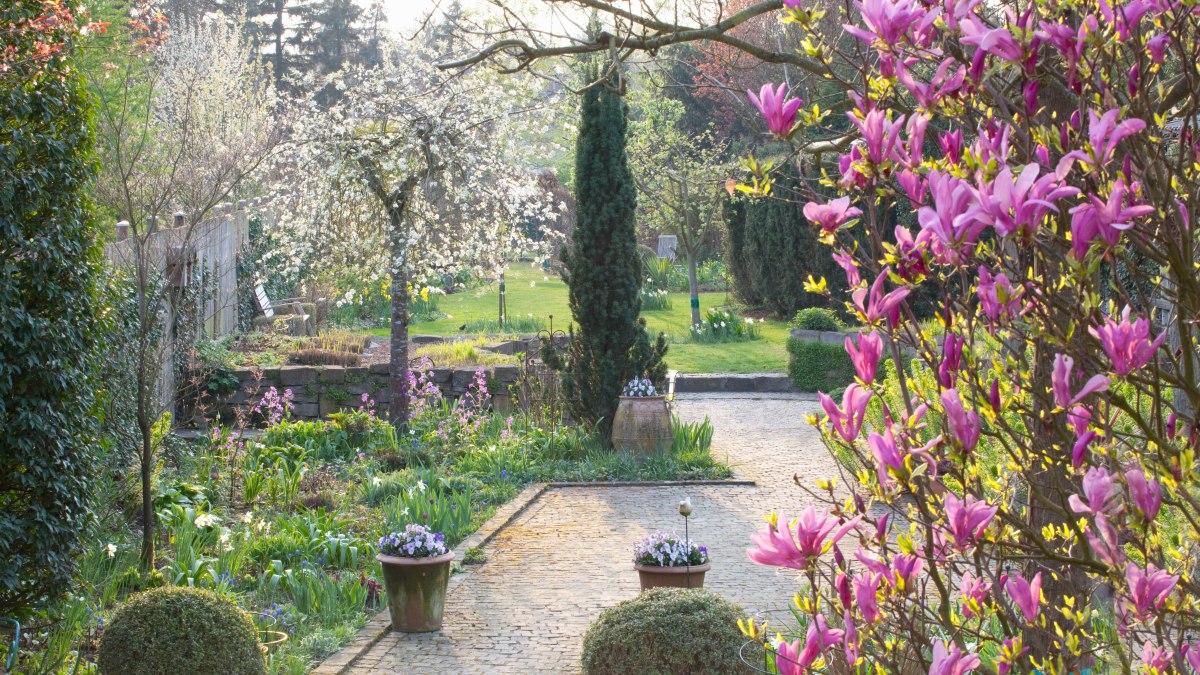
As I write, I’m looking directly out onto my well-established and hugely characterful Magnolia soulangeana, commonly known as Saucer or Chinese magnolia. It’s in that tantalising stage where some flowers are still cupped in bud while others have opened in the past few days — their semi-translucent blooms holding the light magnificently. Magnolias may be fleeting in flower, and I know that anyone who has one will also be praying that a sharp late frost doesn’t brown them, but when they are in bloom the trees do a magnificent job of celebrating the arrival of spring.
Magnolias are fascinating plants. Having evolved over 100 million years ago, they are one of the most primitive forms of flowering plants. They even predate bees, so their large, often scented flowers are designed by nature to entice beetles to crawl in and pollinate them.
My magnolia is a biggie, but there are some fine cultivars that stay smaller, growing to about 3m in height, meaning they can work particularly well in front gardens. Whether you grow them or not it’s always worth a trip to a garden or estate to see them doing their thing at this time of year. RHS gardens, National Trust and National Gardens Scheme gardens are home to some stunning specimens across the country. Caerhays garden in south Cornwall holds a national collection of magnolias, while Bodnant garden in Conwy, Mottisfont in Hampshire and Batsford Arboretum in Gloucestershire (home to about 100 cultivars that peak in late March) are just a few of my top choices for a visit.
The main window of flowering is from March to May, with the Magnolia grandiflora ‘Evergreen Magnolia’ (a stately glossy-leaved evergreen tree often trained as a wall shrub) blooming from late summer into early autumn with creamy white goblet-shaped flowers.
There is a huge range of spring blossoming magnolias available in a range of pinks, whites and soft yellows. A key decision when choosing one will be its ultimate height and spread. They are quite slow growing, so it may not become an issue for some years, but magnolias don’t like being pruned hard so are difficult to reduce in size — just something to take into consideration.
• Read more expert advice about gardening
Early spring and autumn are the best times to plant magnolia, ideally in a sunny sheltered spot. Avoid thin, chalky soil or soils that waterlog. The ideal soil is moisture-retentive and slightly acidic (a pH of about 5.5 to 6.5), but most are fine on a neutral soil. Planting magnolias too deeply is a common problem and can lead to them not taking properly or even dying.
On clay soils dig in some grit to the planting hole to aid drainage. Add some light organic matter such as leaf mould or homemade garden compost to the backfill and firm in well. Mulch over the roots with more garden compost or composted bark without building it up against the trunk, and keep it well watered for its first year (ideally with rainwater) or until well established.
Nine magnificent spring-flowering magnolias
M. loebneri ‘Leonard Messel’
Rounded small tree with pale pink star-shaped flowers in March and April. Good choice for chalky soils. Height 8m
M. ‘Susan’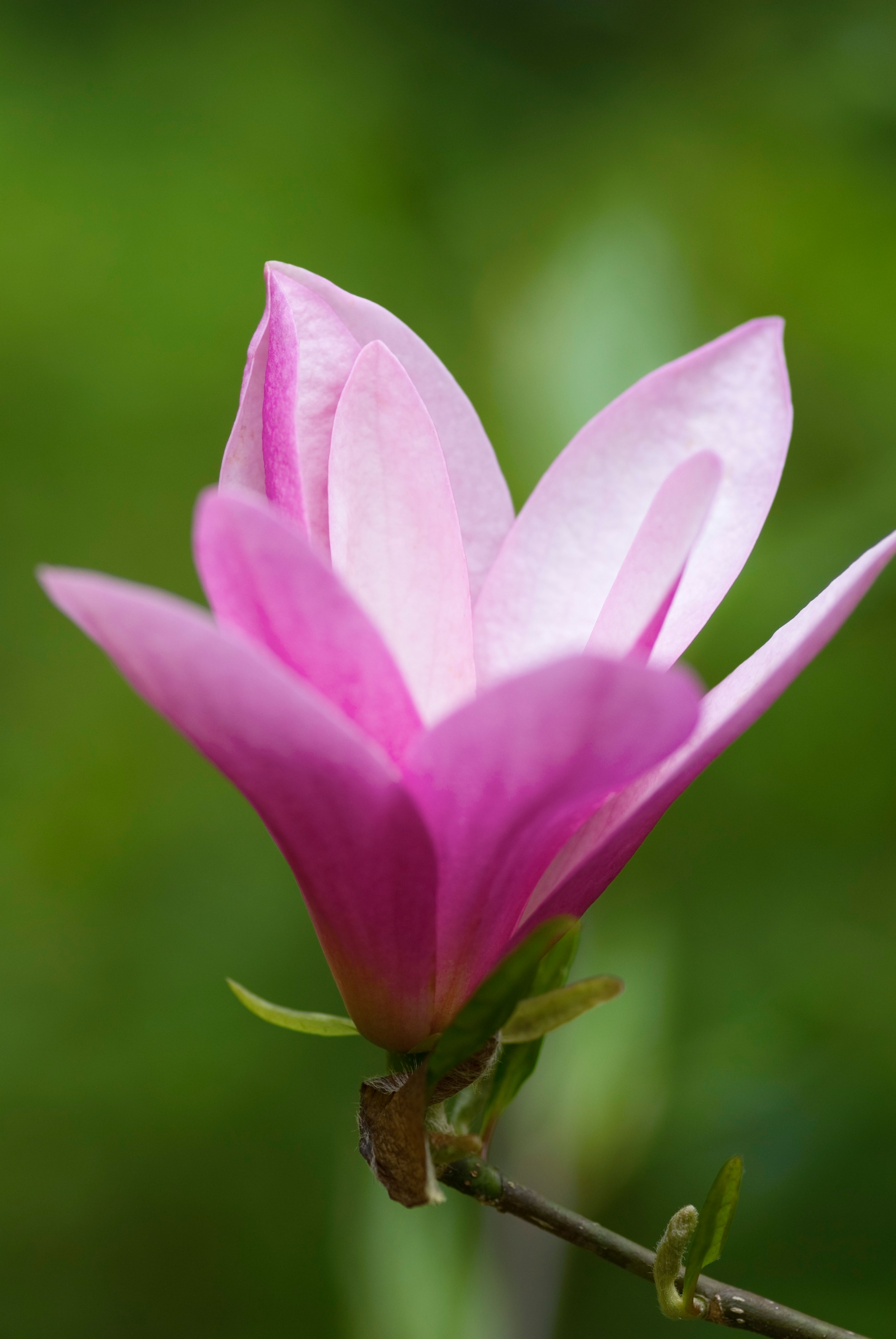
An upright, reliable shrub with deep pink buds opening to slender goblet-shaped flowers. Height 4m
M. ‘Star Wars’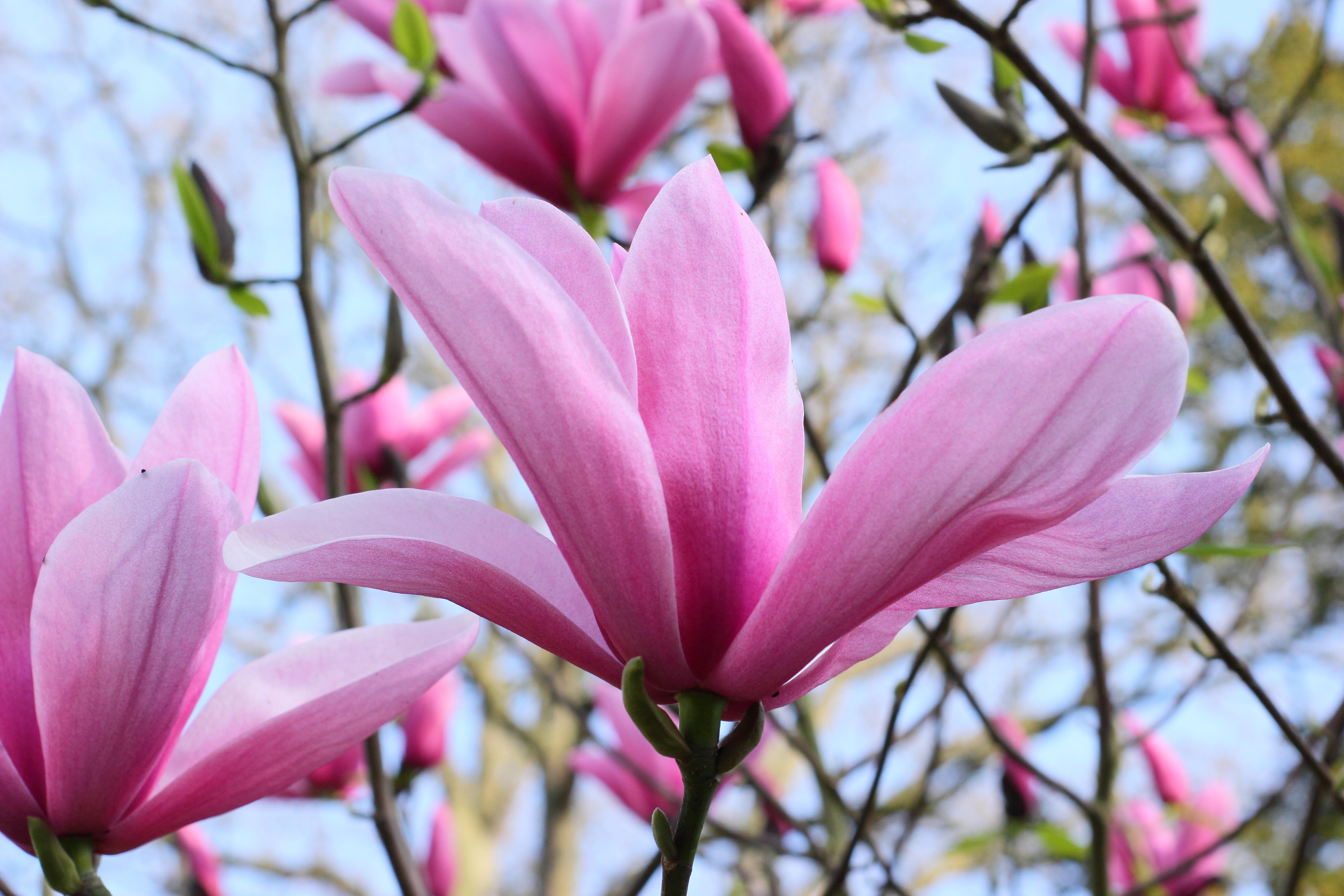
A hybrid with very clear pink goblet flowers and lovely thick foliage. Height 6m
M. soulangeana 
The classic spreading large magnolia with mid to dark green leaves and huge goblet-shaped rose pink and white flowers in April and May. Height 6m
M. ‘Genie’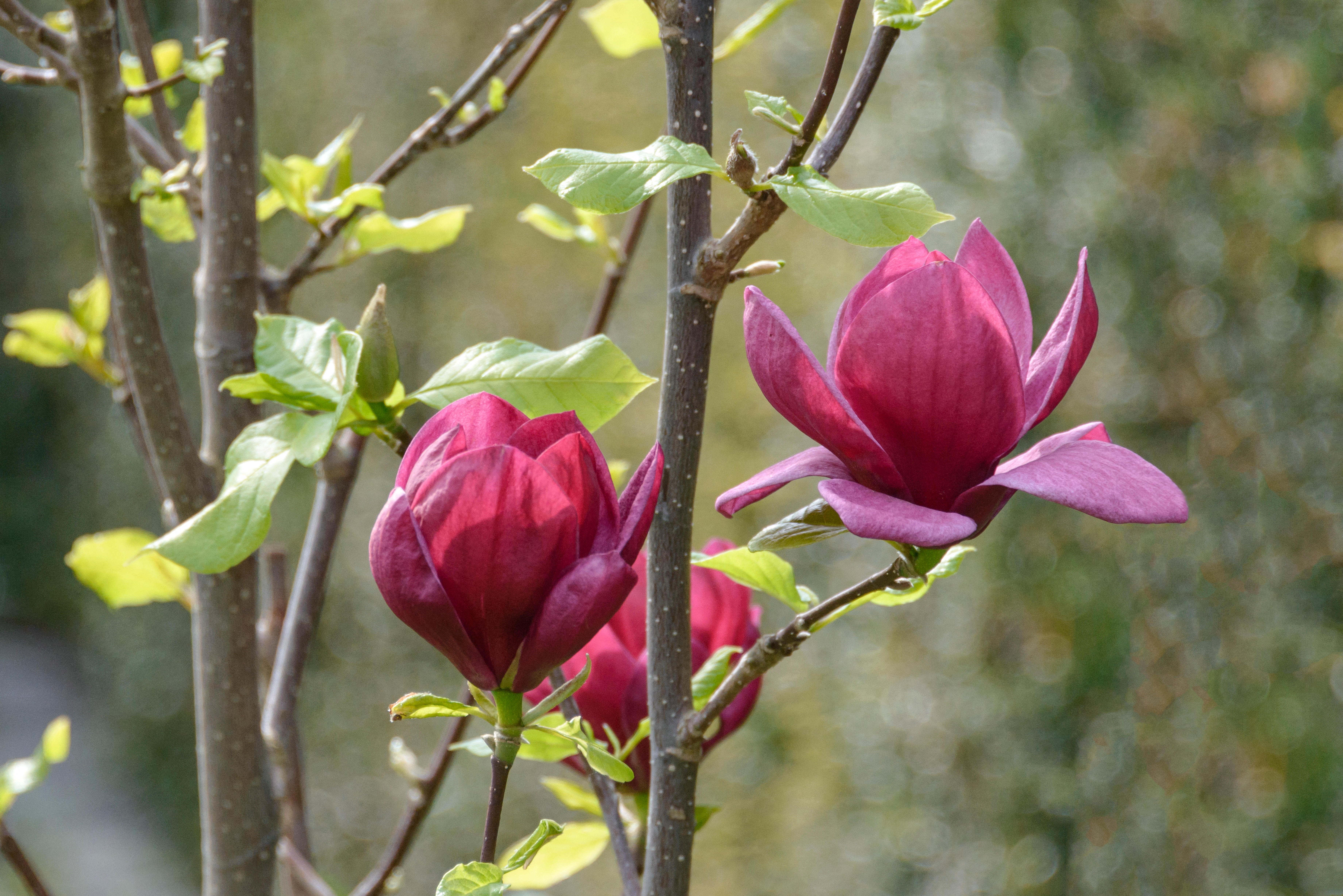
A relatively new introduction with very dark purple, almost black flowers and an ideal size for small gardens and large containers. Height 4m
M. ‘Elizabeth’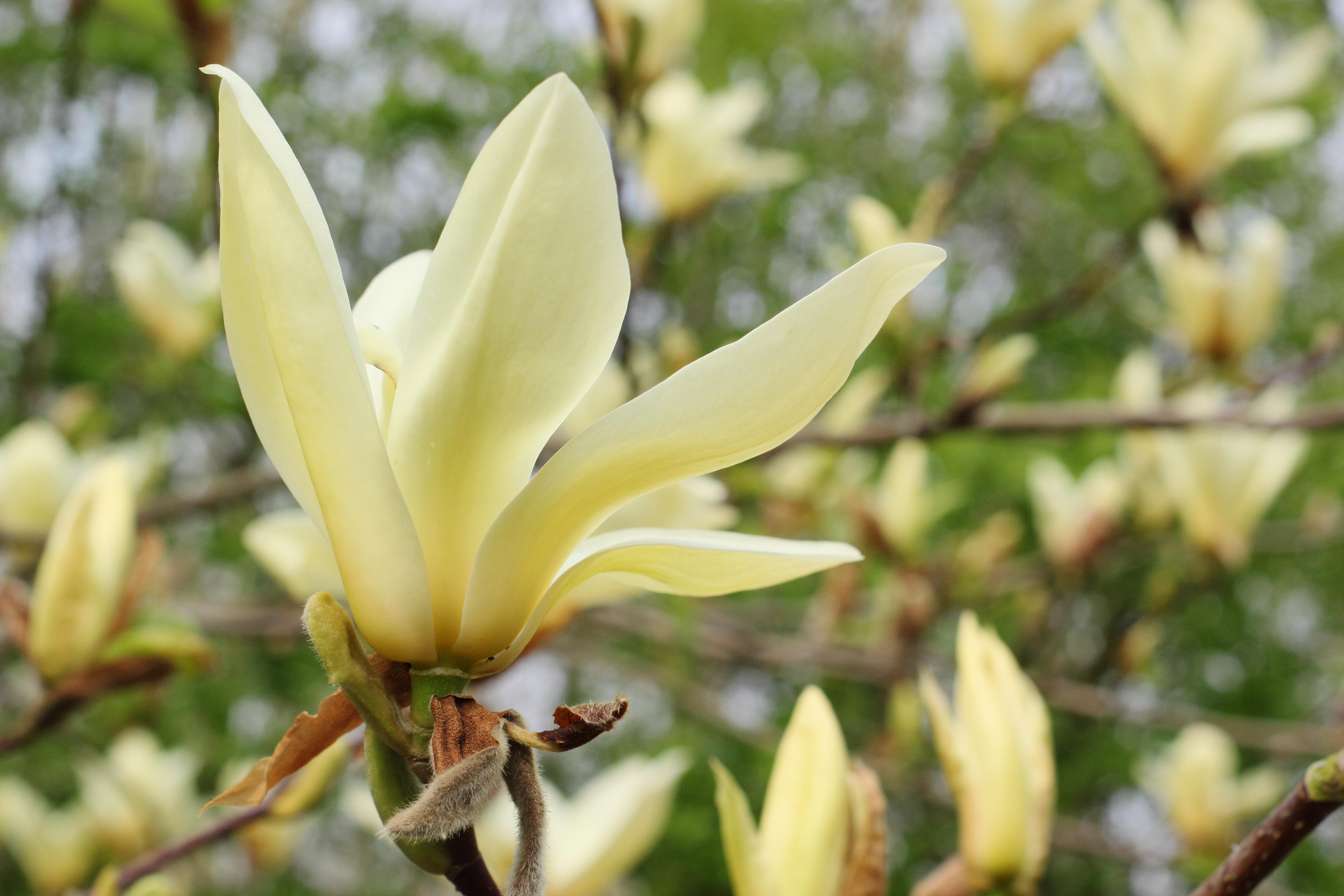
A tidy, conical shape with fragrant primrose yellow flowers. The foliage emerges with a bronze tinge, turning dark green. Height 10m
M. stellata ‘Royal Star’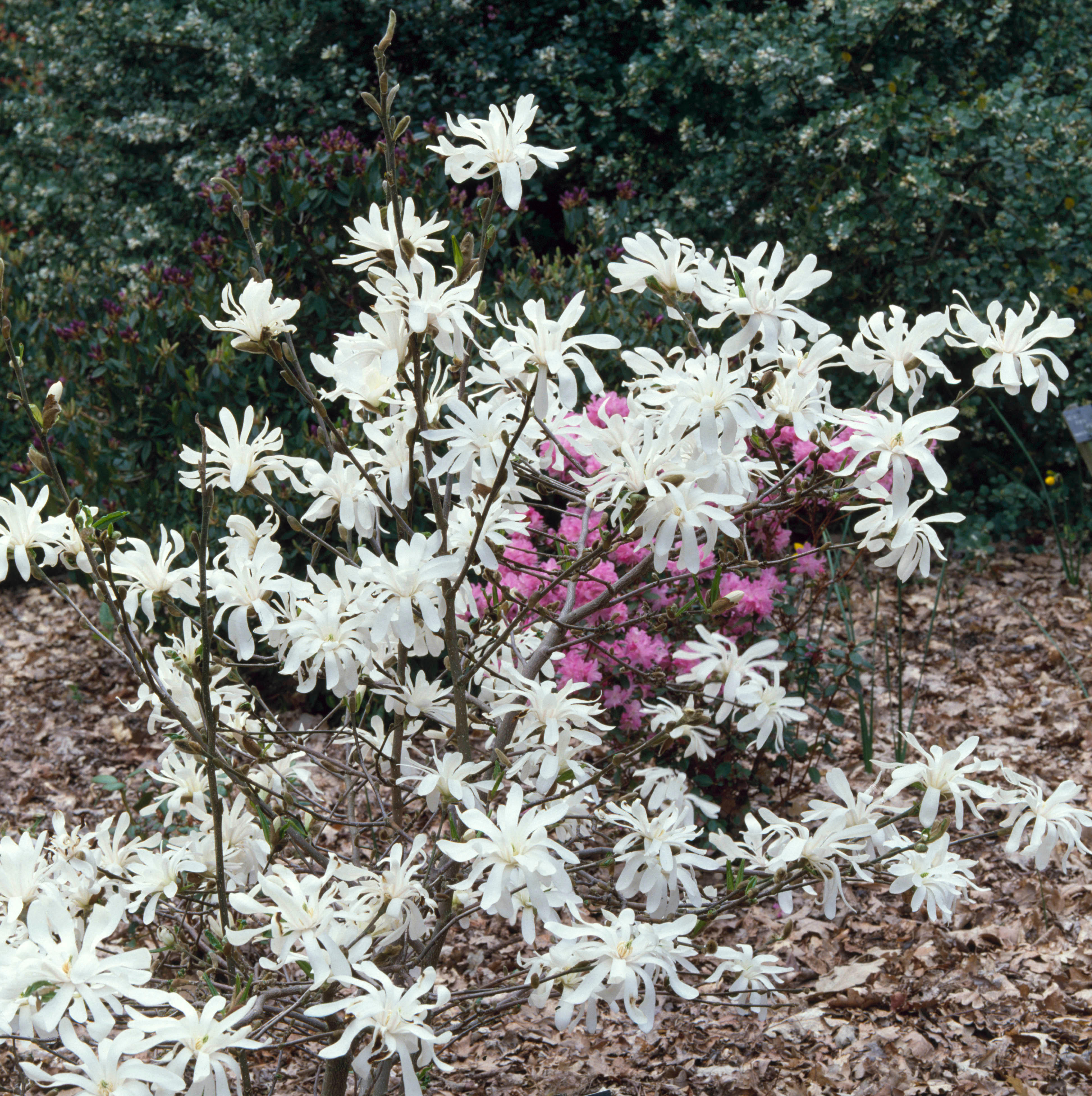
This grows into a rounded bush with long-lasting white starry flowers that sometimes have a pink flush. Height 3m
M. ‘Fairy white’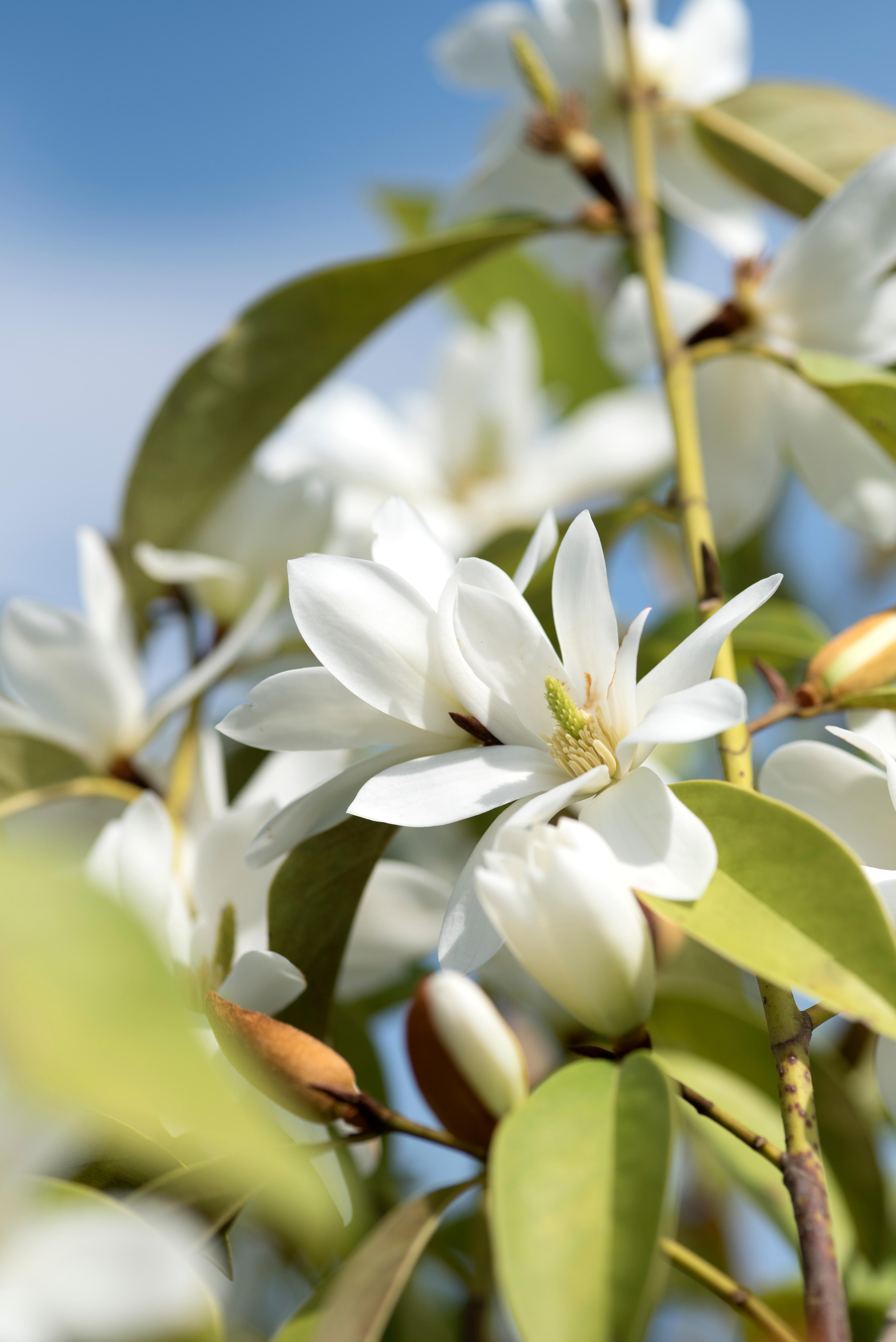
A new introduction. Evergreen with masses of tulip-shaped flowers produced on the stems as well as the tips with glossy foliage. Height 2.5m
M. denudata ‘Yellow River’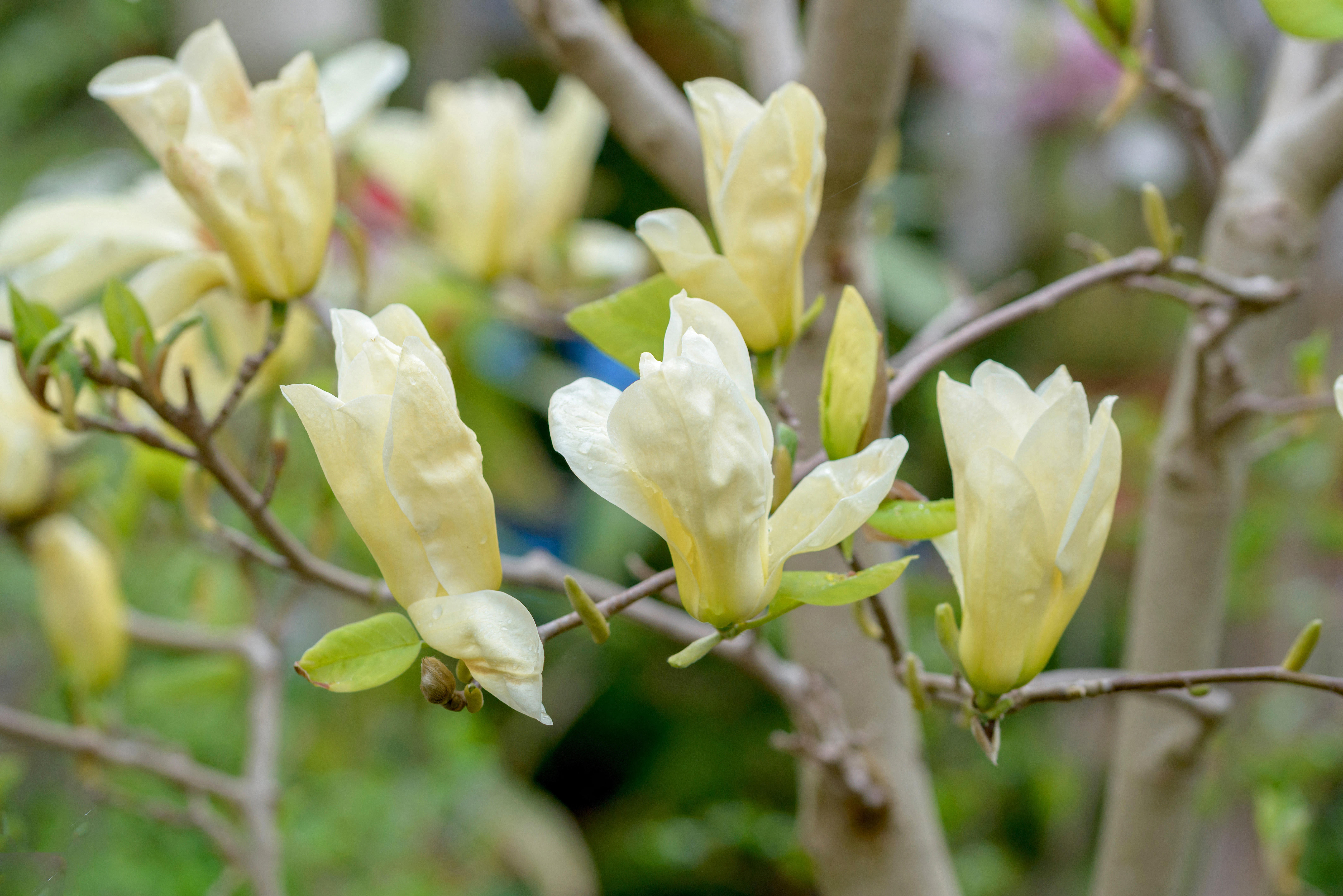
Yellow buds which open into lighter creamier yellow goblet-shaped flowers in April and May. Height 8m
Comments are closed.