
Be careful what you wish for! I like having snow on the ground, but this last storm was a doozy. Carefully knock snow off bending branches of evergreens by lifting from below. Let ice melt on its own without shaking branches. They often break when frozen. I plan to move some of the snowpiles to areas of my yard that could use some extra moisture in the spring. We will see if I actually accomplish that.
Rest assured, the heavy snow is a huge boon to your shrub and perennial borders. The snow insulates and protects plant crowns and the soil surface.
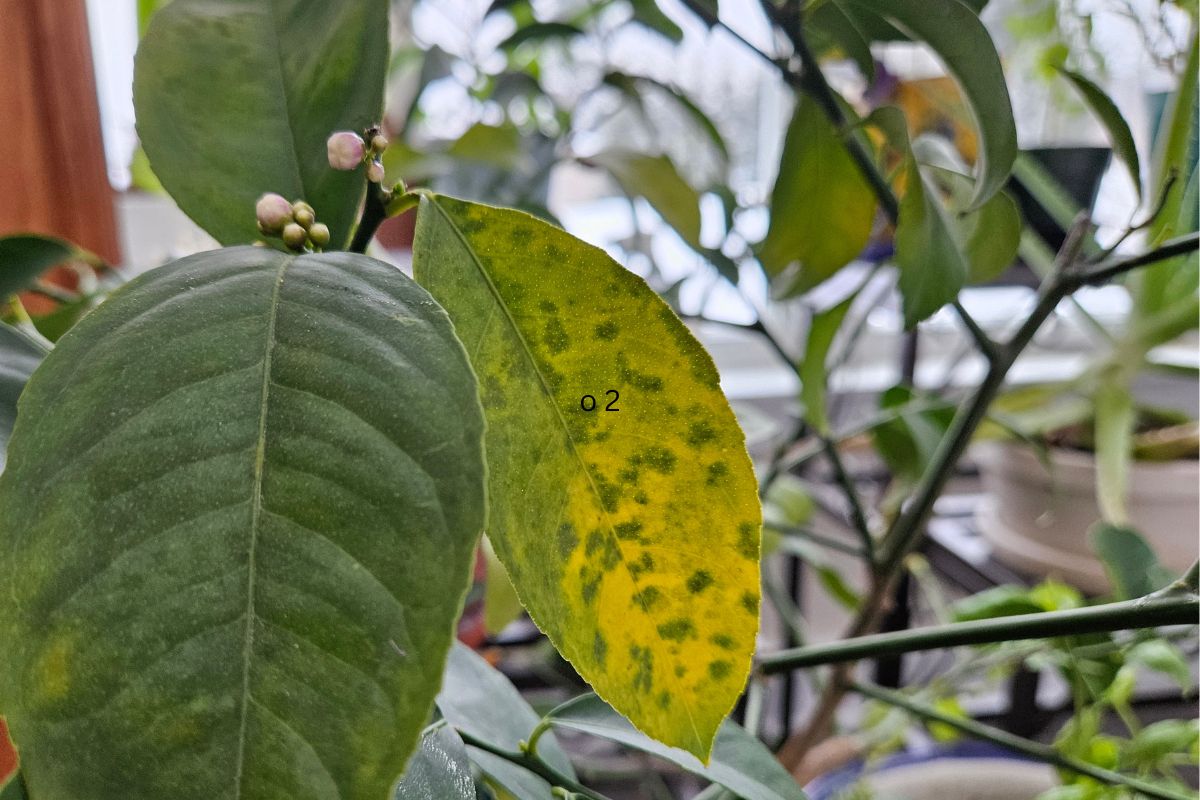
Once again, I think my indoor plants are doing great and then suddenly half the lemon tree leaves get spotty and start to drop. This is my first lemon tree. It fruited and now there are flowers on every flower tip, but sad leaves, too! It is not because of bugs or inconsistent watering or too much water. It is from getting blasted by a cold breeze. The leaves were shocked by the cold as we opened a door and stepped outside on last week’s truly frigid days. The room is only in the 50s, but that cold blast was too much. Luckily, the tree is healthy and will sprout fresh leaves. Plus, I moved it to a more protected spot. Protect your tender tropicals and houseplants from cold drafts.
Let’s start dreaming of spring. Maybe start a flat of pansy seeds! Now is a fine time. Pansies and violas started in a seed tray now can go outdoors in April! Just remember to harden off plants by acclimating them to cooler temperatures in the week before putting them outside. See above—no plants like shock.
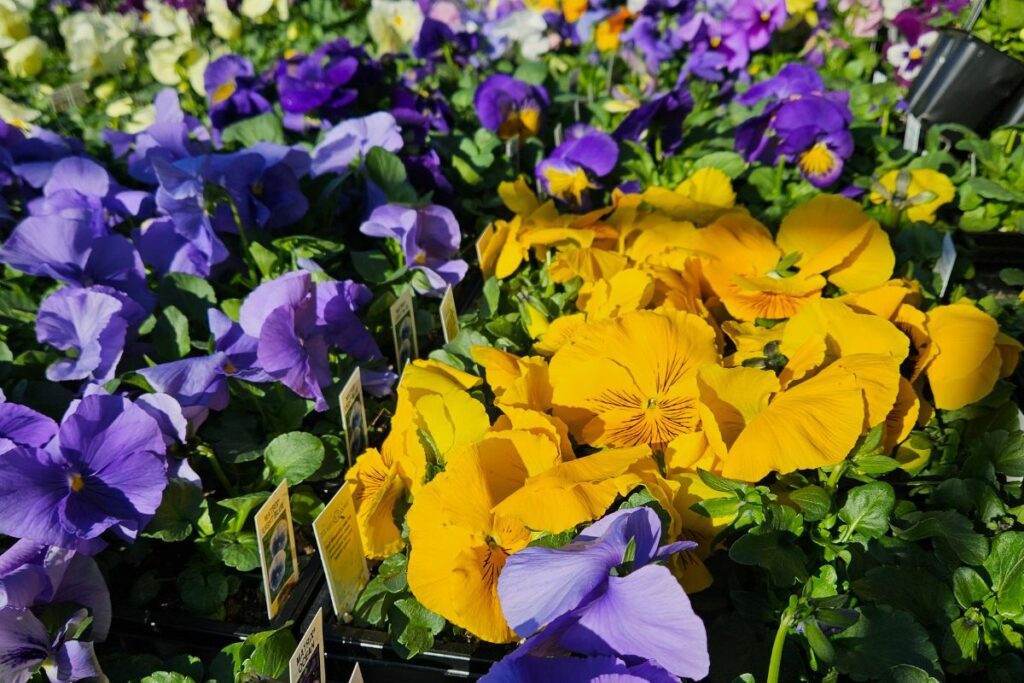 Pansies blooming in a flat in April. Pansies withstand frosty temperatures in April, and planning for them in January warms the heart.
Be careful when reviewing and ordering from seed catalogs. Plants that look too good to be true probably are. Review invasive plant lists for your state before ordering new things for your garden. Here are some links:
I almost forgot about my amaryllis bulbs. There is a great joy in revisiting your plants to see how they are doing. My amaryllis stems keep bending toward the light. To keep them straight, I need to rotate the pots with a quarter turn every day. I love the magic of plants!
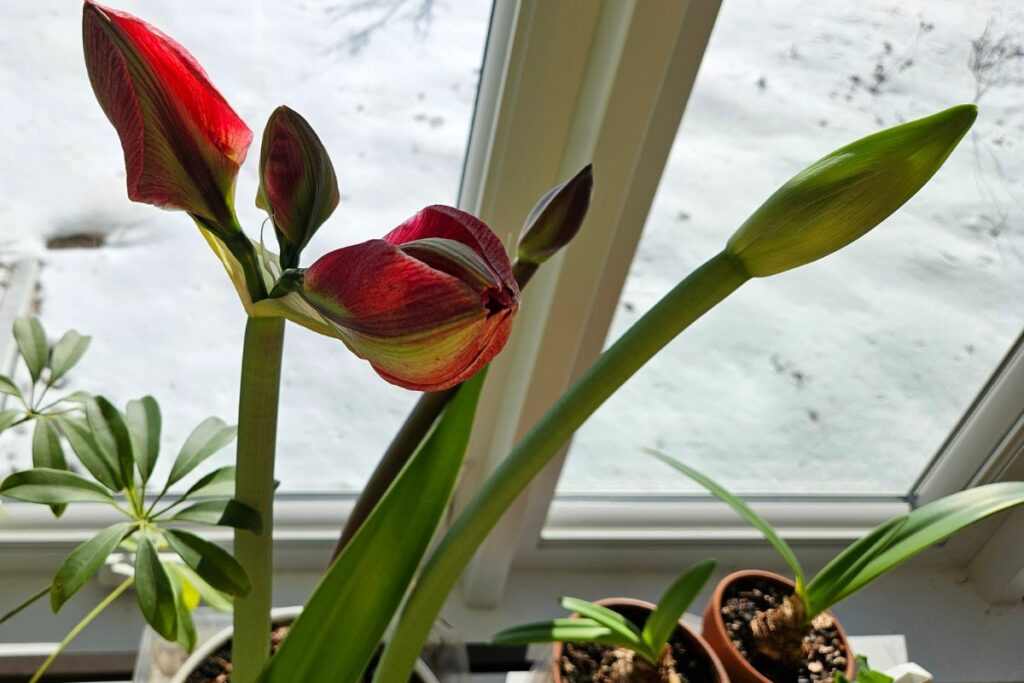 An amaryllis bloom has started to open, and the buds of more stems bend to find the sun.
I am still happy about the snow, I admit. However, who doesn’t want colorful flowering plants indoors right now? Visit the flower shop or garden center now to pick up some flowering color. Daffodils forced into bloom in pots and blooming potted primrose will both flower again outdoors in 2027 if planted in the garden in May. Tulips do not perform as well. But we can enjoy the forced blooms now!
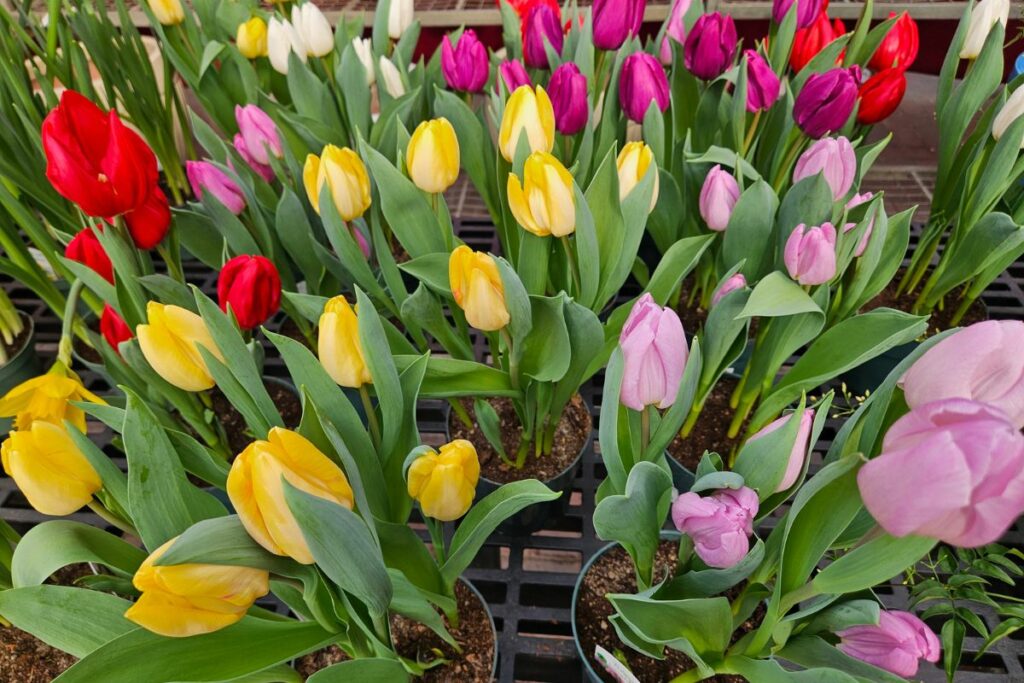 Here is a result of spring-flowering tulip bulbs forced into bloom. If yours did not work out, you can still pick up a pot of spring color.
Lastly, I know my skin is dry from being indoors around the heat and woodstove. Plants dry out, too, and don’t have the opportunity to slather on lotion. Increase the humidity around your plants to improve their resistance to other stressors. I am not sure how my weather app determines the relative humidity indoors, but it seems accurate. It is wicked low! How New England specific! To add moisture around plants, set up a tray filled with small stones and fill it with water. Place your potted houseplant on top of the tray. As the water evaporates, it creates a humid environment around the plant. You can also cluster plants together to increase the humidity.
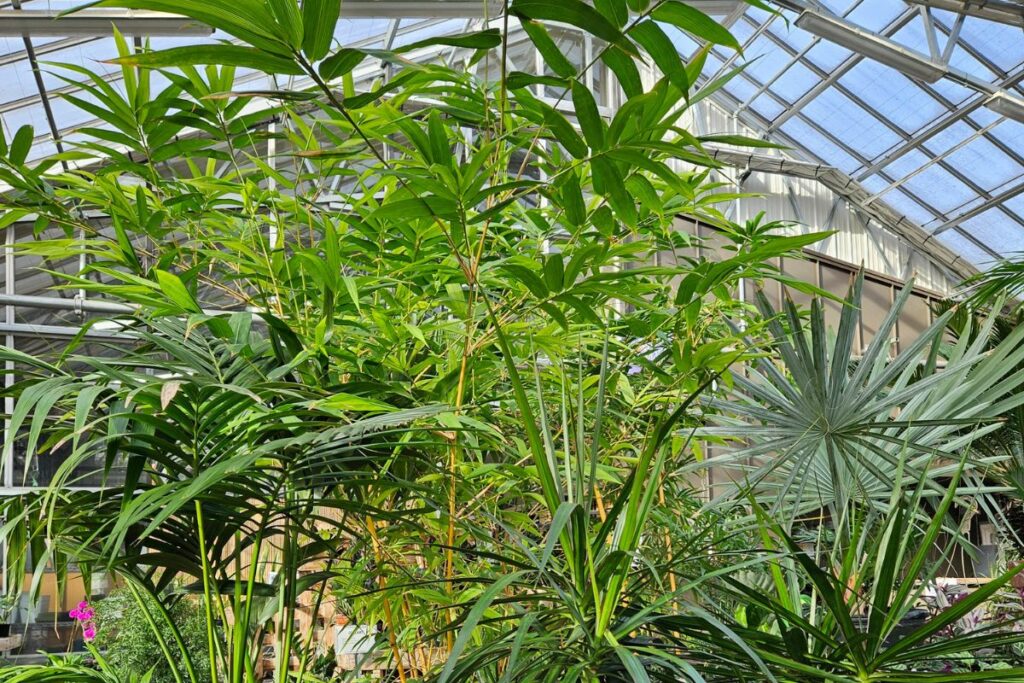 A greenhouse or sunroom can be a great space to increase ambient humidity because clustering plants together will help them maintain the humid environment.
Feeling garden deprived? Check the websites of your favorite garden stores or nonprofits for upcoming lectures, classes, or seminars. The sunlight strengthens every day, and spring is coming!
I call myself the Lazy Berkshire Gardener because I don’t want to work too hard in my gardens. I want to enjoy them. I find it easier to observe my landscape and let the compost happen, the water pool up, or daisies to self-sow. I look for ways to do the minimum task for the biggest impact. For example, mulching is better than spraying and much better than weeding all season. I look for beautiful, low-maintenance plants that thrive in or at least tolerate my garden conditions. Plus, I am willing to live with the consequences if I miss something.
Comments are closed.