
Winter’s firm grip is starting to loosen. Shorter days and bursts of sunshine bring hope that spring is here. But before you stow your snow shovel and start to sow your vegetable seeds indoors, consider hydroponic gardening.
This method grows plants without soil, using water-based nutrient solutions. The word hydroponic originated from two words: “hydro” meaning water and “ponos” meaning labor.
Hydroponic systems are designed to deliver nutrients directly to plant roots, optimizing nutrient uptake and promoting faster, more vigorous growth. This often translates to higher yields compared to traditional soil-based gardening. The growing process is more sustainable compared to traditional agriculture because hydroponic systems recycle water.
These systems can be set up vertically or in compact spaces, making them ideal for apartments and limited spaces. Gardeners can precisely control nutrient levels, pH balance, temperature and other environmental factors, optimizing plant growth.
Reduced pest and disease issues are also critical because the absence of soil minimizes the risk of soil-borne pests and diseases, reducing the need for pesticides. As hydroponic systems are devised to be used indoors, it allows for year-round cultivation regardless of weather conditions. And, because there is no soil involved, no weeding is required.
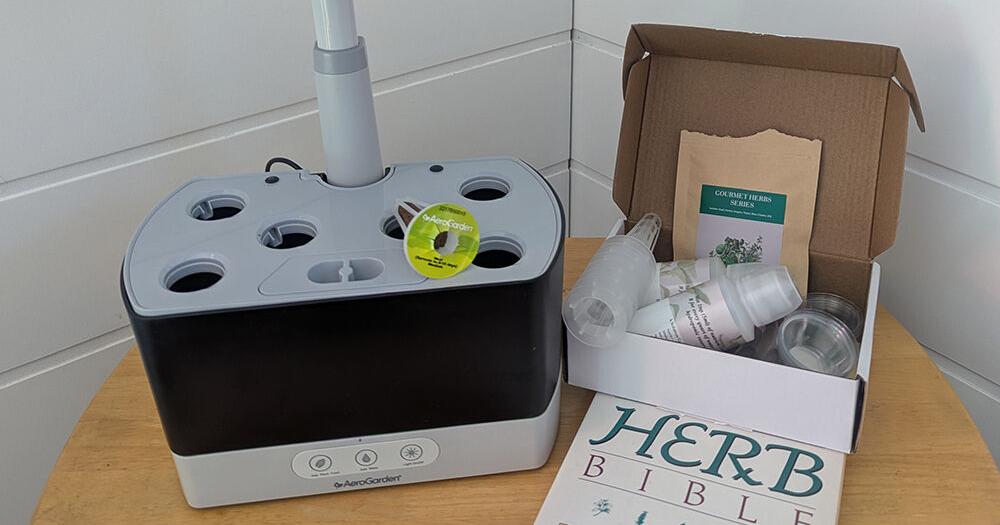
For several years, I have successfully grown herbs in an Aerogarden hydroponic system. The unit is small enough to fit on top of a folding tray table, has a built-in grow light with a timer and six seed pod holes. Indicator lights signal when water or nutrients are required which is helpful for someone without a green thumb.
A new kit generally includes a variety of organic herbs and nutrient supplements. My seed pods typically produce a bounty of fresh, delicious herbs within three months. Basil seems to grow the fastest and requires regular pruning for optimum results. For beginners or those who dislike soil, hydroponic gardening is a modern, sustainable and efficient alternative.
There are several types of hydroponic systems, each with their own advantages and price ranges. My Aerogarden is constructed so plant roots are suspended directly in the nutrient solution. Through experimentation with different methods of cultivating herbs both indoors and outdoors, I observed that herbs grown hydroponically exhibit superior health and faster growth compared to those cultivated outdoors.
Vegetables can also be cultivated in hydroponic systems, although I have not tried this method yet. However, I regularly consume hydroponically grown lettuce which is more flavorful and has a longer shelf life compared to traditional supermarket lettuce.
In essence, hydroponic gardening provides a controlled, efficient method for plant growth year-round, benefiting hobbyists and commercial growers alike.
Jennie Rodriguez-Priest, J.D., MBA, is a certified Master Gardener, and human resources consultant.
Comments are closed.