
In my life, I have had the good fortune to spend time with several people who transformed how I see the world of plants and the world at large. For example, when I was working at Martha Stewart’s television studio, I spend days with celebrated authors Michael Pollan and Oliver Sacks and these were high points in my career. These two men had an ability to connect philosophy and horticulture with a touch of anthropology, allowing me to see the synergies of such areas of study and thought. Whether talking about cycads that caused colorblindness in the atolls of the Pacific or blight-ridden tulips that caused a financial crisis in the 17th-century Netherlands, each of these men elucidated the connection between humans and the plant kingdom.
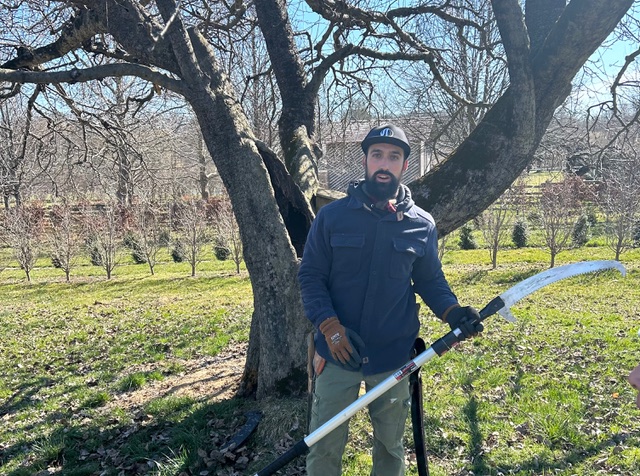
They were both best-selling writers when I met them, but Matt Kaminsky, an orchardist and pomologist, whom I came to know better while working with him on the apple trees at Martha’s farm in Bedford, is not. Yet, to my mind, his ability to think and connect humankind with the forbidden fruit we were pruning, takes place on a similar plane. Known in the apple world as “Gnarly Pippins,” Matt is an orchardist, arborist and cidermaker who hosts the annual Wild and Seedling Pomological Exhibition each fall in Western Massachusetts. And next Thursday, February 19, at the White Hart Inn, he will be ruminating on all things apple as part of the Bad Grass lecture series.
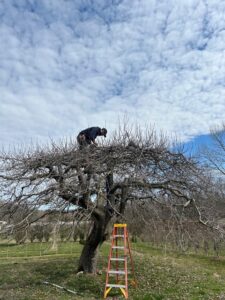 Matt atop the tree. He is filled with ideas for pruning trees of all sizes.
Matt is quick to share his love of apples—both wild and cultivated—and in many ways has an approach that combines the joy of Johnny Chapman, aka Johnny Appleseed, who planted cider apples from seed from Pennsylvania to Illinois at the turn of the 18th century, with the scholarship of Thomas Jefferson, who loved cultivating as many varieties of apples as he could at his farm in Charlottesville, Virginia. Each of these men brought something different to the pomological universe. By plantings seeds, Chapman created a gene bank of wild apples that each displayed characteristics that varied—with some having superior form and taste and others having superior hardiness and disease resistance. Jefferson, on the other hand, grew grafted varieties that could be passed along as clones so that their traits could be maintained—something that can be appreciated by anyone who has a favorite variety such as ‘Roxbury Russet’ or ‘Rhode Island Greening.’ Matt sees the virtues of maintaining both wild and selected forms, balancing the conservation of the genetic breadth of wild seedlings with the preservation of the predictable traits of cultivated varieties.
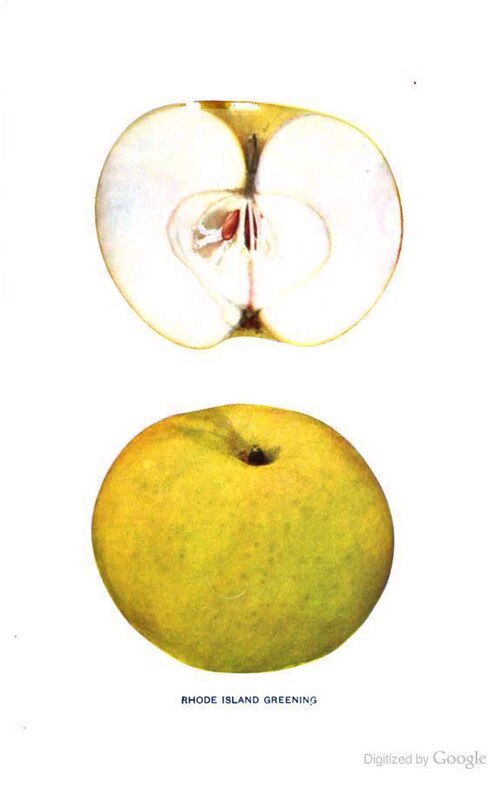 Rhode Island Greening apples. Photo courtesy of Wikipedia
His approach reminds me of the work of seed savers, who work to preserve the varieties they love, but also understand that keeping a species genetically broad and adaptable may be key to a species’ survival—and ours. This balance is also reflected in his approach to his farm in Sunderland, Massachusetts, where he grows apples and raises chickens and sheep in a regenerative practice that brings all three together. The sheep eat the windfalls and forbs in the lanes of the orchard, in turn leaving fertilizer behind for the trees, and are followed by chickens who in turn eat the non-beneficial insects that might otherwise infest the trees. Add a few humans into the mix and it is a compete ecosystem.
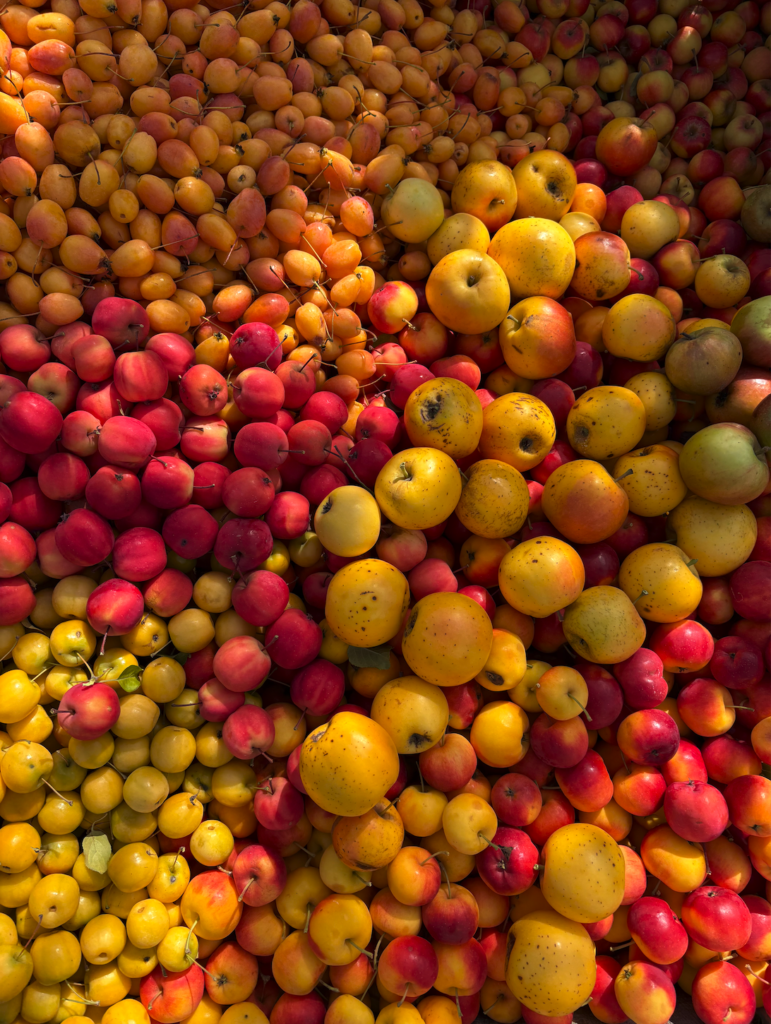 Wild apples. Photo courtesy of Matt Kaminsky
Matt shared his ideas on all these matters as we pruned the 200-year old trees at Martha’s (he has an approach to bringing old apple trees into production that is also of interest and involves promoting the production of new wood on the ancient trees one finds in the center of many a New England landscape). And, if my own opinion of his stature is not enough, Martha’s comfort at letting him structurally prune the beloved specimens viewed from her kitchen door is a recommendation all its own. If you are curious to learn more, come and hear Matt next Thursday and, unlike with my lesson, you are not required to come with a pruning saw in hand, just with an open mind.
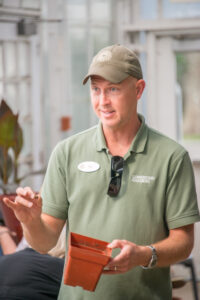 Karl Gercens who will speak at the Berkshire Botanical Garden on February 21. Photo by William (Bill) Longwood
NOTE: If you have room in your schedule for two talks in the coming week, the Berkshire Botanical Garden’s Winter Lecture will take place on Saturday, February 21st. Plantsman Karl Gercens, whose work in ornamental displays at Longwood Gardens is as captivating as his popular Instagram posts, will share some of his favorite plant combinations, with a reception to follow.
________________________
A gardener grows through observation, experimentation, and learning from the failures, triumphs, and hard work of oneself and others. In this sense, all gardeners are self-taught, while at the same time intrinsically connected to a tradition and a community that finds satisfaction through working the soil and sharing experiences with one another. This column explores those relationships and how we learn about the world around us from plants and our fellow gardeners.
Comments are closed.