
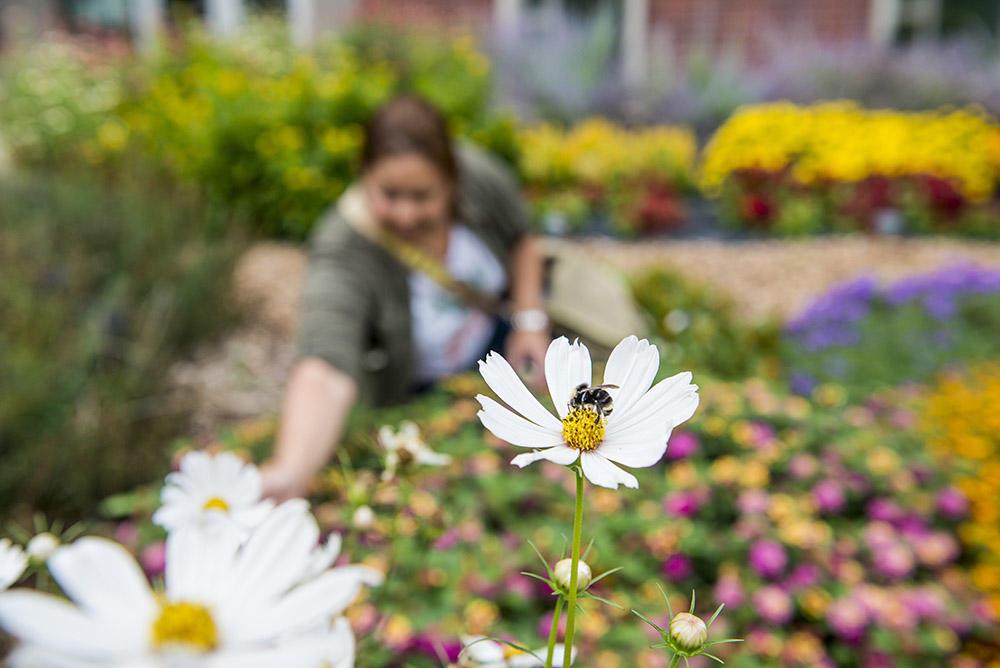
Spring is coming this month, and gardeners have their work cut out for them to get ready for the outdoor yard and garden season. The OSU Extension Service offers this handy list of tips for March:
Planning
•Plan your vegetable garden carefully for spring, summer and fall vegetables that can be eaten fresh or preserved. If you lack in-ground gardening space, plan an outdoor container garden.
Use a soil thermometer at planting depth to help you know when to plant vegetables. Some cool season crops (onions, kale, lettuce and spinach) can be planted when the soil is consistently at or above 40 degrees Fahrenheit.
Maintenance and cleanup
• Lawn mowing: Set blade at 0.75–1 inch for bentgrass lawns; 1.5–2.5 inches for bluegrasses, fine fescues and ryegrasses.
• Compost grass clippings and yard waste, except for clippings from lawns where weed-and-feed products or weed killers have been used.
• Spread a thin layer of mature compost over garden and landscape areas and incorporate it into the top several inches of soil where possible.
• Prune gooseberries and currants; fertilize with composted manure or a complete fertilizer if needed.
• Fertilize evergreen shrubs and trees if needed. If established and healthy, their nutrient needs should be minimal.
• If needed, fertilize rhododendrons, camellias and azaleas with acid-type fertilizer. If established and healthy, their nutrient needs should be minimal.
• Prune spring-flowering shrubs after blossoms fade.
• Fertilize caneberries using band fertilizer, broadcast fertilizer, a complete fertilizer or well-composted manure.
Planting and propagation
• Divide hosta, daylilies and mums.
• Use stored scion wood to graft fruit and ornamental trees.
• Plant insectary plants such as alyssum, phacelia, coriander, candytuft, sunflower, yarrow and dill to attract beneficial insects to the garden.
• If soil is dry enough, prepare vegetable garden and plant early cool-season crops (carrots, beets, broccoli, leeks, parsley, chives, rhubarb, peas and radishes). Plant onions outdoors as soon as the soil is dry enough to work.
• Plant berry crops (strawberries, raspberries, blueberries, blackberries, currants, gooseberries and other berry-producing crop plants). See OSU Extension publications online for berry variety information.
Pest monitoring and management
Use chemical controls only when necessary, after a specific pest has been identified, and only after thoroughly reading and following the pesticide label (the label is the law). First consider cultural, then physical and biological controls.
Choose the least-toxic options that will manage the target pest, such as insecticidal soaps or horticultural oils, and use them judiciously to minimize impacts on beneficial organisms and the environment.
• If webworms or leafrollers are present at damaging levels, consider management options. Prune out and destroy infested twigs, and spray if needed and it’s labeled for the specific pest and plant.
• Protect new plant growth from slugs. Least toxic management options include barriers and traps. Baits are also available for slug control; use with caution around pets. Read and follow all label directions prior to using baits or any other chemical control.
• Learn to identify the predatory insects that can help keep aphids and other pests under control.
• Spray to control leaf and twig fungus diseases in dogwood, sycamore, hawthorn and willow trees.
• Prune ornamentals for air circulation and to help prevent fungus diseases.
• Start rose blackspot control tactics at budbreak. Control rose diseases such as black spot. Remove infected leaves. Spray as necessary with a registered fungicide.
• Monitor for European crane fly and treat lawns if damage has been verified.
• Monitor landscape plants for problems. Don’t treat unless a problem is identified.
Indoor gardening
• Start tuberous begonias indoors.
• Take geraniums, tuberous begonias and fuchsias from protected storage. Water and fertilize lightly, and cut back if necessary. Harden plants off and move outdoors next month after danger of frost.
Source: OSU Extension Service.
Comments are closed.