
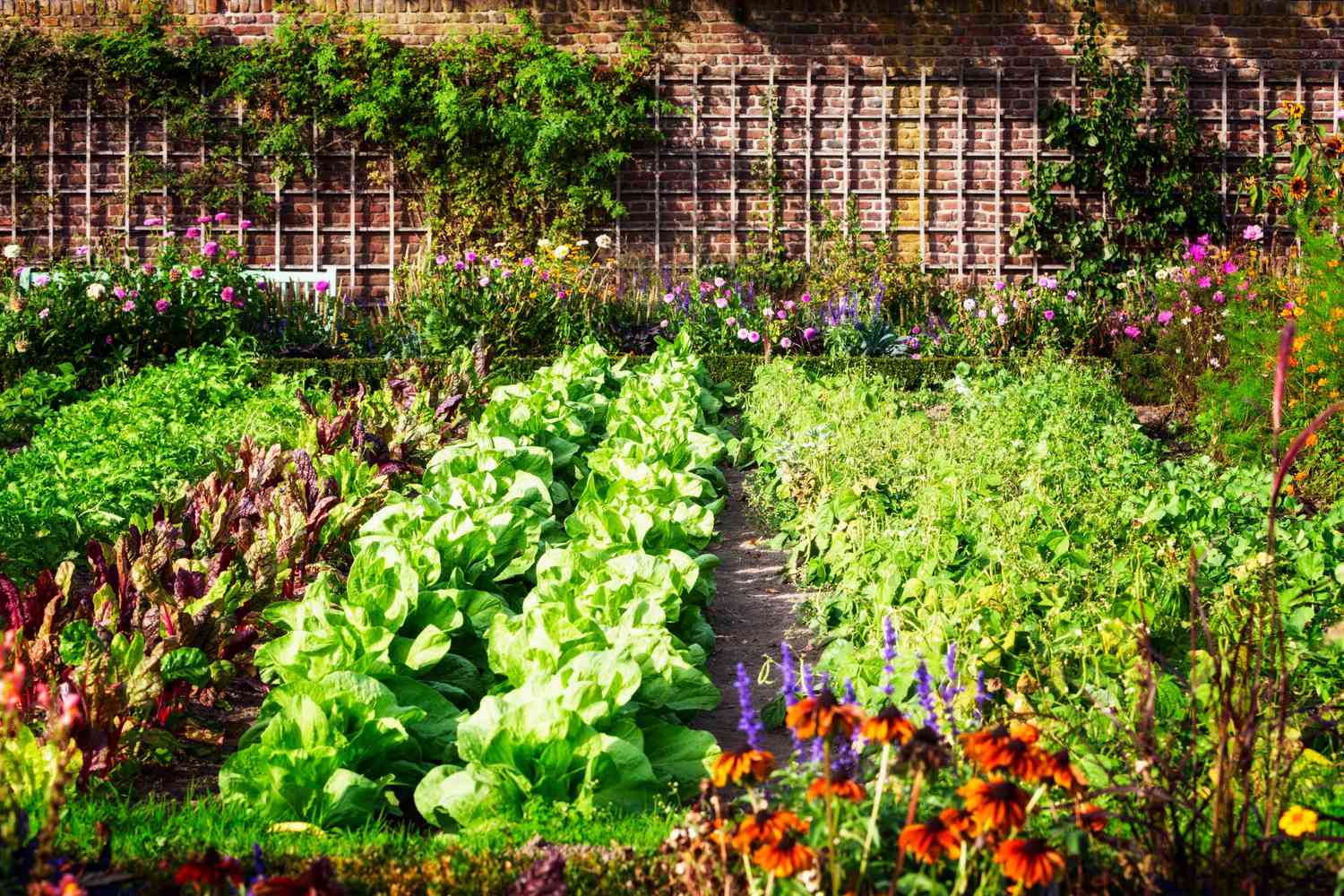
While a trip to the farmers market or your local grocery store is a great time to pick up a bounty of fresh fruits, vegetables, and herbs, imagine if you could scoop up a similar harvest by venturing out to your backyard. By growing a one-stop kitchen garden for your culinary needs, you’ll be able to do just that.
A kitchen garden gives you access to fresh ingredients that you can use right after harvesting. (Or you can dry, pickle, or can your produce for year-round use.) What’s more, this type of gardening gives you the opportunity to grow and eat uncommon heirloom varieties of herbs, fruits, and vegetables that may not be readily available at your local grocery store.
To help you create your own kitchen garden, we spoke to experts who shared everything you need to know about this process, from designing your layout to choosing and harvesting your plants.
Stephanie Rose, author of The Regenerative Garden: 80 Practical Projects for Creating a Self-Sustaining Garden Ecosystem, which introduces readers to basic backyard permaculture concepts in an easy-to-follow way.
Kip McConnell, plant expert for Southern Living Plant Collection, a plant collection designed to solve landscape challenges.
Renee Pottle, creator of SeedtoPantry, which provides safe food preservation techniques, easy and creative recipes, and suburban homesteading ideas and tips.
Dominique Charles, gardening expert and the owner of Plots and Pans, a service that helps people create the garden of their dreams.
Choose a Location for Your Kitchen Garden
The most important thing to consider when choosing a location for your kitchen garden is sunlight. Generally, most herbs and vegetables prefer full sun, so choosing a location that receives six to eight hours of sunlight is ideal. You should also choose a location with well-draining soil to prevent plants from getting waterlogged and causing root rot.
Convenience is also a factor when choosing where your garden will go. “Plan for your culinary garden to be as close to the kitchen as possible,” says Stephanie Rose, creator of Garden Therapy. “You’ll want to access it regularly to harvest for your meals.”
Prepare Your Soil
Once you know where you want to put your kitchen garden, test the soil in that area. “A soil test can tell you whether your soil is alkaline or acidic, plus identify any key nutrients it may need to help plants thrive,” says Jim Putnam, plant expert for Southern Living Plant Collection. While certain plants may require neutral to alkaline soil—think cauliflower, Brussels sprouts, and cabbage—others like acidic soil, including blueberries, raspberries, radishes, tomatoes, and bell peppers.
Generally speaking, light, loamy soil is ideal for a culinary garden, but a soil test will tell you what amendments your soil needs. For example, if you have alkaline soil but you’re growing plants that prefer acidic soil, amending with compost or peat moss can reduce pH levels.
Choose Your Plants
Credit: HannamariaH / Getty Images
There are many plants to choose from when creating a kitchen garden. A good jumping-off point is considering the foods you already love to eat, but there are other things to consider that will help guide your selection.
Know Your Zone
Understanding the climate and conditions of your area is important when choosing plants for your kitchen garden. “Use your address to look up your USDA Hardiness Zone—this information will give you a general sense of the kind of plants that thrive in your area’s climate,” says Putnam.
In addition to knowing your growing zone, familiarize yourself with how long your local growing season is, which will indicate when your plants should go in the ground, says Renee Pottle, creator of SeedtoPantry and author of The Confident Canner.
Think About What You Like
Planting things you love and eat seasonally is essential in a kitchen garden. “The first thing I suggest to people who are trying to start their own garden is to determine what you enjoy and what you tend to spend money on,” says Dominique Charles, gardener and garden consultant at Plots and Pans. In addition to considering what you like to eat, also think about what you like to look at and smell.
Focus on Companion Planting
Choose a few edible plants you know you want to grow, then research the fruits, vegetables, and herbs that grow well next to your selections—a gardening strategy known as companion planting. For example, tomatoes grow well next to basil because basil’s strong scent repels bugs that feed on tomatoes, such as tomato hornworms.
Consider What Fits in Your Space
How much room you have in your garden will also play a role in what you grow. For example, Pottle says she rarely grows corn because you must plant several rows to get many ears, and the stalks are taller than those of some other options. “I almost always grow tomatoes and green beans because you get a lot of produce from a few plants,” she says. Take stock of your space and research how big each plant gets when it reaches maturity.
Decide How to Segment Your Kitchen Garden
Credit: YinYang / Getty Images
Sketch out a design plan for how you want to segment your kitchen garden, which will keep you organized as things start to grow. “It can be helpful to segment a kitchen garden into rows or sections; the space between segments allows you to more easily weed, water, stake if needed, and harvest,” Putnam says.
Trees
One natural way to create rows in your kitchen garden is by growing espaliered fruit trees—trees whose branches have been trained to fit a flat, narrow space. Fig trees, specifically the dwarf variety, are well-suited to espalier because their petite size allows them to fit into snug spaces and containers where other fruit trees can’t, says Putnam.
Fences and Trellises
Create sections in your garden by adding fences and trellises. They can serve double duty by hosting edible plants. “Blackberries train well on fences, trellises, or on wire strung along existing walls,” Putnam says. “This makes the berries easier to pick from thornier varieties.”
Living Border
You can also segment a kitchen garden with a living border. “Choose an edible plant with a compact, mounding habit to create a clean and crisp border,” says Putnam. Rosemary varieties are a great option because they are fragrant, edible, and evergreen, adding year-round visual interest to your culinary garden.
Choose Between Raised vs. In-Ground Beds
Credit: Rachel Weill
A kitchen garden can be grown in the ground or in raised beds. Raised beds give you more autonomy over the quality of your soil, so you can fill them with well-draining soil suited to your plants’ needs. Additionally, raised beds can be raised to any height, making them easy to access for those with limited mobility. “They also offer lower maintenance than in-ground gardening, with less weeding and better drainage,” says Putnam.
In-ground beds are more affordable and require less maintenance to start, assuming you’re using your garden’s existing soil. In-ground beds also have lower watering needs than raised beds.
How to Care for a Kitchen Garden
The plants growing in your garden each have their own care and maintenance needs that must be met, but there are some things to keep in mind as you tend to your crops.
Water
Most plants will need a thorough watering when they’re first planted. Once established, check the instructions on your plant tag for further watering guidance. To stay on track, it’s best to stick to a watering schedule that caters to the individual needs of your plants.
Light
Most common edible plants tend to thrive in partial to full sun conditions. However, if you are growing a variety that enjoys shade, consider growing a taller full-sun variety next to it to create shade naturally, says Charles.
Soil
Edible plants typically need well-drained soil to thrive. Some varieties may prefer a certain type of soil, like acidic or sandy, so it’s best to do research into what you’re growing and amend your soil as needed.
Fertilization
Feeding your plants fertilizer is necessary to ensure they have the nutrients needed to produce a successful crop. “Read up on the specific variety you’re growing to find out the type of fertilizer you need and the appropriate time to apply it,” Putnam says.
Staking
Upkeep is dependent on the type of plants you’re growing—but tasks for a culinary garden may include staking vining plants and heavy produce, like tomatoes and beans. “Bamboo or plastic garden stakes, twine, twist-ties, tomato cages, and wire can help you get the job done,” he says.
Pruning
Pruning and deadheading aren’t typically necessary for edible plants, like it is for flowers; with the exception of tomatoes, which need to be pruned to promote fruit growth. Some plants may also need to be thinned when planted from seed. “Carrots, lettuce, rutabaga, and beets all fall into this category,” says Pottle. “You want them to have enough room to develop.”
Harvesting
Most vegetable seed packets will indicate when your edible plants are ready to be harvested. “That said, you can also use your own taste-testing,” says Rose. “Head out to the garden and taste a few things that look like they’re ripening. If they taste good, then you know they’re ready.”
How to Keep Pests Out of Your Kitchen Garden
Credit: Marco Scocco / Getty Images
One downside to a kitchen garden is that it’s commonly invaded by animals and insects, but there are a few precautionary measures you can take to protect your space.
Grow Pest-Resistant Plants
Protect your garden from unwanted bugs by growing pest-resistant varieties, which have been specifically selected to be less appealing to bugs. “If a plant has been bred for pest or disease resistance, this information will likely be noted on the plant tag at the nursery or home and garden center,” says Putnam.
Create a Physical Barrier
Creating a physical barrier with chicken wire, fencing, or mesh around your garden may protect it from common garden pests like deer, rabbits, and squirrels. “You can purchase ready-to-assemble systems online, or custom-create your own using garden stakes and materials from your local garden center,” Putnam says.
Use Natural Pesticides
Natural pesticides are always an option if you suspect pests are invading your garden. Charles recommends using neem oil and diatomaceous earth if you see spots or holes on your plants. The neem oil should be sprayed all over the plant, including the leaves and soil. Diatomaceous earth can be sprinkled all over the soil surrounding the plant.
Comments are closed.