
Swap Sisters’ Annual Seed Swap and Social
It’s time for the Swap Sisters’ annual Seed Swap and Social. Please join us Sunday March 22, 3-5 p.m., at the Parker Ladd Community Room at the Judevine Library, 93 North Main Street in Hardwick. All are welcome to the social whether you are a new gardener in need of seeds or an old pro with homegrown or extra seeds to share. We will ask participants to introduce themselves and share if they brought any seeds that have a story or need special instructions, then start the free-for-all seed swap. In years past the swap has offered a lot of donated seed from local seed companies as well as seed saved by gardeners themselves and older or excess seed purchased from seed companies that neighbors are willing to share. We encourage all to attend this free event whether they have something to swap or not. This year we are accepting donations for Migrant Justice https://migrantjustice.net/.
For more information about the swap feel free to email swapsisters@gmail.com. Please note this is not a library sponsored event.
—
20th Annual Vermont Composting Summit Kicks Off on March 25
The 20th annual Vermont Organics Recycling Summit (VORS) will be held on Wednesday, March 25, 2026, at the Montpelier Performing Arts Hub. It is organized by the Composting Association of Vermont (CAV) and the Agency of Natural Resources.
VORS brings together composters, farmers, businesses, educators, policymakers, and community leaders to advance solutions to keep clean organic materials out of landfills and return nutrients to Vermont soils. Additional workshops, tours, and hands-on learning opportunities will be held across the state on March 26..
“The 20th annual Vermont Organics Recycling Summit is guided by the theme, Compost! Feed the Soil that Feeds Us,” said Department of Environmental Conservation Commissioner Misty Sinsigalli. “This is a cornerstone gathering for Vermont’s growing organics recycling ecosystem. Whether you’re a backyard composter, a farmer, a municipal leader, or a sustainability advocate, VORS provides a critical forum for cross-sector collaboration.”
A highlight of this milestone year will be the keynote presentation from Jayne Merner. Merner is a lifelong compost practitioner and co-owner / operator of Earth Care Farm in Rhode Island. She grew up working in compost production and now leads one of the region’s best-known large-scale compost operations. Merner also hosts The Composter podcast and has taught composting and soil stewardship around the world.
Each year, VORS fosters connections, sparks innovation, and helps translate policy and research into real-world action. The summit welcomes all who are passionate about creating healthier communities through composting.
CAV is partnering with ORCA Media to record sessions for post-event viewing. To learn more and register for VORS, visit compostingvermont.org/vors-2026.
—
Spring Cover Crops for the Vegetable Garden
By Amy Simone
University of Vermont
Extension Master Gardener
The ground may still be covered in snow, but now is an excellent time to start planning to improve the soil in your vegetable gardens for the planting season ahead.
Cover crops are effective tools in the gardener’s toolbox for soil improvement. While some are food crops, they are not planted for harvest. Instead, they share the beneficial qualities of their species to either build organic matter and tilth, add nitrogen, suppress weeds, and/or fight soil compaction in your garden.
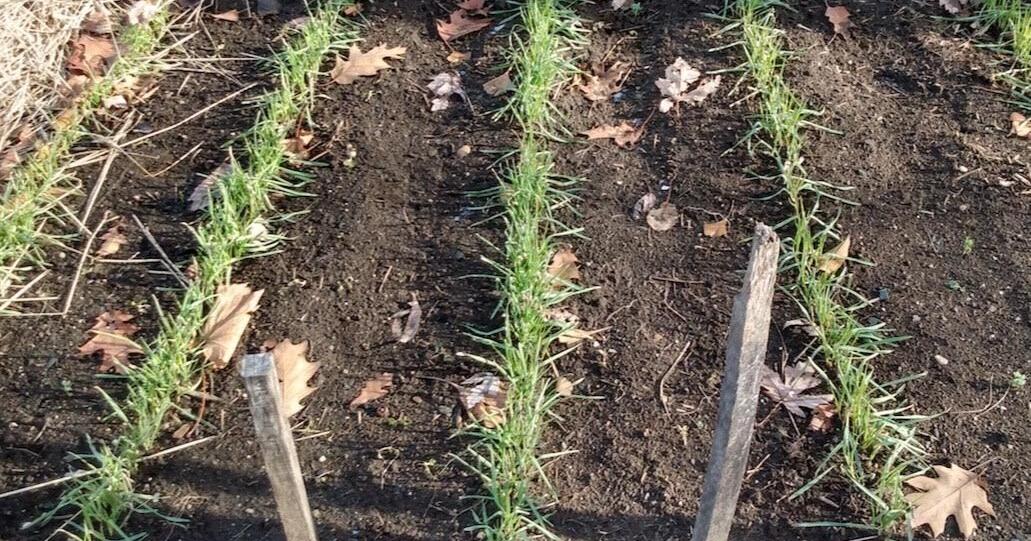
Cover crops planted in the spring can provide a number of benefits to your garden right at the beginning of the growing season. Start by determining what your goals are for the cover crop. If your soil is compacted and simply needs to be loosened up prior to planting your summer crops, a round of oats, fava bean, field peas, or annual rye could be planted.
If, however, your soil’s needs are greater, or not precisely known, it is best to start by assessing its deficiencies or imbalances with a soil test, available at: go.uvm.edu/soiltest. Using the results of the test, choose the cover crops that best address the needs of your soil.
Soil that is low in nitrogen fertility will benefit from a legume cover crop like field peas, fava beans, hairy vetch, crimson clover, and red clover. If the issue is a lack of organic matter or a need for better tilth, cover crops like oats or annual rye can provide that to your soil.
In recent years, garden centers and online seed providers have made it easier for home gardeners to find cover crop seeds. They can be found both in bulk and pre-packaged options. Blends of two or more species of plants, such as field peas and oats, take the guesswork out of application rates and supply multiple benefits.
Ideal cover crops for spring can germinate at colder temperatures, for example, 38°F for oats, or 42°F for crimson clover. This allows you to put in a crop as soon as the snow is gone and the soil can be worked. Some may even be frost-seeded, using the spring’s natural freeze-thaw cycle to ensure good seed-to-soil contact.
Most of these crops will mature between 45 and 60 days and they should be terminated 2 to 3 weeks before you intend to plant in the soil. This means that you may plan to plant your cover crops in March and into early April.
Unlike a fall cover crop, which dies off naturally in the winter cold, you will need to plan how and when to terminate your spring crops. Pay attention to timing – some cover crops (especially annual rye) should not be allowed to flower to avoid creating an unintentional bed of weeds. Many of the crops can simply be chopped and dropped or tilled under and will break down, improving biomass. Follow the directions for your specific crops to extract the most benefits from them.
Another excellent use of early cover crops is as a living or green mulch. Rather than laying down straw, cover bare soil around your vegetable plants with a ground cover such as white clover or lacy phacelia. These plants can suppress weeds and reduce soil erosion while also producing flowers for pollinators.
Your vegetable garden soil works extremely hard for you. Give it a boost with early cover crops to get your growing season off to an excellent start.
Amy Simone is a UVM Extension Master Gardener volunteer from South Burlington, Vermont.
Comments are closed.