


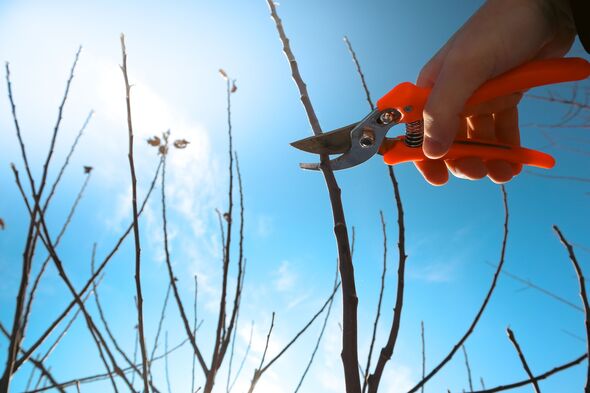
Simon warns that you must clean your secateurs (Image: YouTube/WalkingTalkingGardeners)
Roses are perhaps the most iconic of all of the flowers in British gardens. But they are also among the hardest to care for.
“There is a lot of conflicting advice about how and when to cut your roses,” says horticultural expert Simon, from the Walking Talking Gardeners YouTube channel. But most experts do agree that it’s best to get the job done before the flowers completely break their dormancy at the end of March.
Simon has some handy tips for when and how to cut your prized blooms and an important warning when it comes to pruning that all gardeners should remember.
He explains that there are, broadly, four distinct types of roses, and the rules for pruning each one are slightly different. They are the Rambling, Climbing and Shrub groups as well as the more varied Hybrid tea & floribunda varieties. It is essential, according to Simon, that two of these are pruned this month.
But before you even begin to start snipping off any dead, damaged, or diseased branches, there is one job you must remember that, Simon says, is of paramount importance.
Always remember to clean your secateurs (Image: Getty)
Read more: 5 plants gardeners must ‘get pruning’ in March for lush blooms this summer
Read more: Gardeners urged to carry out final task on wisteria and acers before March ends
Cleaning your kit
Simon says that there’s one vital piece of preparation before your pruning starts: “We need to talk about sterilising your cutting blades before you start cutting, because there are some big problems that you can avoid simply by doing that.”
He explains: “Roses are an absolute magnet for fungal diseases, bacterial infections and viruses. When you cut into these infected plants with your secateurs, you get the infected sap on your blade. So, as soon as you cut into another plant, you’re making a fresh wound and then the infected sap that’s on there touches the the fresh wound and whatever bacterial viral or fungal infections are on it are going to be passed onto that other plant.”
You can avoid this mistake, he says, either by heat-treating the secateur blades, or by wiping them with rubbing alcohol, and leaving them for about 15 minutes or so before wiping it off.
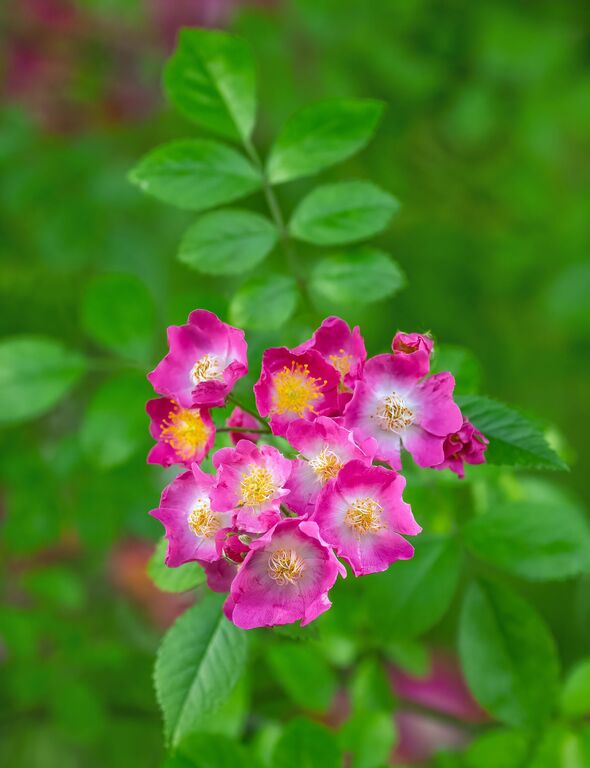
Rambling and climbing roses are easy to mix up (Image: Getty)Climbing roses
The first type of rose that should be pruned in March are climbing roses. “Climbing roses are very different because they flower on the new season’s wood,” Simon explains. There are two schools of thought when it comes to pruning climbing roses. Some experts recommend a snip in November, while others recommend getting the job done in March. “You get two benefits by cutting in March that you don’t get by cutting in November,” Simon suggests.
“The problem with November cuts is that the weather can still be very mild and also extremely damp. As such, there are still a lot of fungal infections floating around in the air that waiting to infect your fresh cuts with your November timing.”
He adds that trimming your roses deprives you of a secondary display of ornamental rose hips. They’re not only a welcome sight in your autumn garden, Simon points out. They’re also a valuable food source for wildlife.
“So cut them in March in my opinion,” he said. “Cut them back to your framework and they’ll flower on that new growth.”
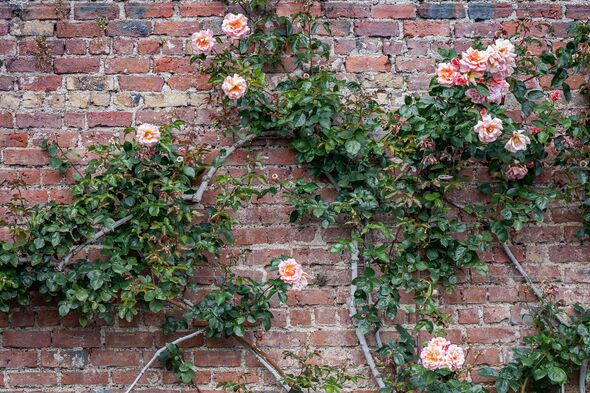
Climbing roses are best pruned in March, Simon says (Image: Getty)Hybrid teas and floribundas
These, Simon says, are in a way the most straightforward roses to deal with and should also be cut in March. “It’s difficult to make mistakes because you have the rose rule of thirds,” he explained.
“When you cut your hybrid teas and floribundas you cut in the third week of the third month – that’d be March – to the third outward facing bud.”
Count three buds from the bottom of the stem and identify the outward-facing bud, he says.
Simon concludes: “When you are doing your cuts to all roses is you never make a flat cut because you can get water sitting on top of these open wounds and that can increase the risk of fungal infections making their way through. Always cut at an angle so that any rain just slides off.”
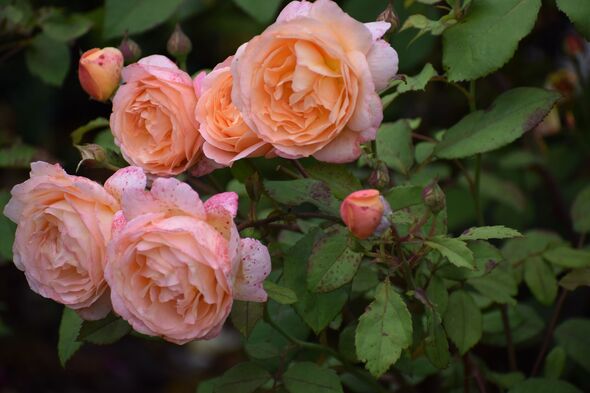
Shrub roses are easier to care for than some other varieties (Image: Getty)Rambling roses
Other roses, like the rambling variety, are best cut at another time of the year. “The pruning times for your rounding roses is always immediately after flowering,” Simon says. “You’re not trying to prune it back to a framework like you would do a climbing rose – you’re just trying to tidy up, stop it being so messy. You want to encourage that rather romantic twisting climbing feature of it.”
People often mix up their rambling and climbing roses, Simon stresses, and this is where problems can creep in. Rambling roses flower on the previous season’s wood: “People often confuse these with climbing roses that are pruned either at the end of the year or in the spring. And if you do that with a rambling rose, wherever you’ve cut it, you’re not going to get any flowers.”
If you’re unsure which kind of roses you have, either because you’ve lost the garden centre label or you inherited the plant when you bought your house, there is a rule of thumb to help distinguish them. Climbing roses will typically bloom repeatedly with larger flowers on stiff stems, while rambling roses are vigorous, flexible growers that tend to produce one massive, display of smaller clustered blooms some time around June.
With rambling roses, Simon says, try to remove crossing branches as well as any obviously dead or damaged stems: “Crossing branches can damage the bark, damage the cambium layer, and that can be an infection point for bacteria, fungal infections, and viruses.”

The ‘rule of three’ will help you with your floribundas (Image: Getty)Shrub roses
Shrub roses are also best not to be cut in March time, according to Simon. They are becoming increasingly popular largely because they tend to be more disease-resistant and easier to look after.
“They mostly flower on the previous season’s wood,” he explained. “That flowering time tends to run out about the end of summer and that is when you would make your cuts.
“You don’t cut it as you would do a hybrid tea or floribunda in the spring, or about March time, simply because you’re going to produce load of new growth so you’re not going to get any blooms from it. So timing is absolutely paramount. You’ve only really got that one time immediately after flowering and you’re not cutting too much off it.”
Comments are closed.