
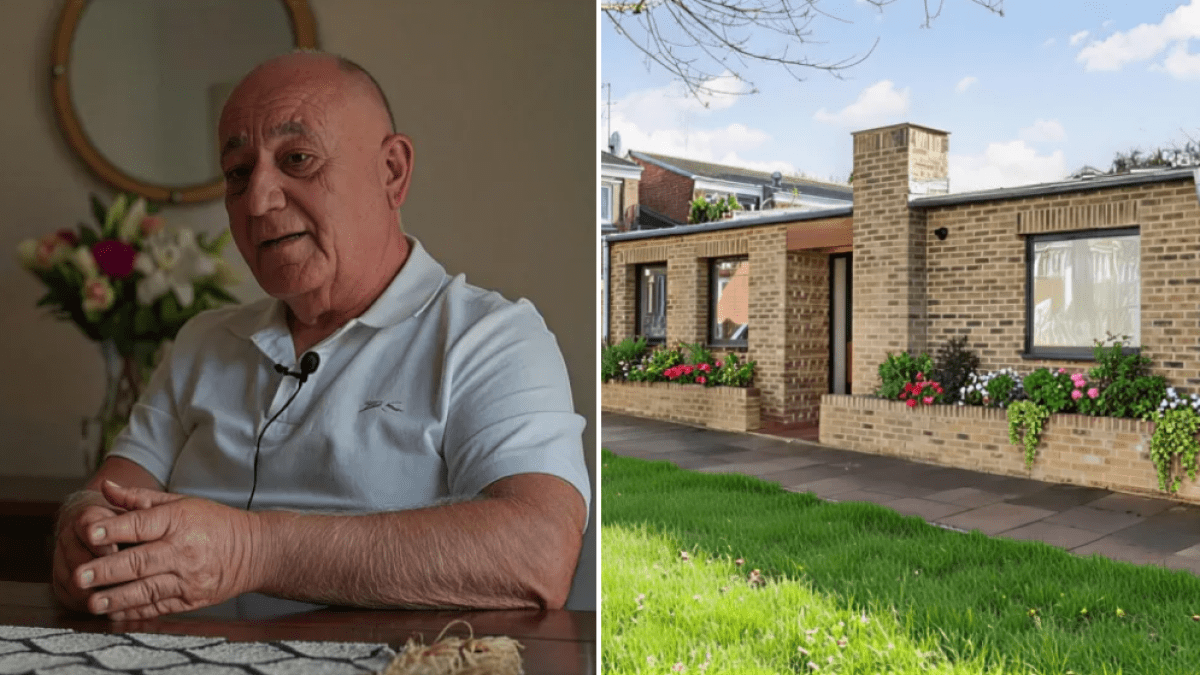
Two homeowners tell how they released some of their land in return for a lump sum
Agnelo Fernandes, who is in his sixties, was living with his nephew in a four-bedroom house in Arnos Grove, London, when he was approached by a developer interested in buying part of his garden.
While it had been his home for 47 years, building a property in his garden was not something he had considered previously.
But, in the last few years, Agnelo, who previously worked for HSBC, had watched his mortgage repayments skyrocket, as interest rates increased, and saw selling part of his garden as an opportunity to pay off his loan and give himself extra financial security.
“My mortgage repayments had almost doubled with about £147,000 outstanding which was a weight on my shoulders,” he says. The monthly repayments were around £1,000 a month.
New FeatureIn ShortQuick Stories. Same trusted journalism.
“As I wasn’t using the garden as much, due to ill-health, when I received a letter from Caswell & Dainow, asking if I would be interested in selling, it seemed like a good opportunity to clear my debts.”
Specialist small-site developers Caswell & Dainow had identified Agnelo’s garden as having planning potential and said they were willing to take on the financial risk of obtaining the relevant planning and permissions, with no up-front cost to him.
The firm uses a combination of aerial software and analysis by staff to identify “suitable” plots which is usually based on size, accessibility and the area.
As the legal owner of the land, before anything was taken further, Agnelo signed a contract agreeing to sell the developers his garden for £150,000, should they be successful in obtaining planning permission.
In a scenario where planning is not achieved, the plot owner keeps the land but doesn’t receive any money, and the developers pay all the planning fees and both sets of legal fees.
Caswell & Dainow then went about organising architectural drawings, land surveys and planning applications.
“I didn’t really get involved too much in the design of the house that is being built, although I was consulted throughout, but I haven’t had any problems,” says Agnelo.
“To be honest, I didn’t want to get involved in all the planning issues, and receiving a lump sum was exactly what I needed.”
From signing the contract to gaining planning, and receiving his fee, took nine months; the house then took around 12 months to build.
“I received a £150,000 lump sum and I paid my mortgage off straight away,” says Agnelo. “It gave me the means to pay off my mortgage and reduce my monthly outgoings without having to move house.”
The plot was 270sqm with the development taking up 200sqm, leaving him with just 70sqm.
While the house – a three-bedroom, 1,200-sqft (111sqm) detached, contemporary home – is still being built, “it doesn’t impact on my living in my house at all,” he says.
“Although it is nice to have a big garden, it was becoming too much to manage due to my health and I wasn’t really using it as much.
“It obviously would depend on your circumstances but, for me, it has been a good thing to do and made me financially more secure.”
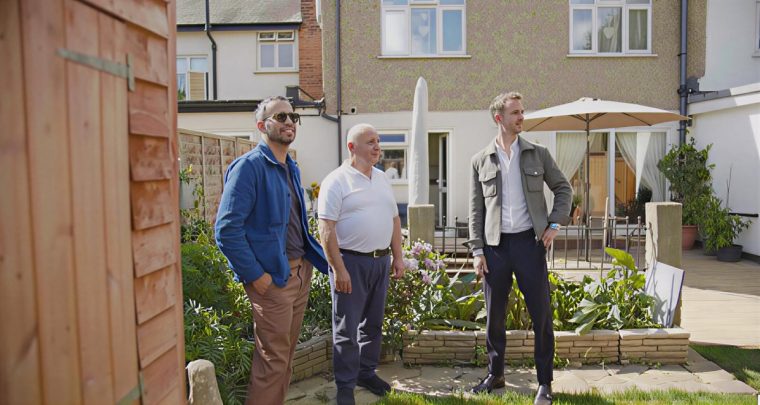 Mr Ziya with the developers in his garden space
‘We sold our garden for a high five-figure sum‘
Ahmet Ziya, 68, and his wife, Yesim, had tried, and failed, twice to get planning permission for a house at the bottom of their 100ft garden in Lewisham, London.
“We applied for planning permission twice and each time it was refused because the council said it didn’t complement the street scenery,” says Ahmet.
At the opposite side of the street, another house had managed to do something similar so, when a leaflet from Caswell & Dainow came through their letterbox, the Ziyas thought they’d give it another go.
“The plus point for us was that they took the risk,” says Ahmet.
“The practicality of it being refused was high but it was a win-win for us, as they undertook the architectural drawings, planning applications and surveys of the land and habitat. They took on the cost of it all up-front – the architect fees alone were £3,000.”
While the two previous planning applications had been refused, and neighbours had raised concerns, the third planning application consultation went through without anything concrete being put forward in terms of complaints.
“We chose an appropriate design, reflecting the local buildings and brickwork,” says Ahmet, who was involved in the process.
“In terms of the design, I made sure it wasn’t overlooking my property as well as my neighbours’ properties.”
The couple received a “high five-figure fee” for the land once the planning permission was confirmed.
The house that’s been built is a single-storey, three-bedroom home, surrounded by a series of courtyards. It’s currently listed for sale for £750,000 with Pedder New Homes and is receiving viewings.
“I still have a nice garden area, and the garden is more maintenance-free,” says Ahmet. “We weren’t making use of the plot, and we have used the money to try and enjoy life because we are retired.”
The garden size was roughly halved by the development.
The Ziyas found the entire process, including the build, sensitive to their needs.
That said, they would advise anyone doing something similar to be involved in the design process: “People need to be aware of what is being built there. You need a build that complements your garden.”
How to know if your garden is a suitable plot
Charlie Caswell, co-founder of Caswell & Dainow and an architect, says the following criteria can identify whether your garden is suitable as a plot.
“Firstly, you need to assess whether you have the physical space for a new building, including appropriate space for the garden, potentially parking, bins and bike storage.
“Secondary, can you get to the new building easily, either by foot or by car? You also need to consider the potential impact on the host property. Will it be hidden and have little to no effect, or will it compromise your enjoyment of living there?
“Lastly, it’s always good to check if there are other examples of that type of development in the area, and to understand if you live in a property or area with specific restrictions like being listed, being in a conservation area, Green Belt of natural landscape (formally AONBs).”
If you think your home meets these criteria, Caswell says the next stage is approaching an architect and planning consultant.
“But there are many other reports needed for a full application. These can range from studies on trees, flooding, and animal habitats to construction methods and local transport studies. Even on small developments, commissioning these reports can run into tens of thousands of pounds,” he says.
Comments are closed.