
Grace Elton
| Special to the Telegram & Gazette USA TODAY NETWORK
On a late winter day in New England, when the garden still looks mostly lifeless, a small white flower pushing through the soil can feel like a miracle. For many gardeners, that first bloom is the true beginning of spring.
Growing up in South Florida, surrounded by greenery year-round, I never quite understood the excitement about spring in northern climates. After nearly a decade of New England winters, however, I now fully appreciate the sense of hope that comes from seeing a single flower emerge from melting snow. As the days lengthen and temperatures rise, I feel the same boost of energy many people experience this time of year. For gardeners, that joy comes with the knowledge that we will soon return to tending our gardens.
As soon as the snow begins to recede, I head outside in search of the earliest signs of life in my home garden —perennial foliage pushing up through the soil, sedum beginning to perk up, and the first bulbs opening their blooms. Many of these early arrivals are known as minor bulbs. In my opinion, however, there is nothing minor about them. These tough little plants muster the energy to push through cold soil — and sometimes even snow — to announce the arrival of spring. Gardeners have long admired these resilient early bloomers. One of the most beloved is the snowdrop (Galanthus), a delicate yet hardy plant that often appears while winter still lingers.
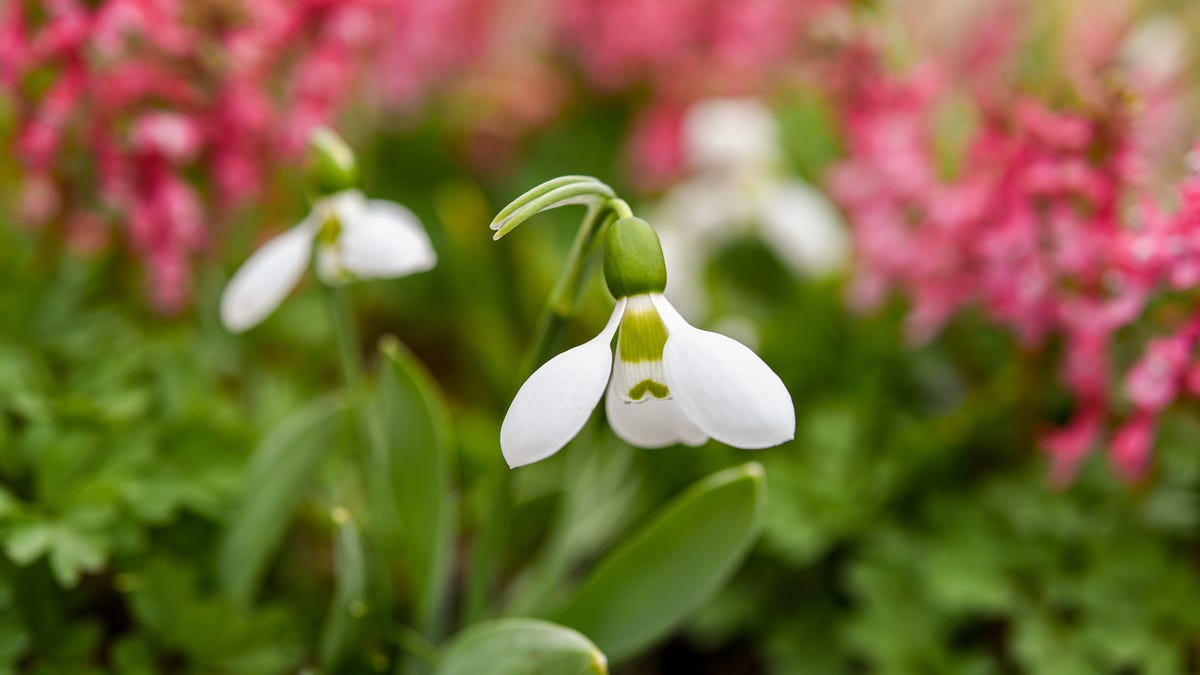
Snowdrops are commonly grown in rock gardens or naturalized in shady woodland settings. They are also naturally deer-resistant and remarkably low maintenance, making them an appealing choice for many gardens. Their flowers are small, white, and bell-shaped, hanging downward from slender stems above blue-green foliage. Though the plants are typically less than a foot tall, they make a striking impact when planted in clusters.
Brent and Becky’s Bulbs, one of my favorite bulb suppliers, affectionately refers to snowdrops as the “shoes and socks of the garden.” They recommend planting them among perennials such as hellebores (Helleborus) or alongside other spring bulbs like daffodils (Narcissus) and tulips (Tulipa). Over time, snowdrops naturalize and spread, forming expanding drifts that help fill garden spaces and reduce the need for mulching and weeding.
There are more than a dozen species of snowdrops and countless cultivated varieties. Among the most common are the common snowdrop (Galanthus nivalis), which reaches about nine inches tall and bears delicate one-inch flowers, and the giant snowdrop (Galanthus elwesii), which can grow close to a foot tall and produces slightly larger blooms.
Snowdrop flowers are made up of six petals arranged in two layers — an inner trio of shorter petals and an outer trio of longer ones. Most snowdrops feature green markings on the inner petals, though rare varieties may display yellow markings. To the casual observer, the subtle variations in flower shape and markings among snowdrop varieties may seem minor. Yet these differences have inspired a passionate community of collectors known as “galanthophiles.” These enthusiasts search tirelessly for unusual or newly discovered snowdrops, and some rare bulbs command astonishing prices. In recent years, a single rare bulb has reportedly sold for more than two thousand dollars.
Fortunately for the home gardener, there are many beautiful snowdrop varieties available at very reasonable prices. Galanthus nivalis ‘Flore Pleno’ produces charming double flowers with extra inner petals tipped in green. Galanthus ‘Atkinsii’ features long, slender outer petals and distinctive green heart-shaped markings on the inner ones. Galanthus ‘Magnet’ lives up to its name with an unusually long flower stalk that allows the blooms to sway gracefully in the breeze. Another variety, Galanthus nivalis ‘Viridi-apice,’ surprises gardeners with green tips on both the inner and outer petals.
However grand or modest the variety, snowdrops all share the same quiet magic. Appearing at a time when the garden still seems asleep, they remind us that spring is on its way. Their delicate blooms offer a small but powerful promise: that warmth, color, and life will soon return to the landscape. After a long New England winter, that first glimpse of white flowers against dark soil — or even lingering snow — can feel like the garden’s first whisper that brighter days are ahead.
Gardening Central Mass. offers ecologically focused tips and helpful stories for home gardeners from New England Botanic Garden at Tower Hill CEO Grace Elton and Director of Horticulture Steven Conaway. Located in Boylston, New England Botanic Garden creates experiences with plants that inspire people and improve the world. Learn more at nebg.org. The column is published on the third Sunday of the month.
Comments are closed.