
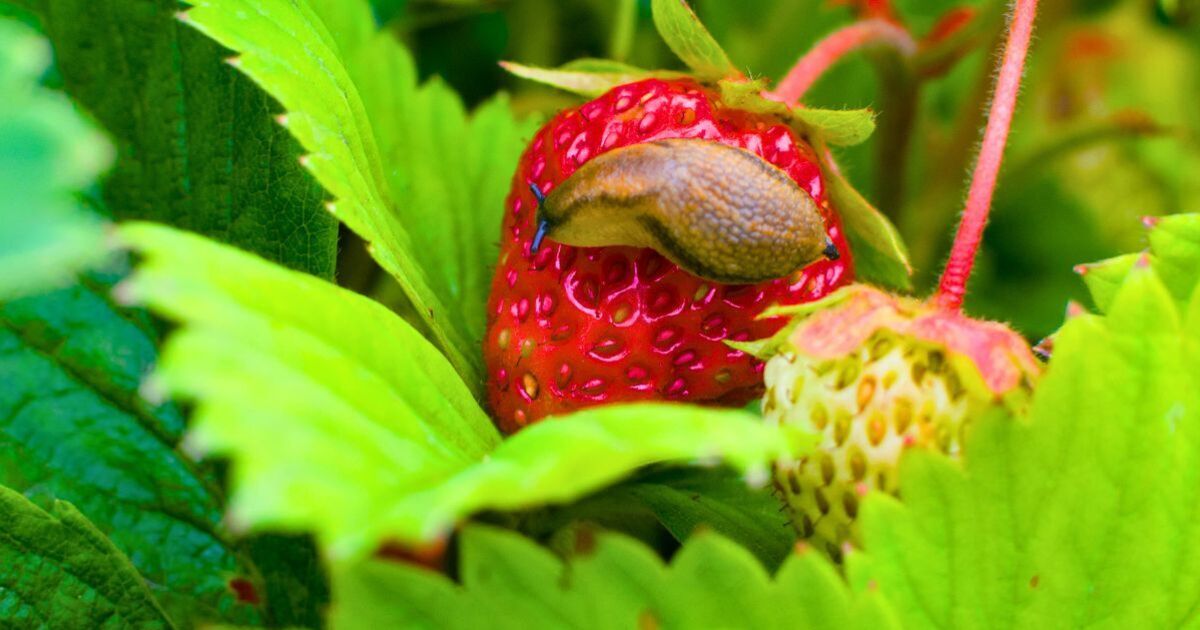
March is when the ice finally melts away, and we start to see hints of green in the garden, which means gardeners can begin planting crops again, such as strawberries. Strawberries are generally quite easy to grow in thanks to the warm soil and rainy days, but the damp weather can also make them vulnerable to slugs that tend to target them.
Slugs are more likely to eat strawberries when the leaves are very tender on shoots, and any damage to the buds can result in fewer berries or even no harvest at all. It is highly recommended not to spray strawberries with pest repellents, as they can poison the fruit, and they can also greatly harm bees, who need to pollinate flowers at this time of year. Instead, Jeff Begin, a farmer who owns Begin Family Farm, has shared that it’s easy to keep slugs away from your strawberries by properly mulching them.
How to mulch strawberries to keep slugs away
Mulching is a simple gardening task in which organic material is placed around a plant to protect it from extreme temperatures and pests.
One of the most common mistakes when mulching strawberries is choosing the wrong material, as many mulches from garden centres can actually attract slugs.
Jeff said: “Slug’s role in nature is to clean up decomposing organic matter by eating holes in it. So don’t use decomposing organic matter as a much – use already decomposed organic matter!”
Gardeners often use straw, bark, or leftover grass clippings because they naturally enrich the soil as they break down, but these mulches retain a lot of moisture.
Once these mulches begin to rot, they will create the perfect environment for slugs to settle in and multiply, which means it will be really difficult to get rid of them.
If you want to protect your strawberries, make sure to use compost that is well-rotted and crumbly, as it will dry out quickly, and will also give the plant the nutrients it needs.
Slugs will only stay in damp soil, but if strawberries are not sitting in stagnant water, it will be less attractive for them to hide under, and they are more likely to move on.
Jeff said: “There’s no fresh or partially decomposed organic matter, only a semi-fine compost where everything has already broken down. Slugs don’t seem to like living here.”
All you need to do is tidy up the area around your strawberry plants, and try to keep it relatively weed-free as lots of foliage will be ideal coverage for slugs.
Then dig a barrier five to 10 centimetres deep around your strawberry plants and fill it with compost. Your strawberry plants will be able to grow without any bite marks or holes in them for the rest of spring.
Comments are closed.