
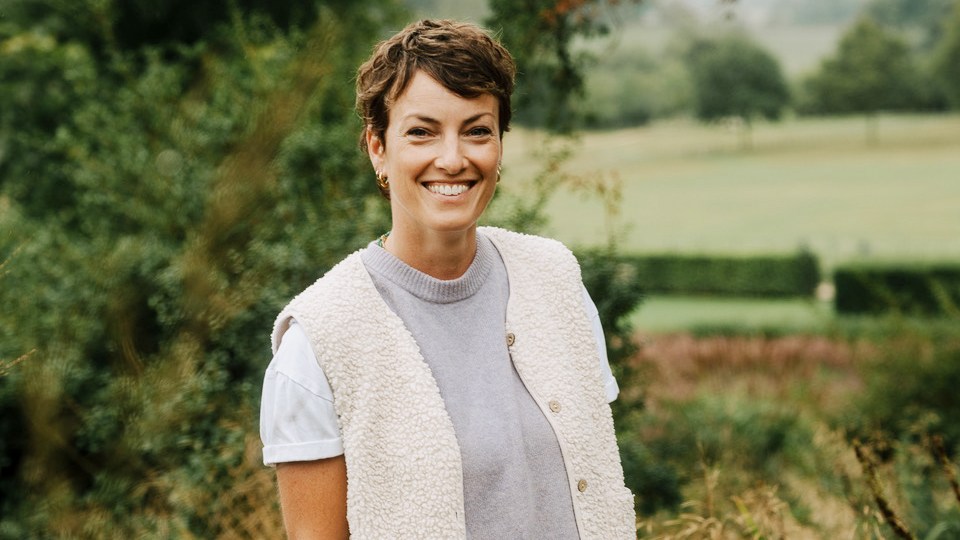
When the garden designer Lottie Delamain set out to write her upcoming book, Gardens That Can Save the World, she knew she wanted to showcase inspirational gardens that have the power to heal and nourish and do good. She also knew that she wanted her book to be quite practical, for each garden she included to inspire an “I can do this too” attitude in readers.
What she didn’t know was how writing the book would affect her emotionally.
“Writing this book has given me so much hope,” she says. “I was looking for an antidote to the overwhelm and the hopelessness and powerlessness we feel all the time — and this is the sort of book I wanted to read.”
Gardeners around the globe are tackling everything from climate change, environmental collapse and biodiversity loss to the mental health crisis, chronic health issues, crime, poverty, loneliness, social inequality and even war, she has discovered. “There are so many problems going on in the world and I’ve realised gardens can be a response to lots of them.”
In a foreword to the book, the rewilding pioneer Isabella Tree writes that there are 23 million private gardens in England, occupying an area four times larger than all the national nature reserves combined. Delamain invites her readers to see the book as both a clarion call and a celebration of how green spaces can radically transform both people and the planet. “It’s quite amazing all the different issues gardens can tackle.”
• Chelsea Flower Show unveils 2026 line-up with focus on healing
The more she searched for both big and small garden projects to feature in the book, the more she found. “I could have filled a two-volume book very easily.” She writes — in a very practical way — about garden projects in the UK, Gaza, Chile, New Zealand, India, Japan, Kenya, Belgium, Vietnam, Brazil and elsewhere that aim to change the world for the better.

This multi-story urban farm building in Ho Chi Minh City, Vietnam, was designed by Vo Trong Nghia Architects
VTN ARCHITECTS
“There seems to be a kind of unspoken agreement around the world that we’re going to get on and do this. Nobody’s said: ‘Right, everybody, you need to restore your connection with nature.’ Everyone has just come to that conclusion themselves, all over the world, at different scales — and I really wanted to capture that sense that this is happening. This movement is already underway. We’ve just got to join in.”
The book is divided into five chapters: Repair (gardens that are restoring lost habitats, reversing biodiversity loss and repairing land and soil affected by industry, agriculture and war); Empower (gardens that are reconnecting people and providing them with dignity and a sense of purpose); Nourish (gardens that are offering innovative, sustainable paths to better food, physical health and emotional solace); Heal (gardens that are boosting mental health and strengthening communities); and Reimagine (projects that are reimagining the role of the gardener and embracing innovation and new garden materials).
Delamain, who trained at the Inchbald School of Design and has exhibited at RHS Chelsea, was particularly affected by the projects she included in the Empower chapter. She highlighted the gardens created by refugees in Kurdistan, thanks to the Lemon Tree Trust charity. “The trust set up these gardening clubs in refugee camps, thinking people might want to grow crops or food. But actually, what people tended to grow were ornamental plants. They were growing for beauty, rather than vegetables.”

Ezequiel Dias is an urban farmer who works at the Horta de Manguinhos community garden in Rio de Janeiro
PILAR OLIVARES/REUTERS
The refugees prioritised making the distressing environment they were living in more bearable, by planting flowers that reminded them of their homes, she says. “To me, that is symbolic of how potent and powerful gardening is.”
Now, the refugees have a green space where children can play and adults can relax and socialise. “Some of the refugees literally planted a seed in an old cola bottle — and yet their gardens are incredibly beautiful,” Delamain says. “It’s made me realise we’re not waiting around for some really snazzy technology to come off patent or for someone to invent something. Many of these gardeners use really simple techniques and show us that just gardening and engaging with the natural world can have this ripple effect.”
• ‘Therapy gardens can be a game changer for mental health’
Another project, the Glasshouse, is providing horticultural training to women in prison near Maidstone in Kent. The training provides the women with a connection to nature and a sense of purpose while they are in prison, while simultaneously equipping them with a skill they can use to get employment on their release.

The Glasshouse project at East Sutton Park prison provides horticultural training for women inmates
THAMES AND HUDSON
One participant told Delamain that before the project began, when a feather fell down from the sky women would fight for it because it was a sign of the natural world they had lost access to. “It was really moving talking to people there,” she says. “I’ve learnt that gardens can make people who have been incarcerated — or cut off from society because of war — feel human again.”
Another project at Oregon State Penitentiary, in the United States, demonstrated that people who previously had to be isolated or kept in solitary confinement could work peacefully with others to create a Japanese garden. “The garden became this kind of safe zone.”
• How gardening helps female prisoners to prepare for life outside
One of the reasons these projects succeed is because gardening is a virtuous circle, Delamain says: “The more we start looking after gardens, the more gardens reciprocate and look after us.”
When war broke out in Ukraine, the Kharkiv resident Alla Olkhovska turned to her garden to support her family. “There’s bombs dropping all around her and she’s growing these exquisite clematis, harvesting the seed and selling them all over the world,” Delamain says.

Brazil’s Hortas Cariocas program supports community food growing
JULIO CESAR BARROS
Other projects focus on innovative ways of gardening in urban spaces. “In Paris they’ve had this huge re-greening effort and pedestrianised a lot of the city. So now there are loads of redundant car parks, which they have turned into mushroom farms. There are also hydroponic farms on roofs.”
In Singapore, Delamain highlights Khoo Teck Puat hospital as a “glowing example of the power of biophilic design. It looks like a tropical rainforest and the building is so beautifully cooled by the plants all over the walls, they have reduced their need for air conditioning,” she says.
• How to design a dementia-friendly garden
Delamain also shines a spotlight on “green thinkers” such as Kalpana Arias, a guerrilla gardener who founded the social enterprise Nowadays on Earth to help people to reconnect with nature through technology. “Rather than seeing technology as the enemy, she uses it as a tool,” Delamain says. “She invites people to use virtual-reality headsets to imagine their street re-greened, because if you can imagine it you’re more likely to invest and be committed to it.”
The book also includes some of the UK’s best-known gardening projects, such as a rewilded walled garden at Knepp, as well as Horatio’s Garden for people with spinal injuries and the biodiverse ornamental gardens at Great Dixter in East Sussex. Projects to create plant-filled urban landscapes in Sheffield, grow orchards across the UK and improve soil quality in Exmoor National Park also feature.
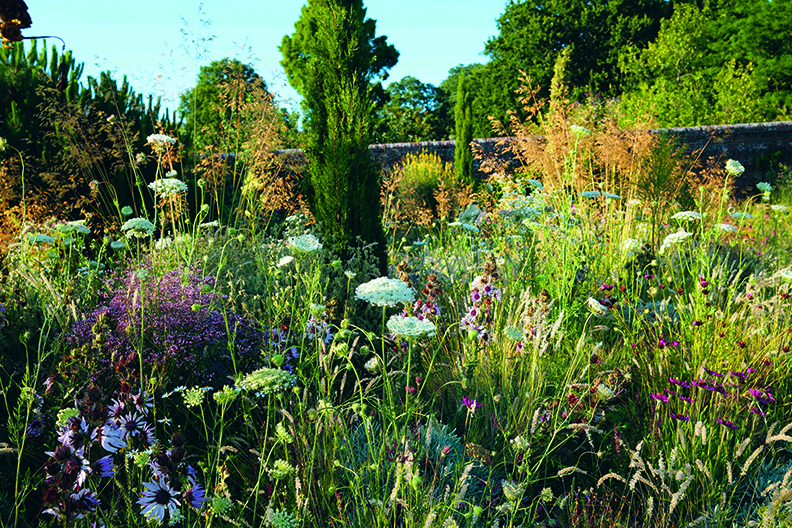
The rewilded walled garden at Knepp Estate in West Sussex
CHARLIE HARPUR
Delamain, who is a trustee of the food-growing charity Grow, hopes the book will be a source of inspiration to anyone who wants to start their own project. Her top tip would be to tap into a local gardening club or find other gardeners to share ideas with: “One pattern that came up again and again was the power of community gardening.”
On a personal level, she says, writing the book has fundamentally changed her outlook on life. “We get fed a lot of bad news, but there are lots of people getting on and doing brilliant things with gardens all over the world. I’ve realised the world is a good place, full of good people — and that has been life-changing.”
Gardens That Can Save the World by Lottie Delamain is published on March 12 by Thames & Hudson at £30. To order a copy go to timesbookshop.co.uk. Free UK standard P&P on orders over £25. Special discount available for Times+ members
Comments are closed.