
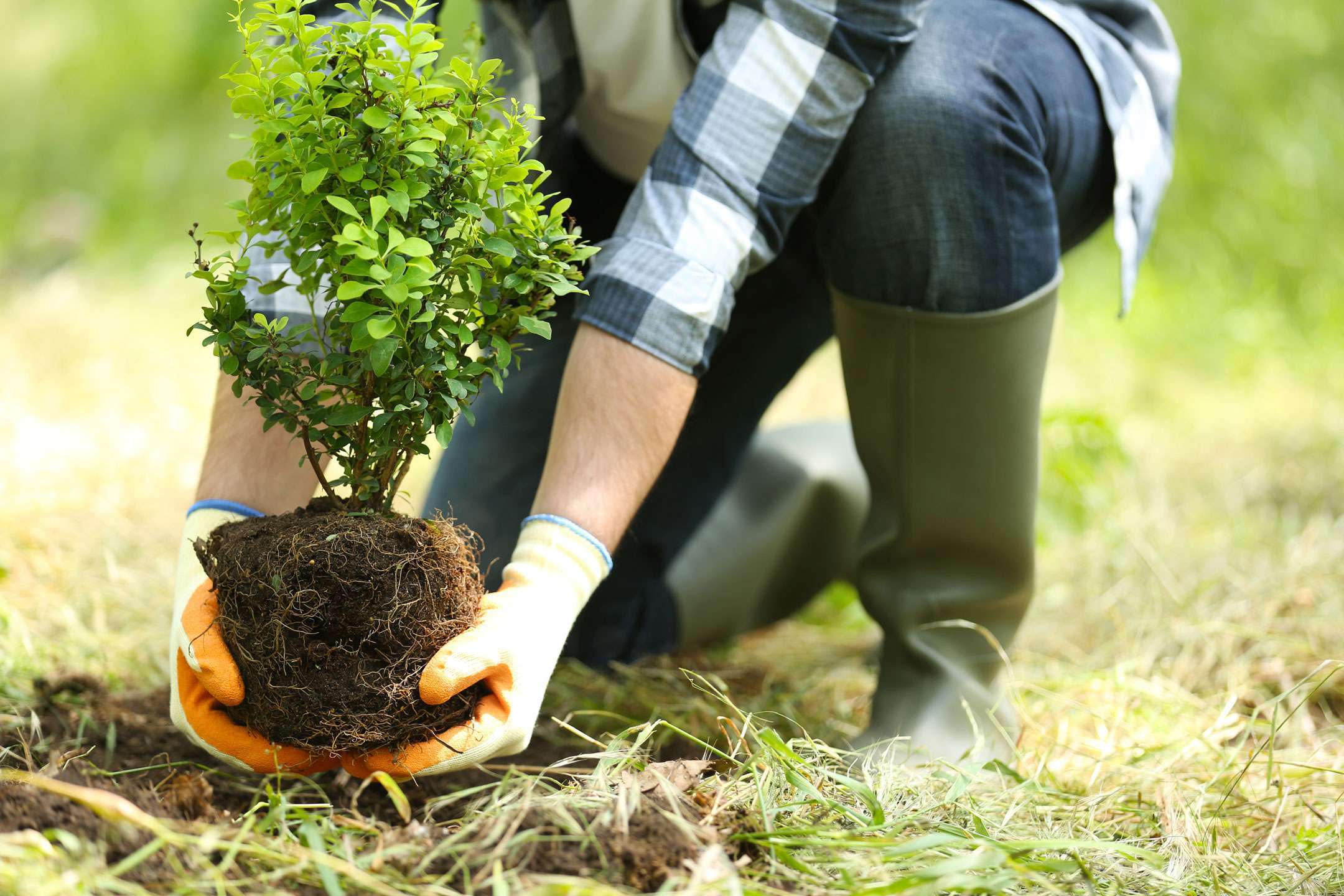
Arbor Day is a national holiday that recognizes the importance of trees. The most common way people celebrate Arbor Day is to get together in groups to plant trees. The next National Arbor Day is Friday, April 24.
When was the First Arbor Day?
Arbor Day was first celebrated in Nebraska on April 10, 1874, following a proclamation by Gov. Robert W. Furnas. In less than a decade, the idea for the holiday caught on in other states until, by 1882, its observance had become a national event. Individual states observe Arbor Day on different days, based on the best tree planting times in their area. Californians celebrate every year with a week-long observance March 7 through 14, known as California Arbor Week, in honor of horticulturalist Luther Burbank.
Who was Luther Burbank?
Luther Burbank was a renowned American botanist, horticulturist, and pioneer in agricultural science who developed more than 800 strains and varieties of plants over his 55-year career. Living in Massachusetts at the time, he developed the Russet Burbank Potato, which is today the most widely cultivated potato in the United States. He then moved to California and made his home in Santa Rosa for more than 50 years, where he conducted plant-breeding experiments that brought him world fame. Burbank’s most successful strains and varieties included the Shasta daisy, the fire poppy (not to be confused with the California wildflower, Papaver californicum, which is also called a “fire poppy”), the “July Elberta” peach, the “Santa Rosa” plum, the “Flaming Gold” nectarine, the “Wickson” plum (named after the agronomist Edward J. Wickson), the freestone peach, and the white blackberry. This was all done through traditional breeding practices.
Why plant trees?
The significant importance of trees in nature naturally resulted in encouraging us to plant more trees in public and home gardens. According to the Arbor Day Foundation, “From backyards to tropical rain forests, trees around the world are hard at work providing the necessities of life. Trees clean our air and water, provide habitat for wildlife, connect communities, and support our health and well-being.”
Trees add beauty to our landscapes and cause us to feel better. Current research about urban trees and human health discovered that trees indeed “improve psychological and physiological functioning, boost ability to focus, improve stress recovery, and increase active living” (as researcher K.L. Wolf et al. discovered).
Trees help clean the air by reducing smog, removing carbon dioxide from the air and releasing oxygen into the atmosphere. Trees collect dust, control soil erosion, serve as windbreaks, and provide wildlife habitat. Properly placed trees can reduce energy consumption by providing summer shade and winter warmth. Trees absorb solar radiation, and release transpired water vapor that can cool surrounding buildings. Cityscapes are enhanced with trees by offsetting the increase of pavement and concrete.
Trees and climate change
Greenhouse gas emissions trap the sun’s heat, leading to global warming and climate change. Greenhouse gases consist of carbon dioxide, methane, ozone, nitrous oxide, chlorofluorocarbons, and water vapor. Due to these gases, the world is warming faster than at any point in recorded history. Trees can pull carbon dioxide from the atmosphere, reducing global temperatures to slow climate change. Every tree planted is a step in the right direction!
Trees’ importance in urban forestry
Living in the Central Valley, we know how intense summer heat can be. Did you know that a condition known as Urban Heat Islands (UHI) in inland and desert cities can result in summertime surface temperatures of unshaded asphalt more than 60°F hotter than shaded asphalt? A major factor in a street’s temperature is the health of its tree canopy. While there are approximately nine million street trees in California, their density has decreased 30% since 1988, and California cities now have the lowest tree canopy per capita in the U.S. Let’s help combat this deficiency by planting more trees in our cities, yards, and public lands!
Trees can:
Cool urban heat islands (UHI)
Provide shade
Save energy
Clean the air (remove dust, absorb pollutants) and release oxygen
Absorb and store (sequester) carbon dioxide
Provide windbreaks
Capture runoff/stormwater flooding
Beautify neighborhoods/increase property value/reduce crime
Improve mental and emotional health
Reduce glare and reflection
Reduce noise
Provide habitat for animals and microorganisms
For more information, visit tinyurl.com/JanetHartin.
Plant a tree for Arbor Day
While fall or winter may be the best time in our county to plant a tree, planting a tree in spring can still be successful, with a little extra care during the upcoming summer. The success of a new tree depends a great deal on how it is planted. We’ve all witnessed trees that just never seem to thrive. Frequently this is caused by poor planting or selection of a tree.
We can minimize maintenance and future problems by picking the best tree for the right area.
Knowledge of a tree’s features: shape, sun and water requirements, leaf/flower/fruit litter, evergreen or deciduous (drops all of its leaves in one season) should be considered. Determine the purpose of the tree: shade, fruit production, visual or sound barrier. Check city guidelines when planting close to a street or intersection.
Most importantly, the mature size of the tree must be wisely considered. Measure the height and width of the site. Are there solar panels, utility lines, fences, buildings, walkways or roads “in the way” of your future tree? If so, pick a different site or a different tree! Nursery labels for some trees state the tree’s adult size at fifteen years of age. However, many tree species will continue to grow beyond this age.
A tree list to aid your tree selection is available on our Master Gardener web site.
Western redbud, crape myrtle, ‘Saratoga’ bay laurel, and Chinese pistache are some favorite trees on this list. In addition, a list with explanations noting “Problematic trees—Proceed with Caution” is also obtainable on our web site. Some of the trees on this list are: mimosa, white birch, mulberry, and coastal redwood. Three trees are marked “Do Not Plant”: tree of heaven, salt cedar, and Chinese tallow.
Trees certainly enhance our lives. Planting the right tree in the right place in the right way can be a wise and appreciated investment for ourselves and our community. And take the advice of a wise Chinese proverb: The best time to plant a tree was 20 years ago. The second best time is now.”
This column is not a news article but the advice and opinion of the writer and does not reflect the views of the Mid Valley Times newspaper.
Comments are closed.