
 5 min read
The Saturday morning ritual of trudging out to mow, weed, and water is, for a growing number of homeowners, no more. In its place are gardens that are still lush and intentional, but entirely self-sufficient. Low maintenance gardening has completely reinvented itself, and in 2026, it’s more beautiful, more purposeful, and more in tune with the natural world.
“We are seeing a departusre from the idea that ‘low maintenance’ means a boring yard filled with just rocks and cacti,” says Amy Enfield, senior horticulturalist at Miracle-Gro. “Instead, it’s all about gardening smarter, not harder—working with nature so your garden practically takes care of itself.” Below, all the trends leading the charge, according to garden and plant experts.
Rewilding the Lawn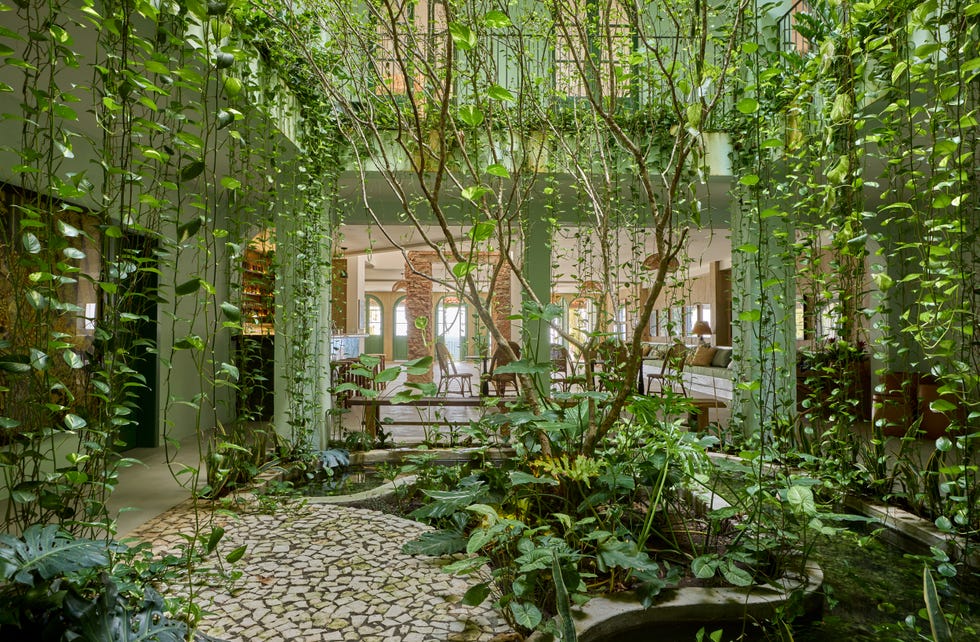
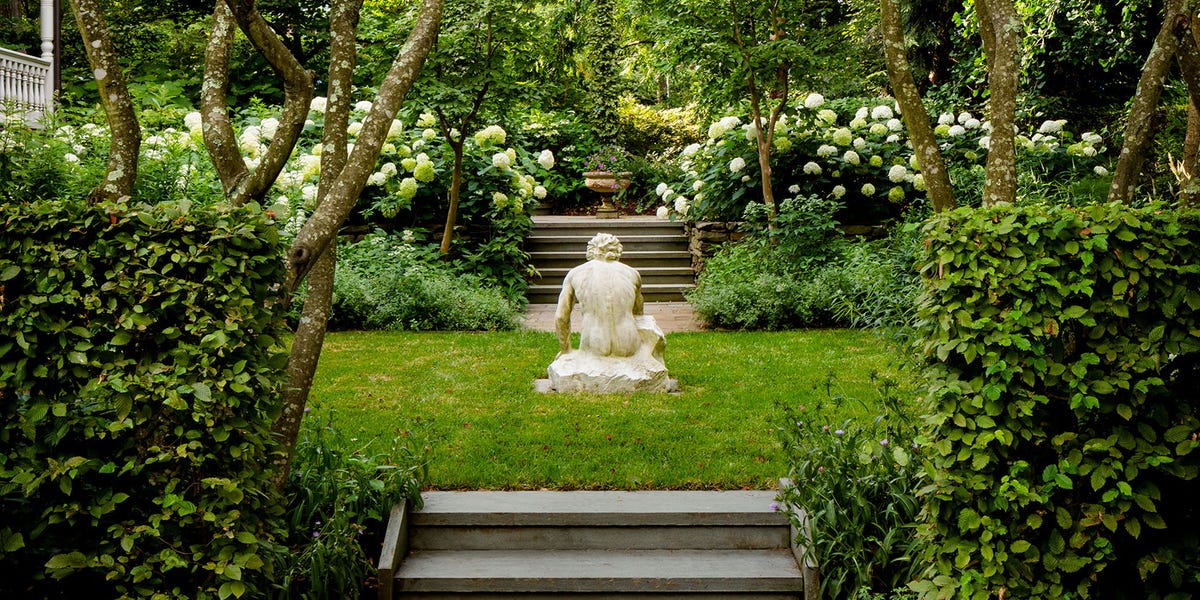
Consider what a conventional lawn demands: weekly mowing from spring through fall, consistent watering (grass is surprisingly thirsty), and regular applications of fertilizer and pesticides to maintain its uniform green. Many homeowners are opting out of grasswith stone pathways, meadow-like garden beds, creeping thyme, and native sedums—plants that handle light foot traffic, naturally suppress weeds by crowding them out, and (almost) never need trimming.
“Many of my clients are realizing that low-maintenance gardens don’t have fewer plants—often they have more,” Elizabeth Waddington, permaculture designer for garden suppliers First Tunnels, says. “Layered planting with carefully selected plants, positioned with their environmental needs in mind, takes far less effort to maintain than many people imagine.”
Her advice: lean on perennials, go native, and stop fighting your conditions. “Rather than trying to fight shade, soil type, or other ‘issues’—work with what you have and select plants ideally suited to the environment where you live,” Waddington adds. “A lawn of just grass is not as easy, beautiful, or eco-friendly as a wild lawn with wildflowers, clovers, mosses, and more.”
Pollinator-Friendly Planting
Swap the manicured lawn for a drift of lavender, echinacea, and native wildflowers, and the garden largely starts tending itself. Pollinator-friendly planting—designing specifically to attract bees, butterflies, and beneficial insects—is also on the rise, according toThe Sill’s plant expert, Paris Lalicata. The plants involved are almost universally easy—they evolved to thrive in local conditions without coddling.
The ripple effect matters too: When bees and other beneficial insects move into a garden, they support the health of the surrounding plants—including edibles—which means less manual intervention across the board.
Enfield sees the same pull. “The 2026 gardener wants an outdoor space that is friendly to bees and butterflies and can handle weather extremes,” she says. “But most importantly, they want to spend their weekends enjoying their yard with a glass of wine—not working in it.” Pollinator planting delivers just that—beauty with a built-in support system, and almost nothing asked of you in return.
John M. Hall
Foodscaping
Instead of a vegetable patch in the corner that requires bending, weeding, and lots of time, many gardeners are gravitating toward “foodscaping.”
“We’re seeing a shift as plant parents and consumers alike crave more control over what they eat,” says Lalicata. “With growing concerns over preservatives and pesticides, people are discovering they can harvest nutrient-rich produce without the need for chemical applications.”
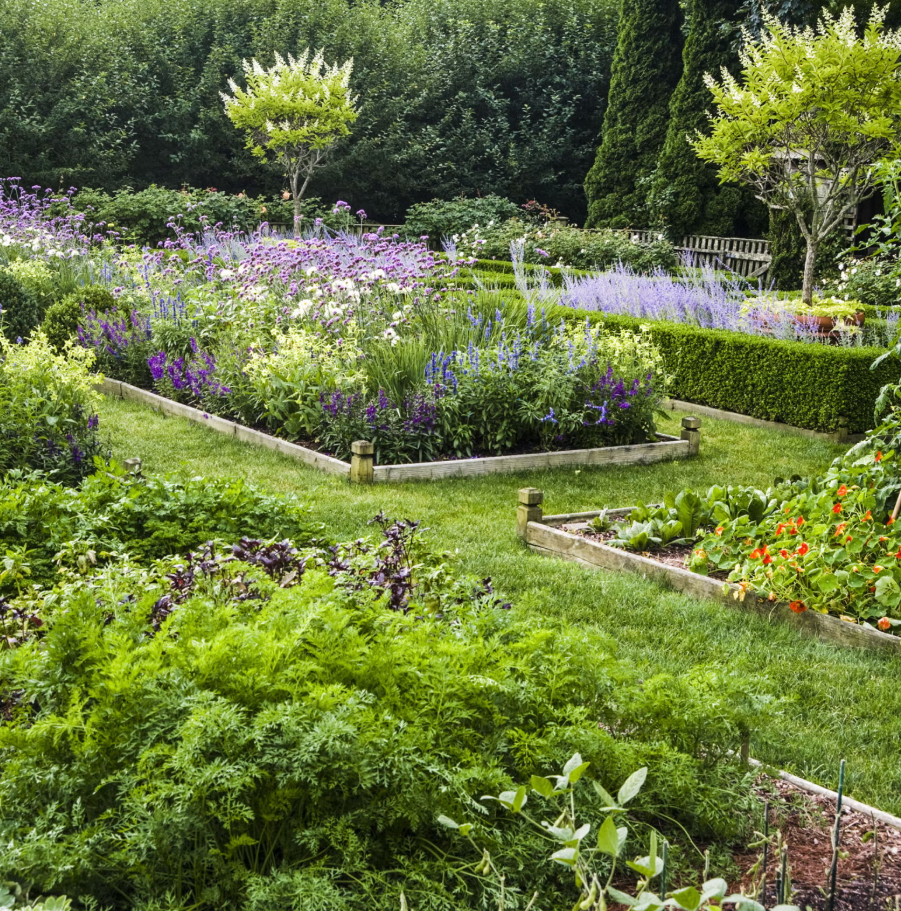
The idea, in practice, is to weave edible plants directly into existing flower beds and borders rather than siloing them in a dedicated (and demanding) vegetable plot.
Lalicata says that “fruiting favorites like citrus, figs, and berry shrubs are topping the list.” The overall style favors “layered, cottage-style textures that feel wild yet intentional.” For apartment dwellers or homeowners with limited outdoor space, the same principle translates indoors: countertop growing systems with built-in grow lights let you harvest fresh herbs and salad greens year-round,and without yard access.
Similarly, Waddington steers clients toward what she calls “edimental” planting (edible and ornamental at once) rather than a dedicated veggie patch. “People are moving away from just gardening in neat rows, and integrating their vegetable patches and fruit gardens with flowers and other ornamental plantings,” she says. “Such perennial kitchen gardens are lower-maintenance once established and can be beautiful too.”
Perennials are plants that come back on their own year after year, rather than annuals that need to be replanted every season. A fruit tree is the ultimate expression: it’s ornamental enough to visually anchor a garden, it flowers in spring, fruits in summer or fall, and once it’s established, it largely takes care of itself, year on year. Compare this to a traditional row of annual vegetables, which need replanting, fertilizing, and consistent attention each season.
Tech in the Garden
The technology that has already taken over the kitchen and the living room has moved outside. The core value proposition is simple. Tools such as smart watering systems that read soil moisture levels and cross-reference the local weather forecast before running a sprinkler are proving quite useful. A moisture sensor doesn’t water your garden on a schedule; it waters when the soil actually needs it, which saves water and stops you from accidentally drowning your hydrangeas.
Enfield describes the shift as technology acting like a “silent, invisible helper” in the backyard. For households that still want real grass—for kids, dogs, or the sheer pleasure of it—robotic mowers have become as normalized as robot vacuums indoors.
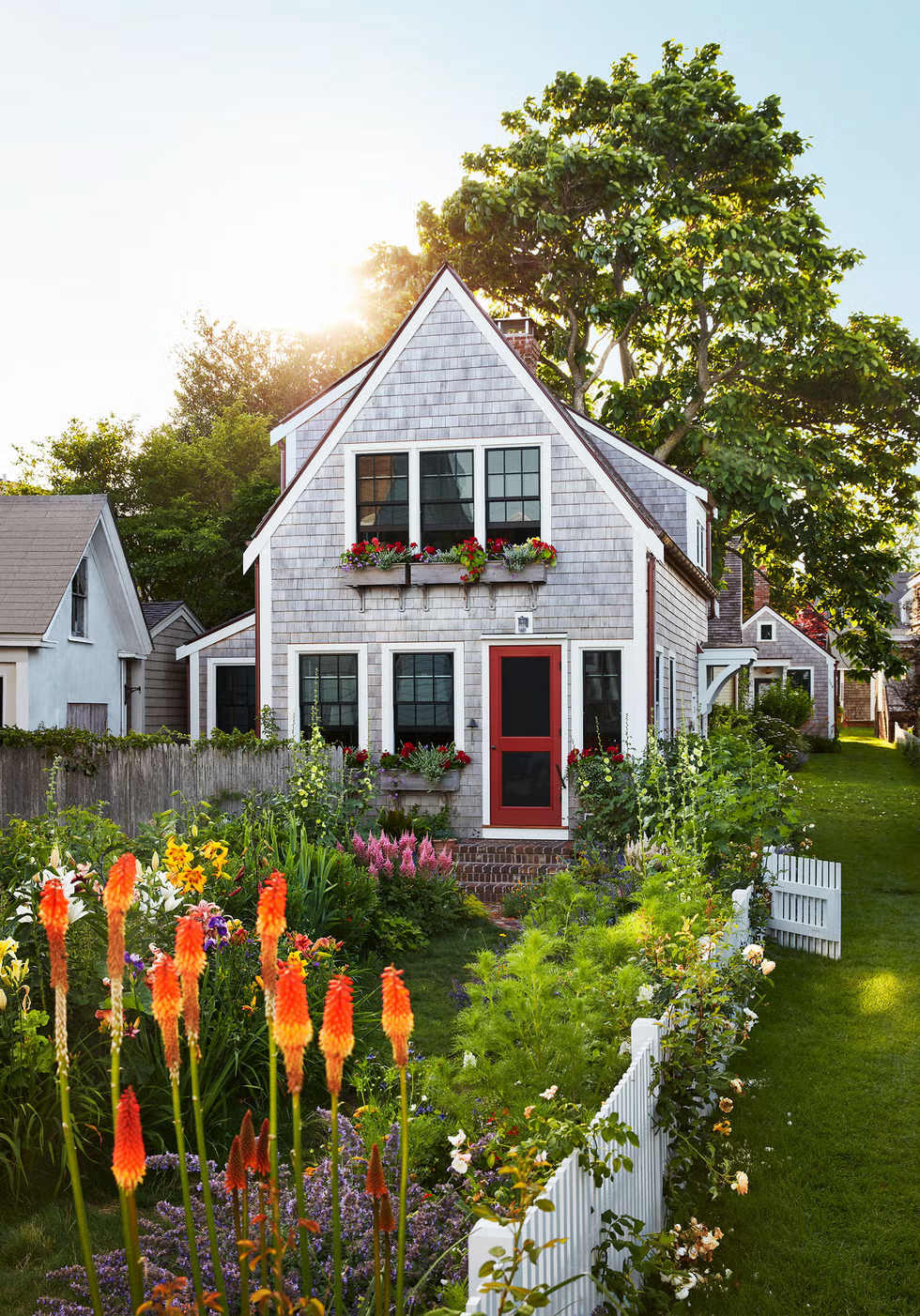 Stephen Kent JohnsonTerrence Meck and Bret Alberti’s home in Provincetown, Massachusetts features a garden created by landscape designer Samuel Spiegel.Propagation
One of the most low-maintenance ways to expand a garden is already growing in your backyard. Propagation, the practice of multiplying plants from cuttings, divisions, or seeds taken from an existing collection, has surged in popularity as more gardeners realize they can double or triple what they’ve been working with, and for virtually no cost. Hanfei of Niu Plants on Palmstreet has watched the trend accelerate alongside the rise of community plant swaps, where neighbors trade cuttings and seedlings. The social dimension, they note, has made propagation feel less like a gardening chore. “Potting up a little plant, propagating pieces of your personal plant collection, or providing guests with a seed pack tied with ribbon and a ‘thank you’ note is a thoughtful way to send loved ones off with a piece of you,” Hanfei says. The guest grows the cutting; you’ve expanded someone else’s garden without lifting a finger.
It’s a fitting note for where low-maintenance gardening has landed in 2026—not a retreat from the garden, but a smarter relationship with it. Work with what you have, choose plants that belong where you put them, and let the rest follow.
More Garden Stories From Elle Decor

Julia Cancilla is the engagement editor at ELLE Decor, where she oversees the brand’s social media and writes about the intersection of design, pop culture, and emerging trends. She also authors the monthly ELLE Decoroscope column. Her work has appeared in Inked magazine, House Beautiful, Marie Claire, and more.
Comments are closed.