
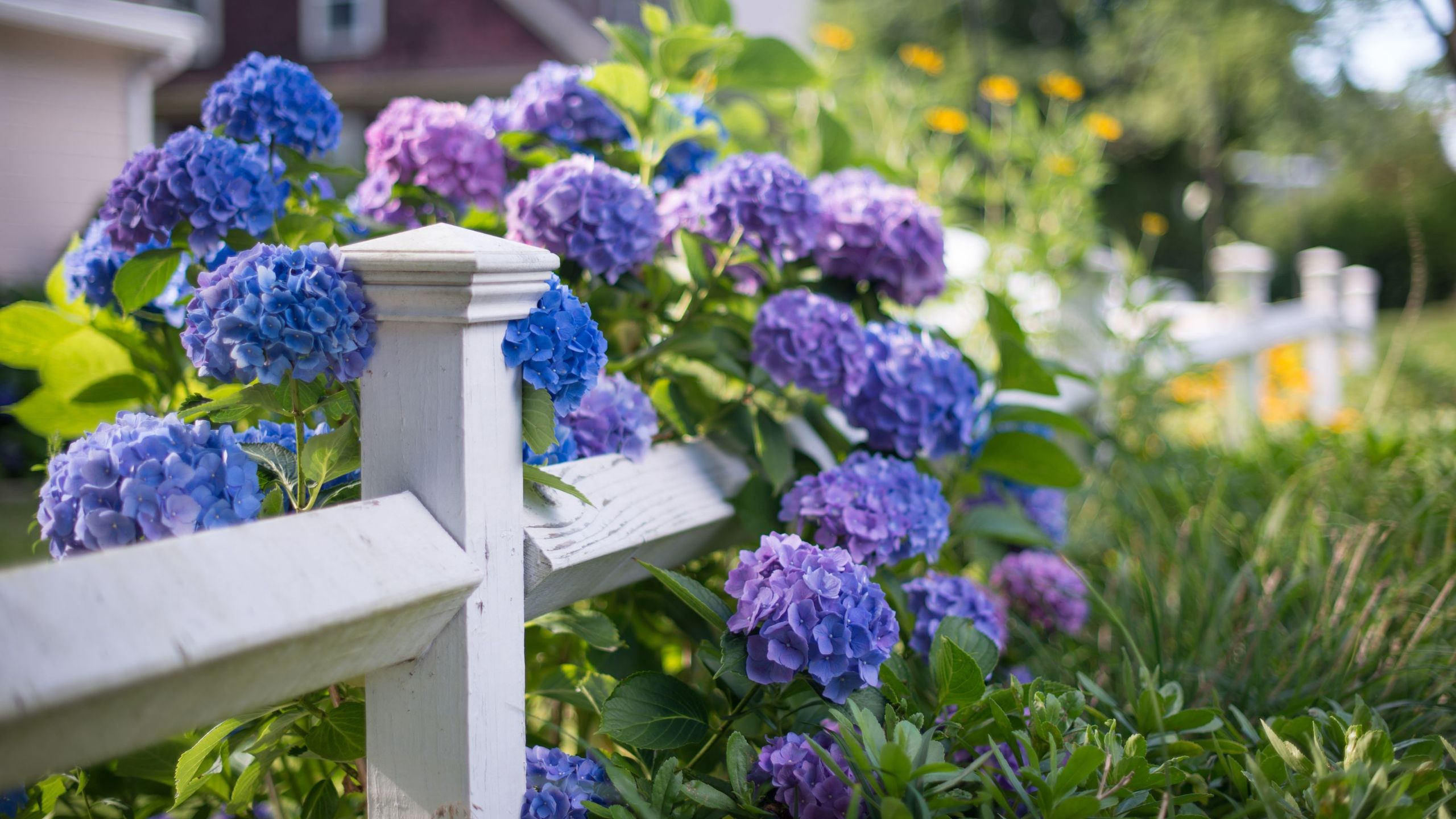
If you are lucky enough to have hydrangeas growing in your garden, you’ll know what a beautiful feature they make. However, if you’re a little unsure of when to deadhead hydrangeas in spring, you’ve come to the right place.
It’s a quick job, but knowing how to deadhead hydrangeas is just as important as knowing when to prune a hydrangea, especially if you want yours to bloom successfully in summer.
Article continues below
You may like
When to deadhead hydrangeas
If, like me, you left your hydrangea blooms on the plant over winter (as many gardeners recommend doing), early spring, around late March, is the perfect time to remove them. At this point, you’ll usually see new buds swelling along the stems, which is your signal that the plant is ready for a tidy.
Liam Clearly, gardening expert from Old Railway Line Garden Centre, explains that deadheading helps them put their energy into fresh growth, and ‘the main thing we explain to customers in the garden centre is that not all hydrangeas behave the same, so how you deadhead them depends on the type you have.”
And Richard Barker, horticultural expert at LBS Horticulture, advises the same. ‘Most hydrangeas should be pruned in late winter or early spring, but climbing hydrangeas should be pruned after they have finished flowering in summer,’ he advises.
So, I asked him which varieties he’d recommend deadheading in spring.
Which hydrangeas should you deadhead in spring?
‘Mophead and lacecap hydrangeas should be deadheaded right now, cutting just above a pair of healthy buds to remove old flowers,’ explains Richard. However, he advises avoiding cutting back too far as these hydrangeas bloom on old wood.
What to read next
He adds that ‘Panicle hydrangeas can also be deadheaded, and as this type of hydrangea flowers on new wood, they can be pruned harder to encourage stronger stems and bigger blooms.’
Liam agrees that you can be a bit more confident, trimming back panicles and even Annabelle-style hydrangeas.
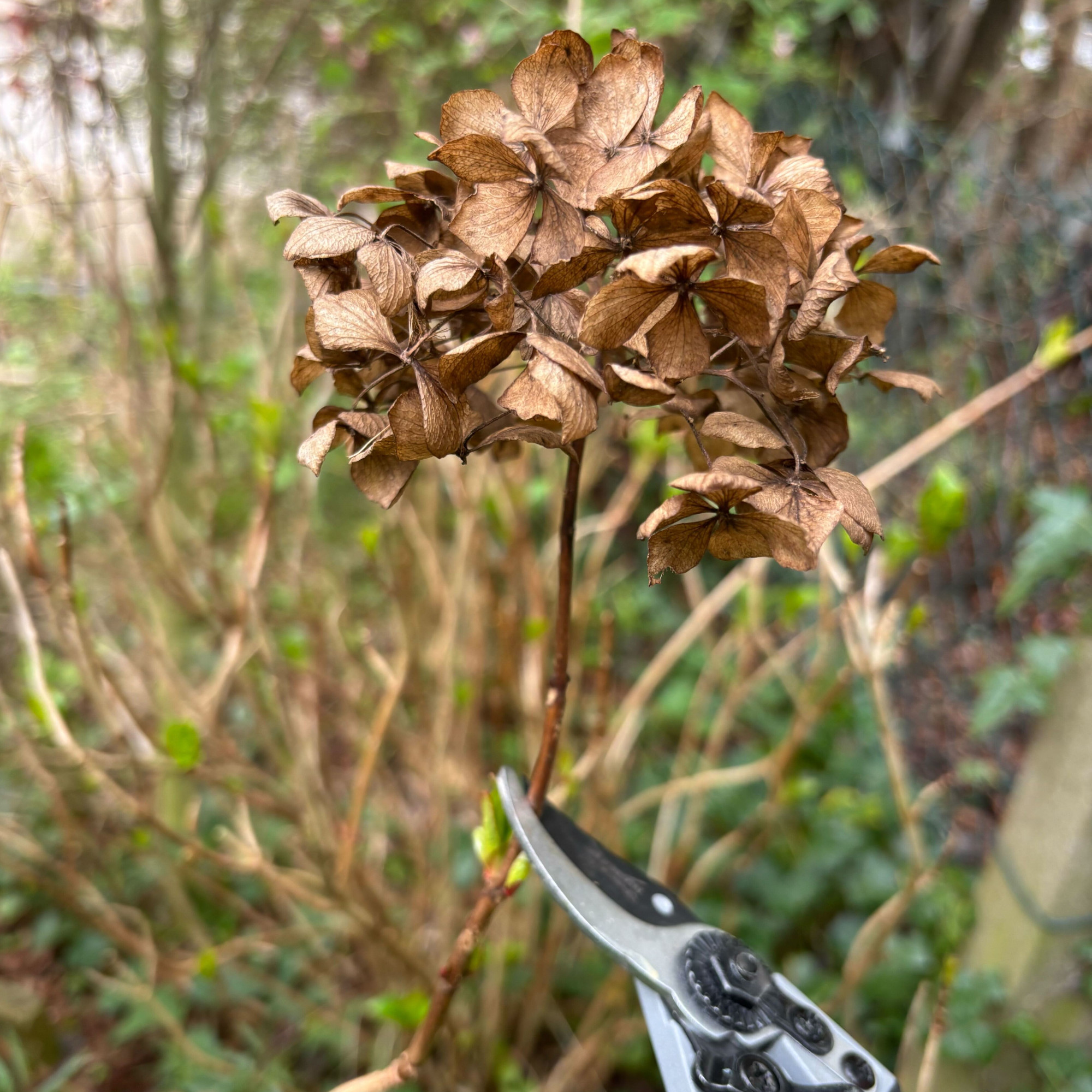
Deadheading my mophead hydrangeas a la Monty
(Image credit: Future/Jenny McFarlane)
How Monty Don deadheads hydrangeas in spring
One of the biggest hydrangea pruning mistakes gardeners make when deadheading hydrangeas in spring is cutting too far down the stem. If you remove too much growth on varieties that flower on old wood, you can accidentally remove the buds that would have produced summer flowers.
In Monty Don’s March gardening duties blog, he says the key to deadheading hydrangeas is cutting in the right place so you don’t remove developing flower buds, making the distinction between pruning and deadheading.
He recommends deadheading the spent bloom ‘just above the top pair of buds beneath the bloom.’ So, I’ve been following the old flower head down the stem and looking for the first pair of plump green buds forming below it.
Then I’ve been snipping just above the buds with sharp secateurs. Mine are Wilkinson Sword Ultralight bypass pruners, £16.99 at Amazon.
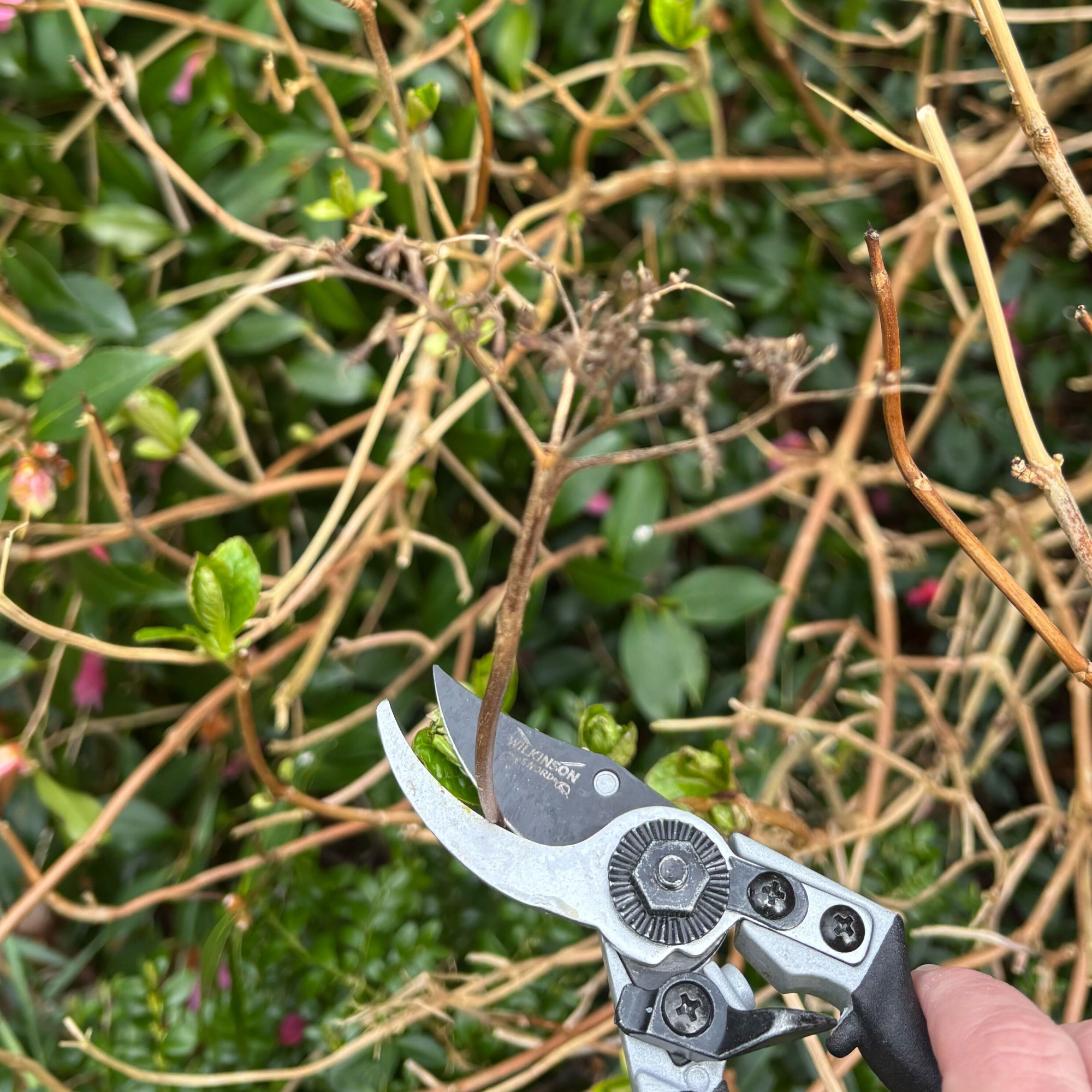
I deadheaded my lacecap hydrangea
(Image credit: Future/Jenny McFarlane)
When to deadhead different hydrangeas throughout the year
Hydrangeas don’t all behave the same way, which is why Richard recommends slightly different timings depending on the variety. I asked him which varieties should be deadheaded and when.
Bigleaf hydrangeas: ‘It is best to leave the flowers on bigleaf hydrangeas over winter to provide some protection from frost. Once the risk of harsh frosts has passed, usually around March or April, the flowers can be deadheaded. Cut the stems of the hydrangea back to the first or second pair of healthy buds, as this is where new flowers will emerge.’Panicle hydrangeas: ‘Panicle hydrangeas should be deadheaded in late winter or early spring (February and March) before new growth begins to appear. Faded panicles should be cut back to the first or second pair of healthy buds below the flower head. However, as they flower on new wood, they can be cut back harder in spring to encourage the plant to produce larger blooms.’Smooth hydrangeas: ‘Smooth hydrangeas can be deadheaded in autumn, or if they are not too heavy, they can be left on the plant to protect from frosts in winter. Prune this kind of hydrangea in late winter or early spring, and cut back to low buds to encourage strong stems and larger flowers.’Climbing hydrangeas: ‘Climbing hydrangeas should be deadheaded immediately after they have finished flowering, often in late summer. Even though the flowers can be left in place for winter interest, deadheading in summer can encourage better flowering in summer the following year.’

My lacecap hydrangea now ready to produce plenty of blooms in summer
(Image credit: Future/Jenny McFarlane)
Deadheading essentials

Burgon & Ball
Flora Brite Nylon Yellow Gardening Gloves
Our tester rated these gardening gloves the best multipurpose in our best gardening gloves guide, as you can use them for a variety of different gardening tasks. The gloves feel light and non-bulky when you are wearing them, and there is no problem doing fiddly tasks like deadheading and pruning.
ProsHigh-vis colourGood priceLightweightGood dexterityMachine washable

Wilkinson Sword
Comfort Ratchet Pruner
Wilkinson Sword’s Comfort Ratchet Pruners were the best secateurs our Gardens Editor, Sophie, tried for easy, comfortable pruning of woody stems, so they will work well for deadheading hydrangeas that grow on older, woody growth. With a 2-in-1 mechanism, this pair provides either a straight cut or a ratchet mechanism on tough, woody growth.
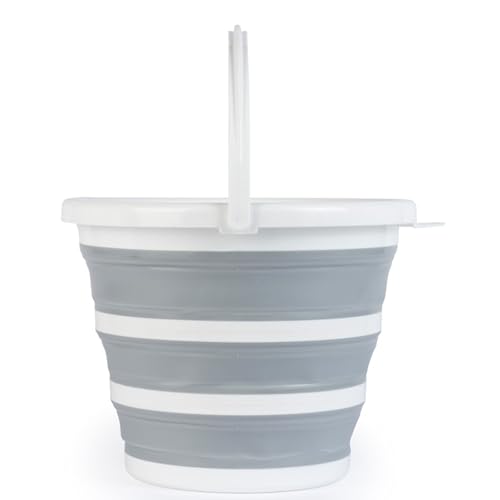
Beldray
Collapsible Bucket
This collapsible bucket is a great option to have to hand when doing a spot of deadheading and pruning, or pretty much anything else garden related! It has a 10L capacity and can be easily stored away again once the job is complete.
So, there you have it! By deadheading the right hydrangea varieties now, you’re giving your plants a little spring refresh that sets them up for a strong season ahead. Liam explains that ‘it’s a simple job that makes a big difference once the garden starts waking up for the season.’
I’ve already deadheaded my own mophead and lacecap hydrangeas in the garden, following Monty Don’s tip of cutting old blooms back to the first pair of healthy buds, and I’m excited to see them burst into life again.
Get it right, and you’ll be rewarded with plenty of beautiful blooms this year, along with healthier, more vigorous growth throughout the season. Happy snipping!
Comments are closed.