
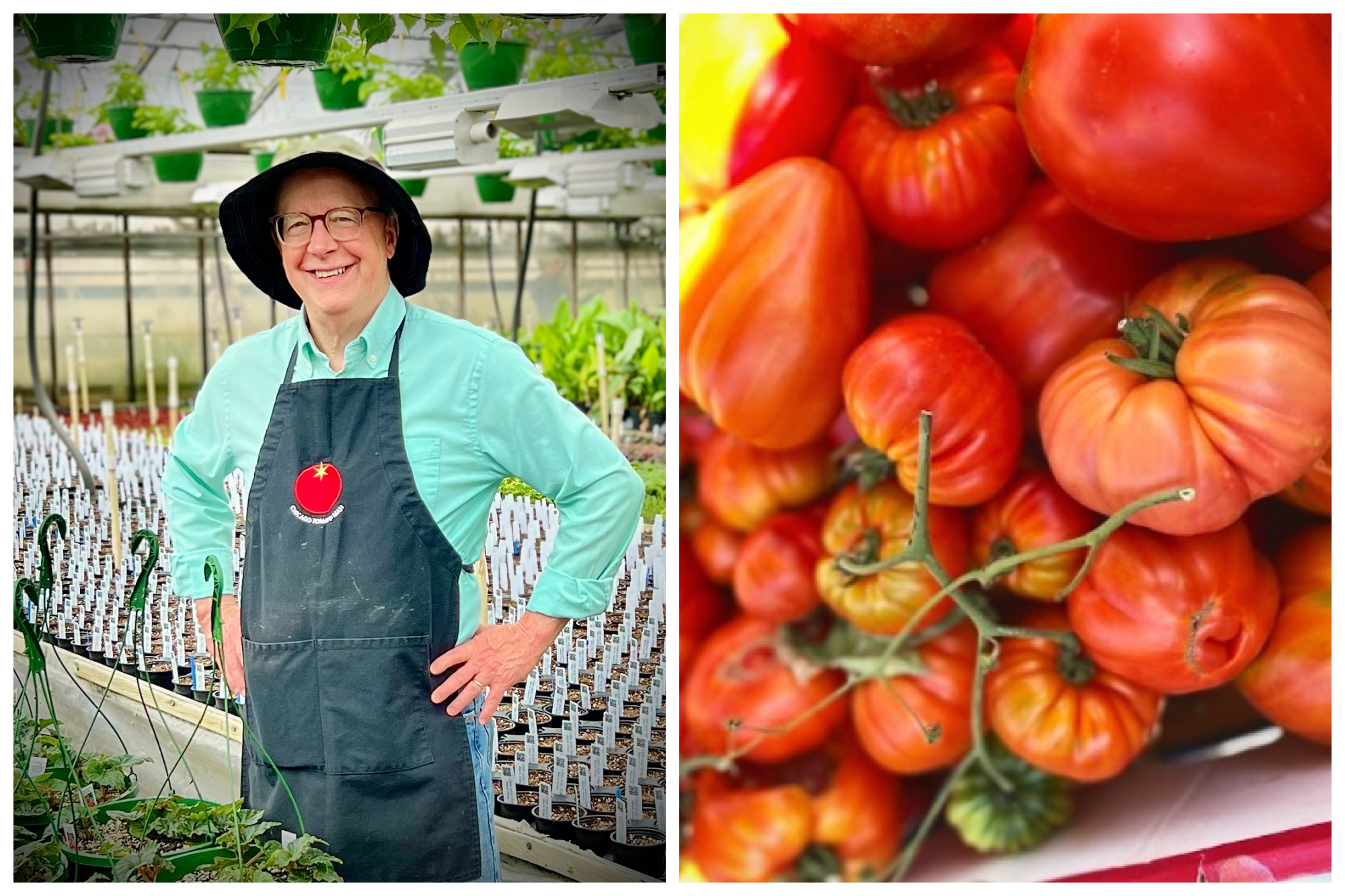
CHICAGO — Chicagoans may reject ketchup, but fresh, juicy tomatoes are a different story.
No one knows this better than Bob Zeni, of suburban LaGrange Park, whose annual tomato plant sale has earned him the moniker of “Chicago Tomato Man” for 12 years.
Each year, Zeni scours the earth for the world’s tastiest and most interesting tomatoes — grown ethically and cleanly — to showcase on his website and at events around the Chicago area, making donations of money, time and plants along the way.
In 2025, Zeni sold about 13,000 plants and donated 1,600 to 32 nonprofits, churches and community gardens, he said. This year, he aims to sell 16,000 with a goal of donating 1,800-2,000 plants.
The sale begins noon Friday via his website, where customers can peruse a selection of nearly 200 varieties, including 29 new ones for 2026. Tomatoes come in a range of sizes, from hanging basket to dwarf to standard. Most will be 6-8 inches tall by pickup time, depending on the variety. Some can grow up to 15 feet tall.
Plants are $6.50-$16, with the price increasing with rarity.
New tomatoes this year include the sweet, BLT-friendly Melon Liqueur, the tangy Dancing with Smurfs and the smoky, plum-like Fairy Tale Night. For homemade pasta sauce, the new Almandine is an apt choice, while Snakebite, Burgermeister, Raya Rey, Mushroom Basket, Gold Medal and Big Rainbow varieties are strong options for grilling, roasting, stuffing or topping burgers and sandwiches.
Zeni’s most-anticipated picks for the year are Cinnamon Girl, a salty cherry-size tomato by Bene Seeds, the green-and-yellow tiny Gandalf and the dark, rich Molten Lava varieties. Mostly, he likes their names, he said with a chuckle.
New to tomatoes and need a recommendation? Zeni suggests starting with a tabletop variety which can be grown in small, 8-inch pots, or planted in the ground. They’re good for apartments, patios and balconies. These tomatoes only grow to 24-30 inches and can help new gardeners decide if they want to move on to more advanced plants, he said.
“Tomatoes reward meticulous” care, he said. They’re “good if you suffer from the heartbreak of ‘O.G.D’ — obsessive gardening disorder.”
Between April 18-June 7, plant orders will be available for pickup at 41 pop-up locations across the city and suburbs. This year will see pick-up spots in Avondale, Lincoln Square, Logan Square and Woodlawn for the first time.
Other events throughout the season will include the Tasty Tomatoes class at the Chicago Botanic Garden on March 28, in which Zeni will speak on all things tomato. Tickets for the event can be bought here.
Zeni will also be at two free events: Tomatopalooza April 18 at The Roof Crop, 1516 W. Carroll Ave., which will showcase tomato-inspired snacks, drinks and cocktails; and Pints, Plants & Pups May 23 at Off Color Brewing, 1460 N. Kingsbury St., which will have dogs from One Tail At A Time rescue available for adoption. A portion of tomato plant sales from the day will benefit the organization.
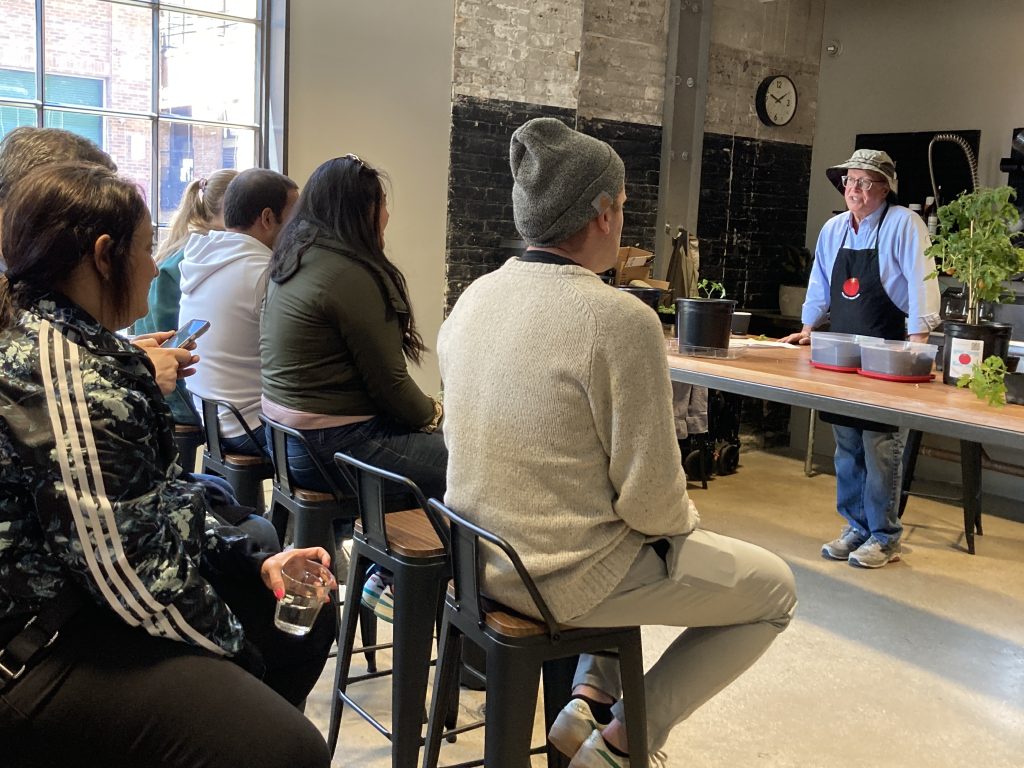 Bob Zeni speaks to fellow gardeners at Tomatopalooza on April 26, 2025 at The Roof Crop. Credit: Provided
A Growing Tomato ‘Cult’
Zeni, 74, has been growing tomatoes for 26 years — a hobby-turned-compulsion and business for the last dozen of them.
Zeni first started growing plants in his basement, a setup which spilled over into the rest of the house and backyard. Operations are now done with the help of a master gardener and a professional greenhouse, as well as a team of warehouse workers who help separate and organize the plants. His wife, Wendy, is the “executive chef” who also serves as his trusted adviser, and daughter Rebecca, a data strategist by trade, is the group’s “inventory guru,” he said.
“You’ve heard the expression: If you enjoy your job, you’ll never work again,” Zeni said.
Zeni’s motivated to keep up the sweet endeavor by the hope he can sell enough to increase his donations each year. Often, tomatoes given to nonprofits and community groups are harvested and shared with food pantries, he said.
Zeni’s success has allowed him to support organizations like the Gardeneers, a Chicago-based nonprofit that works with Chicago Public Schools to create and care for school gardens while students learn about eating well.
“It all stems from my fervent desire to have everybody taste a real tomato,” Zeni said. “I don’t know if ‘tomato evangelist’ is a word, but those tasteless travesties in supermarkets are not tomatoes. They’re red water balloons, and people should taste a real tomato.”
Zeni also spends his time visiting local gardening clubs, answering questions about growing, helping to troubleshoot problems and combating tomato myths. One of the most common misconceptions that he encounters is that it’s good to place coffee grounds at the base of the plant. Untrue, he said; the acidity of the grounds will scorch the roots.
It may come as no surprise, but Zeni’s just plain fascinated by the “wondrous” plant. Zeni notes that tomatoes carry more than double the volatiles — a component of plants that determines their characteristics — than other vegetables, meaning there is a much wider variety in shape, size, color and flavor than typically found among veggies. He loves their history, too, and the stories behind the individual plants and growers.
One of Zeni’s main priorities after the selling season is over is to source more seeds, particularly new and rare varieties that are open-pollinated by hand. For this, he relies on the fellow members of his “tomato cult,” many of whom are growers, gardeners and seed purveyors who are online and share their journeys and creations through social media. His seeds come from across Illinois and the rest of the United States — and even overseas.
The time and effort are worth it, though, to know that people are experiencing what he considers one of life’s greatest joys: luxurious, succulent tomatoes.
Though Zeni doesn’t expect everyone who tastes his tomatoes to become as obsessed as he is, he said he occasionally receives feedback from customers who say his plants helped them in surprisingly personal ways. Sometimes, it brings a tear to his eye, he said.
“There is certainly a level of intensity and interest that I’d hoped for, but didn’t truly expect,” he said.
Listen to the Block Club Chicago podcast:
Comments are closed.