
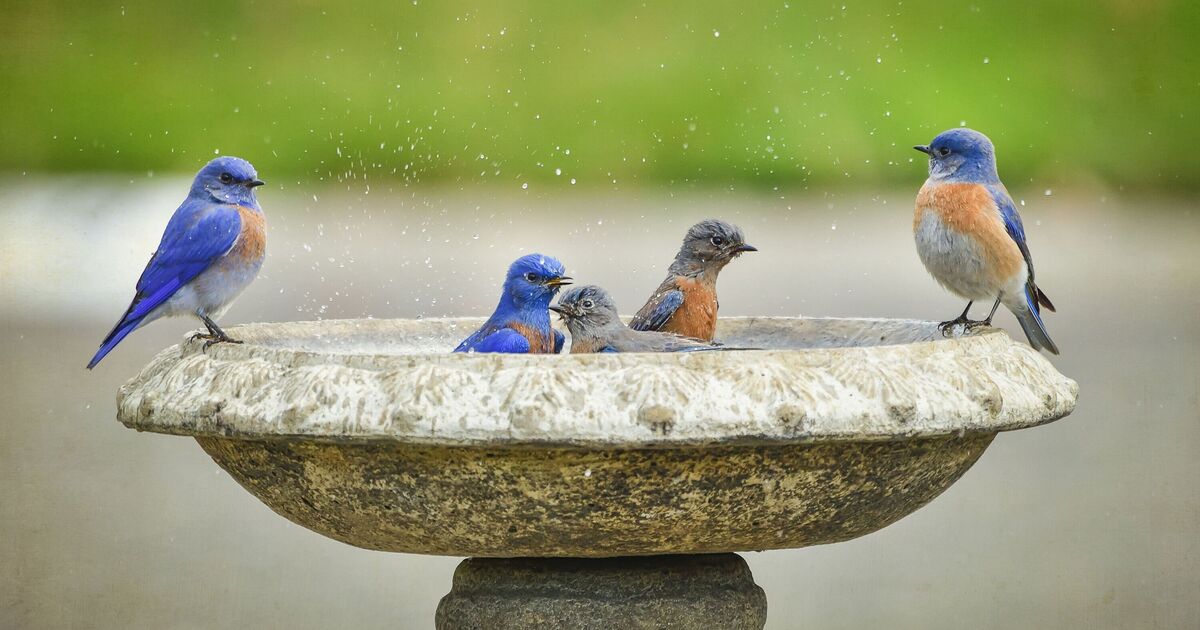
Gardeners are being encouraged to place a penny in their birdbaths this March to help protect visiting wildlife and keep the water cleaner. Birdbaths are a popular decorative element in gardens across the country, but also serve as a way of attracting birds by providing a shallow, reliable water source for them to drink, bathe and cool down.
However, they are known to quickly build up dirt and grime, with cleaning often becoming a time-consuming task. However, experts believe that one simple trick can help slow the growth of algae and bacteria, keeping birdbaths fresher for longer and making them safer for birds to drink from and bathe in. The method works because many coins contain copper, which naturally releases tiny amounts of metal ions into the water.
These ions can help inhibit the growth of algae, which often builds up quickly in outdoor water features during milder spring weather.
Sam Stevens, garden design expert at Pergolux UK, said: “Spring is on its way, and a lot of people will be looking at their gardens and getting them ready for brighter and longer days ahead.
“Cleaning the garden doesn’t have to be an expensive job at all. We all love a cheap and cheerful hack and the good news is that there are plenty of items you’ll already have in your home that can be used in the garden.
“Whether you need to buff away stains, achieve a streak-free finish on glass or get rid of rust, there will be something in your house for everything.”
As temperatures begin to rise in March, birdbaths can rapidly become cloudy or develop a slimy coating if they are not cleaned regularly.
*** Ensure our latest lifestyle and travel headlines always appear at the top of your Google Search by making us a Preferred Source. Click here to activate or add us as Preferred Source in your Google search settings. ***
This can make the water less appealing to birds and may even pose health risks if harmful bacteria begin to develop.
By placing a penny or copper coin in the base of the birdbath, gardeners may be able to slow down this process and keep the water clearer between cleans.
Wildlife experts still stress that birdbaths should be washed regularly with fresh water and a stiff brush to prevent dirt and droppings building up.
The coin trick is not a substitute for proper cleaning, but it can help reduce algae growth and make maintenance easier.
Lucy Taylor, bird expert for Vine House Farm, added: “Clean bird baths daily and allow them to air dry before refilling.
“The drying process helps ensure that the Trichomonosis parasite does not survive.”
Comments are closed.